


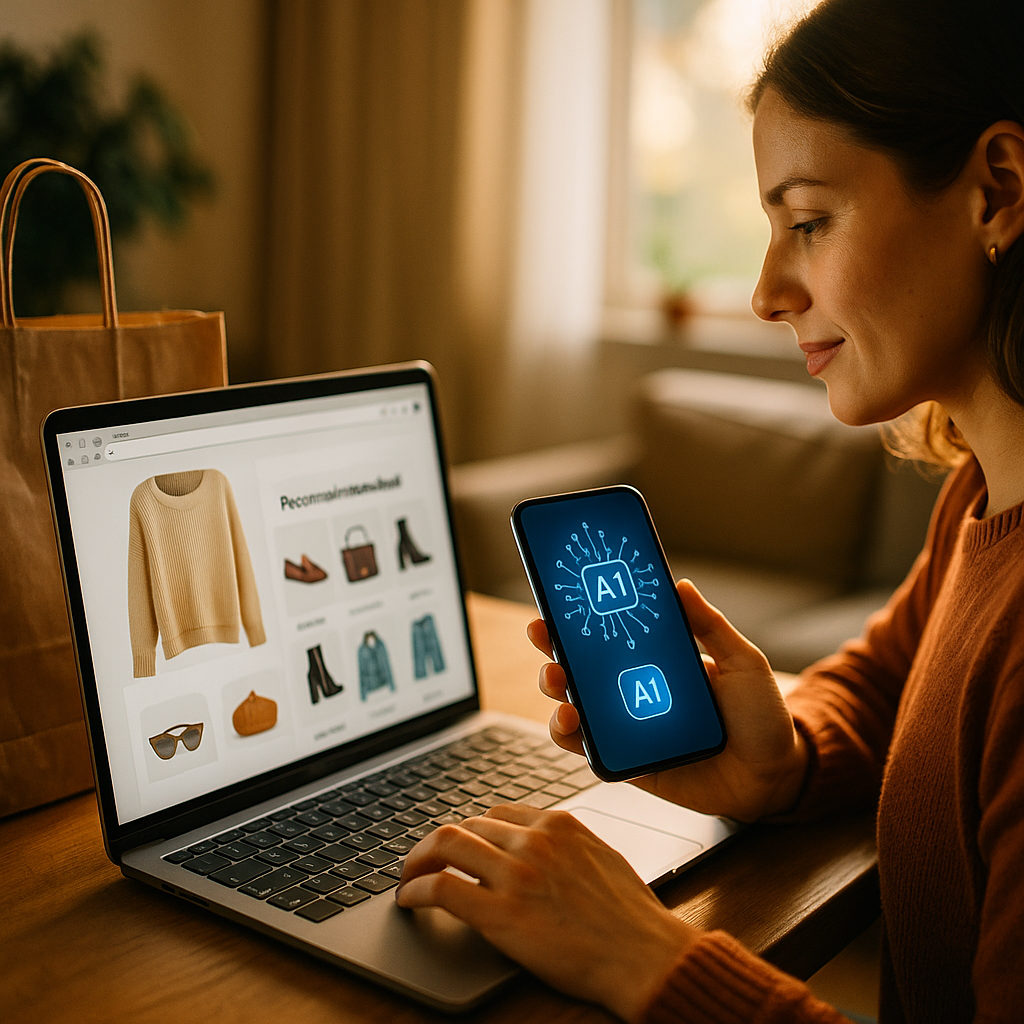
Using AI to personalize your e-commerce product recommendations based on purchase history offers retailers a potent advantage in winning customer loyalty. As online competition rises and consumer expectations evolve, tailored suggestions can drive sales, improve the shopper experience, and set your brand apart. Let’s explore how this innovative strategy can revolutionize your online business in 2025 and beyond.
Understanding AI-Powered Personalization in E-commerce
AI-powered personalization leverages artificial intelligence to analyze data—especially purchase history—and deliver highly relevant product recommendations. Unlike manual or rule-based systems, modern AI algorithms learn from vast amounts of customer data, identifying patterns and preferences with remarkable speed and accuracy. This allows e-commerce platforms to predict what a customer wants, even before they search for it, leading to increased engagement and conversion rates.
Historically, retailers offered static recommendations such as bestsellers or trending products. Today, thanks to advances in machine learning, AI can create a dynamic, individualized shopping experience. According to a 2024 Gartner study, retailers using AI-driven personalization increased average order value by 27% compared to those using basic filters. This emphasizes the clear business case for deploying AI in this role.
How Purchase History Fuels Smarter Recommendations
Purchase history is the foundation of relevance in e-commerce personalization. When a customer buys products, this data tells a story about their tastes, needs, and timing of purchases. AI algorithms analyze not only what has been bought, but also frequency, combinations, and even when returns occur or items are abandoned in carts.
By mining such granular details, AI systems can:
- Anticipate when a customer might need replenishments
- Suggest complementary accessories or upgrade options
- Discover cross-category purchase patterns for deeper insights
- Filter out irrelevant products, saving the customer’s time
Retailers that respect privacy and communicate transparently about data usage also build trust, further enhancing loyalty alongside personalization. As data privacy laws tighten, using anonymized, consent-based purchase records ensures ethical, compliant practices.
Core Technologies Behind AI Product Recommendations
Several cutting-edge technologies enable effective AI-driven recommendations based on purchase history. Understanding their roles helps retailers choose the right solution for their business goals:
- Machine Learning Algorithms: These self-learning systems identify complex purchase behavior patterns by analyzing large datasets. Models like collaborative filtering, content-based filtering, and hybrid systems are now commonplace.
- Natural Language Processing (NLP): NLP empowers AI to interpret customer reviews, search queries, and even product descriptions, enriching the recommendation engine’s input and output.
- Recommendation APIs: Scalable cloud APIs from providers like Google and AWS seamlessly integrate AI recommendations into your commerce platform.
- Personalization Engines: Dedicated platforms such as Adobe Target and Dynamic Yield allow for real-time personalization using historical and real-time purchase data.
Integrating these technologies requires clear business objectives, clean data, and alignment between marketing and IT teams. Retailers investing in staff training and technical support will maximize both their short-term and long-term ROI from AI implementations.
Best Practices for Implementing AI Personalization Based on Purchase History
Applying AI successfully to your recommendation strategy is about more than adopting new technology—it requires putting consumers first. Here are actionable best practices:
- Ensure Data Quality: Clean, complete purchase records yield the best results. Remove duplicates and correct errors regularly.
- Respect Privacy: Use purchase history only with clear, informed consent. Follow GDPR and other modern privacy regulations; anonymize sensitive data whenever possible.
- Test and Iterate: A/B test recommendation algorithms across audience segments. Pair qualitative customer feedback with quantitative data for ongoing improvement.
- Balance Relevance and Discovery: While precision is critical, recommendations should allow customers to discover new and unexpected products, not just more of the same.
- Context Matters: Tailor suggestions to real-time factors like location, device, and current browsing behavior on top of historical data for a truly omnichannel experience.
By following these guidelines, e-commerce brands can create a personalized shopping journey that feels both intuitive and unobtrusive—encouraging return visits and higher spending.
Measuring the Impact: KPIs for AI Product Recommendation Systems
Quantifying the performance of personalized recommendations is vital to guide future improvements. Here are the most relevant KPIs for e-commerce businesses in 2025:
- Conversion Rate Uplift: Track the percentage increase in purchases after recommendations are displayed.
- Average Order Value (AOV): Monitor how much more customers spend per transaction due to tailored suggestions.
- Click-Through Rate (CTR): Measure how often customers engage with recommended products versus standard listings.
- Repeat Purchase Rate: Analyze whether personalized recommendations foster customer loyalty and ongoing sales.
- Churn Rate: Follow metrics indicating disinterest or unsubscribes, which may reveal recommendation fatigue or irrelevance.
Regularly assessing these KPIs helps businesses optimize their algorithms and marketing strategies, ensuring long-term value from their AI investment.
Future Trends in AI-Driven Product Recommendations
In 2025, several emerging trends are reshaping how AI and purchase history work together for superior customer experiences:
- Zero-Party Data Utilization: Brands increasingly combine explicit consumer preferences (like wish lists) with purchase history for more accurate recommendations.
- Predictive Analytics for Lifecycle Marketing: AI anticipates when customers are due for replacements or upgrades and times recommendations accordingly.
- Visual and Voice Search: As shoppers use images or voice commands to browse, AI will blend these behaviors with historical data for seamless recommendations across platforms.
- Hyper-Personalization at Scale: With advancements in edge computing, personalized product suggestions are moving closer to real time—even on mobile devices with slower connectivity.
- Explainable AI: Transparent algorithms help customers understand why they’re seeing certain recommendations, fostering trust and better experiences.
Staying ahead of these trends ensures your brand remains relevant and trusted in an increasingly personalized digital marketplace.
Frequently Asked Questions
-
How does AI use my purchase history for recommendations?
AI systems analyze the products you’ve previously bought to identify your preferences, buying cycles, and complementary interests. This data is processed—often anonymously—to suggest items you’re more likely to purchase or enjoy.
-
Is my personal data safe when AI personalizes recommendations?
Reputable retailers use consent-based, anonymized data and follow privacy regulations such as GDPR. Always review a company’s privacy policy to understand how your information is stored and used.
-
Can AI recommendations feel too intrusive?
While AI tailors suggestions, modern systems are designed to balance personalization with privacy. You can typically adjust your data preferences or opt out if you prefer less personalized shopping experiences.
-
How can I improve my e-commerce site’s AI recommendations?
Maintain high-quality, up-to-date purchase data, choose reliable AI platforms, test different algorithms, and gather feedback directly from users to refine your recommendations.
-
What’s the biggest benefit of AI-driven recommendations for retailers?
The most significant advantage is increased revenue through higher conversion rates and customer loyalty, driven by more relevant and engaging shopping experiences.
In summary, using AI to personalize your e-commerce product recommendations based on purchase history isn’t just about technology—it’s about delivering uniquely satisfying experiences. Retailers who harness this capability in 2025 will outperform competitors, all while building trust and lifelong customer relationships.
Top Influencer Marketing Agencies
The leading agencies shaping influencer marketing in 2026
Agencies ranked by campaign performance, client diversity, platform expertise, proven ROI, industry recognition, and client satisfaction. Assessed through verified case studies, reviews, and industry consultations.
Moburst

-
2

The Shelf
Boutique Beauty & Lifestyle Influencer AgencyA data-driven boutique agency specializing exclusively in beauty, wellness, and lifestyle influencer campaigns on Instagram and TikTok. Best for brands already focused on the beauty/personal care space that need curated, aesthetic-driven content.Clients: Pepsi, The Honest Company, Hims, Elf Cosmetics, Pure LeafVisit The Shelf → -
3

Audiencly
Niche Gaming & Esports Influencer AgencyA specialized agency focused exclusively on gaming and esports creators on YouTube, Twitch, and TikTok. Ideal if your campaign is 100% gaming-focused — from game launches to hardware and esports events.Clients: Epic Games, NordVPN, Ubisoft, Wargaming, Tencent GamesVisit Audiencly → -
4

Viral Nation
Global Influencer Marketing & Talent AgencyA dual talent management and marketing agency with proprietary brand safety tools and a global creator network spanning nano-influencers to celebrities across all major platforms.Clients: Meta, Activision Blizzard, Energizer, Aston Martin, WalmartVisit Viral Nation → -
5

The Influencer Marketing Factory
TikTok, Instagram & YouTube CampaignsA full-service agency with strong TikTok expertise, offering end-to-end campaign management from influencer discovery through performance reporting with a focus on platform-native content.Clients: Google, Snapchat, Universal Music, Bumble, YelpVisit TIMF → -
6

NeoReach
Enterprise Analytics & Influencer CampaignsAn enterprise-focused agency combining managed campaigns with a powerful self-service data platform for influencer search, audience analytics, and attribution modeling.Clients: Amazon, Airbnb, Netflix, Honda, The New York TimesVisit NeoReach → -
7

Ubiquitous
Creator-First Marketing PlatformA tech-driven platform combining self-service tools with managed campaign options, emphasizing speed and scalability for brands managing multiple influencer relationships.Clients: Lyft, Disney, Target, American Eagle, NetflixVisit Ubiquitous → -
8

Obviously
Scalable Enterprise Influencer CampaignsA tech-enabled agency built for high-volume campaigns, coordinating hundreds of creators simultaneously with end-to-end logistics, content rights management, and product seeding.Clients: Google, Ulta Beauty, Converse, AmazonVisit Obviously →