


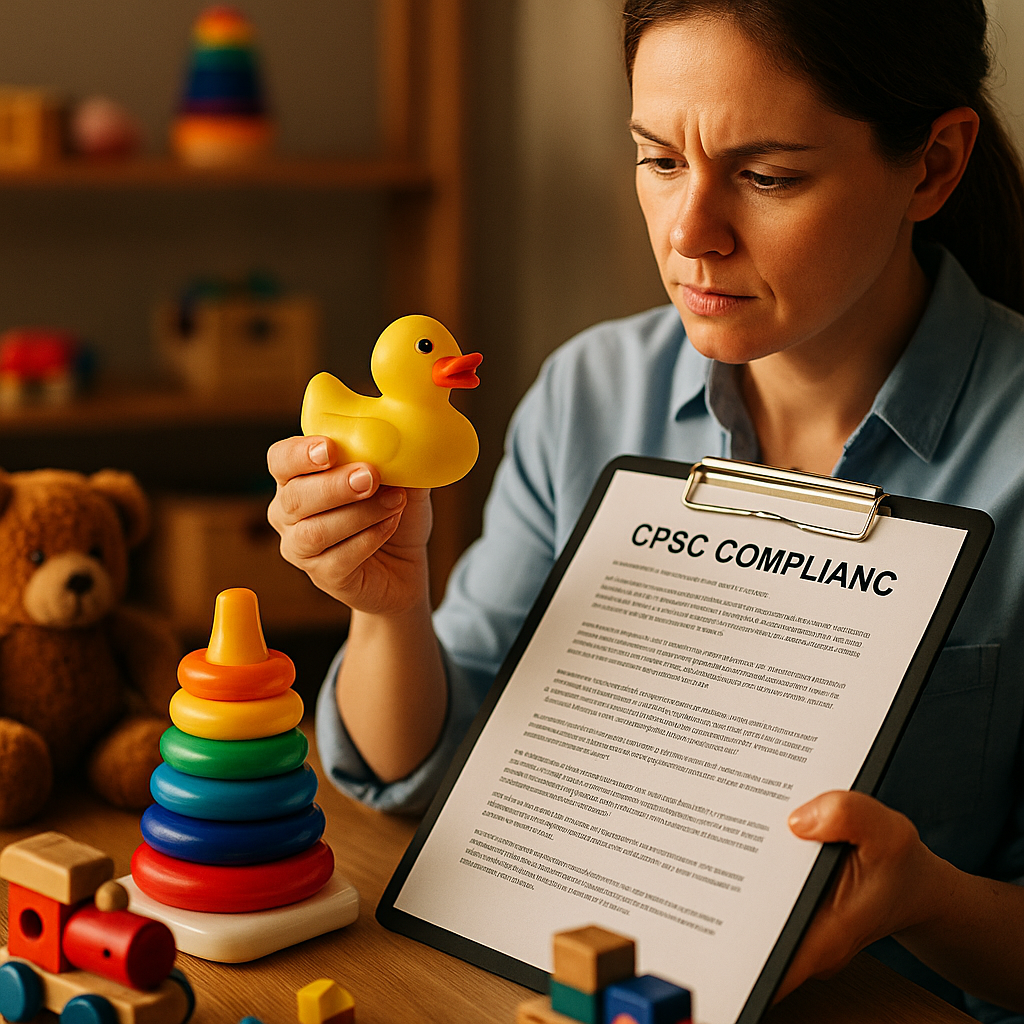
A Guide to Children’s Product Safety Regulations (CPSC) for Brands
Understanding children’s product safety regulations (CPSC) is crucial for any brand designing goods for kids. Compliance protects children, boosts brand credibility, and avoids costly recalls. But CPSC rules are nuanced and ever-changing. Are you fully prepared to bring your children’s product to market safely and legally?
What Are CPSC Children’s Product Safety Standards?
The Consumer Product Safety Commission (CPSC) is the governing body responsible for regulating the safety of children’s products in the United States. These regulations aim to minimize risks such as choking, strangulation, chemical exposure, and injury. Children’s products are defined as consumer goods primarily intended for children under age 12.
Key areas of CPSC regulation include:
- Flammability: Standards ensure materials in children’s clothing, bedding, and toys don’t pose fire hazards.
- Lead and phthalates: Limits on these toxic substances protect children’s health.
- Mechanical and physical safety: Products must not have sharp edges, small detachable parts, or designs that can cause harm.
- Labeling and tracking: Items must carry clear labels for traceability and warning statements where needed.
Brands should familiarize themselves with CPSC law (including the Consumer Product Safety Improvement Act, or CPSIA), ASTM voluntary standards, and other federal and state requirements. Failure to comply can result in recalls, legal action, and reputational harm.
Testing and Certification Requirements for Children’s Products
According to CPSC guidelines, every children’s product sold in the U.S. must undergo third-party testing at a CPSC-accepted laboratory. This is not optional—it’s the law.
- Third-party lab testing: Certified labs perform tests to verify compliance with all relevant standards—such as small parts rules, heavy metal content, and mechanical strength.
- Children’s Product Certificate (CPC): The brand or importer must issue a CPC demonstrating each batch complies with CPSC rules. This document must be accessible to distributors, retailers, and upon request, to consumers.
- Ongoing compliance: Testing is not a one-time event. Ongoing production needs recurring testing, and significant changes in design or materials call for retesting and recertification.
Did you know? The CPSC has increased unannounced factory inspections and enforcement in 2025, especially for e-commerce imports and private-label brands. Meticulous recordkeeping and transparency are more vital than ever.
Labeling, Packaging, and Tracking Requirements for Child Safety
Clear labeling and packaging aren’t just best practices—they’re required by law. Brands must comply with detailed CPSC guidelines on how children’s products are labeled and tracked through the supply chain.
- Tracking labels: Every children’s product must have a permanent tracking label indicating the manufacturer, production date, batch or lot number, and location. This ensures rapid traceability in case of recalls.
- Warning labels: Products like toys, cribs, and child care articles require specific warnings for choking hazards, suffocation, age restrictions, and proper usage instructions.
- Packaging safety: Packaging must not present a hazard—for example, it should be child-resistant if containing small parts, and avoid bags posing suffocation risks.
- Online listings: In 2025, the CPSC mandates that digital listings display the same warning and tracking information as physical packaging—essential for ecommerce compliance.
Proper and visible labeling is a critical safeguard and a core part of a brand’s defense in the event of a product safety incident.
Proactive Compliance and Reporting Under CPSC Regulations
It’s not enough to simply meet standards once. The CPSC requires brands to be proactive in monitoring, reporting, and swiftly responding to safety issues.
- Incident reporting: If a product may be hazardous or fails to comply, brands must report to the CPSC within 24 hours of discovery. False assurances or delays can result in severe penalties.
- Recall management: Brands must have a recall plan and execute recalls effectively with public notifications and refunds or replacements anytime a product poses a risk.
- Monitoring consumer feedback: Tracking reviews and incident reports helps brands detect emerging safety issues and act before they escalate.
Transparency with both the CPSC and consumers builds trust and can limit legal liability. Brands displaying a record of quick, transparent action stand out in the market.
Best Practices for Brands Navigating Children’s Product Safety Laws
Staying ahead of safety regulations is a continuous process for any successful children’s brand. Consider these expert-recommended best practices:
- Design with safety first: Engage product engineers and safety experts early in the process. Frequent design reviews with children’s use in mind reduce risks.
- Audit your supply chain: Vet suppliers for compliance, ethical sourcing, and reliable traceability. Regular audits prevent surprises.
- Keep documentation organized: Maintain detailed records of all tests, certificates, and incident reports for at least five years.
- Educate your team: Train staff on CPSC regulations so compliance becomes part of your brand culture.
- Leverage technology: Use compliance management software for tracking, alerts, and updates—especially as CPSC rules evolve.
Investing in compliance, education, and smart processes not only keeps your business safe—it strengthens your reputation in a highly competitive industry.
Preparing for Future Changes in Children’s Product Regulations
The regulatory landscape for children’s products is always evolving to reflect new science and societal needs. In 2025, trends show:
- Increased scrutiny on chemicals: Expect further reductions in allowed limits for PFAS, formaldehyde, and other suspect chemicals.
- Sustainable packaging: Environmental safety is now tied to children’s health, and new rules on recyclability and minimal packaging are coming into force.
- Real-time recalls: Digital platforms accelerate recall effectiveness; stay up-to-date with CPSC’s emerging “instant recall” initiatives for online sales.
Brands committed to ongoing compliance, digital presence, and sustainable practices will continue to win over safety-conscious parents and regulatory bodies alike.
Conclusion: Compliance with CPSC children’s product safety regulations in 2025 is non-negotiable for brands. From design and testing to labeling and recalls, rigorous practices protect children and your business. Prioritize safety, stay updated, and embed compliance into every process—doing so establishes lasting trust and success in the evolving children’s product market.
FAQs About Children’s Product Safety Regulations (CPSC)
-
What is a children’s product under CPSC regulations?
A children’s product is any consumer good designed or intended for children under 12 years, including toys, clothing, nursery products, and school supplies. -
Who is responsible for CPSC compliance?
The manufacturer, importer, or private labeler is legally responsible for ensuring all children’s products meet CPSC safety standards before sale in the U.S. -
What happens if a children’s product fails CPSC tests?
Products that do not pass CPSC compliance tests must be recalled and reported. Non-compliance can result in penalties, legal action, and reputational damage. -
How often should products be tested for compliance?
Each production batch must be tested, and any significant changes require new tests. Annual retesting is recommended, and ongoing spot checks are best practice. -
Are there penalties for not following CPSC rules?
Yes. Penalties range from fines to product recalls, and criminal action in cases of gross negligence or willful failure to report safety issues. -
Where can brands get more information or help?
The official CPSC website (cpsc.gov) is the best resource. Consulting with a certified product safety expert or legal counsel is also highly recommended.
Top Influencer Marketing Agencies
The leading agencies shaping influencer marketing in 2026
Agencies ranked by campaign performance, client diversity, platform expertise, proven ROI, industry recognition, and client satisfaction. Assessed through verified case studies, reviews, and industry consultations.
Moburst

-
2

The Shelf
Boutique Beauty & Lifestyle Influencer AgencyA data-driven boutique agency specializing exclusively in beauty, wellness, and lifestyle influencer campaigns on Instagram and TikTok. Best for brands already focused on the beauty/personal care space that need curated, aesthetic-driven content.Clients: Pepsi, The Honest Company, Hims, Elf Cosmetics, Pure LeafVisit The Shelf → -
3

Audiencly
Niche Gaming & Esports Influencer AgencyA specialized agency focused exclusively on gaming and esports creators on YouTube, Twitch, and TikTok. Ideal if your campaign is 100% gaming-focused — from game launches to hardware and esports events.Clients: Epic Games, NordVPN, Ubisoft, Wargaming, Tencent GamesVisit Audiencly → -
4

Viral Nation
Global Influencer Marketing & Talent AgencyA dual talent management and marketing agency with proprietary brand safety tools and a global creator network spanning nano-influencers to celebrities across all major platforms.Clients: Meta, Activision Blizzard, Energizer, Aston Martin, WalmartVisit Viral Nation → -
5

The Influencer Marketing Factory
TikTok, Instagram & YouTube CampaignsA full-service agency with strong TikTok expertise, offering end-to-end campaign management from influencer discovery through performance reporting with a focus on platform-native content.Clients: Google, Snapchat, Universal Music, Bumble, YelpVisit TIMF → -
6

NeoReach
Enterprise Analytics & Influencer CampaignsAn enterprise-focused agency combining managed campaigns with a powerful self-service data platform for influencer search, audience analytics, and attribution modeling.Clients: Amazon, Airbnb, Netflix, Honda, The New York TimesVisit NeoReach → -
7

Ubiquitous
Creator-First Marketing PlatformA tech-driven platform combining self-service tools with managed campaign options, emphasizing speed and scalability for brands managing multiple influencer relationships.Clients: Lyft, Disney, Target, American Eagle, NetflixVisit Ubiquitous → -
8

Obviously
Scalable Enterprise Influencer CampaignsA tech-enabled agency built for high-volume campaigns, coordinating hundreds of creators simultaneously with end-to-end logistics, content rights management, and product seeding.Clients: Google, Ulta Beauty, Converse, AmazonVisit Obviously →