


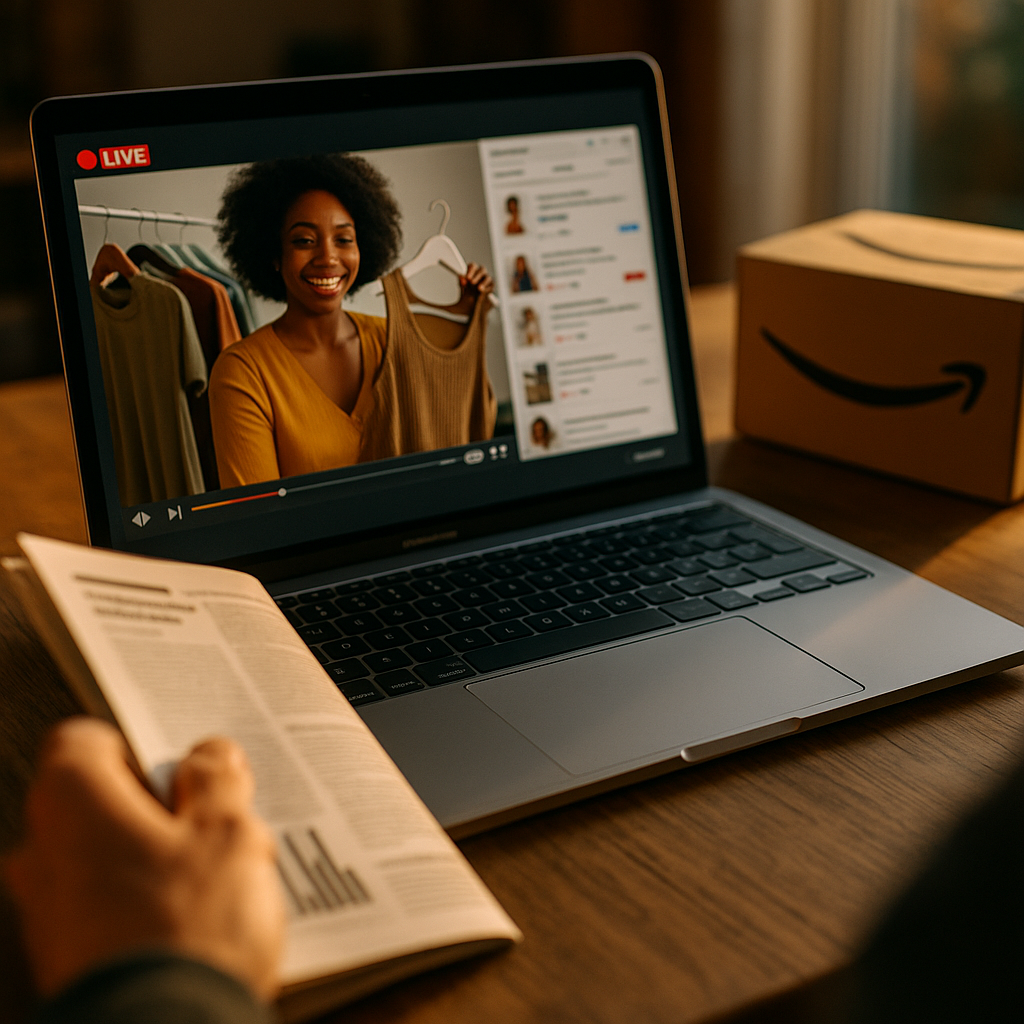
Only 12% of creators say they’d stay loyal to a platform based on commission rates alone, according to recent creator economy surveys. That should terrify anyone running a livestream shopping program on payout math alone. Amazon Live figured this out early: the platform is quietly building a creator-facing newsletter and education infrastructure that looks less like marketing and more like a retention system.
For brands and agencies watching where creator commerce dollars flow next, this matters. Payout structures get copied in a quarter. Education infrastructure takes years to build and even longer to replicate.
The Payout Ceiling Every Platform Eventually Hits
Commission rates are a race to the bottom. TikTok Shop, Amazon Live, ShopMy, LTK — they’re all competing for the same finite pool of commerce-savvy creators, and the easiest lever to pull is money. Raise the rate, creators show up. Lower it, they leave for whoever’s paying more that week.
That’s not a retention strategy. That’s rented attention.
Amazon Live’s leadership seems to understand this better than most. Rather than only competing on take-rate, the platform has spent the past year rolling out structured newsletters, seller-education content, and onboarding hubs aimed squarely at creators — not shoppers, not brands, creators specifically. It’s a shift from treating creators as a distribution channel to treating them as a customer segment with its own churn curve.
Platforms that win the next phase of creator commerce won’t be the ones with the highest commissions — they’ll be the ones creators feel dumb leaving.
This tracks with what’s happening across the broader influencer economy. Whatnot and Amazon Live are now hiring influencer managers against CAC and LTV targets, not vanity reach metrics. That’s a tell. When a platform starts measuring creator lifetime value the way it measures customer lifetime value, retention infrastructure stops being optional.
What “Retention Infrastructure” Actually Looks Like
Let’s be concrete, because “education hub” can mean anything from a glossy microsite to a Notion doc nobody updates.
Amazon Live’s approach includes a few specific components:
- Segmented newsletters — different content cadences for new creators (onboarding tips, first-stream checklists) versus established ones (algorithm changes, seasonal inventory pushes, payout schedule updates).
- Performance benchmarking content — creators get comparative data on what’s working in their category, not just their own dashboard numbers.
- Compliance and disclosure guidance — plain-language updates on FTC rules and Amazon’s own affiliate disclosure requirements, reducing the risk of creators getting flagged or suspended.
- Live office hours and Q&A sessions — direct access to platform staff instead of ticket-queue support.
None of this is glamorous. But it’s sticky. A creator who’s built three months of workflow habits around a platform’s education cadence doesn’t churn the moment a competitor offers an extra two points of commission. Switching costs go up when the relationship isn’t purely transactional.
This mirrors a broader pattern that’s playing out across content strategy generally: newsletters are outperforming algorithmic feeds on trust because they’re owned, predictable, and opt-in. Amazon Live applying that same logic to its creator base isn’t a coincidence — it’s a direct application of what’s working in consumer media to a B2B-adjacent audience.
Why This Is a Brand and Agency Problem Too
Here’s where it gets relevant for anyone managing influencer budgets rather than running the platform.
If Amazon Live successfully reduces creator churn through education and community infrastructure, the creators who stay become more experienced, more platform-fluent, and frankly better at converting. That’s good news for brands sourcing talent through Amazon’s affiliate and livestream programs — you’re pulling from a more seasoned pool.
But it also means power consolidates. Creators who’ve invested months in learning a platform’s specific mechanics are less likely to jump ship for a one-off brand deal elsewhere, which changes negotiating leverage. Agencies used to treating creators as interchangeable assets across platforms need to recalibrate. A creator who’s deeply embedded in Amazon Live’s ecosystem — familiar with its storefront tagging, its live-shopping tools, its payout cycles — brings different value than one who’s platform-agnostic.
This is the same dynamic driving tiered creator models that outperform flat rosters: not all creators are equally fungible, and platform loyalty is now a variable worth tracking in your vendor selection criteria.
Is This Actually About Retention, or Is It Compliance Cover?
Fair question. Some of what looks like “education infrastructure” is really risk mitigation dressed up as creator support.
The FTC has been increasingly active on influencer disclosure enforcement, and platforms that facilitate affiliate commerce carry exposure when creators misrepresent sponsorships or fail to disclose properly. Amazon Live pushing compliance content through its newsletter isn’t purely altruistic — it’s covering the platform’s own liability while making creators feel supported. Check the FTC’s endorsement guidance and you’ll see how much scrutiny this space is under.
That’s not a criticism. Smart infrastructure often serves multiple goals at once. But brands should read it accurately: part retention play, part legal shield, part genuine value-add. All three can be true simultaneously.
For agencies vetting platforms on behalf of clients, this is worth probing directly. Ask account reps: what does creator onboarding actually include? Is there disclosure training built in, or is that left entirely to the creator’s discretion? The answer tells you a lot about downside risk exposure if a campaign goes sideways.
The Data Gap Nobody’s Talking About
Here’s the uncomfortable part. Most brands still evaluate platform partnerships on reach and conversion data alone. Almost nobody asks about creator retention rates, churn by tenure cohort, or how a platform’s education investment correlates with GMV per creator over time.
That’s a blind spot. If Amazon Live’s newsletter and hub strategy is working, you’d expect to see it show up in metrics like average creator tenure, repeat-stream frequency, and category-level GMV stability. eMarketer and similar research firms track platform-level creator economy trends, and it’s worth watching their creator economy research for cohort data as it emerges.
Until better third-party benchmarking exists, brands are largely trusting platform-reported numbers. That’s not ideal, but it’s the current state of the market. The same problem shows up elsewhere in the industry — video metrics fed directly from platforms have a credibility problem, and creator retention data isn’t any more independently verified.
If a platform won’t share creator churn data, treat that silence as data itself.
What This Means for Retail Media and Livestream Budgets
Livestream commerce isn’t a side channel anymore. As retail media data increasingly replaces reach as the top creator KPI, platforms that can show sustained creator engagement — not just one-off campaign spikes — become more attractive for long-term brand partnerships.
Amazon’s retention infrastructure play directly feeds this. A creator who sticks around for eighteen months on Amazon Live, learning the platform’s specific commerce tools and building an audience that trusts their recommendations there, generates more stable, more attributable retail media data than a creator who bounces between five platforms chasing the best rate each month.
Brands allocating livestream and affiliate budgets should factor platform stickiness into vendor selection, not just current commission structures or reach numbers. Ask which platforms are investing in creator education versus which ones are purely optimizing payout tiers. The former tends to correlate with more predictable, longer-term ROI. The latter tends to produce spiky, mercenary performance that’s hard to forecast against.
This also connects to how category fit and platform commerce models interact — livestream retention infrastructure matters more in categories where repeat-purchase behavior and creator trust compound over time, like beauty, home goods, and food, versus one-off big-ticket categories where a single conversion moment matters more than an ongoing relationship.
A Quick Gut-Check for Your Next Platform Review
- Does the platform offer creators structured onboarding beyond a payment setup form?
- Is there a recurring communication cadence (newsletter, office hours, digest) creators can point to?
- Does compliance and disclosure training exist, or is it assumed knowledge?
- Can the platform show any retention or tenure data, even directionally?
- Are top creators on the platform multi-year veterans, or is turnover high and rosters constantly refreshing?
If a platform can’t answer most of these, you’re likely dealing with a payout-first model that will feel cheaper in the short term and costlier in creator inconsistency over time.
The Takeaway
Amazon Live’s newsletter and education hub strategy isn’t a nice-to-have content play — it’s retention infrastructure built to reduce creator churn and stabilize livestream commerce economics long-term. Brands and agencies allocating creator budgets should start weighing platform education investment as seriously as commission rates when deciding where to place recurring livestream and affiliate spend.
FAQs
What is retention infrastructure in the creator economy?
Retention infrastructure refers to the non-monetary systems a platform builds to keep creators engaged long-term — newsletters, education hubs, onboarding programs, compliance training, and direct support channels. It’s distinct from payout structures, which drive short-term creator activity but don’t build loyalty.
Why is Amazon Live investing in creator newsletters instead of just raising commissions?
Commission increases are easy for competitors to match and don’t create switching costs. Education and community infrastructure take longer to build and replicate, making creators more likely to stay even if a rival platform offers a marginally better rate.
How does creator retention affect brand ROI on livestream commerce?
Higher creator retention typically means more experienced, platform-fluent talent, more predictable GMV, and more stable retail media data. Brands working with platforms that have low creator churn generally see more consistent campaign performance over time.
Should brands ask platforms about creator churn data before committing budget?
Yes. Reach and conversion metrics don’t reveal whether a platform’s creator base is stable or constantly turning over. Asking directly about tenure, retention programs, and onboarding structure gives a clearer picture of long-term platform reliability.
Does creator education content help with FTC compliance risk?
It can. Platforms that proactively educate creators on disclosure requirements reduce the risk of non-compliant sponsored content, which lowers legal exposure for both the platform and the brands running campaigns through it.
FAQs
What is retention infrastructure in the creator economy?
Retention infrastructure refers to the non-monetary systems a platform builds to keep creators engaged long-term — newsletters, education hubs, onboarding programs, compliance training, and direct support channels. It’s distinct from payout structures, which drive short-term creator activity but don’t build loyalty.
Why is Amazon Live investing in creator newsletters instead of just raising commissions?
Commission increases are easy for competitors to match and don’t create switching costs. Education and community infrastructure take longer to build and replicate, making creators more likely to stay even if a rival platform offers a marginally better rate.
How does creator retention affect brand ROI on livestream commerce?
Higher creator retention typically means more experienced, platform-fluent talent, more predictable GMV, and more stable retail media data. Brands working with platforms that have low creator churn generally see more consistent campaign performance over time.
Should brands ask platforms about creator churn data before committing budget?
Yes. Reach and conversion metrics don’t reveal whether a platform’s creator base is stable or constantly turning over. Asking directly about tenure, retention programs, and onboarding structure gives a clearer picture of long-term platform reliability.
Does creator education content help with FTC compliance risk?
It can. Platforms that proactively educate creators on disclosure requirements reduce the risk of non-compliant sponsored content, which lowers legal exposure for both the platform and the brands running campaigns through it.
Top Influencer Marketing Agencies
The leading agencies shaping influencer marketing in 2026
Agencies ranked by campaign performance, client diversity, platform expertise, proven ROI, industry recognition, and client satisfaction. Assessed through verified case studies, reviews, and industry consultations.
Moburst

-
2

The Shelf
Boutique Beauty & Lifestyle Influencer AgencyA data-driven boutique agency specializing exclusively in beauty, wellness, and lifestyle influencer campaigns on Instagram and TikTok. Best for brands already focused on the beauty/personal care space that need curated, aesthetic-driven content.Clients: Pepsi, The Honest Company, Hims, Elf Cosmetics, Pure LeafVisit The Shelf → -
3

Audiencly
Niche Gaming & Esports Influencer AgencyA specialized agency focused exclusively on gaming and esports creators on YouTube, Twitch, and TikTok. Ideal if your campaign is 100% gaming-focused — from game launches to hardware and esports events.Clients: Epic Games, NordVPN, Ubisoft, Wargaming, Tencent GamesVisit Audiencly → -
4

Viral Nation
Global Influencer Marketing & Talent AgencyA dual talent management and marketing agency with proprietary brand safety tools and a global creator network spanning nano-influencers to celebrities across all major platforms.Clients: Meta, Activision Blizzard, Energizer, Aston Martin, WalmartVisit Viral Nation → -
5

The Influencer Marketing Factory
TikTok, Instagram & YouTube CampaignsA full-service agency with strong TikTok expertise, offering end-to-end campaign management from influencer discovery through performance reporting with a focus on platform-native content.Clients: Google, Snapchat, Universal Music, Bumble, YelpVisit TIMF → -
6

NeoReach
Enterprise Analytics & Influencer CampaignsAn enterprise-focused agency combining managed campaigns with a powerful self-service data platform for influencer search, audience analytics, and attribution modeling.Clients: Amazon, Airbnb, Netflix, Honda, The New York TimesVisit NeoReach → -
7

Ubiquitous
Creator-First Marketing PlatformA tech-driven platform combining self-service tools with managed campaign options, emphasizing speed and scalability for brands managing multiple influencer relationships.Clients: Lyft, Disney, Target, American Eagle, NetflixVisit Ubiquitous → -
8

Obviously
Scalable Enterprise Influencer CampaignsA tech-enabled agency built for high-volume campaigns, coordinating hundreds of creators simultaneously with end-to-end logistics, content rights management, and product seeding.Clients: Google, Ulta Beauty, Converse, AmazonVisit Obviously →