


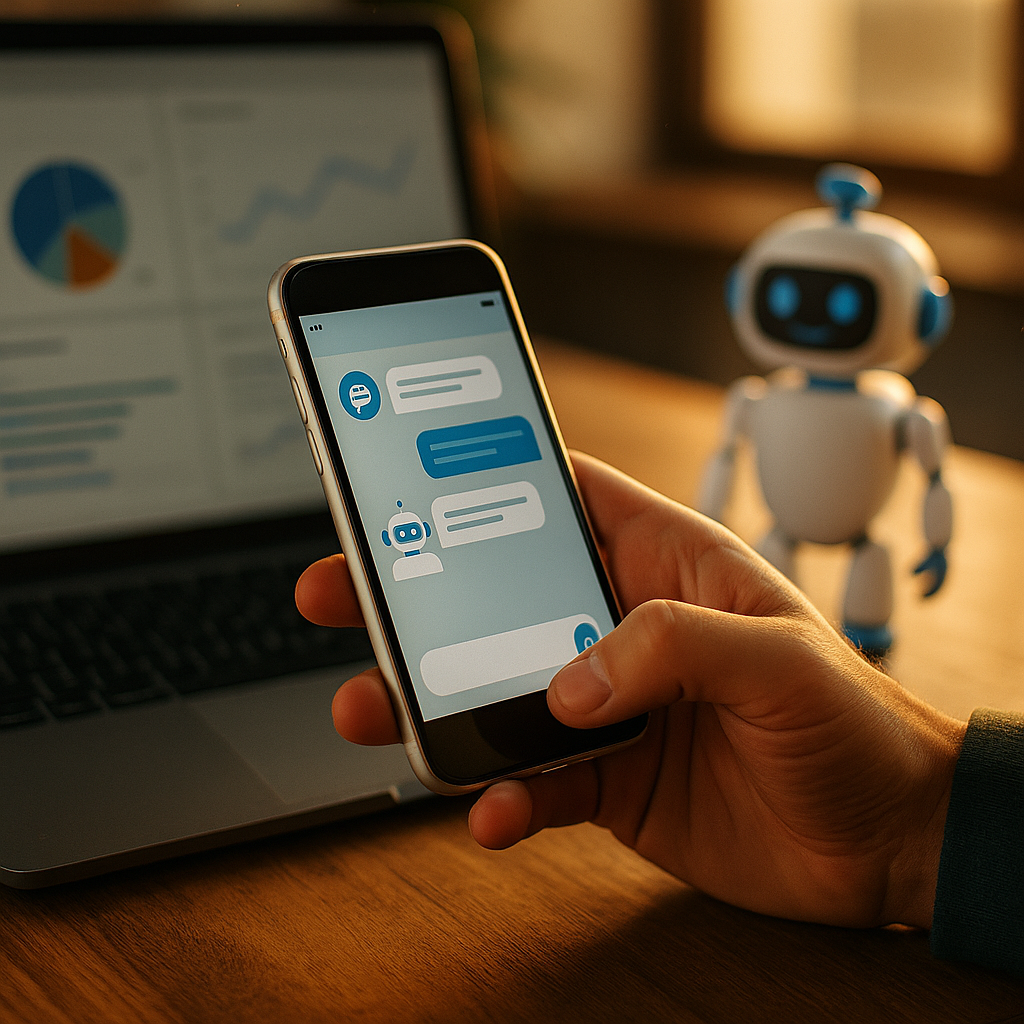
The rise of conversational marketing and AI chatbots has transformed how brands engage with customers in 2025. Businesses now leverage real-time, personalized experiences to boost conversion rates and customer satisfaction. This shift isn’t just a passing trend—it’s fundamentally redefining digital marketing. Ready to discover how conversational AI is reshaping the future of customer engagement? Dive in below.
What Is Conversational Marketing? The New Standard in Customer Engagement
Conversational marketing harnesses real-time, one-on-one interactions to guide customers through the buying journey. Unlike traditional marketing tactics, it emphasizes personalized dialogues, using tools like live chat, messaging apps, and now AI chatbots. This methodology helps brands address individual needs instantly, fostering trust and streamlining decision-making. In 2025, it has become a core expectation for customer-centric businesses across all sectors.
Recent studies show that 71% of consumers now expect companies to offer conversational experiences on their websites. As a result, conversational marketing is no longer an optional strategy—it’s pivotal for companies aiming for competitive differentiation and enhanced loyalty.
AI Chatbots: Revolutionizing Real-Time Sales Conversations
AI chatbots are at the heart of the conversational marketing evolution. Equipped with natural language processing and machine learning, these bots interact seamlessly with users—answering questions, recommending products, and even finalizing purchases round-the-clock. In 2025, advances in AI have made chatbots more intuitive, empathetic, and capable of handling complex, multi-turn conversations.
Consider this: recent data from Statista indicates that 80% of customer interactions are now managed by AI chatbots without human intervention. Businesses gain efficiency, customers receive immediate responses, and sales cycles shrink dramatically—resulting in a clear win-win dynamic.
Enhancing the Customer Journey with Personalized Messaging
The true power of AI chatbots lies in their capacity to deliver hyper-personalized messaging at scale. Thanks to deep learning and data analytics, chatbots analyze customer history, preferences, and behaviors to tailor responses and product recommendations. This personalization extends across all touchpoints—from first website visit to post-purchase support.
Benefits of personalized AI chatbot interactions include:
- Higher customer satisfaction and trust
- Increased conversion rates and average order values
- Stronger brand loyalty due to memorable experiences
Brands using AI chatbots for personalized conversational marketing report up to a 35% lift in engagement and sales compared to traditional digital marketing alone.
Best Practices for Implementing Conversational Marketing Tools
Integrating conversational marketing solutions requires strategic planning. Here’s how to ensure your chatbot delivers real value and upholds Google’s EEAT (Experience, Expertise, Authoritativeness, Trustworthiness) standards:
- Understand Your Customer Journey: Map out every interaction point. Use AI chatbots where they add maximum value—such as lead qualification, support FAQs, or product recommendations.
- Focus on Transparency: Make sure users know when they’re chatting with a bot versus a human. This builds trust and sets expectations.
- Train and Refine Continuously: Regularly update your AI models with new data to improve accuracy and empathy. Solicit user feedback to guide enhancements.
- Maintain Privacy and Security: Prioritize data protection. Clearly explain privacy policies and ensure your chatbot complies with regulations and best practices.
- Integrate Seamlessly with Human Support: Ensure a smooth transition from bot to human agent when higher-level assistance is needed, without disrupting the user experience.
Challenges and Opportunities in Conversational AI Adoption
While AI chatbots unlock exceptional opportunities, implementing them isn’t without challenges. Key obstacles include data privacy concerns, language nuances, and ensuring bots deliver authentic, human-like interactions. However, with advanced training methods and ethical AI design, these barriers are rapidly diminishing in 2025.
On the opportunity side, companies that focus on ethical, user-centered design are setting new standards in customer trust and engagement. By leveraging conversational analytics, businesses gain deeper behavioral insights and can rapidly adjust strategies, maintaining agility in a dynamic market.
The Future: Conversational Marketing and AI Chatbots in 2025 and Beyond
The fusion of conversational marketing and AI-powered chatbots is creating a future where brands feel more accessible, responsive, and empathetic. Looking ahead, expect to see greater adoption of multimodal AI—voice, visual, and text chat merged seamlessly. As generative AI models continue to advance, chatbots will be able to hold longer, richer, and more context-aware conversations, further blurring the lines between automated and human interaction.
In 2025, businesses that invest in advanced conversational marketing solutions are already experiencing reduced churn, increased customer lifetime value, and more effective marketing ROI. The message is clear: the age of interactive, AI-driven brand engagement has arrived.
Conclusion: Embracing the Conversational Revolution with AI Chatbots
Conversational marketing and AI chatbots redefine the way brands connect and convert in 2025. Companies that embrace this technology offer better experiences and drive tangible business results. To stay ahead, prioritize authentic, personalized customer conversations powered by reliable AI—your growth depends on it.
Frequently Asked Questions
-
What is conversational marketing?
Conversational marketing is a customer engagement approach that uses real-time, personalized interactions—through chatbots, live chat, and messaging apps—to move prospects through the sales funnel more efficiently.
-
How do AI chatbots work in conversational marketing?
AI chatbots leverage natural language processing and machine learning to understand user queries, deliver tailored responses, recommend products, and provide instant support—improving customer experience and operational efficiency.
-
Are AI chatbots replacing human agents?
AI chatbots handle routine queries and tasks, freeing human agents to manage complex or sensitive interactions. The best solutions integrate both, ensuring efficiency and a seamless escalation process for users.
-
What are the main benefits of conversational marketing?
Conversational marketing speeds up lead qualification, increases engagement and conversions, offers 24/7 support, and provides personalized experiences that foster loyalty and long-term value.
-
How can businesses start with conversational marketing in 2025?
Begin by mapping your customer journey, selecting a reliable AI chatbot platform, training the bot on your brand voice and FAQs, and consistently analyzing performance to refine user experiences.
Top Influencer Marketing Agencies
The leading agencies shaping influencer marketing in 2026
Agencies ranked by campaign performance, client diversity, platform expertise, proven ROI, industry recognition, and client satisfaction. Assessed through verified case studies, reviews, and industry consultations.
Moburst

-
2

The Shelf
Boutique Beauty & Lifestyle Influencer AgencyA data-driven boutique agency specializing exclusively in beauty, wellness, and lifestyle influencer campaigns on Instagram and TikTok. Best for brands already focused on the beauty/personal care space that need curated, aesthetic-driven content.Clients: Pepsi, The Honest Company, Hims, Elf Cosmetics, Pure LeafVisit The Shelf → -
3

Audiencly
Niche Gaming & Esports Influencer AgencyA specialized agency focused exclusively on gaming and esports creators on YouTube, Twitch, and TikTok. Ideal if your campaign is 100% gaming-focused — from game launches to hardware and esports events.Clients: Epic Games, NordVPN, Ubisoft, Wargaming, Tencent GamesVisit Audiencly → -
4

Viral Nation
Global Influencer Marketing & Talent AgencyA dual talent management and marketing agency with proprietary brand safety tools and a global creator network spanning nano-influencers to celebrities across all major platforms.Clients: Meta, Activision Blizzard, Energizer, Aston Martin, WalmartVisit Viral Nation → -
5

The Influencer Marketing Factory
TikTok, Instagram & YouTube CampaignsA full-service agency with strong TikTok expertise, offering end-to-end campaign management from influencer discovery through performance reporting with a focus on platform-native content.Clients: Google, Snapchat, Universal Music, Bumble, YelpVisit TIMF → -
6

NeoReach
Enterprise Analytics & Influencer CampaignsAn enterprise-focused agency combining managed campaigns with a powerful self-service data platform for influencer search, audience analytics, and attribution modeling.Clients: Amazon, Airbnb, Netflix, Honda, The New York TimesVisit NeoReach → -
7

Ubiquitous
Creator-First Marketing PlatformA tech-driven platform combining self-service tools with managed campaign options, emphasizing speed and scalability for brands managing multiple influencer relationships.Clients: Lyft, Disney, Target, American Eagle, NetflixVisit Ubiquitous → -
8

Obviously
Scalable Enterprise Influencer CampaignsA tech-enabled agency built for high-volume campaigns, coordinating hundreds of creators simultaneously with end-to-end logistics, content rights management, and product seeding.Clients: Google, Ulta Beauty, Converse, AmazonVisit Obviously →