


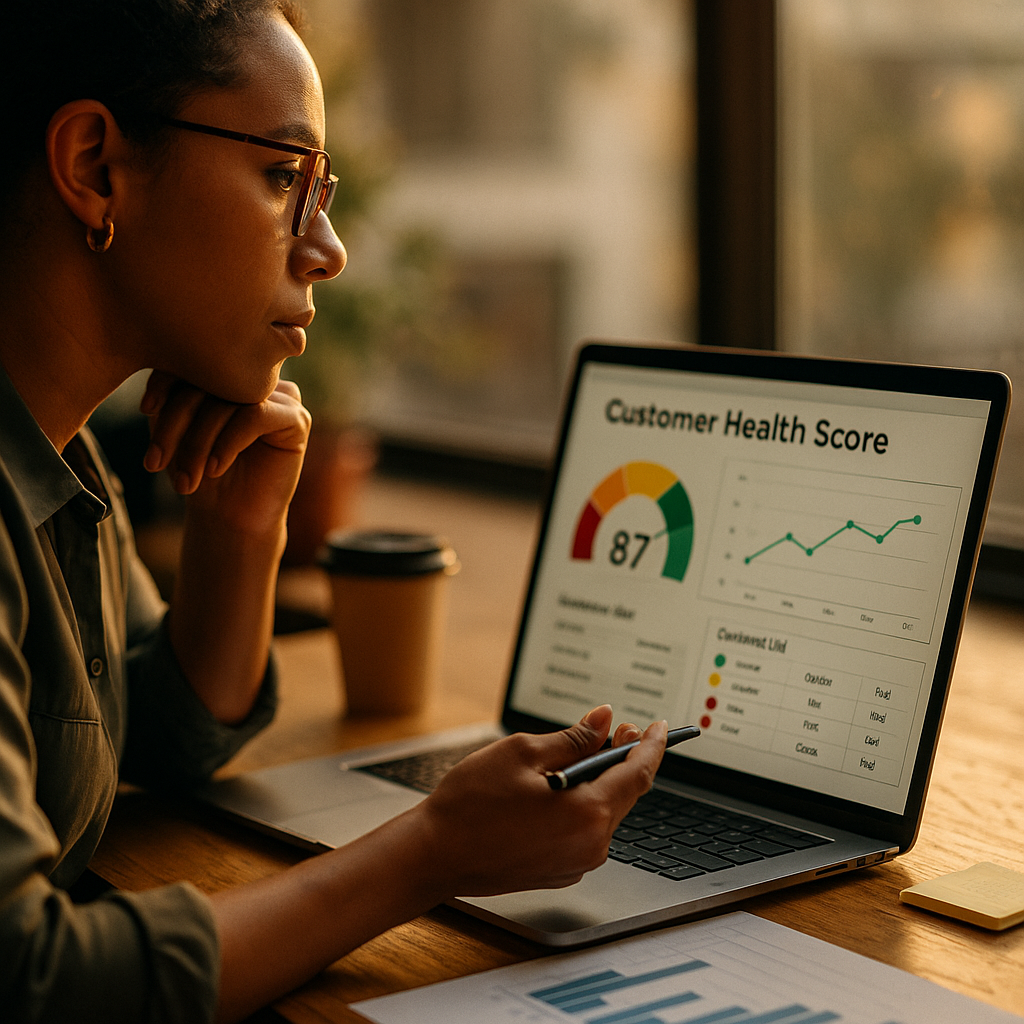
A robust customer health score model offers organizations a data-driven way to predict customer behavior and enhance retention. By assigning measurable values to customer interactions, businesses gain actionable insights to inform strategic decisions. But what does building an effective customer health score really involve? Explore the essential steps, best practices, and cutting-edge strategies in this comprehensive guide.
Understanding Customer Health Score Fundamentals
At its core, a customer health score is a composite metric reflecting the strength of a customer’s relationship with your brand. Unlike a single metric, a customer health score model combines multiple data points—such as product usage, support interactions, and financial activity—to assess overall engagement and satisfaction. This holistic view helps account and success teams prioritize outreach and reduce churn risks.
According to a 2024 Forrester Research survey, nearly 73% of SaaS enterprises that implemented a well-defined customer health score model saw an improvement in renewal rates and upsell opportunities. By unifying diverse customer signals, the model transforms disparate data into actionable intelligence that supports proactive engagement.
Selecting Customer Engagement Metrics to Track
Choosing the right customer health score metrics is critical. The most effective models leverage a mix of quantitative and qualitative metrics tailored to your customer journey. Common quantitative metrics include:
- Product adoption: Frequency and depth of feature usage
- Recurring revenue: Timeliness and amount of payments
- Support tickets: Number, type, and resolution speed
- Login frequency: How often users access the platform
Qualitative signals also matter. Customer sentiment—derived from feedback surveys, net promoter scores (NPS), and direct conversations—provides vital context. Top-performing companies blend these insights with behavioral data to score customers reliably.
Before finalizing your model, interview both frontline teams and customers. This practice ensures the selected engagement metrics align with real pain points and business objectives, fostering greater buy-in and long-term accuracy.
Data Integration and Customer Health Score Automation
Integrating customer data across multiple systems underpins any successful customer health score automation effort. Relying only on siloed CRM data often results in blind spots. Instead, merge data from CRM, helpdesk, payment processors, product analytics, and survey tools for a unified view.
Modern customer health score software—like Gainsight, Totango, and in-house platforms—automates data aggregation and scoring. These tools update scores in real time, flagging at-risk accounts instantly. Automation reduces manual labor, delivers consistency, and empowers teams to act on the freshest customer insights.
In 2025, with API integrations now more accessible and secure, there are fewer excuses for not connecting data pipelines. Rigorous back-end integration ensures your customer health score reflects current realities and triggers timely workflows for retention, upselling, or customer education.
Weighting and Calculating the Customer Health Score
Once you’ve chosen your data sources, the next step is defining your customer success metrics weighting. Not all signals carry equal importance. For example, product adoption might be a stronger indicator of long-term loyalty than frequent support tickets (which could signal dissatisfaction).
Use historical data and statistical analysis to determine the predictive value of each metric. Begin with a baseline (such as equal weights) and iterate. Leverage machine learning or regression models to scientifically adjust weights as you observe actual customer outcomes. Avoid “set-and-forget”—consistently review how weighting influences real retention and expansion results.
Transparency is critical. Document your weighting rationale and share it with all stakeholders. Engaged teams are better positioned to interpret scores accurately and take appropriate action.
Interpreting Scores to Drive Proactive Customer Success
A well-calibrated customer health score model is only powerful if it prompts specific, effective actions. Teams should interpret health scores within the context of each account’s journey stage and historical performance. Here’s how leading companies put scores to work:
- Early warning system: Low scores or sudden drops trigger intervention playbooks (e.g., personalized outreach, product training).
- Opportunity identification: Consistently high scores can indicate readiness for upsell conversations or customer advocacy programs.
- Resource prioritization: Focus human effort where it has the most impact, while automating low-risk account monitoring.
Provide customer-facing teams with detailed score breakdowns—not just a single number, but what’s driving it. This encourages more personalized, effective customer care. Recent industry data shows that organizations using health scores to inform outreach reduced their average churn rates by 18% in 2024–2025.
Best Practices for Continuous Model Improvement
Building a customer health score model isn’t a one-time project; it’s an evolving process. To maximize long-term impact:
- Validate regularly: Conduct quarterly score-to-outcome analyses. Check whether your “unhealthy” customers are truly at risk—and if “healthy” ones are still growing.
- Solicit feedback: Ask customer-facing teams for qualitative assessment of score accuracy. Adjust metrics or weighting, as needed.
- Monitor data quality: Audit integrations and source systems to ensure ongoing data reliability. Outdated or inconsistent data can undermine the model.
- Adapt to business changes: Update the model as your product, customer journey, or value propositions evolve. Don’t let your score get stuck in the past.
The most agile organizations treat customer health scoring as a living process, allocating resources to continuous improvement and leveraging advances in analytics and AI to further refine predictive accuracy.
FAQs on Building a Customer Health Score Model
-
What is a customer health score model?
A customer health score model is a framework combining diverse metrics—such as engagement, financial activity, and sentiment—to yield a composite score indicating overall customer relationship strength. This score guides teams to proactively manage churn and identify growth opportunities.
-
How do you choose the right metrics for your model?
Work closely with internal teams and customers to identify metrics that reflect real-world engagement and risk. Blend quantitative data (like product usage and payments) with qualitative insights (such as survey feedback) to get a balanced, predictive view.
-
How often should you update your customer health score model?
You should review and adjust your model at least quarterly. As customer behavior or business offerings change, revisit data sources, metrics, and weights to ensure accuracy and ongoing relevance.
-
Can smaller businesses benefit from customer health scores?
Absolutely. While enterprise-scale tools offer automation, even smaller organizations can manually track key metrics, assign weights, and spot early signs of churn or expansion potential. Over time, as data and resources grow, automation can be introduced.
Building an effective customer health score model delivers actionable insights that boost retention, expansion, and overall satisfaction. By integrating the right data, applying considered weighting, and adopting a culture of continuous improvement, any business can turn raw customer signals into a strategic growth engine for 2025 and beyond.
Top Influencer Marketing Agencies
The leading agencies shaping influencer marketing in 2026
Agencies ranked by campaign performance, client diversity, platform expertise, proven ROI, industry recognition, and client satisfaction. Assessed through verified case studies, reviews, and industry consultations.
Moburst

-
2

The Shelf
Boutique Beauty & Lifestyle Influencer AgencyA data-driven boutique agency specializing exclusively in beauty, wellness, and lifestyle influencer campaigns on Instagram and TikTok. Best for brands already focused on the beauty/personal care space that need curated, aesthetic-driven content.Clients: Pepsi, The Honest Company, Hims, Elf Cosmetics, Pure LeafVisit The Shelf → -
3

Audiencly
Niche Gaming & Esports Influencer AgencyA specialized agency focused exclusively on gaming and esports creators on YouTube, Twitch, and TikTok. Ideal if your campaign is 100% gaming-focused — from game launches to hardware and esports events.Clients: Epic Games, NordVPN, Ubisoft, Wargaming, Tencent GamesVisit Audiencly → -
4

Viral Nation
Global Influencer Marketing & Talent AgencyA dual talent management and marketing agency with proprietary brand safety tools and a global creator network spanning nano-influencers to celebrities across all major platforms.Clients: Meta, Activision Blizzard, Energizer, Aston Martin, WalmartVisit Viral Nation → -
5

The Influencer Marketing Factory
TikTok, Instagram & YouTube CampaignsA full-service agency with strong TikTok expertise, offering end-to-end campaign management from influencer discovery through performance reporting with a focus on platform-native content.Clients: Google, Snapchat, Universal Music, Bumble, YelpVisit TIMF → -
6

NeoReach
Enterprise Analytics & Influencer CampaignsAn enterprise-focused agency combining managed campaigns with a powerful self-service data platform for influencer search, audience analytics, and attribution modeling.Clients: Amazon, Airbnb, Netflix, Honda, The New York TimesVisit NeoReach → -
7

Ubiquitous
Creator-First Marketing PlatformA tech-driven platform combining self-service tools with managed campaign options, emphasizing speed and scalability for brands managing multiple influencer relationships.Clients: Lyft, Disney, Target, American Eagle, NetflixVisit Ubiquitous → -
8

Obviously
Scalable Enterprise Influencer CampaignsA tech-enabled agency built for high-volume campaigns, coordinating hundreds of creators simultaneously with end-to-end logistics, content rights management, and product seeding.Clients: Google, Ulta Beauty, Converse, AmazonVisit Obviously →