


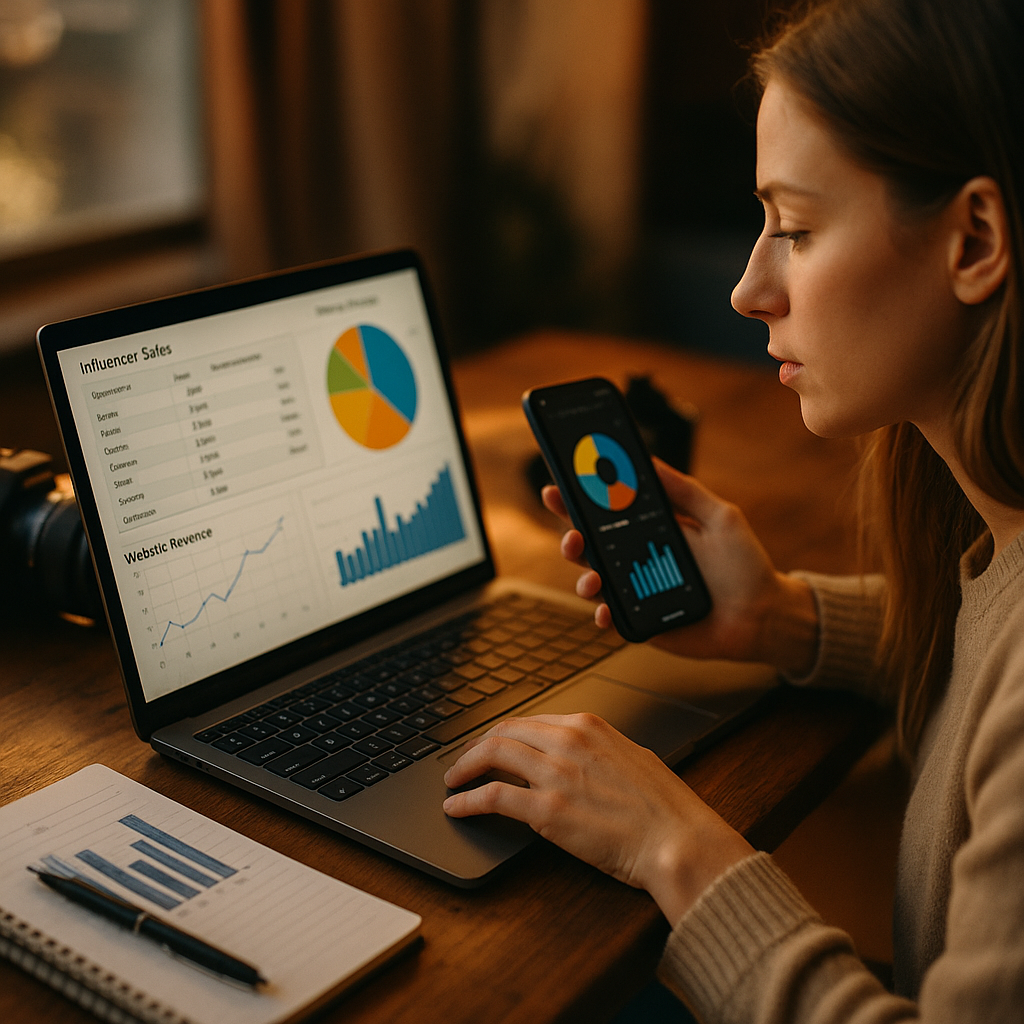
Understanding which influencers drive sales is critical in 2025’s competitive digital landscape. Choosing the right tools for influencer sales attribution modeling empowers brands to optimize influencer marketing spend and prove ROI. In this article, we’ll explore the top platforms and strategies to accurately attribute influencer-driven conversions and maximize your campaigns. Ready to measure what truly matters in influencer marketing?
Why Accurate Influencer Sales Attribution Matters
Before investing in tools, it’s essential to recognize why influencer sales attribution modeling is fundamental. Influencer marketing budgets have surged, with influencers generating up to 11x higher ROI than traditional ads, according to recent eMarketer data. Yet, poor visibility on which influencers drive sales leads to wasted spend and misinformed decisions. Accurate attribution ensures brands:
- Identify top-performing influencers and content
- Allocate budgets efficiently
- Reward authenticity and tangible results
- Refine future collaborations with data-driven insights
Effective attribution not only incentivizes influencers to perform but also defends marketing spend for stakeholders keen on seeing proof of value.
Core Features to Seek in Influencer Attribution Solutions
Selecting the right attribution tools means knowing the features that deliver real measurement and compliance. In 2025, leading platforms must offer:
- Multi-touch attribution: Assess the influence of each creator at multiple steps in the customer journey.
- First-party integration: Direct connection with your own eCommerce and CRM systems for clean, privacy-compliant data, now crucial after third-party cookie deprecation.
- Cross platform tracking: Covering Instagram, TikTok, YouTube, and emerging channels to capture omnichannel influence.
- Automated reporting and dashboards: Allowing brands to visualize, analyze and act fast on insights.
- Promo code and affiliate link tracking: Measuring direct influencer sales and awareness-driven conversions.
- Fraud detection: Filtering out fake engagement, bot traffic, and ensuring accuracy.
These capabilities not only help track short-term sales spikes but also longer funnel impacts, including brand lift and new customer acquisition.
Top Tools for Influencer Sales Attribution Modeling
Here are acclaimed platforms in 2025 helping brands achieve granular influencer sales attribution:
- Impact.com
Renowned for robust partner management and influencer attribution, Impact.com supports multi-touch attribution and integrates deep with eCommerce stores. Customizable analytics, affiliate tracking, and advanced fraud detection make it a top choice for global brands. - LTK (formerly LikeToKnowIt)
Perfect for retail and DTC brands, LTK offers comprehensive influencer tracking with direct checkout integration. Their attribution technology tracks multi-channel performance, provides automated commission payments, and generates tailored attribution reports. - Shopify Collabs
Best for Shopify users, Collabs allows store owners to create unique affiliate links, automate influencer payments, and track sales and audience analytics from a unified dashboard—all on a first-party basis, crucial for accurate data in a privacy-centric era. - Affable.ai
Lauded for AI-powered influencer discovery and sales attribution, Affable.ai captures both direct and assisted conversions, offering transparent ROI metrics and fraud protection features. Their emphasis on enterprise data security appeals to major brands. - Trackier Influencer Marketing Platform
Offering real-time campaign tracking and bulk influencer onboarding, Trackier’s flexible touchpoint attribution modeling helps brands visualize each creator’s true contribution, from awareness to final sale, in diverse verticals.
When selecting, consider compatibility with your tech stack, user experience, and level of customer support, as these factors will influence adoption and results.
Integrating Influencer Attribution Tools with Existing Martech Stacks
Effective influencer sales attribution thrives on seamless integration. Connecting your chosen attribution tool to CRM, eCommerce, analytics, and ad platforms lets brands:
- Merge offline and online sales data for more holistic reporting
- Identify repeat customers activated by influencers
- Automate commission payouts and compliance records
- Trigger personalized follow-ups to influencer-referred leads
For instance, integrating with Salesforce or HubSpot ensures a closed-loop view, mapping influencer-driven leads right through to sales. Leveraging webhooks or APIs expedites data flows and simplifies omnichannel attribution visualization.
Overcoming Challenges in Influencer Sales Attribution
While tools have advanced, sales attribution via influencers remains complex. Here’s how top-performing brands address ongoing challenges:
- Dark social: Many conversions happen off public feeds. Utilizing promo codes, unique URLs, and post-purchase surveys helps capture this activity.
- Long consideration cycles: Some purchases occur weeks after initial influencer contact. Tools with view-through conversion windows and multi-touch models more accurately reflect incremental impact.
- Platform restrictions: Social networks constantly change their tracking permissions. Prioritize tools that partner closely with networks to ensure access to the latest APIs and compliant tracking methods.
- Fraud and fake engagement: Robust anti-fraud algorithms, outlined earlier, are non-negotiable for maintaining data integrity.
Consistent training and process documentation help marketing teams fully utilize these tools and interpret results correctly.
Best Practices for Maximizing Attribution Insights
To make the most of influencer attribution modeling tools, ensure you:
- Define clear KPIs upfront: Know what you need to measure: sales, leads, brand lift, or combined metrics.
- Use unique codes or links in every campaign: This is vital for linking influencer content directly to sales.
- Regularly audit and optimize integrations: Keep systems and tracking methods up-to-date as both laws and platforms evolve.
- Combine quantitative and qualitative insights: Sales data paired with influencer content analysis reveals the “why” behind top-performing partnerships.
- Foster transparent influencer relationships: Share performance data with creators. This helps them improve and builds lasting partnerships.
With disciplined measurement and collaboration, brands can continually refine strategy to turn influence into measurable business growth.
Conclusion
Choosing the right tools for influencer sales attribution modeling unlocks powerful, actionable insights for growth in 2025. By prioritizing robust features, seamless integrations, and best practices, brands convert influencer investments into measurable, repeatable results. Start with one tool, commit to data-driven refinement, and build a marketing engine where every influencer partnership proves its value.
FAQs About Tools for Influencer Sales Attribution Modeling
- What is influencer sales attribution?
Influencer sales attribution is the process of identifying and measuring the exact sales or conversions driven by influencer marketing activities, using specialized tools and tracking methods to link influencer content to business outcomes. - Are promo codes or unique links better for attribution?
Both have strengths. Promo codes track redemptions directly, especially in eCommerce, while unique links capture clicks and can track assisted conversions. Using both provides the most accurate measurements. - Can these tools track ROI across multiple platforms?
Yes. Leading tools support multi-channel and multi-touch attribution across platforms like Instagram, TikTok, YouTube, and even blogs, providing unified reporting on influencer ROI. - How do influencer attribution tools handle privacy regulations?
The best attribution platforms use first-party data, comply with GDPR and CCPA, and update tracking methods as privacy rules evolve—ensuring accurate, lawful measurement. - What if an influencer drives sales, but through “dark social” (e.g., private DMs)?
Attribution tools can use indirect measures such as post-purchase surveys, unique codes, and credit surveys to capture dark social-driven conversions that aren’t visible via standard tracking.
Top Influencer Marketing Agencies
The leading agencies shaping influencer marketing in 2026
Agencies ranked by campaign performance, client diversity, platform expertise, proven ROI, industry recognition, and client satisfaction. Assessed through verified case studies, reviews, and industry consultations.
Moburst

-
2

The Shelf
Boutique Beauty & Lifestyle Influencer AgencyA data-driven boutique agency specializing exclusively in beauty, wellness, and lifestyle influencer campaigns on Instagram and TikTok. Best for brands already focused on the beauty/personal care space that need curated, aesthetic-driven content.Clients: Pepsi, The Honest Company, Hims, Elf Cosmetics, Pure LeafVisit The Shelf → -
3

Audiencly
Niche Gaming & Esports Influencer AgencyA specialized agency focused exclusively on gaming and esports creators on YouTube, Twitch, and TikTok. Ideal if your campaign is 100% gaming-focused — from game launches to hardware and esports events.Clients: Epic Games, NordVPN, Ubisoft, Wargaming, Tencent GamesVisit Audiencly → -
4

Viral Nation
Global Influencer Marketing & Talent AgencyA dual talent management and marketing agency with proprietary brand safety tools and a global creator network spanning nano-influencers to celebrities across all major platforms.Clients: Meta, Activision Blizzard, Energizer, Aston Martin, WalmartVisit Viral Nation → -
5

The Influencer Marketing Factory
TikTok, Instagram & YouTube CampaignsA full-service agency with strong TikTok expertise, offering end-to-end campaign management from influencer discovery through performance reporting with a focus on platform-native content.Clients: Google, Snapchat, Universal Music, Bumble, YelpVisit TIMF → -
6

NeoReach
Enterprise Analytics & Influencer CampaignsAn enterprise-focused agency combining managed campaigns with a powerful self-service data platform for influencer search, audience analytics, and attribution modeling.Clients: Amazon, Airbnb, Netflix, Honda, The New York TimesVisit NeoReach → -
7

Ubiquitous
Creator-First Marketing PlatformA tech-driven platform combining self-service tools with managed campaign options, emphasizing speed and scalability for brands managing multiple influencer relationships.Clients: Lyft, Disney, Target, American Eagle, NetflixVisit Ubiquitous → -
8

Obviously
Scalable Enterprise Influencer CampaignsA tech-enabled agency built for high-volume campaigns, coordinating hundreds of creators simultaneously with end-to-end logistics, content rights management, and product seeding.Clients: Google, Ulta Beauty, Converse, AmazonVisit Obviously →