


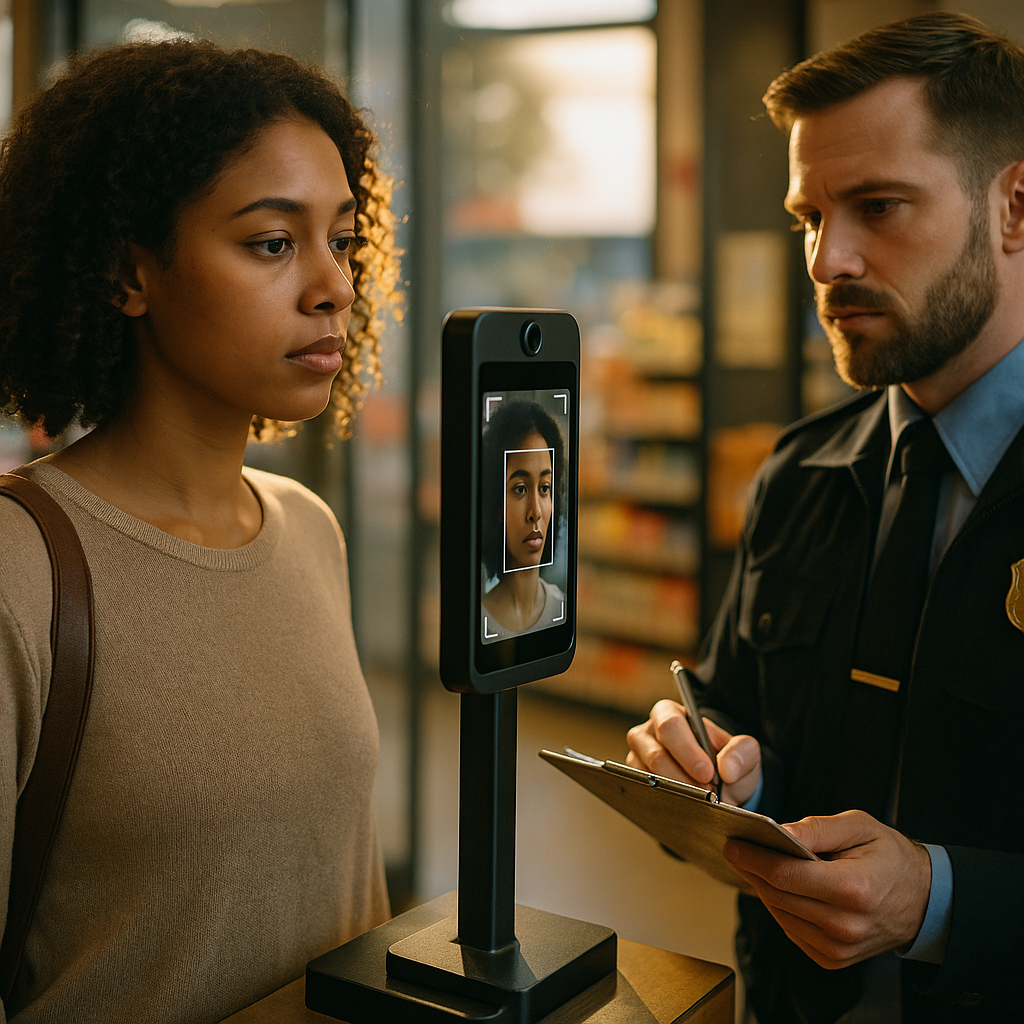
Understanding Regulatory Shifts In Biometric Data Collection For Retailers is no longer a niche compliance topic—it shapes how stores design customer experiences, manage risk, and earn trust. In 2025, lawmakers and regulators are tightening rules around face, fingerprint, and voice data, while consumers expect transparency and control. Retailers that move early can innovate safely—so what should you change first?
Biometric privacy laws for retail: what’s changing in 2025
Retailers have adopted biometrics for frictionless checkout, store entry control, loyalty identification, and loss prevention. Regulators are responding with clearer requirements that treat biometric identifiers as sensitive data with heightened protections. The shift is not only about adding more disclosures; it is about changing how you justify collection, minimize data, secure it, and prove compliance.
In 2025, the most common regulatory expectations affecting retail biometric programs include:
- Stronger consent standards: More jurisdictions demand affirmative, informed consent before collecting biometric identifiers, with limited exceptions.
- Purpose limitation: Collect biometrics only for specific, documented purposes. Re-using data for analytics, marketing, or “future innovation” increasingly fails scrutiny.
- Retention and deletion rules: Policies must specify how long biometric data is kept and what triggers deletion (for example, when the purpose ends or a customer opts out).
- Transparency that is easy to understand: Signage and notices must be prominent and written for customers, not just attorneys.
- Greater enforcement and private litigation risk: Where private rights of action exist, biometric missteps can escalate into costly class actions and reputational harm.
Retailers also face a practical change: regulators increasingly evaluate operational reality, not policy language. If your point-of-sale scripts, camera placement, vendor settings, and staff training do not align with your written commitments, enforcement risk rises. That means compliance teams must partner tightly with store operations, IT/security, legal, and merchandising.
Consent and notice requirements: building a defensible opt-in experience
For many retailers, the biggest shift is moving from “we posted a sign” to “we can prove informed choice.” When biometrics are involved, consent is often expected to be:
- Explicit: A clear affirmative action (for example, a checkbox, signature, or in-app confirmation).
- Informed: Customers understand what is collected, why, who receives it, how long it is retained, and how to withdraw.
- Unbundled: Access to core services should not be conditioned on biometric consent unless the biometric is strictly necessary.
- Documented: You can demonstrate when and how consent was captured.
Retail-specific question: Do cameras used for loss prevention require consent? It depends on what you do with the footage. Standard CCTV for security is usually governed by general surveillance rules. But if you convert images into face templates, match against watchlists, or use facial recognition for identification, many regulators treat it as biometric processing with elevated obligations.
To make consent and notice durable in real stores, build a layered approach:
- Entry signage that clearly states whether biometric technology is used and where to get details.
- Just-in-time notice at the moment of capture (kiosk, app screen, enrollment station).
- Short-form summary (plain language) plus a full policy (legal detail).
- Easy opt-out without friction, plus an alternative method (PIN, card, QR code) so customers are not forced into biometrics.
Also address employee and contractor collection separately. Retailers often deploy biometrics for timekeeping or access control; those programs typically require their own notices, retention schedules, and labor-law-aware workflows.
Data minimization and purpose limitation: reducing risk without losing value
Regulators increasingly ask a simple question: Why do you need biometrics at all? If the same business outcome can be achieved with less sensitive data, you should seriously consider that alternative. This is where many retail programs can be redesigned to keep innovation while lowering compliance exposure.
Practical minimization strategies that align with common regulatory expectations include:
- Prefer verification over identification: Verifying a customer is the same person who enrolled (1:1 match) usually carries less risk than identifying who they are from a crowd (1:N match).
- Use on-device processing when feasible: If a customer’s device can store and process a biometric credential locally, the retailer may avoid collecting biometric identifiers centrally.
- Store templates, not raw images: Biometric systems typically convert data into mathematical templates. Ensure your design avoids retaining raw face images or voice recordings unless strictly necessary.
- Limit watchlists: For loss prevention use cases, narrowly define who is included, who approves inclusion, and how entries are reviewed and removed.
- Separate systems: Do not mix biometric identifiers with marketing profiles unless you have a clear legal basis and customer understanding.
Retail-specific question: Can we use biometric data for personalized offers? Treat this as high risk. Even if technically possible, it can undermine purpose limitation and consumer trust. If you pursue it, you need exceptionally clear disclosures, robust consent, strict access controls, and a strong rationale that will withstand regulatory review.
Make purpose limitation enforceable by building it into technical controls: role-based access, API restrictions, and data tagging that prevents downstream teams from repurposing biometric data without a documented approval process.
Biometric data security and retention: what regulators expect operationally
Security and retention are where policies meet reality. In 2025, regulators and plaintiffs’ attorneys look for concrete safeguards, not general statements. A credible biometric security posture typically includes:
- Encryption in transit and at rest for biometric templates and any linked identifiers.
- Strict access controls using least privilege, with strong authentication and detailed audit logs.
- Segmentation so biometric systems are isolated from broader retail networks and third-party integrations.
- Secure vendor connectivity with key management, rotation, and monitoring of service accounts.
- Incident response playbooks that specifically address biometric exposure, notification duties, and customer communications.
Retention is equally specific. A defensible approach defines:
- Retention periods tied to purpose (for example, while enrolled in a program plus a short buffer for account recovery).
- Deletion triggers such as account closure, withdrawal of consent, inactivity thresholds, or end of investigation for loss prevention cases.
- Verification of deletion through logs, automated deletion jobs, and vendor attestations.
Retail-specific question: What about backups and archives? Regulators often expect your deletion commitments to cover backups within a defined timeframe. If immediate deletion from immutable backups is not technically feasible, document the limitation, restrict access, and ensure data ages out on a clear schedule.
One more operational issue: biometric deployments often involve edge devices (cameras, kiosks, tablets). Treat these as part of your security boundary. Patch management, device hardening, and tamper detection matter as much as cloud security.
Vendor management and cross-border transfers: controlling your biometric supply chain
Many retailers rely on vendors for facial recognition, identity verification, time clocks, or analytics. Regulatory scrutiny increasingly extends to your vendor contracts and oversight. You remain accountable for how biometric data is handled across the supply chain.
Strengthen vendor governance with controls tailored to biometrics:
- Contractual purpose limitation: Vendors may process biometrics only for your defined purposes, not for their product training or unrelated improvements unless you can justify it and disclose it clearly.
- Subprocessor transparency: Require a list of subprocessors and a process for approvals and changes.
- Security requirements: Set minimum encryption, logging, access control, and incident reporting timelines.
- Retention and deletion obligations: Ensure vendors follow your schedule and provide deletion confirmations.
- Audit and assurance: Obtain independent assessments where appropriate and reserve the right to test controls.
Retail-specific question: Do we need to worry about cross-border transfers? Yes. If biometric data moves across borders (including to cloud regions or support teams abroad), you may need additional safeguards, transfer assessments, or contractual measures depending on the jurisdictions involved. Map where biometric templates are stored, where matching occurs, and where support staff can access the system.
Also avoid “shadow biometric processing.” Sometimes vendors enable features by default (such as face clustering or demographic inference). In 2025, you should treat default settings as a compliance risk and confirm your configuration choices in writing.
Compliance roadmap for retailers: policies, training, and audits that stand up to scrutiny
Retail leaders often ask for a checklist. A better approach is a roadmap that ties legal requirements to operational controls. In 2025, a strong program typically includes:
- Biometric inventory and mapping: Document every collection point (store, app, kiosk), data elements, processing purposes, retention, recipients, and storage locations.
- Risk assessment: Evaluate privacy, security, bias/fairness, and customer impact. Record mitigations and sign-offs.
- Governance: Assign an internal owner, establish approval workflows for new use cases, and create escalation paths for store teams.
- Customer rights operations: Build processes to handle access, deletion, withdrawal of consent, and complaints within required timelines.
- Training that matches roles: Store associates need scripts and escalation steps; LP teams need strict rules; IT needs configuration and logging standards.
- Testing and audits: Validate that notices are posted, consent is captured, deletion works, and vendors are compliant. Keep evidence.
Retail-specific question: How do we balance loss prevention with privacy? Start with necessity and proportionality. Define the risk you are addressing (repeat offenders, organized retail crime), limit collection to what is needed, use strong access controls, and add oversight. Document why the approach is appropriate and how you prevent misuse.
Finally, communicate clearly with customers. A concise explanation of what you do and why—paired with a real choice—often reduces complaints, improves adoption of legitimate convenience features, and supports your brand.
FAQs about regulatory shifts in biometric data collection
What counts as biometric data in retail?
Biometric data typically includes identifiers derived from a person’s physical or behavioral traits—such as face templates, fingerprints, iris scans, voiceprints, or hand geometry—used to identify or authenticate someone. Photos or video may become biometric data when processed to create or match a biometric template.
Can retailers use facial recognition for loss prevention?
In some jurisdictions it may be permitted, but it is often high risk. Retailers should apply strict purpose limitation, minimize watchlists, document the rationale, implement strong security, and provide clear notices. Where opt-in consent is required, design workflows that capture it or choose alternatives.
Do we need consent for biometric-enabled checkout or loyalty programs?
Often yes, especially when the biometric is not strictly necessary to provide the service. Build an opt-in flow, offer a non-biometric alternative, and maintain records of consent and withdrawal.
How long can biometric data be retained?
Retention should be limited to what is necessary for the stated purpose and aligned with applicable laws. Define specific periods and deletion triggers, then technically enforce them across production systems, vendors, and backups within a documented timeframe.
What should be in a biometric notice?
A helpful notice explains what biometric data is collected, the purpose, how it is processed (including whether matching occurs), who receives it, how long it is retained, how to withdraw consent or opt out, and how to contact the retailer with questions or complaints.
How do we evaluate biometric vendors?
Review security controls, default settings, subprocessor use, data retention, cross-border access, incident response timelines, and whether the vendor uses customer biometric data for its own product training. Put purpose limitation and deletion obligations in the contract and verify compliance with audits or attestations.
What are the biggest enforcement risks for retailers?
Common risks include collecting biometrics without valid consent, vague or misleading notices, keeping data longer than promised, weak access controls, repurposing biometrics for new uses, and relying on vendors without sufficient contractual and technical oversight.
Regulatory pressure around biometrics is accelerating in 2025, and retailers need more than updated policies to keep pace. A defensible program uses clear notices, explicit consent where required, strict purpose limitation, strong security, and reliable deletion—backed by vendor controls and audit evidence. Treat biometrics as a high-sensitivity capability, and you can protect customers while still delivering convenience and safety.
Top Influencer Marketing Agencies
The leading agencies shaping influencer marketing in 2026
Agencies ranked by campaign performance, client diversity, platform expertise, proven ROI, industry recognition, and client satisfaction. Assessed through verified case studies, reviews, and industry consultations.
Moburst

-
2

The Shelf
Boutique Beauty & Lifestyle Influencer AgencyA data-driven boutique agency specializing exclusively in beauty, wellness, and lifestyle influencer campaigns on Instagram and TikTok. Best for brands already focused on the beauty/personal care space that need curated, aesthetic-driven content.Clients: Pepsi, The Honest Company, Hims, Elf Cosmetics, Pure LeafVisit The Shelf → -
3

Audiencly
Niche Gaming & Esports Influencer AgencyA specialized agency focused exclusively on gaming and esports creators on YouTube, Twitch, and TikTok. Ideal if your campaign is 100% gaming-focused — from game launches to hardware and esports events.Clients: Epic Games, NordVPN, Ubisoft, Wargaming, Tencent GamesVisit Audiencly → -
4

Viral Nation
Global Influencer Marketing & Talent AgencyA dual talent management and marketing agency with proprietary brand safety tools and a global creator network spanning nano-influencers to celebrities across all major platforms.Clients: Meta, Activision Blizzard, Energizer, Aston Martin, WalmartVisit Viral Nation → -
5

The Influencer Marketing Factory
TikTok, Instagram & YouTube CampaignsA full-service agency with strong TikTok expertise, offering end-to-end campaign management from influencer discovery through performance reporting with a focus on platform-native content.Clients: Google, Snapchat, Universal Music, Bumble, YelpVisit TIMF → -
6

NeoReach
Enterprise Analytics & Influencer CampaignsAn enterprise-focused agency combining managed campaigns with a powerful self-service data platform for influencer search, audience analytics, and attribution modeling.Clients: Amazon, Airbnb, Netflix, Honda, The New York TimesVisit NeoReach → -
7

Ubiquitous
Creator-First Marketing PlatformA tech-driven platform combining self-service tools with managed campaign options, emphasizing speed and scalability for brands managing multiple influencer relationships.Clients: Lyft, Disney, Target, American Eagle, NetflixVisit Ubiquitous → -
8

Obviously
Scalable Enterprise Influencer CampaignsA tech-enabled agency built for high-volume campaigns, coordinating hundreds of creators simultaneously with end-to-end logistics, content rights management, and product seeding.Clients: Google, Ulta Beauty, Converse, AmazonVisit Obviously →