


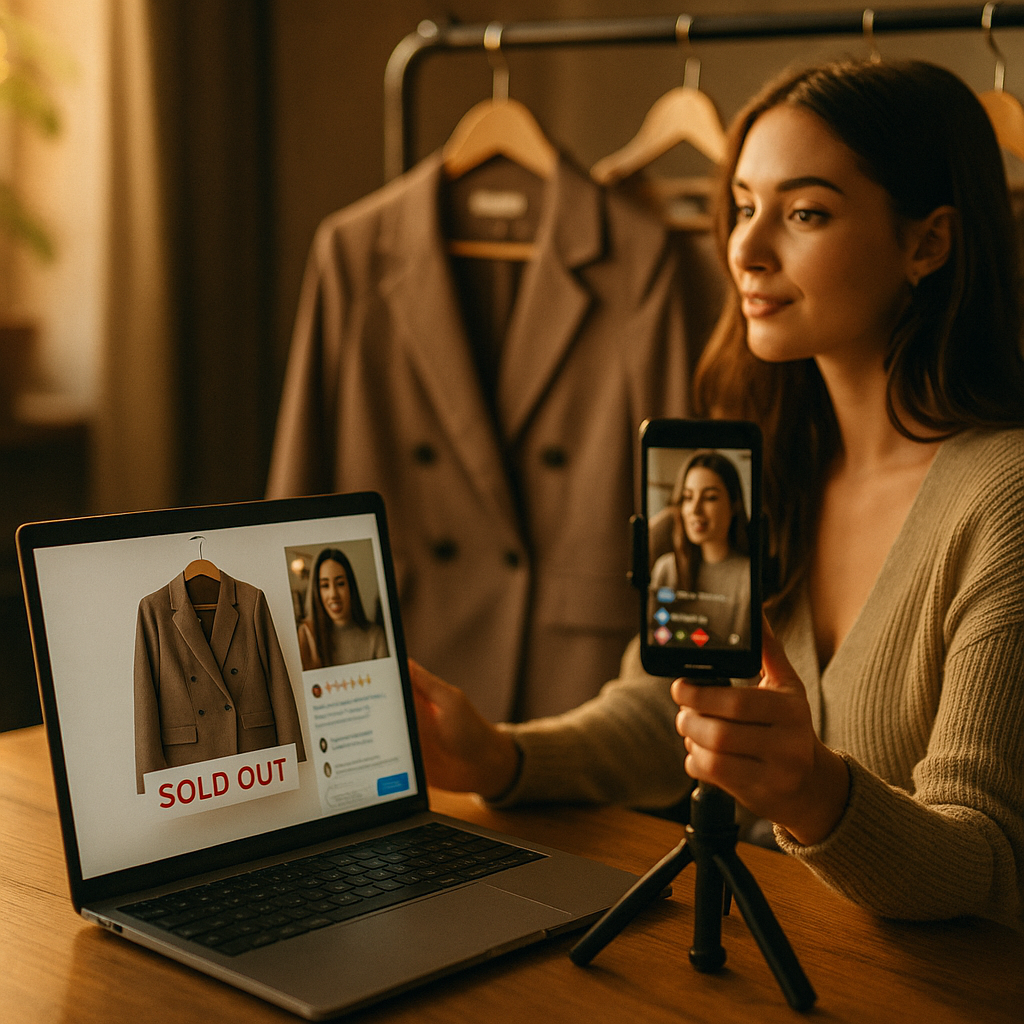
E-commerce fashion has transformed how brands launch, market, and sell apparel in 2025. From strategic influencer seeding to rapidly reaching “sold out” status, mastering every phase is key for fashion brands. Ready to uncover the journey from buzz-building to near-instant sell-outs? Discover the proven blueprint powering today’s most successful online fashion launches.
Understanding Influencer Seeding: The Modern Word-of-Mouth in E-Commerce Apparel
Influencer seeding—delivering products to carefully chosen creators—has become a cornerstone in modern e-commerce fashion marketing. In 2025, brands leverage data-driven selection tools to pinpoint micro and macro-influencers whose audiences match the brand’s target demographic. The goal? To organically spark conversations, reviews, and authentic social media buzz.
By providing free products without mandated content creation, brands foster genuine affinity with influencers. This authenticity translates to increased trust and engagement from potential customers. Combined with sophisticated tracking, brands can measure the impact of every seed, refining future collaborations for higher ROI. According to a 2025 Shopify Insights report, well-executed influencer seeding increases fashion e-commerce conversion rates by up to 28% over traditional ads.
Building Anticipation: Pre-Launch Tactics That Drive Hype in Fashion E-Commerce
Before items hit the digital shelves, successful fashion e-commerce brands invest in pre-launch strategies that spark anticipation. Key tactics include:
- Teaser campaigns: Sharing behind-the-scenes content and sneak peeks.
- Waitlists and exclusive early access: Creating a sense of urgency by limiting initial availability.
- User-generated content (UGC): Encouraging seeded influencers and advocates to share previews, amplifying reach.
Brands also utilize AI-powered email segmentation, delivering tailored messages to nurture various audience segments. Fashion startups like Aura & Co. reported a 40% higher opening rate for personalized pre-launch emails in 2025, compared to generic campaigns.
From Clicks to Carts: Optimizing the E-Commerce Fashion Website for Conversions
The transition from buzz to business hinges on a seamless digital experience. In 2025, mobile-first design, AR-powered try-ons, and one-click checkout are standard for leading fashion e-commerce sites. Here’s how brands optimize each step:
- Visual merchandising: High-quality images, 360° views, and video reels provide shoppers with real-world context.
- AI-driven recommendations: Smart cross-selling and sizing guidance reduce friction and returns.
- Social proof: Real-time reviews, “just purchased” notifications, and influencer-curated shop pages build buyer confidence.
The focus is on minimizing decision fatigue and guiding users seamlessly from product discovery to checkout. Data from Global Web Index in early 2025 shows that over 60% of Gen Z fashion shoppers abandon their carts if the checkout process is not frictionless—underscoring the need for continual optimization.
Leveraging Flash Sales and Scarcity: From E-Commerce Fashion Launches to Sold-Out Success
The psychology of scarcity remains a powerful motivator in e-commerce fashion. Limited-time flash sales and low-stock alerts capture attention and drive urgency. Brands strategically communicate inventory levels via social and onsite banners, encouraging immediate purchases.
In 2025, AI demand forecasting tools help brands set accurate quantities and minimize overstock. When an item sells out, smart waitlist and restock notifications keep customers engaged. Fashion brand Ember’s 2025 limited drops sold out in under 17 minutes, thanks to this well-executed scarcity strategy.
Additionally, brands use data insights from sold-out campaigns to inform future product development and sizing, ensuring continual improvement in sell-through rates.
Post-Sale Engagement: Creating Loyalty After the E-Commerce Fashion Frenzy
Once fashion e-commerce products have sold out, maintaining momentum and nurturing new customers is essential. Leading brands follow up with:
- Personalized thank-you emails: Including behind-the-scenes content, style tips, or sneak peeks of upcoming collections.
- Loyalty rewards: Points, early access, and invite-only experiences for repeat shoppers.
- Community building: Inviting buyers to private social groups, virtual styling sessions, or ambassador programs.
This post-sale strategy boosts retention and lifetime value. Data from the E-Commerce Fashion Index (2025) reveals brands with active post-purchase engagement see 34% higher repeat purchase rates versus those who don’t nurture after the sale.
Analytics and Ongoing Improvement: Measuring Success in E-Commerce Fashion
Continuous data analysis is the backbone of sustained growth in fashion e-commerce. Brands track:
- Seeding ROI: Engagement, reach, and conversion rates from influencer campaigns.
- Traffic sources: Identifying top channels for acquisition and optimizing spend.
- Customer feedback: Leveraging surveys and review mining to inform new collections.
Advanced analytics platforms in 2025 integrate seamlessly with e-commerce and marketing tools, providing actionable insights in real time to identify gaps and opportunities. Leading teams use this data for rapid iteration—fine-tuning everything from product design to checkout flow for ever-stronger launch outcomes.
In summary, mastering every stage—from influencer seeding through seamless checkout to post-sale loyalty—is essential for thriving in e-commerce fashion. The brands who succeed are those who embrace data, authenticity, and community at every turn. Ready to turn your next apparel launch from “seeded” to “sold out”?
FAQs: E-Commerce Fashion—From Seeding to Sold Out
-
What is influencer seeding in e-commerce fashion?
Influencer seeding is when brands gift products to carefully selected influencers or creators, encouraging them to share authentic content and generate organic buzz without contractual content obligations. It’s a crucial step for building anticipation and credibility before launch.
-
How do fashion e-commerce brands create hype before launch?
Brands build hype with teaser campaigns, waitlists, exclusive previews, and by activating seeded influencers. Personalized emails and user-generated social content play key roles in generating interest and anticipation.
-
What technologies help optimize fashion e-commerce stores?
Mobile-first design, artificial intelligence for recommendations and sizing, AR try-ons, and streamlined one-click checkout all improve user experience and conversion rates. Additionally, AI-driven analytics track every touchpoint for optimization.
-
How do limited drops and scarcity tactics drive fashion e-commerce sales?
Time-sensitive flash sales, low-stock alerts, and exclusive launches leverage psychological triggers, prompting urgency and immediate action. This often leads to rapid sell-outs, especially when authentically promoted by influencers.
-
What’s the best way to retain customers after a sold-out campaign?
Send personalized post-purchase messages, offer loyalty rewards, and foster an engaged community. Continue providing value beyond the sale to increase repeat purchases and build long-term brand advocates.
Top Influencer Marketing Agencies
The leading agencies shaping influencer marketing in 2026
Agencies ranked by campaign performance, client diversity, platform expertise, proven ROI, industry recognition, and client satisfaction. Assessed through verified case studies, reviews, and industry consultations.
Moburst

-
2

The Shelf
Boutique Beauty & Lifestyle Influencer AgencyA data-driven boutique agency specializing exclusively in beauty, wellness, and lifestyle influencer campaigns on Instagram and TikTok. Best for brands already focused on the beauty/personal care space that need curated, aesthetic-driven content.Clients: Pepsi, The Honest Company, Hims, Elf Cosmetics, Pure LeafVisit The Shelf → -
3

Audiencly
Niche Gaming & Esports Influencer AgencyA specialized agency focused exclusively on gaming and esports creators on YouTube, Twitch, and TikTok. Ideal if your campaign is 100% gaming-focused — from game launches to hardware and esports events.Clients: Epic Games, NordVPN, Ubisoft, Wargaming, Tencent GamesVisit Audiencly → -
4

Viral Nation
Global Influencer Marketing & Talent AgencyA dual talent management and marketing agency with proprietary brand safety tools and a global creator network spanning nano-influencers to celebrities across all major platforms.Clients: Meta, Activision Blizzard, Energizer, Aston Martin, WalmartVisit Viral Nation → -
5

The Influencer Marketing Factory
TikTok, Instagram & YouTube CampaignsA full-service agency with strong TikTok expertise, offering end-to-end campaign management from influencer discovery through performance reporting with a focus on platform-native content.Clients: Google, Snapchat, Universal Music, Bumble, YelpVisit TIMF → -
6

NeoReach
Enterprise Analytics & Influencer CampaignsAn enterprise-focused agency combining managed campaigns with a powerful self-service data platform for influencer search, audience analytics, and attribution modeling.Clients: Amazon, Airbnb, Netflix, Honda, The New York TimesVisit NeoReach → -
7

Ubiquitous
Creator-First Marketing PlatformA tech-driven platform combining self-service tools with managed campaign options, emphasizing speed and scalability for brands managing multiple influencer relationships.Clients: Lyft, Disney, Target, American Eagle, NetflixVisit Ubiquitous → -
8

Obviously
Scalable Enterprise Influencer CampaignsA tech-enabled agency built for high-volume campaigns, coordinating hundreds of creators simultaneously with end-to-end logistics, content rights management, and product seeding.Clients: Google, Ulta Beauty, Converse, AmazonVisit Obviously →