


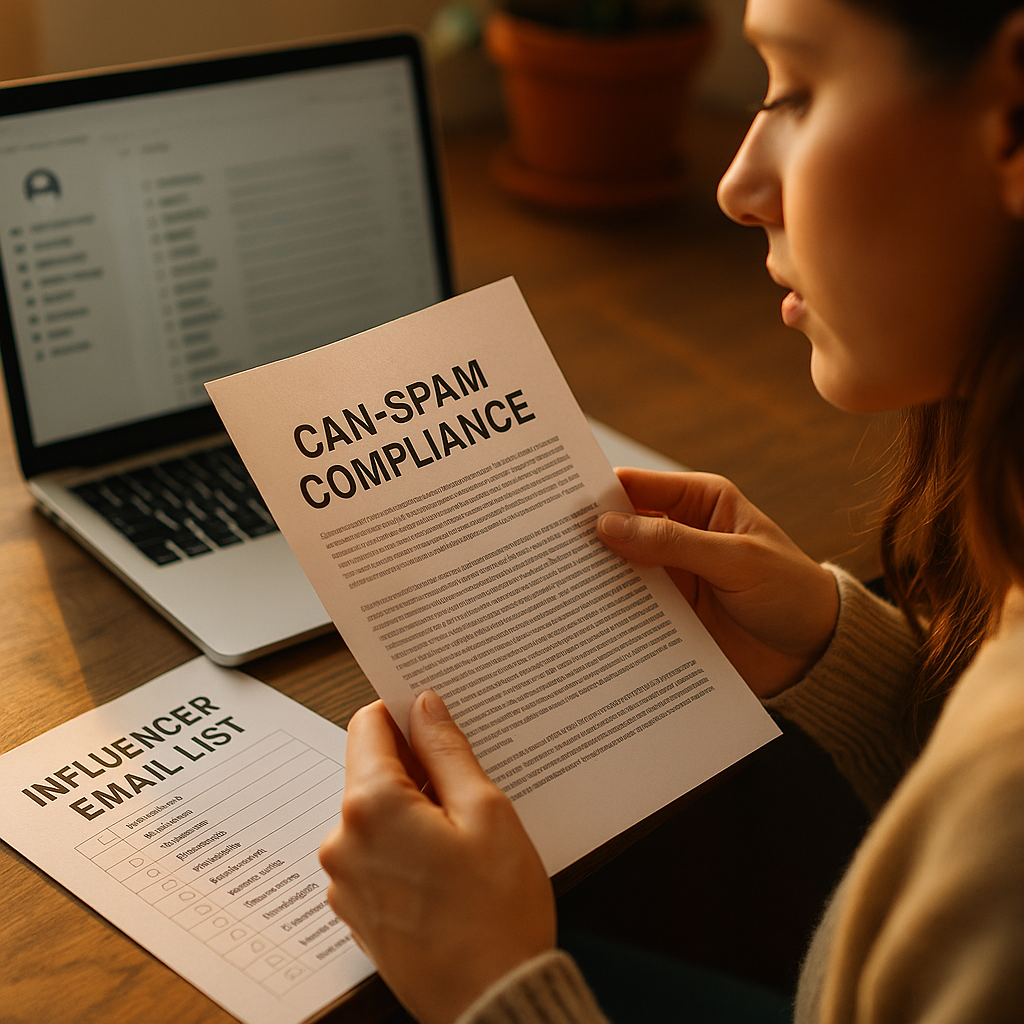
Understanding CAN-SPAM Act compliance for influencer email lists is crucial for anyone growing their brand through direct email outreach. With stricter regulations and consumer scrutiny in 2025, influencers face significant risks if they mishandle emails. Are you certain your email campaigns aren’t violating the law? Here’s what every influencer must know about compliant list management.
The CAN-SPAM Act Explained: Why Influencers Must Care
The CAN-SPAM Act sets federal standards for email marketing, prohibiting deceptive tactics and requiring transparency with recipients. Established to protect consumers from unwanted messages and data misuse, the law applies to all commercial emails, including those sent by influencers promoting products or services. Non-compliance can result in fines of up to $51,744 per violation in 2025. For influencers, reputation and legal standing hinge on following these rules to the letter.
Key Requirements for Influencer Email List Compliance
Influencer email lists must meet several CAN-SPAM obligations to avoid penalties. Below are the absolutely essential requirements:
- Clear identification: Every email must accurately disclose the sender’s identity, including a valid influencer or brand name.
- Truthful subject lines: Subject headings must reflect the message content honestly—no misleading hooks allowed.
- Physical address: Legally, emails must include a current physical postal address related to the sender.
- Unsubscribe mechanism: Recipients need a clear and functioning way to opt-out that processes unsubscribes within 10 business days.
- Third-party accountability: If you’re using agencies or software for email campaigns, you’re equally responsible for their compliance.
Keeping up-to-date with these basics is vital as enforcement and consumer awareness continue to intensify.
Building and Maintaining Permission-Based Email Lists
Consent is the cornerstone of compliant influencer email marketing. Gaining explicit permission—known as opt-in—ensures your list is lawful. In 2025, consumers and regulators both expect:
- Confirmed opt-ins: Use double opt-in techniques where users confirm their intent twice to join your list.
- Clear value exchange: Explain why you’re collecting emails, how you’ll use them, and what subscribers can expect.
- Regular hygiene: Purge inactive or unresponsive recipients and honor all opt-out requests swiftly.
Collecting emails from giveaways or events? Always secure documented consent to email those participants, and retain this proof should you ever need to demonstrate compliance.
Crafting CAN-SPAM Compliant Campaigns as an Influencer
Influencers often blur the line between personal branding and commercial marketing. To remain compliant:
- Compose clear, authentic messaging that avoids deceptive claims or false urgency.
- Double-check that all product or sponsor placements are disclosed and comply with both CAN-SPAM and FTC requirements.
- Each email footer should feature:
- A visible, one-click unsubscribe link.
- Your current, valid business or personal address.
- A reminder why the recipient is on your list (“You are receiving this email because you subscribed to…”).
- If using automation, test your emails to ensure all personalized fields populate accurately—misaddressed or “Hi {{firstname}}” mishaps could lead to spam complaints.
Quality, not quantity, is essential. Focus your email marketing on valuable content, not just promotions, to keep engagement high and complaints low.
Managing Legal Risks and Handling Violations
Legal action under the CAN-SPAM Act is expensive and reputation-damaging. Influencers have unique risk profiles: a single complaint can reach thousands of followers. Practical tips for risk management:
- Maintain comprehensive records of consent, campaign dates, and unsubscribes.
- Monitor your complaint rates through your email service provider’s dashboard.
- Respond immediately to all requests, including data or subscription status inquiries.
- If you receive a warning from the FTC or email platforms in 2025, cease relevant campaigns at once and seek legal counsel specializing in digital marketing law.
Many platforms now integrate AI tools to scan for non-compliance in outbound influencer campaigns; leverage these, but review and update your processes regularly.
Best Practices for Influencer Email List Growth in 2025
Building and maintaining compliant yet effective email lists requires strategic thinking and robust systems. In 2025, the following best practices ensure both legal protection and list quality:
- Transparent onboarding: Use pop-ups, lead magnets, or social sign-ups that clearly link to your privacy and email policies.
- Preference centers: Let subscribers select which types of emails they want to receive, reducing the likelihood of opt-outs.
- Regular audits: Conduct periodic checks of your emails, templates, and operational workflows to verify ongoing CAN-SPAM compliance.
- Ongoing education: Stay informed about evolving privacy regulations, especially regarding cross-border outreach and affiliate promotions.
Accountability is the influencer’s advantage: by being transparent and responsive, you build trust—and protect yourself from costly legal missteps.
Frequently Asked Questions (FAQs)
-
What is the CAN-SPAM Act and does it apply to influencers?
The CAN-SPAM Act is a federal law regulating commercial email. Yes, it absolutely applies to influencers who use email for sponsorships, collaborations, or marketing. -
What’s the biggest CAN-SPAM compliance mistake influencers make?
The most common error is failing to include a working unsubscribe link or not honoring opt-out requests quickly. -
Can I add event attendees or giveaway entrants to my list?
Only if you clearly obtain their permission for marketing emails. Always document this consent. -
What counts as a commercial email under CAN-SPAM?
Any email that advertises, promotes, or sells a product, service, or brand—including sponsored content or collaborations. -
How can influencers prove CAN-SPAM compliance?
Keep records clearly showing opt-in, unsubscribe handling, and evidence of required disclosures in your sent emails.
In summary, CAN-SPAM Act compliance for influencer email lists is non-negotiable in 2025. Diligent list hygiene, consent-first practices, and transparent communication not only prevent legal trouble—they build valuable long-term trust with your audience. Start reviewing your campaigns now to stay ahead and thrive.
Top Influencer Marketing Agencies
The leading agencies shaping influencer marketing in 2026
Agencies ranked by campaign performance, client diversity, platform expertise, proven ROI, industry recognition, and client satisfaction. Assessed through verified case studies, reviews, and industry consultations.
Moburst

-
2

The Shelf
Boutique Beauty & Lifestyle Influencer AgencyA data-driven boutique agency specializing exclusively in beauty, wellness, and lifestyle influencer campaigns on Instagram and TikTok. Best for brands already focused on the beauty/personal care space that need curated, aesthetic-driven content.Clients: Pepsi, The Honest Company, Hims, Elf Cosmetics, Pure LeafVisit The Shelf → -
3

Audiencly
Niche Gaming & Esports Influencer AgencyA specialized agency focused exclusively on gaming and esports creators on YouTube, Twitch, and TikTok. Ideal if your campaign is 100% gaming-focused — from game launches to hardware and esports events.Clients: Epic Games, NordVPN, Ubisoft, Wargaming, Tencent GamesVisit Audiencly → -
4

Viral Nation
Global Influencer Marketing & Talent AgencyA dual talent management and marketing agency with proprietary brand safety tools and a global creator network spanning nano-influencers to celebrities across all major platforms.Clients: Meta, Activision Blizzard, Energizer, Aston Martin, WalmartVisit Viral Nation → -
5

The Influencer Marketing Factory
TikTok, Instagram & YouTube CampaignsA full-service agency with strong TikTok expertise, offering end-to-end campaign management from influencer discovery through performance reporting with a focus on platform-native content.Clients: Google, Snapchat, Universal Music, Bumble, YelpVisit TIMF → -
6

NeoReach
Enterprise Analytics & Influencer CampaignsAn enterprise-focused agency combining managed campaigns with a powerful self-service data platform for influencer search, audience analytics, and attribution modeling.Clients: Amazon, Airbnb, Netflix, Honda, The New York TimesVisit NeoReach → -
7

Ubiquitous
Creator-First Marketing PlatformA tech-driven platform combining self-service tools with managed campaign options, emphasizing speed and scalability for brands managing multiple influencer relationships.Clients: Lyft, Disney, Target, American Eagle, NetflixVisit Ubiquitous → -
8

Obviously
Scalable Enterprise Influencer CampaignsA tech-enabled agency built for high-volume campaigns, coordinating hundreds of creators simultaneously with end-to-end logistics, content rights management, and product seeding.Clients: Google, Ulta Beauty, Converse, AmazonVisit Obviously →