


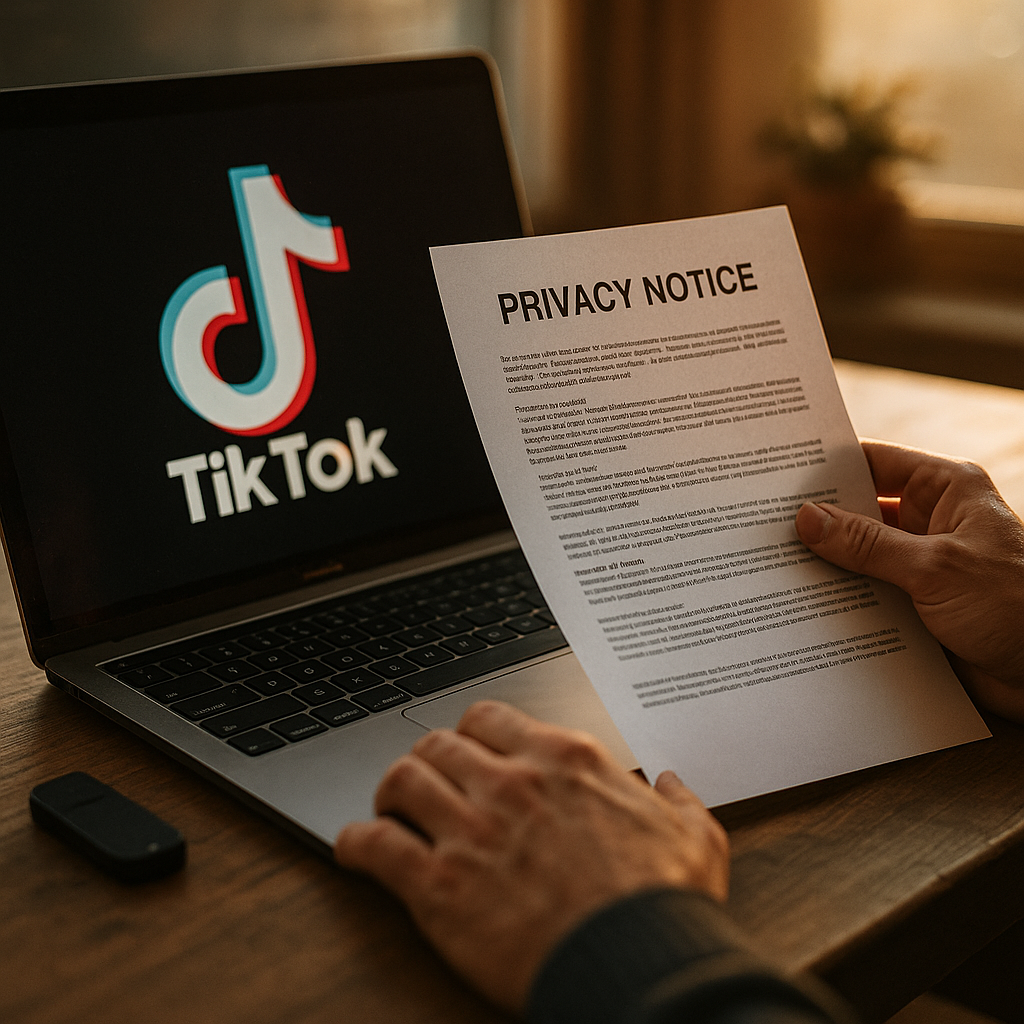
California regulators have already fined companies over sloppy pixel disclosures, and the 2026 CCPA amendments raise the bar again. If your brand runs TikTok Pixel without a rewritten data privacy notice, you’re not just risking a fine, you’re gambling with an entire ad account’s worth of first-party data. Getting the TikTok Pixel data privacy notice right isn’t a legal afterthought anymore. It’s a budget-protection exercise.
Marketers tend to treat privacy notices as boilerplate someone in legal handles. That mindset doesn’t survive contact with the amended CCPA rules. The updated framework specifically targets behavioral advertising pixels, cross-context tracking, and the kind of granular retargeting data TikTok Pixel collects by default. If your notice still reads like a generic “we use cookies” paragraph from 2019, you’re exposed.
What Actually Changed in the 2026 CCPA Rules
The California Privacy Protection Agency tightened definitions around “sharing” and “cross-context behavioral advertising,” closing a loophole that let some brands claim pixel data wasn’t technically being “sold.” Under the amendments, if TikTok’s pixel fires on your checkout page and that data feeds TikTok’s ad optimization models, that’s a sale or share, full stop. No more hiding behind semantics.
The practical effect: brands using TikTok Pixel, Meta Pixel, or any conversion API now need explicit, itemized disclosure of what’s collected, why, and who receives it. Vague catch-all language like “we may share data with advertising partners” no longer meets the bar. Regulators want specificity, and enforcement has already shown they’ll act on it, evidenced by the growing list of biometric and tracking-related settlements hitting consumer brands.
A privacy notice that lumps TikTok Pixel data in with generic “analytics cookies” is functionally useless under the amended CCPA standard, and likely non-compliant.
Why TikTok Pixel Specifically Draws Scrutiny
TikTok Pixel isn’t a passive analytics tool. It captures page views, add-to-cart events, purchase completions, and — depending on your implementation — hashed customer identifiers used for advanced matching. That last part is where brands get into trouble. Advanced matching sends hashed emails, phone numbers, or names to TikTok to improve audience matching. Regulators increasingly view hashed PII as still-identifiable data, not anonymized data, which changes your disclosure obligations entirely.
Add TikTok Events API into the mix, and you’ve got server-side data flowing to TikTok independent of what a user’s browser blocks or a cookie consent banner controls. That’s a meaningful gap: a consumer can decline cookies and still have their data transmitted server-side unless your consent management platform is wired to suppress Events API calls too.
Most brands haven’t audited that connection. It’s worth checking before your next campaign launch.
Building the Notice: Structure That Actually Holds Up
A compliant TikTok Pixel data privacy notice needs distinct sections, not a single dense paragraph. Here’s the structure that satisfies both CCPA specificity requirements and basic readability:
- Categorized data collection statement: List exactly what TikTok Pixel captures — page views, purchase events, hashed identifiers, device/browser metadata — rather than a vague “usage data” reference.
- Purpose disclosure: State explicitly that data feeds TikTok’s ad targeting and measurement systems, not just “improving user experience.”
- Third-party recipient naming: Name TikTok (and its ad network, TikTok for Business) directly. Generic “advertising partners” language is a compliance gap.
- Sale/share classification: Explicitly classify pixel-based data transfer as a “share” for cross-context behavioral advertising under CCPA definitions.
- Opt-out mechanism link: A working, tested “Do Not Sell or Share My Personal Information” link that actually suppresses pixel firing, not just a cosmetic toggle.
- Retention and deletion terms: How long TikTok retains matched data and how deletion requests propagate to the platform.
Each bullet needs to be a discrete, scannable block in your actual notice, not folded into one run-on sentence. Regulators and plaintiffs’ attorneys alike are now testing whether disclosures are genuinely legible to an average consumer, not just technically present somewhere in a 4,000-word policy.
The Consent Banner Has to Match the Notice
Here’s where a lot of brands fail even with a well-written notice: the consent banner and the pixel implementation don’t actually agree with each other. If your notice says users can opt out of TikTok Pixel tracking, but your consent management platform only blocks the client-side pixel while the Events API still fires server-side, you’ve made a disclosure you can’t back up operationally.
This mirrors a pattern we’ve seen across the ecosystem — TikTok’s own shopping data consent prompt changes forced brands to re-audit how consent state gets passed to backend systems, not just frontend cookie banners. The same logic applies here. A notice is a promise. Your tech stack has to keep it.
Test this directly: open your site in an incognito browser, decline all tracking, then check your TikTok Events Manager for incoming server events tied to that session. If events still show up, your consent architecture is broken, regardless of what your privacy notice claims.
Where Brands Get Advance Matching Wrong
Advanced matching is the single biggest liability inside a TikTok Pixel implementation, and it’s rarely disclosed with any real precision. Most default implementations hash and transmit customer email or phone data automatically, even when a marketer never explicitly enabled it in the TikTok Ads Manager settings. If your privacy notice doesn’t call out advanced matching by name, you have a gap.
The fix isn’t complicated, but it does require cross-functional buy-in. Legal needs to know advanced matching exists. Engineering needs to expose a toggle. And your privacy notice needs a dedicated line item: “TikTok Pixel may collect hashed contact information for advanced audience matching purposes; you may opt out via [mechanism].”
This same granular-disclosure logic is showing up across biometric and AI data cases too — see how Charlotte Tilbury’s biometric fine reshaped expectations for specificity in consumer notices, or the broader shift covered in biometric consent obligations under GDPR and CCPA. Regulators are applying the same specificity standard across every category of tracking tech, not just pixels.
Cross-Platform Consistency Isn’t Optional
If you’re running TikTok Pixel alongside Meta Pixel, Google Ads tags, and a Snap Pixel, your privacy notice can’t treat these as one undifferentiated blob of “advertising cookies.” Each platform has different data-sharing arrangements, different retention windows, and different opt-out mechanics. A notice that fails to distinguish between them is arguably worse than one that says nothing at all, because it creates an appearance of transparency without delivering it.
This is where a lot of enterprise brands stumble — they build a disclosure framework for one platform and assume it scales. It doesn’t. The consent handling differences between TikTok’s Events API and Meta’s Conversions API are significant enough that a copy-paste privacy notice section will misstate at least one of them. If you’re managing disclosure across multiple platforms, it’s worth reviewing frameworks like the cross-platform disclosure playbook for major networks to make sure your language doesn’t collapse distinct legal obligations into one paragraph.
Treating TikTok Pixel, Meta Pixel, and Google tags as interchangeable in your privacy notice is a shortcut regulators are actively penalizing.
Operationalizing the Update: A Short Checklist
- Audit whether TikTok Events API fires independent of frontend consent state.
- Rewrite the notice with itemized data categories, not generic “cookies and tracking” language.
- Name TikTok explicitly as a data recipient, not “advertising partners.”
- Add a dedicated advanced matching disclosure and opt-out path.
- Test your “Do Not Sell or Share” link against actual pixel behavior, quarterly.
- Align legal, engineering, and marketing sign-off before publishing the updated notice.
None of this requires exotic legal theory. It requires cross-functional discipline most marketing teams haven’t historically applied to privacy notices. That’s changing fast, and brands that treat this as a checkbox exercise rather than an operational commitment will be the ones facing enforcement actions next. Industry data from eMarketer shows retargeting-driven ad spend continuing to climb, which means the regulatory spotlight on pixel tracking isn’t going anywhere. Meanwhile, FTC guidance increasingly overlaps with state privacy law on tracking disclosures, so brands should treat this as a converging compliance requirement, not two separate problems.
Don’t Forget the Data Minimization Angle
The CCPA amendments also lean harder into data minimization principles, echoing what we’ve already seen play out in FTC data minimization rules for TikTok Shop merchants. If you’re collecting pixel data you don’t actually use for optimization or measurement, that’s now a liability, not just inefficiency. Audit your pixel event configuration and strip out anything collected “just in case.” Regulators are asking brands to justify every data point, not just disclose it.
Tools like HubSpot’s consent management resources and platform-native controls in TikTok Ads Manager both offer granular event configuration. Use them. Turning off unused events is a five-minute fix that materially reduces your disclosure surface area.
FAQs
Frequently Asked Questions
Does the 2026 CCPA update require a completely new privacy notice, or can existing ones be amended?
Amendments work in most cases, provided they add the itemized disclosure elements regulators now expect: named third-party recipients, specific data categories, and a functioning opt-out mechanism tied to actual pixel behavior. A full rewrite is safer if your current notice uses generic “cookies and tracking technologies” language throughout.
Is hashed data from TikTok Pixel’s advanced matching considered personal information under CCPA?
Yes. Hashed identifiers like emails or phone numbers are still considered identifiable personal information under current regulatory interpretation, since they can be matched back to individuals. Brands should disclose advanced matching explicitly rather than assuming hashing exempts them from disclosure requirements.
What’s the difference between TikTok Pixel and TikTok Events API for consent purposes?
TikTok Pixel is a client-side, browser-based tag typically controlled by cookie consent tools. Events API is a server-side integration that can fire independent of browser consent settings unless specifically configured to respect user opt-outs. Brands need to verify both are wired to the same consent signal.
How often should brands audit their TikTok Pixel privacy notice for compliance?
Quarterly, at minimum, and immediately after any pixel implementation change, new event configuration, or platform policy update. Privacy notices drift out of sync with actual tracking behavior faster than most teams expect.
Can a brand simply block TikTok Pixel entirely to avoid these disclosure requirements?
Technically yes, but that sacrifices conversion measurement and retargeting capability that most paid social programs depend on. Most brands find it more practical to build compliant disclosure and consent architecture than to abandon pixel tracking altogether.
Start with the audit, not the copywriting: pull your TikTok Events Manager logs, compare them against what your current notice claims, and fix the gaps before you touch a single sentence of legal language. A privacy notice is only as compliant as the tracking behavior it describes.
Top Influencer Marketing Agencies
The leading agencies shaping influencer marketing in 2026
Agencies ranked by campaign performance, client diversity, platform expertise, proven ROI, industry recognition, and client satisfaction. Assessed through verified case studies, reviews, and industry consultations.
Moburst

-
2

The Shelf
Boutique Beauty & Lifestyle Influencer AgencyA data-driven boutique agency specializing exclusively in beauty, wellness, and lifestyle influencer campaigns on Instagram and TikTok. Best for brands already focused on the beauty/personal care space that need curated, aesthetic-driven content.Clients: Pepsi, The Honest Company, Hims, Elf Cosmetics, Pure LeafVisit The Shelf → -
3

Audiencly
Niche Gaming & Esports Influencer AgencyA specialized agency focused exclusively on gaming and esports creators on YouTube, Twitch, and TikTok. Ideal if your campaign is 100% gaming-focused — from game launches to hardware and esports events.Clients: Epic Games, NordVPN, Ubisoft, Wargaming, Tencent GamesVisit Audiencly → -
4

Viral Nation
Global Influencer Marketing & Talent AgencyA dual talent management and marketing agency with proprietary brand safety tools and a global creator network spanning nano-influencers to celebrities across all major platforms.Clients: Meta, Activision Blizzard, Energizer, Aston Martin, WalmartVisit Viral Nation → -
5

The Influencer Marketing Factory
TikTok, Instagram & YouTube CampaignsA full-service agency with strong TikTok expertise, offering end-to-end campaign management from influencer discovery through performance reporting with a focus on platform-native content.Clients: Google, Snapchat, Universal Music, Bumble, YelpVisit TIMF → -
6

NeoReach
Enterprise Analytics & Influencer CampaignsAn enterprise-focused agency combining managed campaigns with a powerful self-service data platform for influencer search, audience analytics, and attribution modeling.Clients: Amazon, Airbnb, Netflix, Honda, The New York TimesVisit NeoReach → -
7

Ubiquitous
Creator-First Marketing PlatformA tech-driven platform combining self-service tools with managed campaign options, emphasizing speed and scalability for brands managing multiple influencer relationships.Clients: Lyft, Disney, Target, American Eagle, NetflixVisit Ubiquitous → -
8

Obviously
Scalable Enterprise Influencer CampaignsA tech-enabled agency built for high-volume campaigns, coordinating hundreds of creators simultaneously with end-to-end logistics, content rights management, and product seeding.Clients: Google, Ulta Beauty, Converse, AmazonVisit Obviously →