


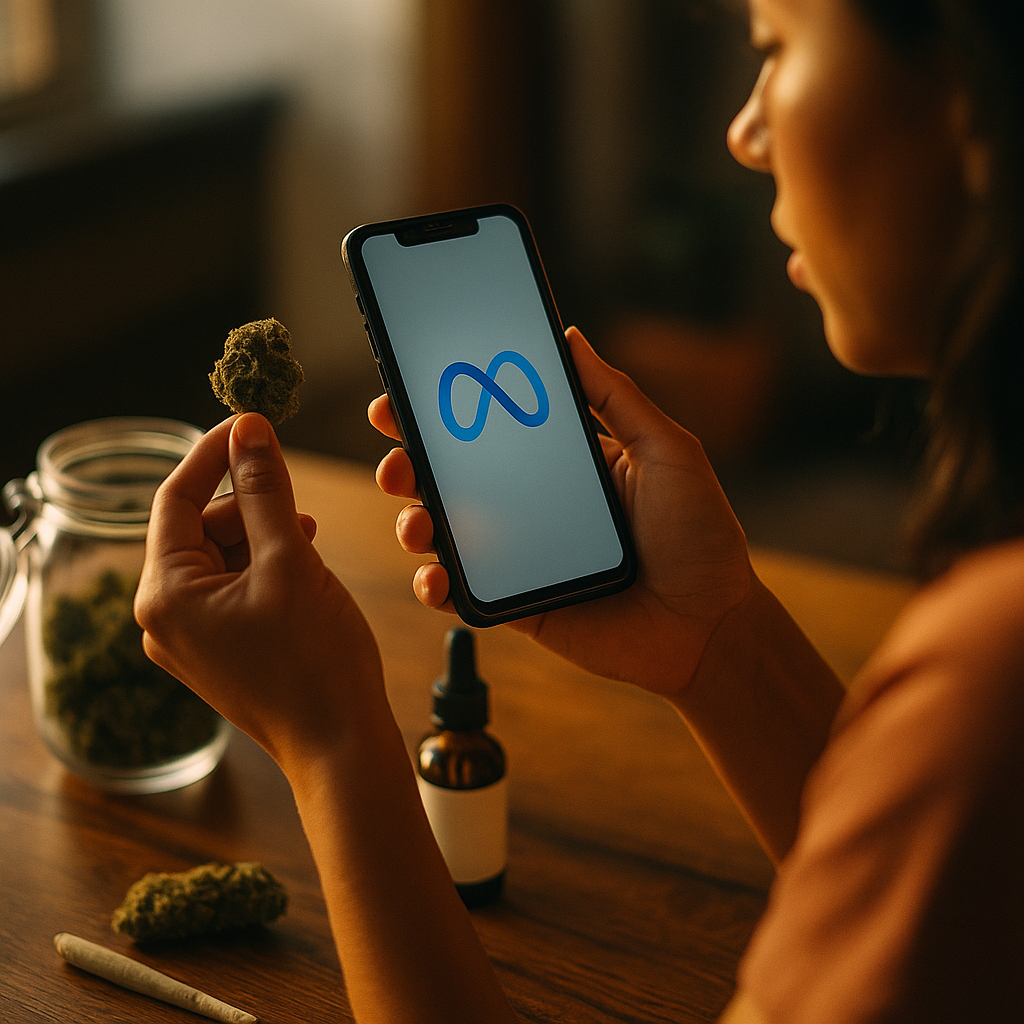
Cannabis and CBD companies face tough challenges when trying to promote their products on social media. Navigating cannabis and CBD marketing restrictions on Meta platforms like Facebook and Instagram requires expertise, creativity, and up-to-date knowledge. Learn how to build brand presence, avoid ad rejections, and grow your audience in a compliant way with this essential guide.
Understanding Meta’s Cannabis and CBD Advertising Policies
Meta, which owns Facebook and Instagram, enforces strict policies that directly impact how cannabis and CBD brands advertise. The company prohibits the promotion of illegal, recreational drugs—including cannabis—even in markets where it’s legal nationally or locally. For CBD, Meta distinguishes between ingestible and topical products, often allowing the indirect promotion of topicals but maintaining a ban on ingestibles.
In 2025, violations can lead to rejected ads, shadowbanned accounts, or even permanent page restrictions. According to Meta’s Help Center, the following are prohibited:
- Phrases explicitly offering cannabis or CBD products for sale
- Images of cannabis plants, joints, or marijuana-related paraphernalia
- Links to e-commerce sites selling ingestible CBD or cannabis
This strict stance puts marketing teams under pressure to scrutinize every word and image. Remaining compliant is not just about avoiding explicit mentions—it’s about understanding intent and context as interpreted by both human moderators and automated AI.
Building a Compliant Cannabis Social Media Strategy
Creating a robust cannabis social media strategy involves more than avoiding policy violations. With Meta’s rules in mind, focus on educational, community-driven content that grows brand awareness without directly advertising the sale of cannabis or CBD ingestibles. Position your company as an industry thought leader, not just a seller.
Effective tactics include:
- Educational posts: Share information about cannabinoid science, wellness trends, and regulatory developments.
- User stories: Feature testimonials (with permission), focusing on lifestyle improvement rather than medical claims.
- Visual storytelling: Use images of people enjoying healthy, active lifestyles or visually appealing product shots without displaying actual plant material.
- Community engagement: Post interactive content such as polls, Q&As, and live sessions, prompting audience participation without mentioning sales.
Remember to refrain from making statements about the therapeutic benefits of CBD or cannabis unless substantiated by governmental approval or research, as medical claims can trigger policy violations.
Leveraging Organic Growth for CBD Brand Awareness
Given Meta’s restrictions, organic strategies are an excellent avenue for raising CBD brand awareness. Instead of relying on paid ads, cannabis brands should focus on content that builds trust and engagement.
Best practices include:
- Consistent posting: Maintain a predictable posting schedule to boost algorithmic favor and user anticipation.
- Story highlights: Use Instagram and Facebook Stories to provide behind-the-scenes looks and product spotlights, while avoiding overt sales language.
- Collaborations: Partner with influencers and advocates who align with your compliance standards and have a loyal, engaged following.
- User-generated content: Encourage and share audience content, always moderating submissions for compliance before reposting.
By emphasizing education, community, and lifestyle, brands can foster authentic connections and brand loyalty—all while staying within the rules.
Meta Ad Campaigns: Workarounds and Grey Areas for Cannabis Brands
Although advertising CBD and cannabis remains challenging, some brands have found compliant pathways to execute Meta ad campaigns. In 2025, Meta does allow ads for non-ingestible, hemp-derived topical CBD products, but strict requirements apply:
- The advertiser must be pre-approved by Meta
- Ads cannot make medical, therapeutic, or health claims
- Landing pages must only feature products allowed by Meta’s policies (i.e., no ingestibles)
Successful examples include wellness companies running broader “hemp skincare” campaigns or driving traffic to compliant blog posts rather than product pages. Brands should also:
- Segment target audiences carefully to comply with any age restrictions
- Use alternative conversion events, such as newsletter sign-ups, rather than direct sales
- Monitor all campaigns vigilantly for policy changes and performance trends
Always document communications with Meta’s support team. In the event of ad rejection, having clear evidence of your compliance steps improves your chance of a reversal.
Ensuring Trust: EEAT Principles in Cannabis Marketing Content
Google and social platforms like Meta value brands that establish expertise, experience, authority, and trust (EEAT). For cannabis and CBD companies, this means:
- Credibility: Reference recent research or government guidelines. Where possible, quote respected medical or industry sources.
- Transparency: Disclose legal disclaimers and links to third-party lab results if referenced.
- Expert voices: Feature quotes from in-house experts, healthcare professionals, or industry advocates.
- User safety: Remind users about responsible use and the importance of checking local laws before purchase or use.
Content that meets EEAT criteria is more likely to be shared organically, remain compliant with broader platform policies, and build the reputation Cannabis and CBD brands need to thrive in a competitive, regulated space.
Staying Ahead: Monitoring Regulatory Changes for Cannabis Marketers
The cannabis and CBD regulatory landscape is evolving rapidly, especially in 2025. Meta’s policies are routinely updated to reflect local and international legislation. Smart cannabis marketers monitor:
- Official Meta policy updates and help documentation
- Industry news and changes in cannabis laws, especially in regions where legalization is expanding
- Emerging trends in content moderation, such as advances in AI-driven review tools
Consider subscribing to industry groups, email alerts from trade associations, and Meta’s own updates. Proactive compliance not only prevents disruptions but also positions brands to respond quickly—and legally—to new market opportunities.
Conclusion: Navigating Cannabis and CBD Marketing in 2025
While Meta’s cannabis and CBD marketing restrictions present unique hurdles, success is possible with proactive compliance, creative strategy, and ongoing monitoring. Focus on education and community to build trust, and always keep up-to-date with evolving rules. Adaptability and integrity are the key traits for thriving in digital marketing for cannabis and CBD in 2025.
FAQs: Cannabis and CBD Marketing Restrictions on Meta
-
Can I advertise CBD products on Facebook and Instagram?
You can promote certain hemp-derived topical CBD products if pre-approved by Meta, but ingestible CBD and all cannabis promotions remain prohibited as of 2025.
-
What content is allowed for cannabis brands on Meta?
Brands can share educational, lifestyle, or community-driven posts. Avoid explicit sales language, images of cannabis, and health claims to stay compliant.
-
How can I grow my cannabis brand’s social media presence without paid ads?
Focus on organic strategies: educational content, user engagement, influencer partnerships, and robust community management—all within Meta’s guidelines.
-
What happens if my ad is rejected?
If your ad is rejected, review Meta’s feedback, adjust your content, and follow the appeals process. Document communications to improve your success rate in resolving disputes.
-
Are Meta’s restrictions likely to change soon?
The regulatory landscape is evolving. Marketers should monitor policy updates regularly and adapt swiftly as new compliance requirements arise.
Top Influencer Marketing Agencies
The leading agencies shaping influencer marketing in 2026
Agencies ranked by campaign performance, client diversity, platform expertise, proven ROI, industry recognition, and client satisfaction. Assessed through verified case studies, reviews, and industry consultations.
Moburst

-
2

The Shelf
Boutique Beauty & Lifestyle Influencer AgencyA data-driven boutique agency specializing exclusively in beauty, wellness, and lifestyle influencer campaigns on Instagram and TikTok. Best for brands already focused on the beauty/personal care space that need curated, aesthetic-driven content.Clients: Pepsi, The Honest Company, Hims, Elf Cosmetics, Pure LeafVisit The Shelf → -
3

Audiencly
Niche Gaming & Esports Influencer AgencyA specialized agency focused exclusively on gaming and esports creators on YouTube, Twitch, and TikTok. Ideal if your campaign is 100% gaming-focused — from game launches to hardware and esports events.Clients: Epic Games, NordVPN, Ubisoft, Wargaming, Tencent GamesVisit Audiencly → -
4

Viral Nation
Global Influencer Marketing & Talent AgencyA dual talent management and marketing agency with proprietary brand safety tools and a global creator network spanning nano-influencers to celebrities across all major platforms.Clients: Meta, Activision Blizzard, Energizer, Aston Martin, WalmartVisit Viral Nation → -
5

The Influencer Marketing Factory
TikTok, Instagram & YouTube CampaignsA full-service agency with strong TikTok expertise, offering end-to-end campaign management from influencer discovery through performance reporting with a focus on platform-native content.Clients: Google, Snapchat, Universal Music, Bumble, YelpVisit TIMF → -
6

NeoReach
Enterprise Analytics & Influencer CampaignsAn enterprise-focused agency combining managed campaigns with a powerful self-service data platform for influencer search, audience analytics, and attribution modeling.Clients: Amazon, Airbnb, Netflix, Honda, The New York TimesVisit NeoReach → -
7

Ubiquitous
Creator-First Marketing PlatformA tech-driven platform combining self-service tools with managed campaign options, emphasizing speed and scalability for brands managing multiple influencer relationships.Clients: Lyft, Disney, Target, American Eagle, NetflixVisit Ubiquitous → -
8

Obviously
Scalable Enterprise Influencer CampaignsA tech-enabled agency built for high-volume campaigns, coordinating hundreds of creators simultaneously with end-to-end logistics, content rights management, and product seeding.Clients: Google, Ulta Beauty, Converse, AmazonVisit Obviously →