


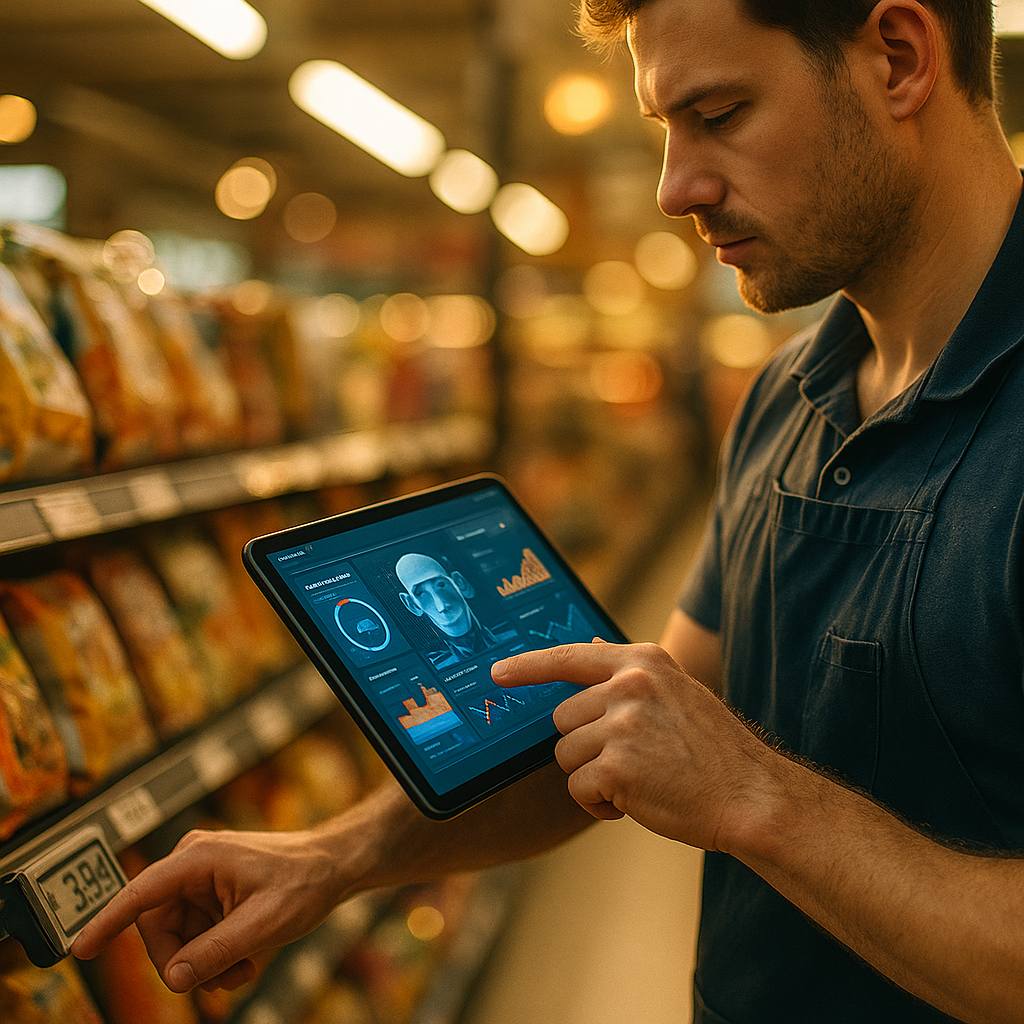
AI For Real-Time Price Optimization is changing how retailers react to demand swings, competitor moves, and supply constraints. In 2025, the biggest advantage comes from linking pricing decisions to what is actually available nearby, not just what is forecasted. When local inventory becomes the signal, price becomes a lever you can pull instantly—without guessing. Ready to see how it works?
Local inventory pricing: why shelf reality beats forecasts
Most pricing systems still treat inventory as a back-office metric. That separation is expensive. When a store is overstocked on a fast-depreciating item, the “right” price is different than when that same item is scarce two miles away. Local inventory pricing ties price to the stock position of a specific store, micro-fulfillment center, or delivery zone, so decisions reflect what customers can buy right now.
In practice, this means your pricing logic accounts for:
- On-hand and available-to-promise inventory (what can actually be sold today).
- Inbound supply and lead times (what will arrive soon, and how certain it is).
- Sell-through velocity by store and channel (pickup, ship-from-store, walk-in).
- Local demand signals such as events, weather, and neighborhood patterns.
Local inventory is also a customer experience variable. If a shopper sees “Only 2 left near you,” the perceived value changes, and so does their willingness to pay—up to the point where price feels unfair. A well-designed system uses inventory-aware logic to improve both margin and availability, without surprising customers.
Retailers and brands that operate across multiple locations often discover that uniform pricing hides performance. A store with excess inventory quietly accumulates carrying costs, while a store with low stock sells out too early and loses potential profit. Inventory-linked pricing corrects both outcomes, and it does so at the level where decisions matter: locally.
Demand-based pricing AI: how models make real-time decisions
Demand-based pricing AI uses machine learning to estimate how quantity sold will change as price changes, given context. The goal is not to “raise prices whenever demand is high,” but to choose the price that best matches your objective—margin, revenue, sell-through, availability, or a balanced scorecard—while respecting constraints.
A practical real-time pricing system typically includes:
- Elasticity modeling that learns how sensitive demand is to price by product, store cluster, channel, and seasonality.
- Context features such as local stock, competitor price, promotion flags, day-of-week, weather, and delivery promise.
- Optimization logic that selects a price from allowed ranges and rules, maximizing the chosen objective.
- Continuous learning so the model adapts as customer behavior and competitive conditions shift.
Real-time does not mean chaotic. Strong systems run within guardrails: minimum margin, price floor/ceiling, brand price image limits, and policy constraints. The AI recommends or applies a price change only when it predicts meaningful impact, reducing noise for store teams and protecting customer trust.
One important nuance: inventory-based pricing is not the same as “dynamic pricing” headlines. Retailers can run inventory-aware prices in controlled ways, such as:
- Micro-promotions for overstocked local SKUs.
- Soft price increases when local stock is tight but replenishment is uncertain.
- Channel-specific offers for click-and-collect when store shelves need relief.
To anticipate your next question—“How fast is real-time?”—many teams start with refresh cycles every 15–60 minutes for e-commerce and once or twice daily for stores, then tighten intervals as data quality and operational confidence grow.
Retail price optimization software: data inputs and architecture that work
Retail price optimization software succeeds or fails on data integrity and system design. In 2025, most retailers already have the core components, but they often sit in silos: POS, ERP, OMS, WMS, loyalty, and competitor feeds. The winning architecture connects them with a pricing decision layer built for speed and governance.
Key data inputs you should prioritize:
- Local inventory accuracy: on-hand, reserved, damaged, shrink adjustments, and real-time availability.
- Transaction and basket data: units, revenue, discount depth, returns, and substitution patterns.
- Competitor pricing: local online offers, marketplace prices, and major nearby chains (when legally and ethically sourced).
- Promotion calendar: planned campaigns, manufacturer funding, and coupon stacking rules.
- Product attributes: brand, pack size, perishability, lifecycle stage, and comparable items.
- Service constraints: delivery windows, pickup capacity, and fulfillment costs by node.
A resilient workflow typically looks like this:
- Ingest and validate inventory and sales feeds with anomaly detection (sudden stock spikes, negative on-hand, missing stores).
- Score candidate prices using models and business rules.
- Run an approval path (optional) for high-impact changes, sensitive categories, or regulated products.
- Publish prices to POS/e-commerce and confirm propagation (price activation monitoring is essential).
- Measure impact with causal testing where possible, not just before/after comparisons.
If you are wondering where teams get stuck, it is usually at the intersection of inventory accuracy and execution: prices change, but store counts are wrong, or signage and shelf labels lag behind. That is why top programs include operational readiness as part of the technology plan.
Dynamic pricing by location: strategies that protect brand trust
Dynamic pricing by location can lift performance, but it must be customer-safe. Shoppers accept variability when it is understandable—because costs differ, availability differs, or the offer is clearly tied to convenience. They resist it when it feels arbitrary. Your approach should emphasize consistency of principles, not identical prices everywhere.
Strategies that tend to work well:
- Inventory-led markdowns: reduce prices locally when weeks-of-supply exceeds target, especially for seasonal, perishable, or trend-driven items.
- Scarcity protection: modest increases when stock is low and replenishment risk is high, capped to avoid price shocks.
- Localized bundles: use value bundles to move overstock while keeping shelf price stable.
- Price zones with AI within zones: maintain zone-level coherence, while letting AI fine-tune within pre-set bounds.
Guardrails to implement from day one:
- Change frequency limits by category (customers notice price flapping).
- Maximum delta rules (for example, no more than X% up or down in a given window).
- Fairness checks to avoid patterns that look discriminatory or that penalize certain neighborhoods.
- Explainability notes for internal teams: “Price lowered due to overstock; target sell-through not met.”
Many readers ask whether location-based pricing creates channel conflict. It can, unless you coordinate policy. A clear framework helps: define when e-commerce follows local store pricing, when it uses a regional price, and how pickup or ship-from-store inherits the selling node’s inventory context. The goal is a coherent customer promise.
Inventory-aware promotions: balancing sell-through and profitability
Inventory-aware promotions replace blanket discounts with targeted actions. Instead of discounting every store equally, you discount where inventory is heavy, demand is soft, or expiration risk is rising. This approach can reduce margin waste while improving in-stock performance where demand is strongest.
Effective promotion tactics tied to local inventory include:
- Store-specific markdown ladders that trigger when weeks-of-supply crosses thresholds.
- Time-boxed offers for slow movers: “Today only” pricing to avoid long-term price image damage.
- Geo-targeted digital coupons that pull demand toward the right node without changing shelf price.
- Substitution-aware promotions: discount the right item so you do not cannibalize a higher-margin substitute unnecessarily.
To keep profitability in view, your AI should optimize at contribution margin level, not just top-line revenue. That means incorporating:
- Unit cost and vendor funding (including rebates and promotional support).
- Fulfillment cost to serve by node and method (pickup vs delivery).
- Spoilage or obsolescence risk for perishables and seasonal items.
Teams also ask how to avoid training the customer to wait for discounts. The answer is control and segmentation: use inventory-aware markdowns primarily for excess stock, apply them locally, and prefer targeted incentives (loyalty offers) over across-the-board price cuts when you want to preserve price integrity.
Pricing governance and compliance: deploying AI with accountable controls
AI-driven pricing can move fast, so governance must be equally strong. In 2025, leaders treat pricing as a controlled system: transparent objectives, auditable decisions, and clear human ownership. This is central to Google’s helpful content and EEAT expectations: expertise in the method, experience in operations, authority through documented process, and trust via safeguards.
Governance practices that reduce risk:
- Documented pricing policy that defines objectives, constraints, and acceptable triggers tied to inventory.
- Approval tiers for sensitive categories, large price moves, and high-visibility items (KVIs).
- Audit logs showing data inputs, model version, recommended price, applied price, and reason codes.
- Monitoring dashboards for anomalies: margin dips, sell-out spikes, competitor gaps, and customer complaints.
- Bias and fairness reviews for location-based patterns, plus legal review where required.
Operationally, assign clear ownership:
- Pricing lead accountable for policy and performance.
- Merchants/category managers accountable for strategy and exceptions.
- Data and ML owners accountable for model quality and drift management.
- Store ops and e-commerce ops accountable for execution and customer-facing accuracy.
If you are concerned about “black box” decisions, choose models and tooling that provide interpretable drivers at the recommendation level. You do not need to expose proprietary logic to customers, but internal teams must understand why a change happened to manage it responsibly.
FAQs
What is real-time price optimization based on local inventory?
It is a pricing approach that adjusts prices using near-real-time signals from a specific location’s available inventory, expected replenishment, and local demand, rather than relying only on regional averages or long-range forecasts.
How often should prices update in an inventory-aware system?
Update frequency depends on category and channel. Many retailers start with hourly or several-times-daily updates online and daily or a few times per week in stores, then refine as execution (labels, signage, POS sync) becomes reliable.
Does inventory-based pricing require competitor price scraping?
No. Local inventory is a powerful signal on its own. Competitor pricing can improve performance in competitive categories, but it is optional and should be sourced ethically and in compliance with platform and legal requirements.
Will localized pricing confuse customers?
It can if changes are frequent or unexplained. Use guardrails (limits on frequency and size of changes), keep principles consistent, and prefer targeted offers over constant shelf-price movement for highly visible products.
What are the biggest data risks?
The top risks are inaccurate on-hand inventory, delayed price propagation to POS/e-commerce, and missing promotion constraints. Address them with inventory reconciliation, activation monitoring, and validation checks before publishing prices.
How do you measure success beyond revenue?
Track gross margin, contribution margin after fulfillment costs, sell-through, stockout rate, markdown spend, waste/spoilage, and customer metrics such as complaint rate and price perception surveys where available.
AI For Real-Time Price Optimization delivers the most value when it responds to what is truly available in each local market. By connecting clean inventory signals to demand models, promotion logic, and strict governance, you can lift margin, reduce waste, and improve in-stock performance without damaging trust. The takeaway: start with inventory accuracy, add guardrails, and scale from controlled tests to confident automation.
Top Influencer Marketing Agencies
The leading agencies shaping influencer marketing in 2026
Agencies ranked by campaign performance, client diversity, platform expertise, proven ROI, industry recognition, and client satisfaction. Assessed through verified case studies, reviews, and industry consultations.
Moburst

-
2

The Shelf
Boutique Beauty & Lifestyle Influencer AgencyA data-driven boutique agency specializing exclusively in beauty, wellness, and lifestyle influencer campaigns on Instagram and TikTok. Best for brands already focused on the beauty/personal care space that need curated, aesthetic-driven content.Clients: Pepsi, The Honest Company, Hims, Elf Cosmetics, Pure LeafVisit The Shelf → -
3

Audiencly
Niche Gaming & Esports Influencer AgencyA specialized agency focused exclusively on gaming and esports creators on YouTube, Twitch, and TikTok. Ideal if your campaign is 100% gaming-focused — from game launches to hardware and esports events.Clients: Epic Games, NordVPN, Ubisoft, Wargaming, Tencent GamesVisit Audiencly → -
4

Viral Nation
Global Influencer Marketing & Talent AgencyA dual talent management and marketing agency with proprietary brand safety tools and a global creator network spanning nano-influencers to celebrities across all major platforms.Clients: Meta, Activision Blizzard, Energizer, Aston Martin, WalmartVisit Viral Nation → -
5

The Influencer Marketing Factory
TikTok, Instagram & YouTube CampaignsA full-service agency with strong TikTok expertise, offering end-to-end campaign management from influencer discovery through performance reporting with a focus on platform-native content.Clients: Google, Snapchat, Universal Music, Bumble, YelpVisit TIMF → -
6

NeoReach
Enterprise Analytics & Influencer CampaignsAn enterprise-focused agency combining managed campaigns with a powerful self-service data platform for influencer search, audience analytics, and attribution modeling.Clients: Amazon, Airbnb, Netflix, Honda, The New York TimesVisit NeoReach → -
7

Ubiquitous
Creator-First Marketing PlatformA tech-driven platform combining self-service tools with managed campaign options, emphasizing speed and scalability for brands managing multiple influencer relationships.Clients: Lyft, Disney, Target, American Eagle, NetflixVisit Ubiquitous → -
8

Obviously
Scalable Enterprise Influencer CampaignsA tech-enabled agency built for high-volume campaigns, coordinating hundreds of creators simultaneously with end-to-end logistics, content rights management, and product seeding.Clients: Google, Ulta Beauty, Converse, AmazonVisit Obviously →