


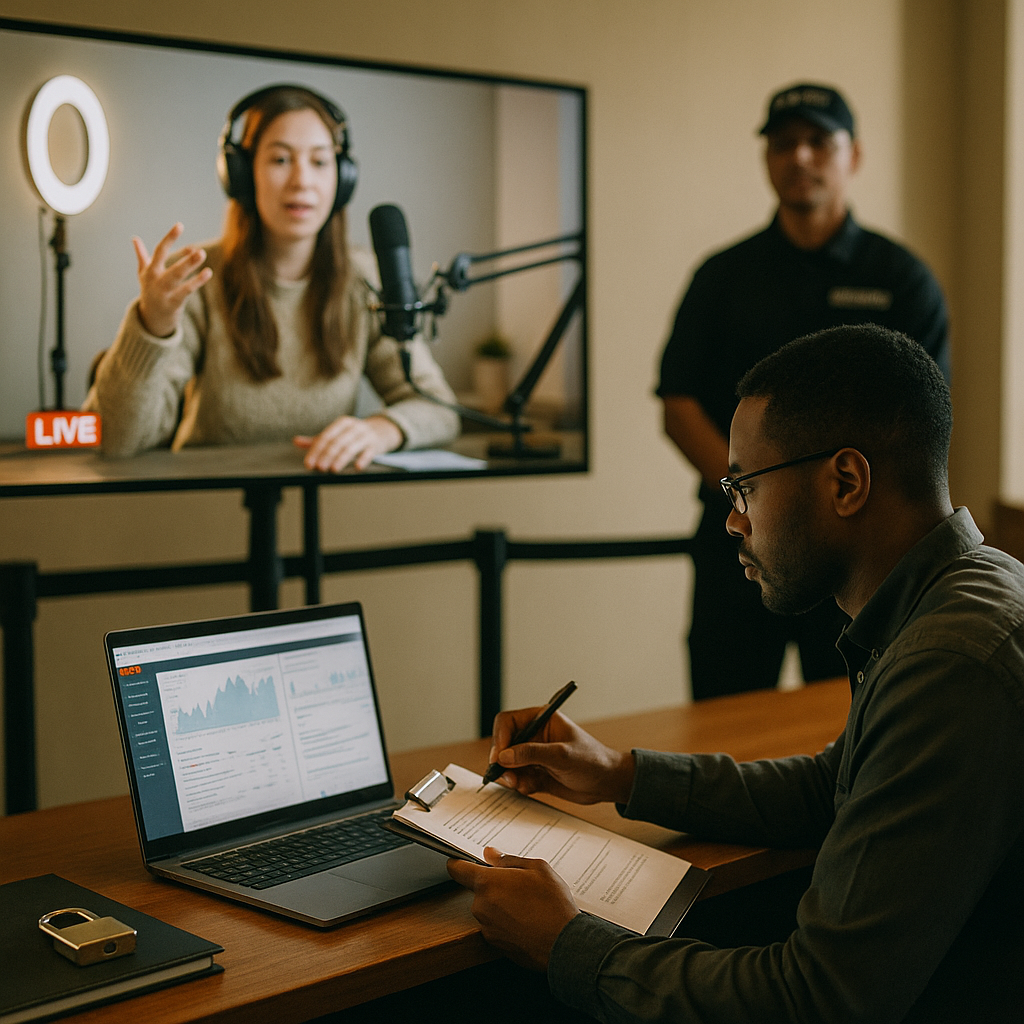
When 500 Creators Hit “Post” Simultaneously, Your Approval Process Is Already Broken
A single large-scale brand activation can generate over 2,000 pieces of creator content in 48 hours. According to Statista’s creator economy data, brands allocated an average of 27% of their digital budgets to influencer programs in recent years — and the biggest chunk of that spend now flows into large-format creator events. Coachella brand houses. Product launch summits. Multi-city press trips with hundreds of attendees. The problem? Traditional governance — approve every caption, review every Story frame — collapses under that volume. The Scale-Over-Control Governance Framework offers an alternative: pre-approved content guardrails, real-time monitoring triggers, and disclosure verification systems that protect the brand without strangling output.
Why the Approve-Everything Model Fails at Scale
Let’s do the math. If 500 creators each post three pieces of content — a Reel, a Story sequence, and a static feed post — that’s 1,500 assets in a compressed window. Even with a team of five reviewers working eight-hour shifts, each reviewer must evaluate one piece of content every 96 seconds. No context. No nuance. Just rubber-stamping or bottlenecking.
The result is predictable. Either content sits in a queue and misses the cultural moment it was designed to capture, or your team waves everything through and the “review process” becomes theater. Neither outcome protects the brand.
Governance at scale isn’t about seeing everything. It’s about knowing which 5% of content carries 95% of your risk — and building systems that surface exactly that.
This is the core insight behind the Scale-Over-Control Governance Framework. You shift from gatekeeper to architect. Instead of reviewing content, you design the conditions under which content gets created, and you build tripwires that fire only when something actually goes wrong. For deeper context on how creative control affects liability, the legal landscape is evolving fast.
Building Pre-Approved Content Guardrails That Actually Work
Pre-approved guardrails are not a brand brief. A brief tells creators what to say. Guardrails tell them what they cannot say — and leave everything else open. The distinction matters enormously at 500-plus scale.
Effective guardrails have three layers:
- Hard boundaries. These are non-negotiable. No unapproved health claims. No comparative competitor statements. No use of unlicensed music (a growing concern — see our coverage on music licensing risk). No content involving minors without separate consent documentation. Hard boundaries should fit on a single page. If your “guardrails” document runs 12 pages, you’ve written a brief, not a boundary set.
- Soft guidance. These are suggestions, not rules. Preferred hashtags. Recommended angles. Example content that performed well at previous events. Soft guidance gives creators a creative launchpad without mandating output.
- Format-specific rules. A TikTok has different risk vectors than a LinkedIn carousel. Stories disappear (mostly). Feed posts persist. Live streams can’t be pre-reviewed by definition. Your guardrails should acknowledge that not all formats carry equal risk and calibrate accordingly.
One tactic that works: traffic-light cards. Physical or digital cards given to every creator at check-in that categorize actions as green (go ahead), yellow (check with your brand contact first), or red (do not do this under any circumstances). Simple. Scannable. Memorable. Far more effective than a PDF no one reads.
The FTC’s endorsement guidelines make clear that brands bear responsibility for the content their sponsored creators produce — even when no explicit script was provided. Guardrails are your documented evidence that you took reasonable steps. They’re also your best argument in any regulatory review that you exercised appropriate oversight without exercising editorial control, a distinction with major FTC liability implications.
Real-Time Monitoring Triggers: Watching the Signal, Not the Noise
You cannot monitor 1,500 pieces of content manually. You shouldn’t try. What you can do is build a monitoring architecture that surfaces anomalies — the posts that actually need human eyes.
Think of it like a hospital ICU. Nurses don’t listen to every heartbeat. They watch monitors that alarm when something deviates from expected parameters. Your event content monitoring should work the same way.
What to monitor for:
- Keyword and phrase triggers. Set alerts for competitor brand mentions, regulated claim language (“clinically proven,” “FDA approved,” “guaranteed results”), and profanity or slur detection. Tools like Brandwatch, Sprinklr, and Sprout Social offer real-time social listening with customizable keyword alerts that can be configured per campaign.
- Sentiment deviation. If 490 creators are posting positive content and 10 are posting neutral-to-negative, you want to see those 10 immediately. Sentiment triggers don’t mean the content is bad — but they flag content that warrants review.
- Visual compliance flags. AI-powered image recognition can now scan for brand logo misuse, unapproved product placement, or visual elements that conflict with campaign guidelines. This technology has matured significantly, and platforms like CreatorIQ and GRIN have integrated visual compliance scanning into their dashboards.
- Engagement velocity anomalies. A post going viral from your event is usually good news. Unless it’s going viral because the creator said something problematic. Unusual engagement spikes should trigger a human review within 30 minutes.
The key principle: monitoring triggers should produce a manageable queue. If your system flags 300 of 1,500 posts, your triggers are too sensitive. Aim for a flag rate under 8%. That gives a small team a realistic volume to review in near-real-time.
The best monitoring systems don’t create more work. They create the right work — directing human attention to the small number of posts that carry actual risk.
Disclosure Verification at Scale
This is where most brands fail catastrophically. And it’s where the regulatory exposure is highest.
The FTC doesn’t accept “we told them to disclose” as a defense. You need evidence that disclosure actually happened — across every piece of sponsored content, from every creator, on every platform. At 500-plus scale, that’s a verification nightmare unless you systematize it.
Three approaches that work in combination:
Automated disclosure scanning. Use platform APIs and third-party tools to scan published content for required disclosure language (#ad, #sponsored, paid partnership labels). CreatorIQ, Traackr, and impact.com all offer automated disclosure detection. Set up daily sweeps during your event window and for 30 days afterward — because creators often post follow-up content that still requires disclosure.
Platform-native partnership tools. Instagram’s Branded Content tools, TikTok’s branded content toggle, and YouTube’s paid promotion checkbox create platform-level disclosure that creators can’t easily remove or obscure. Make activation of these tools a contractual requirement, not a suggestion. For brands managing influencer disclosure failures, this is the single highest-ROI intervention.
Post-event audit with teeth. Within 72 hours of event conclusion, run a comprehensive audit of all creator content. Any post missing proper disclosure gets a direct outreach: fix it within 24 hours or face contractual consequences (typically a reduction or forfeiture of payment). Document every outreach and every resolution. This paper trail is your regulatory armor.
One detail brands consistently overlook: Stories and ephemeral content. Just because a Story disappears after 24 hours doesn’t mean disclosure wasn’t required during those 24 hours. Screen-capture tools and Story archiving services (like Storyheap or platform-native download features) should be running throughout your event to capture ephemeral content before it vanishes. This is essential for any brand accountability audit.
The Operational Stack: Who Owns What
Frameworks are useless without clear ownership. For a 500-plus creator event, the governance org chart should look like this:
- Guardrail design: Legal + brand marketing, finalized 30 days before event
- Creator onboarding and guardrail communication: Influencer marketing team or agency partner
- Real-time monitoring: Dedicated social listening analyst(s) with escalation authority — not the same people running the event
- Disclosure verification: Compliance lead with tool access, running automated sweeps and managing remediation outreach
- Escalation decisions: A single senior decision-maker (VP-level or above) who can authorize content takedown requests within 60 minutes
The most common failure mode? Distributed accountability. When “everyone” is responsible for monitoring, no one is. Assign names to roles, not departments.
What Happens When Something Slips Through
It will. Accept that now.
At 500-plus scale, perfection is not the standard. Reasonable, documented, systematic effort is the standard — and it’s the standard the FTC applies. Your response protocol matters more than your prevention rate. Have a documented escalation playbook that covers: who contacts the creator, what the remediation options are (edit, delete, add disclosure), what the timeline is, and who documents the resolution.
Speed matters. A non-compliant post that gets fixed in four hours is a process success. The same post lingering for two weeks is a liability event. As HubSpot’s marketing research has documented, the brands that weather regulatory scrutiny best are invariably the ones with the fastest response loops, not the fewest incidents.
Your Next Move
Before your next large-scale creator event, build a one-page guardrail card, select and configure a real-time monitoring tool with keyword and disclosure triggers, and assign a named compliance lead with explicit escalation authority. Those three steps will cover 80% of your governance exposure — without slowing down a single creator.
Frequently Asked Questions
How many content reviewers do brands need for a 500-plus creator event?
With a Scale-Over-Control Governance Framework, the goal is not to review every piece of content manually. Instead, brands should staff two to three dedicated monitoring analysts who focus exclusively on flagged content from automated triggers. Aiming for a flag rate under 8% keeps the review queue manageable and ensures human attention goes where risk is highest.
What disclosure language is required for creator content at branded events?
The FTC requires clear and conspicuous disclosure of material connections. Acceptable disclosures include #ad, #sponsored, or platform-native paid partnership labels. The disclosure must appear where consumers will see it — not buried below the fold or hidden among dozens of hashtags. Each platform has its own branded content tools that should be activated as a contractual requirement.
Can brands be held liable for creator content posted at sponsored events?
Yes. The FTC holds brands responsible for ensuring that sponsored creators make proper disclosures, even when the brand did not approve or review the specific content. Documented guardrails, systematic monitoring, and prompt remediation of non-compliant posts constitute the reasonable measures the FTC expects brands to take.
What tools can automate disclosure verification at scale?
Platforms like CreatorIQ, Traackr, and impact.com offer automated disclosure detection that scans published posts for required hashtags and partnership labels. Combining these tools with platform-native branded content features — such as Instagram’s Paid Partnership tag or TikTok’s branded content toggle — creates a layered verification system that works at high volume.
How quickly should brands respond to non-compliant creator content?
Best practice is to identify and initiate remediation within four hours of a non-compliant post going live. The response protocol should include direct creator outreach, clear remediation options such as editing or adding disclosure, and documentation of every step taken. Speed of response is often more important than prevention rate in demonstrating regulatory compliance.
Top Influencer Marketing Agencies
The leading agencies shaping influencer marketing in 2026
Agencies ranked by campaign performance, client diversity, platform expertise, proven ROI, industry recognition, and client satisfaction. Assessed through verified case studies, reviews, and industry consultations.
Moburst

-
2

The Shelf
Boutique Beauty & Lifestyle Influencer AgencyA data-driven boutique agency specializing exclusively in beauty, wellness, and lifestyle influencer campaigns on Instagram and TikTok. Best for brands already focused on the beauty/personal care space that need curated, aesthetic-driven content.Clients: Pepsi, The Honest Company, Hims, Elf Cosmetics, Pure LeafVisit The Shelf → -
3

Audiencly
Niche Gaming & Esports Influencer AgencyA specialized agency focused exclusively on gaming and esports creators on YouTube, Twitch, and TikTok. Ideal if your campaign is 100% gaming-focused — from game launches to hardware and esports events.Clients: Epic Games, NordVPN, Ubisoft, Wargaming, Tencent GamesVisit Audiencly → -
4

Viral Nation
Global Influencer Marketing & Talent AgencyA dual talent management and marketing agency with proprietary brand safety tools and a global creator network spanning nano-influencers to celebrities across all major platforms.Clients: Meta, Activision Blizzard, Energizer, Aston Martin, WalmartVisit Viral Nation → -
5

The Influencer Marketing Factory
TikTok, Instagram & YouTube CampaignsA full-service agency with strong TikTok expertise, offering end-to-end campaign management from influencer discovery through performance reporting with a focus on platform-native content.Clients: Google, Snapchat, Universal Music, Bumble, YelpVisit TIMF → -
6

NeoReach
Enterprise Analytics & Influencer CampaignsAn enterprise-focused agency combining managed campaigns with a powerful self-service data platform for influencer search, audience analytics, and attribution modeling.Clients: Amazon, Airbnb, Netflix, Honda, The New York TimesVisit NeoReach → -
7

Ubiquitous
Creator-First Marketing PlatformA tech-driven platform combining self-service tools with managed campaign options, emphasizing speed and scalability for brands managing multiple influencer relationships.Clients: Lyft, Disney, Target, American Eagle, NetflixVisit Ubiquitous → -
8

Obviously
Scalable Enterprise Influencer CampaignsA tech-enabled agency built for high-volume campaigns, coordinating hundreds of creators simultaneously with end-to-end logistics, content rights management, and product seeding.Clients: Google, Ulta Beauty, Converse, AmazonVisit Obviously →