


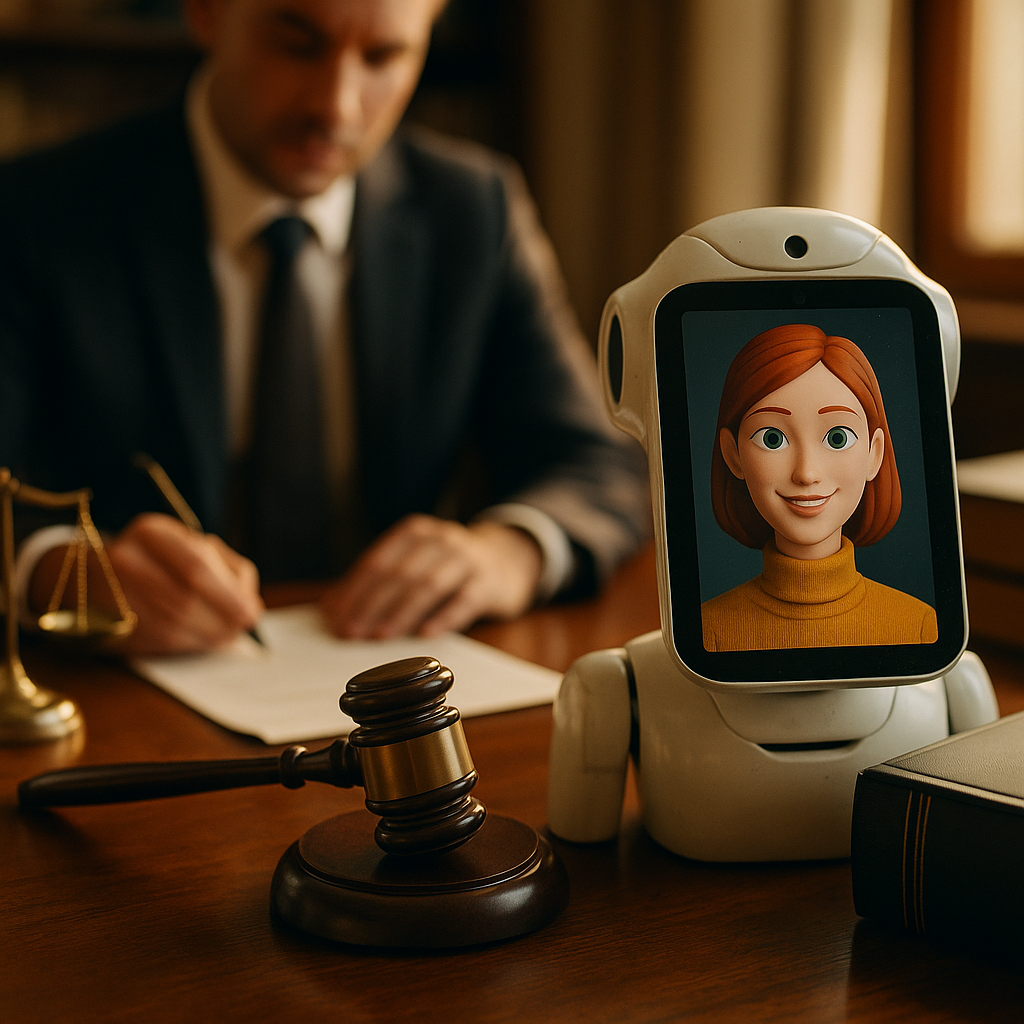
Brands now deploy conversational characters that feel human, remember context, and speak with a distinctive voice across channels. Those “almost-person” experiences can build loyalty, but they also create real exposure when the persona gives advice, makes promises, or harms reputations. This guide to Understanding Legal Liabilities For Sentient-Acting AI Brand Personas explains the key risk areas and practical controls so you can innovate confidently—before an AI misstep becomes tomorrow’s headline.
AI brand persona legal liability: why “human-like” behavior changes risk
In 2025, many AI brand personas are designed to simulate empathy, intent, and continuity. Even when your terms say “this is AI,” users often rely on the persona as if it were a trained employee. That reliance changes the legal and regulatory posture because your organization is the deploying entity and typically the party with the duty to prevent foreseeable harm.
“Sentient-acting” does not mean legally sentient. In most jurisdictions, the persona is not a legal person; it is a tool you control. Liability often flows through familiar doctrines:
- Agency and apparent authority: If the persona appears authorized to make offers, negotiate, or approve refunds, customers may reasonably treat its statements as binding.
- Negligence: If you deploy a system without reasonable safeguards (testing, monitoring, escalation), foreseeable misstatements or harmful outputs can create claims.
- Product/service liability concepts: When AI features are part of a product or service, plaintiffs may argue defects in design, warnings, or instructions.
- Regulatory duties: Privacy, advertising, consumer protection, discrimination, and sector rules (finance, health, children) apply regardless of whether a human or AI spoke.
Practical takeaway: treat the persona as a customer-facing representative. If you would not allow a new human agent to improvise unsupervised, do not allow the AI to do so either.
Consumer protection & deceptive AI marketing compliance: promises, endorsements, and disclosures
AI personas increase the speed and volume of claims a brand can make—often with unintended specificity. That is fertile ground for consumer protection and false advertising allegations. Common triggers include:
- Unsubstantiated performance claims (“guaranteed results,” “clinically proven,” “works for everyone”).
- Misleading pricing or availability (incorrect discounts, “limited stock” claims, inaccurate shipping timelines).
- Undisclosed sponsorships or endorsements when the persona “recommends” partners or affiliates.
- AI impersonation or simulated intimacy that pressures vulnerable users to purchase.
To reduce risk, implement a “claims control” framework:
- Pre-approved claim library: Give the model a set of allowed product claims with required qualifiers and prohibited phrases.
- Hard refusals: Block medical, legal, investment, or eligibility determinations unless you are licensed and have a compliant workflow.
- Clear, persistent disclosure: Identify the persona as AI in a way users will see during the interaction, not buried in a footer. Reinforce at key moments (checkout, complaint handling, advice-like queries).
- Offer and contract guardrails: Require human confirmation for binding changes (pricing, refunds above threshold, bespoke promises).
Answering the likely follow-up: a disclaimer helps, but it rarely cures misleading content. Regulators and courts look at the overall net impression and whether the user was likely to be misled.
Privacy, data protection & AI conversation logs: consent, retention, and cross-border issues
Sentient-acting personas often collect more personal data because users share context, emotions, and history. Your liability increases if that data is processed without a lawful basis, kept too long, used for training without permission, or shared with vendors without proper safeguards.
Key compliance points for AI conversation systems:
- Data minimization: Capture only what the persona needs for the user’s request. If “memory” is optional, make it opt-in and easy to delete.
- Purpose limitation: If logs are collected for support, do not automatically reuse them for marketing or model improvement unless your legal basis and notices cover that use.
- Retention schedules: Define how long transcripts and embeddings are stored, then enforce deletion technically, not just in policy.
- User rights operations: Enable access, deletion, and correction requests that cover both raw transcripts and derived data.
- Vendor and transfer controls: Ensure contracts address subprocessors, security measures, incident notification, and international transfers where applicable.
Practical implementation idea: split your system into two stores—(1) ephemeral session context that expires quickly and (2) explicitly consented “profile memory” with a user dashboard to view and delete stored items.
Defamation, IP & right of publicity: when the persona speaks “on behalf” of the brand
Human-like AI can generate confident, narrative responses that unintentionally harm third parties. That can lead to defamation claims, IP disputes, and right-of-publicity complaints—especially if the persona “names names,” mimics a celebrity, or fabricates allegations.
Common risk scenarios include:
- Defamation: The persona asserts false facts about a competitor, a former employee, or a customer (“they committed fraud”).
- Trade libel: It criticizes a product with false, specific claims (“their batteries explode”).
- Copyright: It reproduces protected text, images, lyrics, or code beyond fair use boundaries.
- Trademark: It misuses logos, generates confusingly similar brand elements, or implies affiliation.
- Right of publicity: It uses a real person’s name, voice, likeness, or distinctive style to sell products without consent.
Controls that work in practice:
- Named-entity guardrails: When the user asks about identifiable people or competitors, route to safer patterns (neutral summaries, citations, or refusal).
- Source-grounded responses: For factual claims, require the model to rely on approved sources or your own verified knowledge base.
- Similarity and copyright filters: Detect and block near-verbatim reproduction and “write the full lyrics” requests.
- Persona design constraints: Avoid voices, catchphrases, or mannerisms that track closely to a living celebrity unless licensed.
Follow-up question: “If users prompt it to say something bad, are we still liable?” Often, yes—at least in part—if you could reasonably foresee misuse and failed to implement prevention, moderation, and takedown processes.
Product liability, safety & negligent reliance: regulated advice and high-stakes decisions
Sentient-acting personas can create negligent reliance risk when users treat outputs as expert guidance. This becomes critical in health, finance, education, employment, and safety contexts. Even outside regulated sectors, an AI that gives step-by-step instructions can cause injury or loss.
High-risk patterns to watch:
- Diagnosis or treatment guidance beyond general wellness information.
- Investment recommendations tailored to a user’s situation.
- Legal advice that suggests a course of action or guarantees outcomes.
- Employment screening or performance evaluation statements that drive adverse decisions.
- Safety instructions involving chemicals, machinery, self-harm, or weapons.
What “reasonable care” looks like in 2025 for brand-deployed AI:
- Risk tiering: Classify intents as low, medium, or high risk; require stricter controls as risk increases.
- Human-in-the-loop: For high-stakes issues, route to trained staff and lock the persona from giving direct instructions.
- Calibration and uncertainty: Require the persona to communicate limits and ask clarifying questions rather than guessing.
- Safety policy enforcement: Use classifiers and refusal templates for self-harm and dangerous guidance.
- Incident playbooks: Document how to respond to harmful outputs, including user outreach, logging, and regulator notification where required.
Reader follow-up: “Is a disclaimer enough?” Disclaimers are supportive evidence, but they do not replace safety design. If the experience is built to feel authoritative and personalized, courts may view reliance as foreseeable.
Governance, contracts & auditability: building an AI persona liability shield that holds up
Legal exposure decreases when you can prove disciplined governance: defined ownership, documented decisions, testing evidence, and measurable controls. This is also where Google’s helpful-content expectations align with legal defensibility—transparent, accurate, and user-centered behavior tends to be safer.
Core governance elements to put in place:
- Accountable owners: Assign a business owner, a technical owner, and a legal/privacy reviewer with clear sign-off authority.
- Model and prompt change control: Track versions, approvals, and rollback plans. Treat prompt changes like code releases.
- Evaluation before launch: Test for hallucinations, sensitive traits, biased outputs, and policy violations with realistic user scripts.
- Ongoing monitoring: Sample transcripts, set alert thresholds, and review edge cases. Monitor both outputs and user outcomes (complaints, chargebacks, escalations).
- Audit-ready logging: Keep records of prompts, safety flags, model versions, and human escalations while respecting privacy minimization.
- Vendor contracting: Negotiate security, data use limits, incident response timelines, IP indemnities where feasible, and clear responsibilities between platform, integrator, and brand.
One practical structure: a lightweight “AI Persona Risk Register” that lists each channel (web, app, social DMs, phone), supported intents, prohibited intents, escalation triggers, and the specific legal risks for that surface area.
FAQs
Are sentient-acting AI brand personas legally considered “persons” in 2025?
No. In most places they are treated as software. Liability typically attaches to the deploying business and sometimes to vendors, depending on contracts and the facts.
Can an AI persona legally bind my company to a promise or deal?
It can, especially if users reasonably believe it has authority (apparent authority). Reduce risk by limiting offer-making, requiring confirmations, and clearly routing contractual changes to authenticated workflows.
What is the single biggest legal risk with an AI brand persona?
Uncontrolled statements: inaccurate claims, unauthorized promises, or harmful advice. A controlled claim library, high-risk refusals, and human escalation address this directly.
Do we need user consent to store AI chat transcripts?
It depends on jurisdiction and purpose, but you always need a lawful basis and clear notice. For optional “memory” and training uses, opt-in consent and easy deletion are strongly advisable.
How do we prevent defamation and competitor-targeting outputs?
Use named-entity guardrails, require source-grounded answers, and block “make allegations” prompts. Provide neutral comparisons using verified, pre-approved information.
Who is responsible if the model vendor caused the harmful output?
Users will usually pursue the brand they interacted with. You may have recourse against vendors through contract terms, but you still need deployment controls, monitoring, and incident response.
What should we do immediately after a harmful AI output is discovered?
Preserve logs, stop or restrict the relevant capability, assess user harm, correct misinformation, and document remediation. If personal data or regulated harm is involved, follow your breach/incident notification process.
Sentient-acting AI personas can strengthen a brand, but they also concentrate legal risk at the point of conversation. In 2025, the safest path combines clear disclosures, disciplined claims control, privacy-by-design data handling, and strong governance with audit-ready logs. Treat the persona like a powerful employee: trained, supervised, and limited in authority. With the right guardrails, innovation remains scalable and defensible.
Top Influencer Marketing Agencies
The leading agencies shaping influencer marketing in 2026
Agencies ranked by campaign performance, client diversity, platform expertise, proven ROI, industry recognition, and client satisfaction. Assessed through verified case studies, reviews, and industry consultations.
Moburst

-
2

The Shelf
Boutique Beauty & Lifestyle Influencer AgencyA data-driven boutique agency specializing exclusively in beauty, wellness, and lifestyle influencer campaigns on Instagram and TikTok. Best for brands already focused on the beauty/personal care space that need curated, aesthetic-driven content.Clients: Pepsi, The Honest Company, Hims, Elf Cosmetics, Pure LeafVisit The Shelf → -
3

Audiencly
Niche Gaming & Esports Influencer AgencyA specialized agency focused exclusively on gaming and esports creators on YouTube, Twitch, and TikTok. Ideal if your campaign is 100% gaming-focused — from game launches to hardware and esports events.Clients: Epic Games, NordVPN, Ubisoft, Wargaming, Tencent GamesVisit Audiencly → -
4

Viral Nation
Global Influencer Marketing & Talent AgencyA dual talent management and marketing agency with proprietary brand safety tools and a global creator network spanning nano-influencers to celebrities across all major platforms.Clients: Meta, Activision Blizzard, Energizer, Aston Martin, WalmartVisit Viral Nation → -
5

The Influencer Marketing Factory
TikTok, Instagram & YouTube CampaignsA full-service agency with strong TikTok expertise, offering end-to-end campaign management from influencer discovery through performance reporting with a focus on platform-native content.Clients: Google, Snapchat, Universal Music, Bumble, YelpVisit TIMF → -
6

NeoReach
Enterprise Analytics & Influencer CampaignsAn enterprise-focused agency combining managed campaigns with a powerful self-service data platform for influencer search, audience analytics, and attribution modeling.Clients: Amazon, Airbnb, Netflix, Honda, The New York TimesVisit NeoReach → -
7

Ubiquitous
Creator-First Marketing PlatformA tech-driven platform combining self-service tools with managed campaign options, emphasizing speed and scalability for brands managing multiple influencer relationships.Clients: Lyft, Disney, Target, American Eagle, NetflixVisit Ubiquitous → -
8

Obviously
Scalable Enterprise Influencer CampaignsA tech-enabled agency built for high-volume campaigns, coordinating hundreds of creators simultaneously with end-to-end logistics, content rights management, and product seeding.Clients: Google, Ulta Beauty, Converse, AmazonVisit Obviously →