


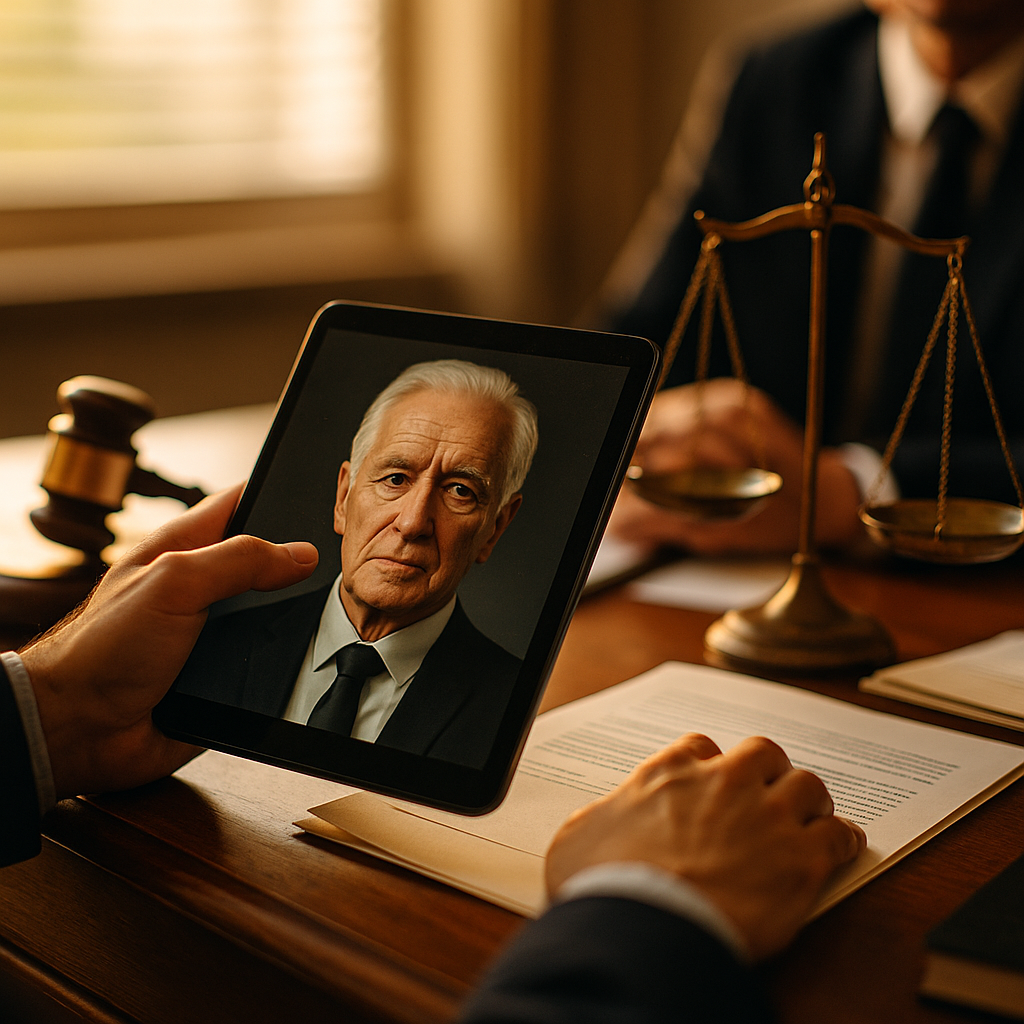
In 2025, digital media teams can recreate faces and voices with a few clicks, but rights don’t disappear when a person dies. Navigating the legal risks of posthumous likeness usage in digital media demands careful planning across publicity, copyright, trademark, privacy, and consumer protection rules. One misstep can trigger injunctions, takedowns, and costly reputational damage—so what does “safe” actually look like?
Posthumous publicity rights and likeness laws
The first legal question is usually: who owns the right to control the deceased person’s name, image, voice, signature, and other identity markers? In many jurisdictions, those interests are covered by “right of publicity” or similar personality rights. The complexity is that these rights can be state-based, country-specific, and highly variable, and they may survive death for a set period (or not at all).
Key risk: you may have permission from a family member but not from the legally recognized rights holder (often an estate, trust, or designated assignee). In some places, only certain categories of people can sue; elsewhere, an estate must have exploited the likeness during life to claim posthumous rights. You must verify the controlling law and chain of authority before production, not after launch.
Practical steps:
- Identify the governing law based on where the content is distributed, where the deceased was domiciled, and where the rights are recognized and enforceable.
- Confirm ownership by requesting estate documentation (letters of administration, executor authorization, trust instruments, or written assignments).
- Define scope precisely: mediums (film, game, social, AR/VR), territories, term, and whether the license covers “new” performances (synthetic voice/face) versus archival use.
- Plan for platform distribution: major platforms often respond quickly to credible rights complaints, even if a legal dispute is unresolved.
Follow-up readers ask: “If it’s a tribute, is it automatically allowed?” Tributes can still be commercial exploitation. Good intent does not defeat a publicity claim. If the tribute is monetized or promotional, treat it like advertising and clear rights accordingly.
Digital media licensing for deceased celebrities
Licensing a posthumous likeness is more than getting a signature on a short-form release. It is a negotiated package that should align business objectives with legal and ethical safeguards.
What to license (and why it matters):
- Name and image for marketing, packaging, key art, thumbnails, and social media cuts.
- Voice and performance if you plan to synthesize speech, dub, or create new dialogue; this often requires additional approvals and restrictions.
- Biographical elements (catchphrases, signature gestures, wardrobe) that can trigger claims even if you avoid exact images.
- Approvals for scripts, storyboards, and final renders to reduce disputes about “derogatory” or “out-of-character” uses.
License clauses that reduce risk:
- Representations and warranties from the licensor that they control the rights, with a clear chain-of-title schedule.
- Indemnities tied to specific breach scenarios (ownership, scope, approvals), plus a practical cap or insurance-backed approach.
- Morals/brand integrity provisions defining prohibited contexts (politics, adult content, sensitive products) and who decides if a use is “disparaging.”
- AI and synthetic media terms specifying whether models can be trained on the likeness, whether datasets must be deleted post-project, and whether outputs can be reused in sequels or spinoffs.
- Audit and reporting if royalties apply across multiple channels, including short-form and UGC monetization programs.
Follow-up readers ask: “Can we rely on a ‘work made for hire’ approach?” Not for identity rights. Work-for-hire may cover commissioned footage or recordings you create, but it does not automatically grant the ability to exploit a person’s likeness outside the contracted scope.
Deepfake and AI voice replication compliance
AI changes the risk profile because it can create new performances that look and sound authentic. That raises issues under publicity rights, consumer protection laws, and platform rules, even when you never touched copyrighted footage.
Core compliance principles for synthetic likeness:
- Obtain explicit consent from the rights holder for AI-generated voice, face, and “new dialogue,” not just “use of image.”
- Disclose material manipulation where required or prudent, especially if the content could be interpreted as factual, documentary, news-related, or an endorsement.
- Avoid deception in ads: if a reasonable viewer might think the deceased personally approved the product, regulators and plaintiffs will focus on misleadingness.
- Document provenance: keep records of datasets, prompts, model versions, and approvals so you can respond quickly to a complaint or audit.
Labeling decisions: Some teams treat disclosure as a branding and trust tool, not just a legal defense. A concise notice (for example, “digitally recreated performance used with permission”) can reduce confusion and complaint velocity without spoiling the creative intent.
Follow-up readers ask: “What if we only use an ‘inspired’ voice?” If the output is identifiable as the person, claims can still arise. Courts and regulators often look at recognizability and the overall impression, not just technical similarity measures.
Estate permission and intellectual property clearance
Even with estate permission, you still need a full clearance plan. Posthumous likeness projects can implicate multiple IP layers at once, and missing one can derail distribution.
Clearance checklist beyond publicity rights:
- Copyright: archival photos, film clips, interviews, recordings, and even certain distinctive wardrobe designs or artworks in the frame may require licenses.
- Trademark: names, logos, band marks, and signature phrases may be registered and controlled by business entities or successors.
- Music rights: if the deceased was a musician, you may need master, publishing, and performance permissions, plus union or guild considerations.
- Guild/union constraints: if the person was a performer, collective bargaining rules may affect reuse of performances, dubbing, and digital replication terms.
- Defamation and false light: while some claims do not survive death in certain jurisdictions, projects can still expose you to claims from living individuals portrayed alongside the deceased, or from estates under related theories.
How to structure estate engagement:
- Start with a creative brief that states intended tone, context, and monetization model.
- Agree on an approvals workflow with timelines, objective criteria, and “deemed approved” provisions to avoid endless revisions.
- Set dispute resolution mechanisms (escalation steps, mediation, venue) that can prevent last-minute injunctive filings.
Follow-up readers ask: “If the estate says yes, are we safe?” Not automatically. A third party may control a photo, a logo, or a prior contract that restricts certain uses. Treat estate permission as necessary but rarely sufficient.
Ethical and reputational risk management for digital resurrection
Legal compliance does not guarantee audience acceptance. Posthumous “digital resurrection” can trigger backlash if it feels exploitative, politically charged, or inconsistent with the person’s values. In 2025, that reputational impact can be faster and more damaging than litigation.
Operational practices that reduce both legal and reputational exposure:
- Context testing: assess whether the use implies endorsement, mocks the person, or places them in sensitive categories (health, finance, politics).
- Ethics review: create an internal checkpoint with legal, brand, editorial, and DEI stakeholders to evaluate dignity, intent, and potential harm.
- Audience transparency: decide what to disclose and where (opening credits, descriptions, ad disclaimers) based on how “real” the performance appears.
- Data minimization: store only what you need, restrict access to source materials and models, and define deletion/retention periods.
- Crisis playbooks: prepare scripts and evidence packets (licenses, approvals, provenance logs) for platform disputes and press inquiries.
Follow-up readers ask: “Can we avoid controversy by making it ‘clearly fictional’?” Fictional framing helps, but it doesn’t eliminate recognizability-based identity claims or consumer deception concerns in advertising. The safest approach is permission plus truthful presentation.
Cross-border distribution and platform enforcement
Digital media travels instantly. A campaign cleared for one jurisdiction can still be challenged elsewhere, and platform policies often act as a parallel enforcement layer. In 2025, you must plan for global distribution realities, even if your company is local.
Common cross-border friction points:
- Different survivability rules for publicity/personality rights and different thresholds for infringement.
- Privacy and data laws affecting biometric processing, especially when training or storing face/voice models.
- Local advertising standards regarding endorsements, disclosures, and deceptive practices.
- Platform takedown behavior: services may remove content based on policy violations or credible complaints, even before a court ruling.
Distribution-ready risk controls:
- Territory mapping: list target countries/states, identify the highest-risk jurisdictions, and decide whether to geofence certain activations.
- Policy alignment: review platform rules on manipulated media, impersonation, and synthetic content disclosures before you ship creative.
- Localization review: ensure translations and local ad formats do not unintentionally turn a “tribute” into a “product endorsement.”
- Insurance and counsel: obtain media liability coverage where feasible and use counsel experienced in rights clearance for entertainment and advertising.
Follow-up readers ask: “Is a disclaimer enough worldwide?” Disclaimers can reduce confusion, but they rarely cure missing rights. Treat disclaimers as a supplement to permissions, not a substitute.
FAQs about posthumous likeness use in digital media
Do I need permission to use a deceased person’s likeness in a documentary?
Often yes, especially for promotional uses and if you are using recreated performances. For purely informational or newsworthy contexts, some jurisdictions provide protections, but the boundaries are fact-specific. You still must clear copyrights in photos, clips, and recordings, and you should avoid implying endorsement.
Who can grant permission after someone dies?
Typically the estate executor, a trustee, or a company that received an assignment of publicity rights. Do not rely on informal approvals. Request written proof of authority and confirm whether multiple parties must sign (for example, co-executors).
Can we use AI to recreate a voice if we don’t use any original recordings?
Yes, you can technically do it, but legality depends on consent and whether the output is identifiable as the person. AI voice replication can trigger publicity claims and consumer deception concerns, especially in advertising or political contexts. Secure explicit rights for synthetic voice and define acceptable use.
Is it safer if we use a look-alike or sound-alike instead of the real person?
Not necessarily. If the character is recognizable as the deceased person, liability can still arise. Courts and regulators may focus on the net impression and whether the use trades on identity or implies endorsement.
What’s the difference between licensing a photo and licensing a likeness?
A photo license typically covers the photographer’s copyright in that image. A likeness license covers the person’s identity rights. You may need both, plus trademark or music rights depending on context.
What documentation should we keep to protect the project?
Maintain signed licenses and releases, estate authority documents, script and asset approvals, provenance logs for AI generation (datasets, model versions, prompts), records of disclosures, and distribution territory decisions. This package helps with insurer underwriting, platform disputes, and litigation defense.
Posthumous likeness projects succeed when legal, creative, and ethical planning move together. In 2025, the safest path is clear authority from the rights holder, contracts that cover AI-generated performance, and a thorough IP clearance process that anticipates global distribution and platform enforcement. Treat disclosures and dignity safeguards as core product requirements, not optional polish—because trust is the hardest asset to rebuild.
Top Influencer Marketing Agencies
The leading agencies shaping influencer marketing in 2026
Agencies ranked by campaign performance, client diversity, platform expertise, proven ROI, industry recognition, and client satisfaction. Assessed through verified case studies, reviews, and industry consultations.
Moburst

-
2

The Shelf
Boutique Beauty & Lifestyle Influencer AgencyA data-driven boutique agency specializing exclusively in beauty, wellness, and lifestyle influencer campaigns on Instagram and TikTok. Best for brands already focused on the beauty/personal care space that need curated, aesthetic-driven content.Clients: Pepsi, The Honest Company, Hims, Elf Cosmetics, Pure LeafVisit The Shelf → -
3

Audiencly
Niche Gaming & Esports Influencer AgencyA specialized agency focused exclusively on gaming and esports creators on YouTube, Twitch, and TikTok. Ideal if your campaign is 100% gaming-focused — from game launches to hardware and esports events.Clients: Epic Games, NordVPN, Ubisoft, Wargaming, Tencent GamesVisit Audiencly → -
4

Viral Nation
Global Influencer Marketing & Talent AgencyA dual talent management and marketing agency with proprietary brand safety tools and a global creator network spanning nano-influencers to celebrities across all major platforms.Clients: Meta, Activision Blizzard, Energizer, Aston Martin, WalmartVisit Viral Nation → -
5

The Influencer Marketing Factory
TikTok, Instagram & YouTube CampaignsA full-service agency with strong TikTok expertise, offering end-to-end campaign management from influencer discovery through performance reporting with a focus on platform-native content.Clients: Google, Snapchat, Universal Music, Bumble, YelpVisit TIMF → -
6

NeoReach
Enterprise Analytics & Influencer CampaignsAn enterprise-focused agency combining managed campaigns with a powerful self-service data platform for influencer search, audience analytics, and attribution modeling.Clients: Amazon, Airbnb, Netflix, Honda, The New York TimesVisit NeoReach → -
7

Ubiquitous
Creator-First Marketing PlatformA tech-driven platform combining self-service tools with managed campaign options, emphasizing speed and scalability for brands managing multiple influencer relationships.Clients: Lyft, Disney, Target, American Eagle, NetflixVisit Ubiquitous → -
8

Obviously
Scalable Enterprise Influencer CampaignsA tech-enabled agency built for high-volume campaigns, coordinating hundreds of creators simultaneously with end-to-end logistics, content rights management, and product seeding.Clients: Google, Ulta Beauty, Converse, AmazonVisit Obviously →