


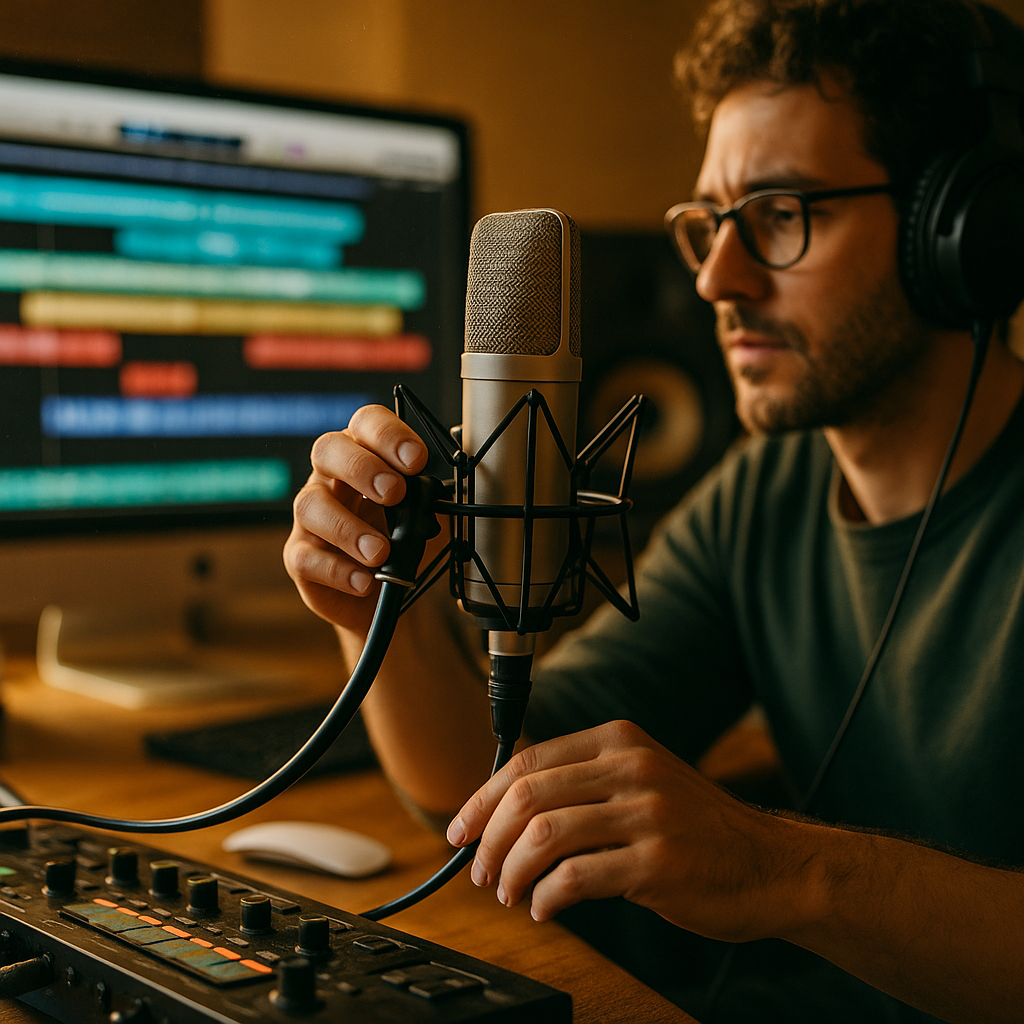
The Psychology Of Sound: Building A Signature Audio Brand Identity is no longer a niche exercise reserved for big broadcasters. In 2025, audio cues shape attention, trust, and recall across podcasts, apps, retail spaces, and video. The right sonic choices can make a brand feel familiar in seconds, while the wrong ones create friction. So what actually makes sound “stick” in memory?
audio branding: Why Sound Shapes Perception Faster Than Visuals
Sound reaches people in moments when screens are unavailable or ignored: while commuting, cooking, scrolling with the phone muted, or walking into a store. That “always-on” access is one reason audio branding can influence perception quickly. But the deeper reason is psychological: hearing is continuous and temporal. You don’t “glance” at audio; it unfolds and guides mood in real time.
In practical brand terms, sonic cues can do three high-value jobs within a few seconds:
- Signal identity: A distinctive motif or sound mark becomes an instant recognizer, even without a logo.
- Set emotional context: Tempo, harmony, and timbre can communicate calm, urgency, sophistication, or playfulness before a single word is spoken.
- Reduce uncertainty: Interface sounds and consistent voice style reassure users that actions “worked,” improving perceived usability and trust.
Many teams treat audio as decoration added at the end. A better approach is to treat audio as part of the product experience. If you already manage typography, motion, and color as a system, audio deserves the same rigor: consistent rules, clear intent, and measurable outcomes like recall, completion rates, and sentiment shifts.
sonic branding: The Brain Science Behind Recognition, Emotion, and Memory
Sonic branding works when it aligns with how people encode and retrieve sound. Three mechanisms matter most for brand identity:
1) Pattern recognition and distinctiveness. The brain is a pattern detector. Short, repeatable motifs—especially those with a unique interval or rhythm—become easier to recognize over time. Distinctiveness matters: if your “brand sound” resembles common stock music, it will be processed as generic background rather than identity.
2) Emotion via arousal and valence. Tempo, loudness, and spectral brightness often increase arousal; harmony and timbre shape valence (pleasant vs. tense). A brand that promises safety and clarity should not use anxious dissonance or overly aggressive transients. Conversely, a fitness or gaming brand may benefit from energetic dynamics—if it stays consistent with the brand’s tone.
3) Memory through repetition and context cues. People remember sound better when they hear it in consistent contexts: app start, confirmation events, video opens, podcast intros, retail entry points. Repetition must be controlled—too frequent and it becomes irritating. The goal is a predictable “signature,” not a jingle that follows the customer everywhere.
Follow-up question most teams ask: Should we use music or a sound logo? Often, you need both in a hierarchy. A sound logo (1–3 seconds) is the identity stamp. A music bed (10–60 seconds or more) carries mood and storytelling. A sound system (UI tones, transitions, notification rules) supports usability. When these elements share a common sonic DNA, your brand becomes recognizable across channels.
sound logo: How to Design a Signature That People Actually Remember
A strong sound logo is short, ownable, and flexible. It should survive different instruments, volumes, and environments—from phone speakers to retail PA systems—without losing its identity. Use these principles to guide design and approval:
- Start with brand attributes, not instruments. Translate attributes into sound decisions. “Clear” might mean clean timbres and uncluttered harmony; “bold” might mean wider intervals and stronger transients.
- Keep it simple enough to hum. If listeners can internally reproduce the contour, recall improves. Complexity reduces recognition under noisy conditions.
- Design for low-fidelity playback. Many customers hear your mark on small speakers. Ensure the core motif remains audible without deep bass or sparkling highs.
- Create a modular family. Build variants: a full 2–3 second mark, a 1-second sting, and micro-cues (200–500 ms) for UI confirmations. Consistency grows familiarity.
- Test for confusion. In concept testing, ask participants what brand they think it belongs to and why. If responses cluster around a competitor or a category cliché, you need more distinctiveness.
Another common follow-up: Do we need vocals? Vocals can increase memorability, but they also introduce language, demographic cues, and higher risk of polarizing taste. Many brands start with instrumental marks to stay adaptable, then add voice elements later if the brand strategy calls for it.
From an EEAT standpoint, treat creation like a professional design process: document creative rationale, reference auditory accessibility considerations, and ensure you can explain why each element supports the brand promise. This becomes essential when multiple stakeholders must approve audio work.
brand voice: Matching Tone, Speech, and Music to Customer Expectations
Your brand voice is not only copywriting. In audio, it includes narrator tone, pacing, accent choices, vocal warmth, and production style. When voice and music conflict, audiences feel it as “inauthentic,” even if they can’t explain why.
Use a structured alignment process:
- Define your vocal persona. Decide whether the voice should feel like a coach, a peer, an expert, or a concierge. Set rules for energy level, pace, and emotional range.
- Prioritize clarity over theatricality. If the goal is trust, avoid overly processed vocals or exaggerated announcer styles unless the brand is intentionally performative.
- Map audio choices to customer moments. A checkout confirmation sound should reduce uncertainty; a meditation app’s start sound should lower arousal; a safety warning should be unmissable yet not panic-inducing.
- Respect cultural variation. Musical modes, rhythms, and vocal cues can signal different meanings across regions. If you operate globally, test locally and provide regionalized variants.
Many teams ask: How do we avoid sounding “like everyone else” in our category? Start by auditing category audio conventions, then decide which conventions you will keep (to meet expectations) and which you will deliberately break (to stand out). For example, financial brands often default to soft pianos and slow tempos. A challenger brand may choose brighter timbres and more forward rhythm, while still maintaining a calm, trustworthy mix.
EEAT in practice: use qualified voice talent, capture consistent recording quality, and keep a documented casting rationale. If you claim “friendly and expert,” your voice should reflect that across ads, IVR, podcasts, and in-app guidance.
sensory marketing: Applying Sound Across Touchpoints Without Annoying People
Sensory marketing succeeds when it improves experience rather than demanding attention. Consistent application is what turns a nice audio asset into a recognizable brand identity. Plan for three environments: personal devices, public spaces, and broadcast media.
1) Digital product and UI audio. UI sounds should be functional first. Define a small palette: success, error, warning, neutral tap, and loading/transition cues. Establish rules for duration, frequency, and user control. In 2025, customers expect mute, volume, and accessibility settings by default. If they cannot control audio, you risk churn.
2) Video, social, and podcasts. Build intros and outros that match platform norms. Keep the sound logo clear and early, but avoid blasting it at high loudness. Loudness consistency matters for trust; sudden spikes feel like manipulation. Use the same sonic DNA in background beds, transitions, and stings so that your content remains recognizable even when the logo isn’t present.
3) Retail and physical spaces. In-store music can influence pace and perceived quality, but it can also overwhelm staff and customers if poorly tuned. Set guidelines for playlist energy by daypart, crowd level, and brand positioning. Train teams on why audio matters and how to handle complaints—this is part of experience design, not a “set and forget” playlist.
Follow-up question: How do we avoid annoyance? Use restraint and context. Keep branded cues brief, reserve them for meaningful moments (open, confirm, close), and allow personalization. Measure annoyance directly with customer feedback rather than assuming silence equals approval.
audio identity guidelines: Governance, Testing, and Measuring ROI in 2025
Without audio identity guidelines, brands drift. Different agencies choose different music, product teams invent random UI tones, and the result is inconsistency. Governance protects recognition and improves production efficiency.
Build a practical audio brand system with these components:
- Core assets. Master sound logo, extended theme, UI sound set, and voiceover standards.
- Usage rules. When to use audio, when not to, and how to adapt for platform constraints (short-form, long-form, retail, support lines).
- Technical specs. Loudness targets, file formats, delivery requirements, and mixing rules to prevent harshness on mobile speakers.
- Accessibility guidance. Provide captions where relevant, ensure critical alerts are not audio-only, and include frequency considerations for sensitive listeners.
- Approval workflow. Clear ownership: brand, product, legal, and regional stakeholders. Reduce bottlenecks with pre-approved templates and variants.
Measurement should answer business questions, not just creative ones. A straightforward evaluation stack includes:
- Brand lift studies. Test ad recall and brand attribution with and without sonic elements.
- Behavioral metrics. For apps: task completion, time-to-confirmation, error rates, and support tickets after adding or refining UI sounds.
- Sentiment and annoyance tracking. Survey customers about perceived quality, trust, and irritation; analyze reviews for audio-related complaints.
- Consistency audits. Quarterly checks across touchpoints to ensure the sonic system is being used correctly.
EEAT credibility comes from process transparency: document testing methods, keep the rationale for creative choices, and work with qualified audio professionals (sound designers, composers, mix engineers, and accessibility-informed UX teams). This makes the program scalable and defensible.
FAQs
What is a signature audio brand identity?
A signature audio brand identity is a consistent set of sonic elements—such as a sound logo, music themes, voice style, and UI sounds—that makes a brand recognizable by ear across channels like apps, ads, podcasts, and physical spaces.
How long should a sound logo be?
Most effective sound logos are 1–3 seconds. This length is short enough to avoid fatigue, yet long enough to establish a distinctive rhythm or melodic contour that people can recognize in noisy environments.
Do small businesses need sonic branding, or is it only for large brands?
Small businesses can benefit significantly because audio assets scale cheaply across content. A simple, well-designed sound logo and consistent voice style can improve recall in videos, podcasts, and phone systems without requiring large media budgets.
How do we choose between a human voice and an AI voice?
Choose based on trust and context. Human voices often feel warmer and more credible for emotional or high-stakes topics. AI voices can work for utility, speed, and frequent updates, but they need careful tuning and governance to stay consistent and avoid sounding generic.
How can we test whether our audio branding works?
Use recognition and attribution tests (can people identify your brand from the sound?), brand lift studies in ads, and product metrics for UI audio (completion rates, error rates, support contacts). Also track annoyance and preferences directly through surveys and customer feedback.
What are common mistakes when building an audio brand identity?
Common mistakes include using generic stock music, overusing branded stings until they annoy people, ignoring accessibility and user controls, failing to set loudness standards, and lacking guidelines—leading to inconsistent sound across teams and channels.
Building a signature audio brand identity in 2025 means designing for how people actually hear: in motion, in noise, and across devices. Use psychology to guide distinctiveness, emotion, and memory—then apply the system consistently with clear governance. The takeaway is simple: treat sound as a product experience, test it like any other brand asset, and let every cue earn its place.
Top Influencer Marketing Agencies
The leading agencies shaping influencer marketing in 2026
Agencies ranked by campaign performance, client diversity, platform expertise, proven ROI, industry recognition, and client satisfaction. Assessed through verified case studies, reviews, and industry consultations.
Moburst

-
2

The Shelf
Boutique Beauty & Lifestyle Influencer AgencyA data-driven boutique agency specializing exclusively in beauty, wellness, and lifestyle influencer campaigns on Instagram and TikTok. Best for brands already focused on the beauty/personal care space that need curated, aesthetic-driven content.Clients: Pepsi, The Honest Company, Hims, Elf Cosmetics, Pure LeafVisit The Shelf → -
3

Audiencly
Niche Gaming & Esports Influencer AgencyA specialized agency focused exclusively on gaming and esports creators on YouTube, Twitch, and TikTok. Ideal if your campaign is 100% gaming-focused — from game launches to hardware and esports events.Clients: Epic Games, NordVPN, Ubisoft, Wargaming, Tencent GamesVisit Audiencly → -
4

Viral Nation
Global Influencer Marketing & Talent AgencyA dual talent management and marketing agency with proprietary brand safety tools and a global creator network spanning nano-influencers to celebrities across all major platforms.Clients: Meta, Activision Blizzard, Energizer, Aston Martin, WalmartVisit Viral Nation → -
5

The Influencer Marketing Factory
TikTok, Instagram & YouTube CampaignsA full-service agency with strong TikTok expertise, offering end-to-end campaign management from influencer discovery through performance reporting with a focus on platform-native content.Clients: Google, Snapchat, Universal Music, Bumble, YelpVisit TIMF → -
6

NeoReach
Enterprise Analytics & Influencer CampaignsAn enterprise-focused agency combining managed campaigns with a powerful self-service data platform for influencer search, audience analytics, and attribution modeling.Clients: Amazon, Airbnb, Netflix, Honda, The New York TimesVisit NeoReach → -
7

Ubiquitous
Creator-First Marketing PlatformA tech-driven platform combining self-service tools with managed campaign options, emphasizing speed and scalability for brands managing multiple influencer relationships.Clients: Lyft, Disney, Target, American Eagle, NetflixVisit Ubiquitous → -
8

Obviously
Scalable Enterprise Influencer CampaignsA tech-enabled agency built for high-volume campaigns, coordinating hundreds of creators simultaneously with end-to-end logistics, content rights management, and product seeding.Clients: Google, Ulta Beauty, Converse, AmazonVisit Obviously →