


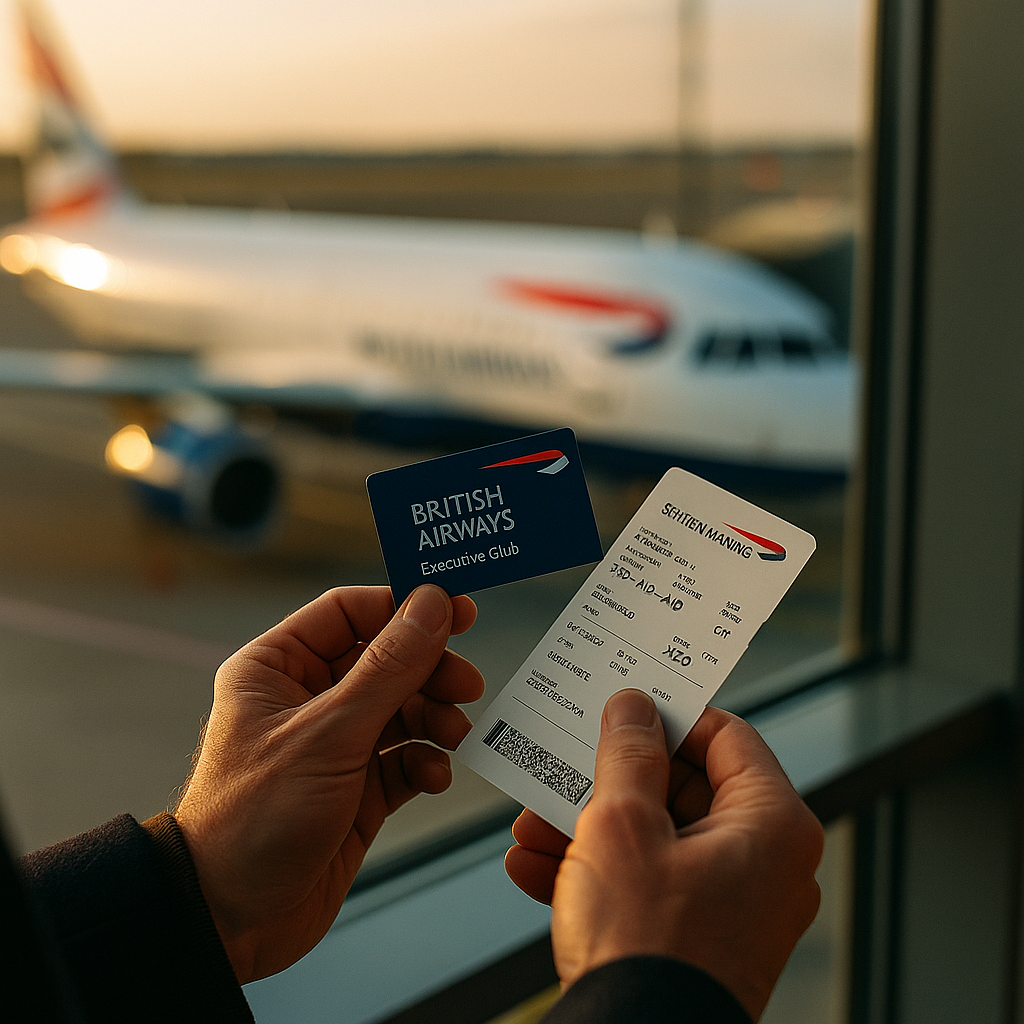
Case Study: How British Airways Used Small Wins to Revive Loyalty ROI matters in 2025 because loyalty leaders face higher costs, tighter margins, and more skeptical customers. British Airways’ turnaround shows how incremental improvements—across data, benefits, and operations—can restore profitability without a risky “big bang” relaunch. This case study breaks down the levers, the sequencing, and the measurement that made it work—so you can adapt it quickly.
Customer loyalty strategy: Start with a clear ROI problem statement
British Airways approached loyalty like a finance-backed product, not a marketing perk. The first “small win” was clarifying the exact value gap: where the loyalty program created cost without driving incremental revenue or retention. That meant separating gross engagement (sign-ups, app opens, points issued) from net value (incremental trips, higher share of wallet, reduced churn, and lower service cost).
In practical terms, BA’s team treated loyalty ROI as a set of measurable drivers:
- Incremental revenue: additional flights, upgrades, ancillaries, and partner transactions attributable to membership.
- Margin quality: revenue adjusted for redemption costs, breakage assumptions, servicing costs, and partner settlement terms.
- Retention lift: changes in repeat purchase rate and time-to-next-booking among members versus comparable non-members.
- Behavioral depth: more direct bookings, higher basket value, and increased premium cabin consideration.
To keep the work grounded, BA focused on a few high-impact segments first—frequent business travelers, premium leisure travelers, and new members at risk of going inactive. This avoided a common trap: trying to “optimize the whole program” before proving where the money is made or lost.
Follow-up question you may have: “Isn’t loyalty ROI too hard to attribute in airlines?” BA’s approach reduced uncertainty by using controlled comparisons (member cohorts, route/cabin matched groups) and by measuring lift on behaviors BA directly controls (direct booking share, upgrade take rate, ancillary attach, partner conversions).
Avios program optimization: Reduce friction before adding new benefits
BA’s next set of small wins came from removing points friction. Many loyalty programs try to buy goodwill by adding benefits, but BA leaned into a more durable driver: making Avios easier to earn, understand, and use—without inflating program liability.
Key optimization moves included:
- Simpler earning clarity: member communications and digital views that made it easier to predict Avios outcomes for specific trips and actions.
- Redemption usability: improving the customer journey around reward availability messaging, fees transparency, and the steps to complete a redemption.
- Micro-redemption pathways: enabling more “small but satisfying” uses that deliver value without requiring a huge balance.
- Partner conversion pathways: streamlining how members earn through co-brands and partners so the program earns margin from partners while members see faster progress.
This is where the “small wins” concept shows its power: each improvement reduced drop-off at a step in the loyalty funnel—earning, tracking, redeeming, or understanding. Small conversion gains compound, especially in an airline where booking cycles are frequent and the value per conversion can be high.
Follow-up question: “How do you optimize Avios without giving away too much?” BA’s playbook emphasized experience improvements and choice architecture before raising headline earn rates. Better guidance, better transparency, and smoother flows can lift perceived value without materially increasing cost per member.
Loyalty program ROI: Build a measurement system that survives scrutiny
BA strengthened loyalty ROI by adopting an analytics discipline that could withstand finance and executive review. The goal was simple: connect loyalty actions to business outcomes in a way that is repeatable, auditable, and decision-ready.
BA’s measurement approach centered on four practical practices:
- Cohort tracking: monitoring new-member and reactivated-member cohorts to see whether early “wins” translate into repeat booking and higher margin over time.
- Holdouts where possible: using test-and-control designs for offers, communications, and benefit changes to estimate incremental lift rather than relying on correlation.
- Unit economics: evaluating each intervention by incremental contribution margin per targeted member, not just by redemption volume or email clicks.
- Redemption liability governance: improving forecasting of points outstanding, expected redemption behavior, and cost per redemption path.
Crucially, BA did not treat ROI as a single number. It treated ROI as a dashboard of drivers that leadership could manage: if redemption costs rose, did incremental revenue rise more? If engagement increased, did it shift direct share or premium cabin propensity? If a perk boosted satisfaction, did it reduce churn in the segment that matters?
Follow-up question: “What should we measure first if we’re behind?” Start with three metrics you can act on quickly: (1) direct booking share among members, (2) repeat purchase rate within 90–180 days by segment, and (3) contribution margin per member after reward cost. These expose both revenue opportunity and hidden cost.
Customer retention in aviation: Target the moments that decide loyalty
Airline loyalty is heavily shaped by operational moments: disruptions, rebooking, baggage, seat changes, and service recovery. BA’s small wins included improving the loyalty experience at these “decision points,” where a member either reaffirms trust or starts shopping around.
Rather than relying only on generic tier benefits, BA worked to improve member-perceived reliability through:
- Proactive disruption support: clearer communications and faster pathways to rebooking options, reducing the “effort tax” on loyal customers.
- Tier-aware service journeys: ensuring higher-tier members consistently received the service priority they were promised, especially during irregular operations.
- Service recovery consistency: better playbooks for compensation and apology gestures that align with lifetime value, not just the single incident.
These initiatives improve retention because they protect the psychological contract: “If I commit to you, you will look after me.” In aviation, that promise is tested most during disruptions, not during routine flights.
Follow-up question: “Why focus on service operations for loyalty ROI?” Because operational friction erodes the very behaviors that create ROI: repeat purchase, premium upsell, and willingness to book direct. A modest reduction in churn among high-value segments can outweigh many expensive benefit additions.
Airline loyalty marketing: Use personalization that earns trust, not clicks
BA’s marketing-oriented small wins focused on relevance and restraint. Instead of pushing more messages, BA prioritized messages that helped members make better decisions—what to do next to reach a goal, when an offer mattered, and how to redeem with confidence.
Effective personalization in 2025 requires more than inserting a first name. BA’s approach can be summarized as:
- Goal-based nudges: communications tied to member progress (tier milestones, Avios thresholds) with specific next actions.
- Contextual offers: targeting based on likely trip intent (routes searched, seasonality, past travel patterns) rather than blanket promotions.
- Channel discipline: reducing over-messaging and prioritizing the channels members actually use for travel decisions.
- Transparency-first content: clear explanations of fees, restrictions, and best-value redemption options to reduce post-purchase regret.
This builds trust, which is an ROI lever. When members believe the program is straightforward and fair, they engage more often and are more likely to consolidate bookings.
Follow-up question: “How do we avoid personalization feeling intrusive?” Set expectations and deliver utility. Personalization should answer: “What’s in it for me right now?” If a message does not reduce effort, save money, or improve the trip, it does not deserve to be personalized.
Digital loyalty transformation: Sequence small wins into a compounding flywheel
BA’s revival did not depend on a single headline feature. The advantage came from sequencing: each small win made the next one cheaper, faster, and more effective. In loyalty transformations, sequencing is strategy.
A practical sequence BA-like teams can follow:
- Step 1: Fix the basics: ensure earning, balance visibility, and redemption flows work smoothly across web and app.
- Step 2: Improve trust signals: make pricing, fees, and availability communication clearer so members feel in control.
- Step 3: Operationalize tier promises: align airport and contact-center experiences with what members were told to expect.
- Step 4: Add targeted value: introduce benefits or partner offers for the segments where measured incremental margin supports it.
- Step 5: Institutionalize experimentation: keep a pipeline of tests, measure lift, and scale only what earns its place.
From an EEAT perspective, this is the most transferable lesson: treat loyalty as a product with a roadmap, governance, and measurable outcomes. In 2025, leadership teams reward programs that can explain value creation clearly and demonstrate disciplined iteration.
Follow-up question: “What’s the fastest ‘small win’ most airlines can ship?” Often it’s reducing redemption confusion: better search/filtering, clearer fee breakdowns, and a “best use of points” guide. These lower customer effort and increase perceived value quickly.
FAQs
What does “small wins” mean in a loyalty program context?
Small wins are incremental improvements—like reducing redemption friction, improving disruption communications, or sharpening targeting—that each deliver measurable lift. They are designed to compound, creating a larger ROI impact than one risky, expensive relaunch.
How can an airline calculate loyalty ROI credibly?
Use cohort tracking and test-and-control measurement where possible. Tie loyalty interventions to incremental contribution margin, accounting for reward costs, servicing costs, and partner settlement economics—not just engagement metrics.
Which loyalty changes typically improve profitability fastest?
Friction reduction (booking and redemption), partner earning optimization, and tier promise consistency often produce quick returns. They lift retention and direct share without necessarily increasing the cost of benefits.
How do you improve Avios (or any points currency) without inflating liability?
Prioritize usability over generosity: clearer value communication, smoother redemption flows, and more flexible low-cost redemption options. Combine that with better forecasting and governance of outstanding points and redemption mix.
What role does operational performance play in customer retention in aviation?
It is central. During disruptions, members judge whether loyalty “counts.” Faster rebooking paths, tier-aware handling, and consistent service recovery can reduce churn among high-value travelers.
How should loyalty teams work with finance and operations?
Set shared metrics (incremental margin, retention lift, service cost-to-serve), run joint experiments, and align on a roadmap. Loyalty ROI improves when product, marketing, operations, and finance manage the same drivers.
British Airways’ loyalty ROI recovery in 2025 shows that sustainable gains come from disciplined iteration, not sweeping reinvention. By clarifying value drivers, reducing Avios friction, strengthening measurement, improving operational loyalty moments, and using personalization that respects customer trust, BA turned loyalty into a compounding system. The takeaway: pick high-impact journeys, prove lift with data, and scale only the wins that pay.
Top Influencer Marketing Agencies
The leading agencies shaping influencer marketing in 2026
Agencies ranked by campaign performance, client diversity, platform expertise, proven ROI, industry recognition, and client satisfaction. Assessed through verified case studies, reviews, and industry consultations.
Moburst

-
2

The Shelf
Boutique Beauty & Lifestyle Influencer AgencyA data-driven boutique agency specializing exclusively in beauty, wellness, and lifestyle influencer campaigns on Instagram and TikTok. Best for brands already focused on the beauty/personal care space that need curated, aesthetic-driven content.Clients: Pepsi, The Honest Company, Hims, Elf Cosmetics, Pure LeafVisit The Shelf → -
3

Audiencly
Niche Gaming & Esports Influencer AgencyA specialized agency focused exclusively on gaming and esports creators on YouTube, Twitch, and TikTok. Ideal if your campaign is 100% gaming-focused — from game launches to hardware and esports events.Clients: Epic Games, NordVPN, Ubisoft, Wargaming, Tencent GamesVisit Audiencly → -
4

Viral Nation
Global Influencer Marketing & Talent AgencyA dual talent management and marketing agency with proprietary brand safety tools and a global creator network spanning nano-influencers to celebrities across all major platforms.Clients: Meta, Activision Blizzard, Energizer, Aston Martin, WalmartVisit Viral Nation → -
5

The Influencer Marketing Factory
TikTok, Instagram & YouTube CampaignsA full-service agency with strong TikTok expertise, offering end-to-end campaign management from influencer discovery through performance reporting with a focus on platform-native content.Clients: Google, Snapchat, Universal Music, Bumble, YelpVisit TIMF → -
6

NeoReach
Enterprise Analytics & Influencer CampaignsAn enterprise-focused agency combining managed campaigns with a powerful self-service data platform for influencer search, audience analytics, and attribution modeling.Clients: Amazon, Airbnb, Netflix, Honda, The New York TimesVisit NeoReach → -
7

Ubiquitous
Creator-First Marketing PlatformA tech-driven platform combining self-service tools with managed campaign options, emphasizing speed and scalability for brands managing multiple influencer relationships.Clients: Lyft, Disney, Target, American Eagle, NetflixVisit Ubiquitous → -
8

Obviously
Scalable Enterprise Influencer CampaignsA tech-enabled agency built for high-volume campaigns, coordinating hundreds of creators simultaneously with end-to-end logistics, content rights management, and product seeding.Clients: Google, Ulta Beauty, Converse, AmazonVisit Obviously →