


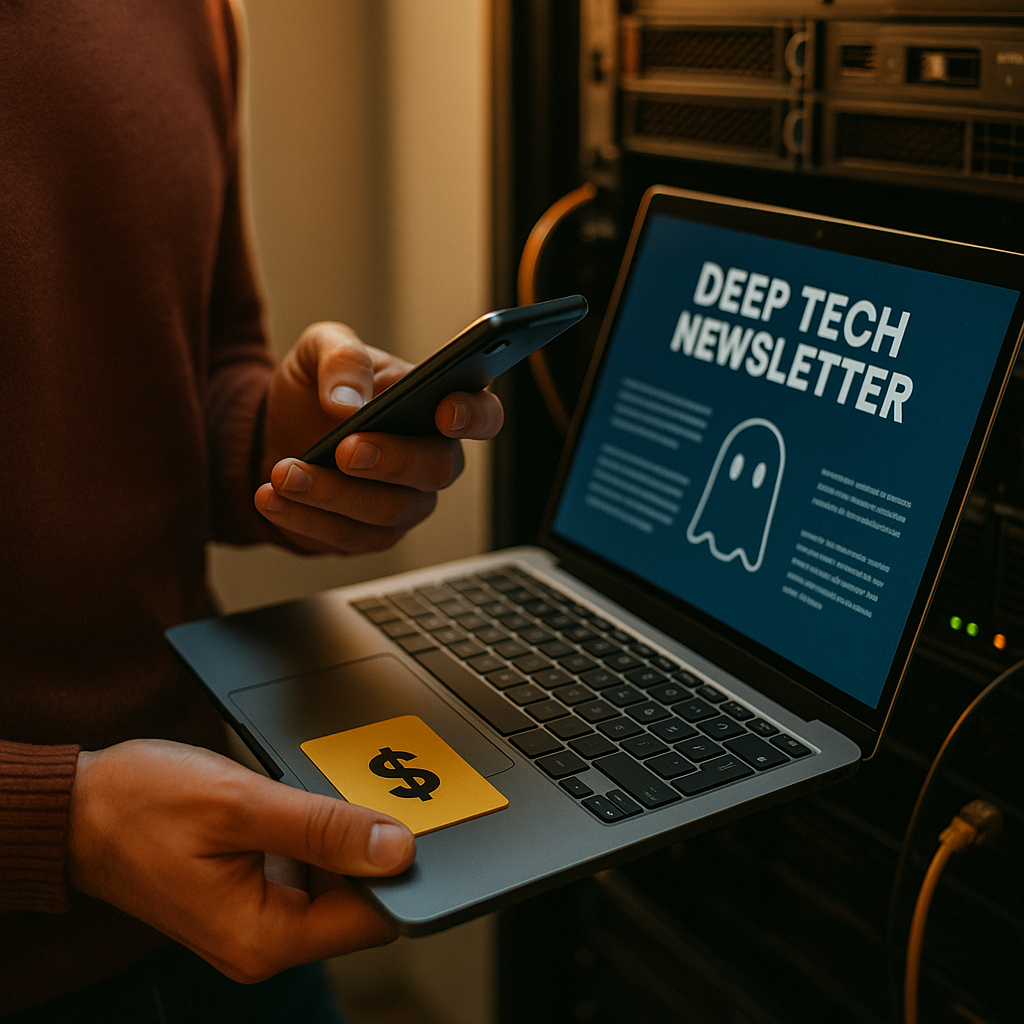
In 2025, deep tech audiences fragment across small, high-trust inboxes where decisions happen fast and publicly. This playbook explains how to win attention and credibility through Sponsoring Deep Tech Newsletters on Niche Ghost Servers—without wasting budget on broad impressions or vanity metrics. You’ll learn how to source the right lists, structure offers, validate performance, and stay compliant while building durable relationships with technical founders. Ready to sponsor like an insider?
Deep tech newsletter sponsorship strategy
Deep tech buyers—research leads, engineering managers, founders, and technical investors—respond best to relevance, proof, and clear next steps. A strong sponsorship strategy starts with audience intent, not newsletter size.
Define one job-to-be-done per campaign. Pick a single outcome: recruit beta users, book technical demos, drive GitHub stars, grow a waitlist, or validate messaging. Deep tech readers dislike vague “brand awareness” ads; they want to know what’s being offered and why it matters.
Map the sponsor message to a specific reader moment. A robotics newsletter read by operations leaders wants ROI and deployment constraints. An applied-ML newsletter wants benchmarks, open-source credibility, and reproducibility. A quantum newsletter audience expects precise claims and nuanced language.
Choose a sponsorship format that matches attention.
- Top slot for high-intent offers (demo, trial, technical webinar) because it captures the highest scroll depth.
- Mid-roll for educational offers (whitepaper, benchmark report, case study) that fit naturally between sections.
- Bottom slot for community asks (survey, open roles, contributor program) where lower CTR can still yield strong conversions.
Build an evidence-backed narrative. Deep tech readers reward rigor. Include one measurable claim, one constraint, and one proof point. Example: “Reduce model inference cost by X% on Y hardware, tested on Z workload; see the methodology.” If you can’t support a number, don’t invent one—state what you can verify.
Anticipate follow-up questions in the ad copy. Your sponsorship should answer: Who is this for? What does it replace? What’s required to try it? What’s the fastest proof of value? Put the friction upfront so the click is qualified.
Ghost newsletter advertising opportunities
Ghost-powered newsletters often run on lean stacks, single-maintainer workflows, and highly niche editorial voices. That combination creates opportunities: lower sponsorship clutter, direct access to the editor, and audiences that self-select for depth.
How to find the right Ghost newsletters.
- Start from communities where deep tech conversations already happen: technical Slack/Discord groups, GitHub orgs, arXiv discussion circles, and specialized conference mailing lists.
- Follow citation trails: many niche writers link to their own newsletters from blog posts, papers, or tool releases.
- Ask your best customers: “Which newsletters do you actually read?” This surfaces high-signal, low-noise lists you won’t find via generic directories.
Qualify opportunities with a fast due-diligence checklist.
- Audience fit: Does the editor clearly state who the newsletter is for? Do posts assume domain knowledge?
- Editorial consistency: Are issues frequent enough to support testing, and consistent enough to predict engagement?
- Sponsorship saturation: Too many sponsors per issue reduces trust. One to two placements per send often performs better than crowded blocks.
- Ad transparency: Look for clear “sponsored” labeling and ethical boundaries. Trust is the inventory.
Understand what “niche Ghost servers” implies operationally. Many Ghost publishers self-host or run custom setups. That can affect tracking, link management, and deliverability practices. Expect variability and plan for simple measurement methods you can validate independently (unique landing pages, UTMs, offer codes).
Negotiate like a partner, not a buyer. In micro-niches, editors protect their credibility. Offer value: early access for readers, a technical teardown, an exclusive benchmark, or a live Q&A. You’ll often earn better placement and more authentic copy when the editor believes the offer helps the audience.
Newsletter sponsorship metrics and attribution
Deep tech sponsorships rarely win on click-through rate alone. The goal is to measure outcomes that match long sales cycles and technical evaluation paths.
Set a measurement stack before you book inventory. Agree on what you will receive after each send: delivered count, opens (if available), clicks, and send time. Because email privacy features can distort open rates, treat opens as directional, not definitive. Prioritize clicks and on-site behavior you can observe.
Use attribution that survives messy reality.
- Unique landing pages per newsletter (recommended). Keep it lightweight, fast, and technical.
- UTM parameters to separate issue date and placement (top/mid/bottom).
- Single “primary action” on the page (book, start, download, join). Too many options hide intent.
- Post-click micro-conversions: time on page, scroll depth, benchmark download, docs visit, GitHub star, “copy install command” events.
Define success with three layers of KPIs.
- Immediate: qualified clicks, cost per qualified visit, conversion to waitlist/trial.
- Near-term: demo show-up rate, technical evaluation starts, proof-of-concept requests.
- Downstream: pipeline created, activated users, revenue influenced.
Ask the editor for context, not just numbers. Niche publishers often know their readers personally. Request qualitative feedback: which sentence resonated, what objections appeared in replies, and whether the offer felt aligned. Those insights can outperform dashboards for message-market fit.
Run controlled tests. Keep everything constant except one variable: headline, offer, placement, or landing page angle. In small lists, you may need multiple sends to reach confidence. Plan for learning velocity, not instant certainty.
Deep tech audience targeting on niche lists
Targeting in newsletters is less about programmatic segmentation and more about choosing the right editorial context. In deep tech, context is targeting.
Create an audience matrix. Build a simple grid with roles (founder, researcher, engineer, product, investor) and domains (AI infrastructure, biotech tooling, robotics, chips, climate hardware). Then match each newsletter to one or two cells. This prevents you from forcing one message across incompatible readers.
Align offer complexity to reader sophistication.
- Research-heavy audiences: publish methodology, citations, and constraints. Provide a paper-style PDF or reproducible notebook.
- Engineering audiences: lead with integration time, docs, SDKs, and deploy targets. Provide quickstart commands and sample repos.
- Operator audiences: emphasize reliability, compliance posture, unit economics, and real deployments.
Use “technical credibility signals” responsibly. Deep tech readers scrutinize claims. If you reference benchmarks, state conditions. If you reference customers, secure permission and avoid exaggeration. If you reference security or compliance, provide a clear status page or documentation rather than vague statements.
Answer the unspoken question: “Is this real?” Include one tangible artifact: a public repo, a demo video with timestamps, a transparent roadmap, or a case study with technical detail. That artifact reduces skepticism and improves conversion quality.
Plan for multi-touch follow-through. Newsletter sponsorships often create “dark demand”: readers search your name, ask a colleague, or visit later. Ensure your product pages, docs, and onboarding reflect the promise made in the ad. If the email says “works on-device,” your docs should show supported hardware and limitations.
Ghost sponsorship pricing and deal structure
Pricing in niche Ghost newsletters varies widely because the real asset is trust, not scale. Treat rate cards as a starting point; structure deals around outcomes and repeatability.
Common pricing models you’ll encounter.
- Flat fee per send: simplest, common in niche publications.
- CPM-based pricing: works when delivered volume is reliable and well-documented.
- Bundled packages: multiple issues plus social posts or website placement.
- Performance add-ons: rare but possible—e.g., bonus placement if clicks exceed a threshold.
What to ask for in the deal.
- Inventory details: placement, word count, image allowance, link count, and whether the sponsor slot appears in the web archive.
- Editorial collaboration: Will the editor help refine copy? Will they write it in their voice (often higher trust) or do you supply final text?
- Category exclusivity: Prevent direct competitors from appearing in the same issue or adjacent sends.
- Make-goods: If a send is delayed, if a link breaks, or if a placement error happens, define what remediation looks like.
Optimize for repeat buys, not one-offs. In deep tech, the second and third placements often outperform the first because trust compounds and readers see consistency. Negotiate a test-to-scale path: one issue as a pilot, then a three-issue bundle if performance hits an agreed target (for example, a minimum number of qualified visits or trials started).
Minimize operational risk. Require link testing before send, confirm UTM formatting, and request a preview screenshot. Many niche teams move fast; a small checklist prevents expensive mistakes.
Compliance and brand safety for newsletter ads
Deep tech sponsorships can intersect with regulated claims, security considerations, and investor sensitivities. Brand safety is not only about content adjacency; it’s about accuracy and disclosure.
Ad disclosure and reader trust. Ensure sponsorships are clearly labeled as sponsored. This protects the publisher’s reputation and reduces backlash. Trust is the engine of performance in niche newsletters.
Substantiate technical claims. If you claim performance improvements, specify conditions. Avoid absolute statements like “guaranteed” unless you can legally and operationally support them. Keep a lightweight internal fact sheet for each campaign so sales, legal, and engineering align.
Respect privacy and data handling. Don’t request personally sensitive data on the landing page unless necessary. Provide a clear explanation of what happens after signup (email cadence, data retention, ability to opt out). If you use tracking pixels or analytics, disclose appropriately on your site.
Security posture matters in deep tech. If your offer involves code execution, SDK installs, or infrastructure access, include secure defaults: signed binaries, verified packages, and documentation on permissions required. Many deep tech readers will evaluate you on operational maturity as much as product features.
Prepare a response plan. In small communities, feedback travels quickly. If readers reply with concerns, respond promptly with specifics. A thoughtful technical reply can convert skeptics and earn long-term credibility.
FAQs
What makes a Ghost-hosted niche newsletter different from large media sponsorships?
Niche Ghost newsletters typically have smaller audiences but higher trust and stronger editorial voice. You often get direct collaboration with the editor, less ad clutter, and readers who self-select for depth—ideal for technical products that need explanation and proof.
How many issues should I sponsor before judging performance?
Plan for at least three sends if the list is small or the product requires evaluation. The first placement establishes awareness, the second clarifies positioning, and the third helps you see whether performance is repeatable rather than a one-off spike.
What metrics matter most for deep tech newsletter sponsorships?
Prioritize qualified clicks, trial or waitlist conversions, demo show-up rate, and evaluation starts (docs visits, repo activity, benchmark downloads). Treat open rate as directional because measurement can be unreliable; focus on actions you can verify on your site.
Should I let the editor write the ad copy?
Often yes, with guardrails. Provide a fact sheet (claims, constraints, links, forbidden wording) and let the editor adapt the message to their voice. Editor-written copy can feel more authentic, but you still need accuracy and compliance checks.
How do I avoid wasting spend on the wrong niche?
Build an audience matrix by domain and role, then match newsletters to one or two cells. Ask for recent issue samples, review sponsorship density, and run a small pilot with a unique landing page. Scale only when you see qualified downstream behavior, not just clicks.
Can newsletter sponsorships work for enterprise deep tech with long sales cycles?
Yes, if you design for multi-touch. Offer technical assets (benchmarks, architecture notes, webinars) and measure influence on pipeline through CRM attribution, self-reported “How did you hear about us?” fields, and repeat visits tied to the campaign landing page.
In 2025, niche Ghost newsletters offer a practical path to reach deep tech decision-makers where they actually spend attention: trusted inboxes curated by domain experts. Sponsor with clear intent, rigorous claims, and measurement that tracks qualified evaluation, not vanity clicks. When you treat publishers as partners and align offers to reader context, you can build repeatable demand and credibility—one high-signal issue at a time.
Top Influencer Marketing Agencies
The leading agencies shaping influencer marketing in 2026
Agencies ranked by campaign performance, client diversity, platform expertise, proven ROI, industry recognition, and client satisfaction. Assessed through verified case studies, reviews, and industry consultations.
Moburst

-
2

The Shelf
Boutique Beauty & Lifestyle Influencer AgencyA data-driven boutique agency specializing exclusively in beauty, wellness, and lifestyle influencer campaigns on Instagram and TikTok. Best for brands already focused on the beauty/personal care space that need curated, aesthetic-driven content.Clients: Pepsi, The Honest Company, Hims, Elf Cosmetics, Pure LeafVisit The Shelf → -
3

Audiencly
Niche Gaming & Esports Influencer AgencyA specialized agency focused exclusively on gaming and esports creators on YouTube, Twitch, and TikTok. Ideal if your campaign is 100% gaming-focused — from game launches to hardware and esports events.Clients: Epic Games, NordVPN, Ubisoft, Wargaming, Tencent GamesVisit Audiencly → -
4

Viral Nation
Global Influencer Marketing & Talent AgencyA dual talent management and marketing agency with proprietary brand safety tools and a global creator network spanning nano-influencers to celebrities across all major platforms.Clients: Meta, Activision Blizzard, Energizer, Aston Martin, WalmartVisit Viral Nation → -
5

The Influencer Marketing Factory
TikTok, Instagram & YouTube CampaignsA full-service agency with strong TikTok expertise, offering end-to-end campaign management from influencer discovery through performance reporting with a focus on platform-native content.Clients: Google, Snapchat, Universal Music, Bumble, YelpVisit TIMF → -
6

NeoReach
Enterprise Analytics & Influencer CampaignsAn enterprise-focused agency combining managed campaigns with a powerful self-service data platform for influencer search, audience analytics, and attribution modeling.Clients: Amazon, Airbnb, Netflix, Honda, The New York TimesVisit NeoReach → -
7

Ubiquitous
Creator-First Marketing PlatformA tech-driven platform combining self-service tools with managed campaign options, emphasizing speed and scalability for brands managing multiple influencer relationships.Clients: Lyft, Disney, Target, American Eagle, NetflixVisit Ubiquitous → -
8

Obviously
Scalable Enterprise Influencer CampaignsA tech-enabled agency built for high-volume campaigns, coordinating hundreds of creators simultaneously with end-to-end logistics, content rights management, and product seeding.Clients: Google, Ulta Beauty, Converse, AmazonVisit Obviously →