


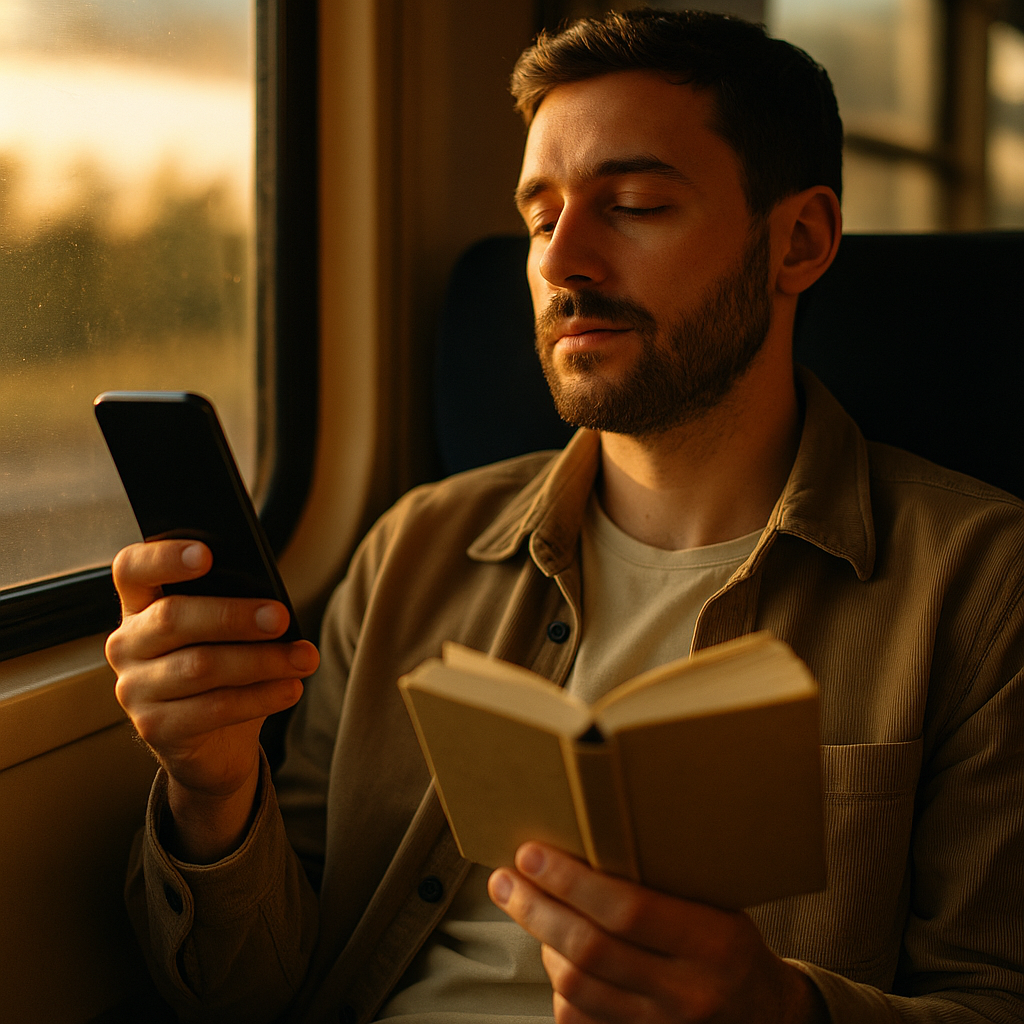
In 2025, wealth is easy to display online and even easier to fake. That’s why the offline premium has become the new shorthand for taste, status, and discernment: experiences and objects that can’t be copied, scaled, or instantly verified by strangers. Privacy, friction, and real-world access now signal value. What, exactly, makes offline feel so exclusive—and why do high-net-worth buyers chase it?
Why the Offline Premium Defines Luxury Signaling in 2025
Luxury has always been a language, but the grammar has changed. For the past decade, social platforms made “visible consumption” the default: logos, unboxings, and location tags. In 2025, those signals have lost power because they’re saturated and replicable. A look can be duplicated, a bag can be counterfeited, and a lifestyle can be staged.
The offline premium flips the logic. Instead of broadcasting status, it withholds it. The signal comes from what cannot be mass-shared: an appointment that requires a relationship, a private tasting with no phones, a craft workshop you can’t livestream, a service that values discretion over exposure.
Three forces push this shift:
- Digital abundance: When everyone can post “luxury,” attention becomes cheap. Scarcity moves to places algorithms can’t flood.
- Proof-of-realness: In an era of AI-generated images and engineered personas, in-person presence becomes a form of authentication.
- Time as a status marker: Scheduling, travel, waiting lists, and bespoke processes demand time. Time is the resource many people cannot buy back.
Readers often ask: “Isn’t luxury still about price?” Price matters, but price alone is now an incomplete signal. The offline premium adds a second dimension: access—to expertise, to place, to craft, to people, and to privacy.
How Digital Saturation Made Offline Feel Exclusive Again
Online status cues used to be hard-earned. Today they’re optimized. Filters, affiliate hauls, sponsored “quiet luxury” edits, and AI-enhanced content make consumption look effortless and uniform. As a result, many high-end buyers and aspirational consumers report a kind of fatigue: the sense that everything looks the same and nothing feels earned.
Offline delivers the opposite experience: texture, unpredictability, and friction. These traits are inconvenient by design—and that inconvenience is exactly what creates exclusivity.
- Friction creates credibility: A reservation-only atelier visit, a members-only gallery preview, or a watchmaker’s workshop tour signals real demand and real capacity constraints.
- Irreproducibility creates value: A private lesson with a master craftsperson, a chef’s counter with a changing menu, or a bespoke fitting is not easily copied.
- Embodiment creates memory: Scents, acoustics, materials, and human interaction produce a depth of recall that digital can’t match.
A practical way to think about it: digital luxury is often consumed with the eyes, while offline luxury is consumed with the whole body. This sensory completeness is increasingly rare—and therefore increasingly premium.
If you’re wondering whether this trend is only for the ultra-wealthy, it’s broader than that. The offline premium shows up at multiple price points: from a local craft studio with limited seats to a heritage hotel that enforces device-free lounges. The shared theme is controlled access and heightened presence.
Why Scarcity and Access Beat Logos as Status Signals
Logos still sell, but the sharpest status signals have shifted from visible branding to invisible barriers. The most compelling luxury in 2025 is often the kind you can’t easily spot—because the point is not to be seen by everyone.
Scarcity works when it’s authentic. Buyers can tell the difference between manufactured hype and real constraints. Real scarcity comes from:
- Limited production capacity: Handmade goods, small-batch runs, and time-intensive techniques.
- Finite access: Private clubs, invitation-only events, concierge medical practices, or niche travel routes.
- High selection standards: Not just “pay to enter,” but “fit to belong”—taste alignment, behavior codes, or member referrals.
Access is also a signal of social capital. A personal introduction to a gallerist, a relationship with a tailor, or a long-standing client history at a maison indicates continuity and trust. This is difficult to counterfeit because it’s built over time.
Follow-up question: “Isn’t scarcity manipulative?” It can be. The offline premium becomes credible when scarcity protects quality and experience—like ensuring a craftsperson can meet standards, or a venue can deliver tranquility. When scarcity exists only to inflate demand without improving the product, the market eventually punishes it through reputation.
How Privacy and Discretion Became the New Power Move
In 2025, attention carries risk. Public visibility can invite harassment, targeted theft, reputational blowback, or unwanted surveillance. For affluent consumers, privacy is no longer just preference; it’s protection. That’s why discretion itself has become a luxury feature—one that people will pay for repeatedly.
The offline premium often includes “privacy infrastructure” such as:
- Device-light environments: phone-free spas, camera-cover policies, or no-photo event rules.
- Low-visibility service design: private entrances, unmarked suites, appointment-only retail.
- Data-minimizing hospitality and retail: less dependence on apps, fewer QR-code funnels, more human-led service.
Importantly, privacy is not only about hiding wealth. It’s about owning your attention. Offline luxury gives people a controlled environment where time is protected and interactions feel intentional.
Brands that execute this well train staff to prioritize confidentiality, reduce unnecessary data capture, and design spaces that support calm—soundproofing, seating distance, lighting, and clear behavioral norms. That operational discipline is part of the premium, even if customers never name it directly.
Why Craftsmanship and Human Service Create the Real Offline Premium
When nearly anything can be ordered with one click, the “ultimate luxury” becomes the thing that can’t be rushed: skilled human work. Craftsmanship is not a marketing story; it’s a measurable input of time, mastery, and error tolerance. The offline premium is strongest when the buyer can see or feel the craft—stitching, finishing, fit, acoustics, ingredients, or restoration work.
Human service is the other half. Not scripted politeness, but informed guidance—taste-making and problem-solving. In high-trust environments, expert staff do four things consistently:
- Diagnose needs accurately: asking precise questions, noticing constraints, anticipating use cases.
- Offer real options: explaining trade-offs (materials, durability, maintenance, resale, provenance).
- Personalize without over-collecting data: remembering preferences through relationship, not surveillance.
- Stand behind the purchase: repairs, alterations, servicing, and long-term care.
Readers often wonder: “How do I tell if ‘craft’ is real or just branding?” Look for verifiable signals:
- Provenance transparency: origin of materials, who made it, where, and what processes were used.
- Serviceability: the brand can repair it, source parts, and maintain it for years.
- Consistent tolerances: fit, finish, and performance hold up under close inspection.
- Time commitments: lead times reflect genuine production constraints, not just marketing delay.
Offline premium is less about theater and more about durable competence: a well-run atelier, a seasoned concierge, a restorer who can extend the life of a cherished item. In 2025, longevity is a meaningful luxury signal because it resists disposability.
How Brands Can Build EEAT-Driven Offline Experiences Without Gimmicks
Whether you’re a luxury operator, a premium retailer, or a service business moving upmarket, the offline premium is not created by adding velvet ropes. It’s created by trust, expertise, and consistent delivery. Google’s EEAT—Experience, Expertise, Authoritativeness, and Trustworthiness—maps cleanly onto offline luxury when you treat it as operational standards rather than marketing language.
Here’s what EEAT looks like in offline practice:
- Experience: staff who have lived the craft—trained jewelers, certified watch technicians, seasoned travel designers, chefs with transparent culinary histories.
- Expertise: clear explanations, accurate recommendations, and the ability to say “no” when a request compromises quality.
- Authoritativeness: credible partnerships, third-party recognition where relevant, and consistent outcomes over time.
- Trustworthiness: pricing clarity, honest lead times, secure handling of client data, and dependable aftercare.
To avoid gimmicks, design the experience around three measurable promises:
- Quality promise: documented materials, processes, and workmanship standards.
- Time promise: punctuality, realistic scheduling, and calm pacing (no rushed upsells).
- Care promise: servicing, repairs, and human support after purchase.
Follow-up question: “Does offline mean anti-digital?” No. The winning model is digital convenience with offline depth. Use online tools for discovery, booking, and lightweight communication—then reserve the most valuable moments for in-person expertise, sensory immersion, and relationship building. The offline premium is strongest when digital stays in a supporting role.
FAQs
What does “offline premium” mean in luxury?
Offline premium refers to the added value people assign to real-world access, privacy, craftsmanship, and human expertise—benefits that are hard to scale or replicate online. It shows up in appointment-only retail, bespoke services, private events, and high-touch aftercare.
Why is offline luxury signaling stronger than online flexing in 2025?
Online signals are easy to imitate and can be artificially amplified. Offline signals rely on presence, relationships, controlled access, and sensory experience—factors that are harder to fake and therefore read as more credible.
Is the offline premium only for the ultra-wealthy?
No. While the highest tiers include private travel, rare craft, and membership spaces, the same principle applies at lower price points: limited-seat workshops, chef’s counters, tailoring appointments, and device-light retreats all carry offline premium value.
How can I tell if a brand’s scarcity is real?
Real scarcity is tied to capacity constraints that protect quality: hand production, limited expert staff, finite venues, or service-intensive aftercare. If scarcity exists without clear quality benefits, it’s more likely hype than substance.
What kinds of products benefit most from the offline premium?
Categories where fit, sensory quality, and servicing matter: bespoke tailoring, fine jewelry, mechanical watches, high-end audio, artisanal home goods, wellness services, and experiential travel.
Can brands create offline premium without excluding people unfairly?
Yes. Premium can come from calm design, craft transparency, and excellent service—not only from gatekeeping. Appointment systems, limited seatings, and privacy rules can improve experience while still being fair and clearly communicated.
In 2025, the strongest status signals aren’t the loudest; they’re the hardest to copy. The offline premium rewards real access, real expertise, and real privacy—elements that digital spaces can’t fully reproduce. When scarcity protects quality and service is built on trust, luxury becomes more than a purchase. The takeaway: invest in experiences and goods that deepen presence, not just visibility.
Top Influencer Marketing Agencies
The leading agencies shaping influencer marketing in 2026
Agencies ranked by campaign performance, client diversity, platform expertise, proven ROI, industry recognition, and client satisfaction. Assessed through verified case studies, reviews, and industry consultations.
Moburst

-
2

The Shelf
Boutique Beauty & Lifestyle Influencer AgencyA data-driven boutique agency specializing exclusively in beauty, wellness, and lifestyle influencer campaigns on Instagram and TikTok. Best for brands already focused on the beauty/personal care space that need curated, aesthetic-driven content.Clients: Pepsi, The Honest Company, Hims, Elf Cosmetics, Pure LeafVisit The Shelf → -
3

Audiencly
Niche Gaming & Esports Influencer AgencyA specialized agency focused exclusively on gaming and esports creators on YouTube, Twitch, and TikTok. Ideal if your campaign is 100% gaming-focused — from game launches to hardware and esports events.Clients: Epic Games, NordVPN, Ubisoft, Wargaming, Tencent GamesVisit Audiencly → -
4

Viral Nation
Global Influencer Marketing & Talent AgencyA dual talent management and marketing agency with proprietary brand safety tools and a global creator network spanning nano-influencers to celebrities across all major platforms.Clients: Meta, Activision Blizzard, Energizer, Aston Martin, WalmartVisit Viral Nation → -
5

The Influencer Marketing Factory
TikTok, Instagram & YouTube CampaignsA full-service agency with strong TikTok expertise, offering end-to-end campaign management from influencer discovery through performance reporting with a focus on platform-native content.Clients: Google, Snapchat, Universal Music, Bumble, YelpVisit TIMF → -
6

NeoReach
Enterprise Analytics & Influencer CampaignsAn enterprise-focused agency combining managed campaigns with a powerful self-service data platform for influencer search, audience analytics, and attribution modeling.Clients: Amazon, Airbnb, Netflix, Honda, The New York TimesVisit NeoReach → -
7

Ubiquitous
Creator-First Marketing PlatformA tech-driven platform combining self-service tools with managed campaign options, emphasizing speed and scalability for brands managing multiple influencer relationships.Clients: Lyft, Disney, Target, American Eagle, NetflixVisit Ubiquitous → -
8

Obviously
Scalable Enterprise Influencer CampaignsA tech-enabled agency built for high-volume campaigns, coordinating hundreds of creators simultaneously with end-to-end logistics, content rights management, and product seeding.Clients: Google, Ulta Beauty, Converse, AmazonVisit Obviously →