


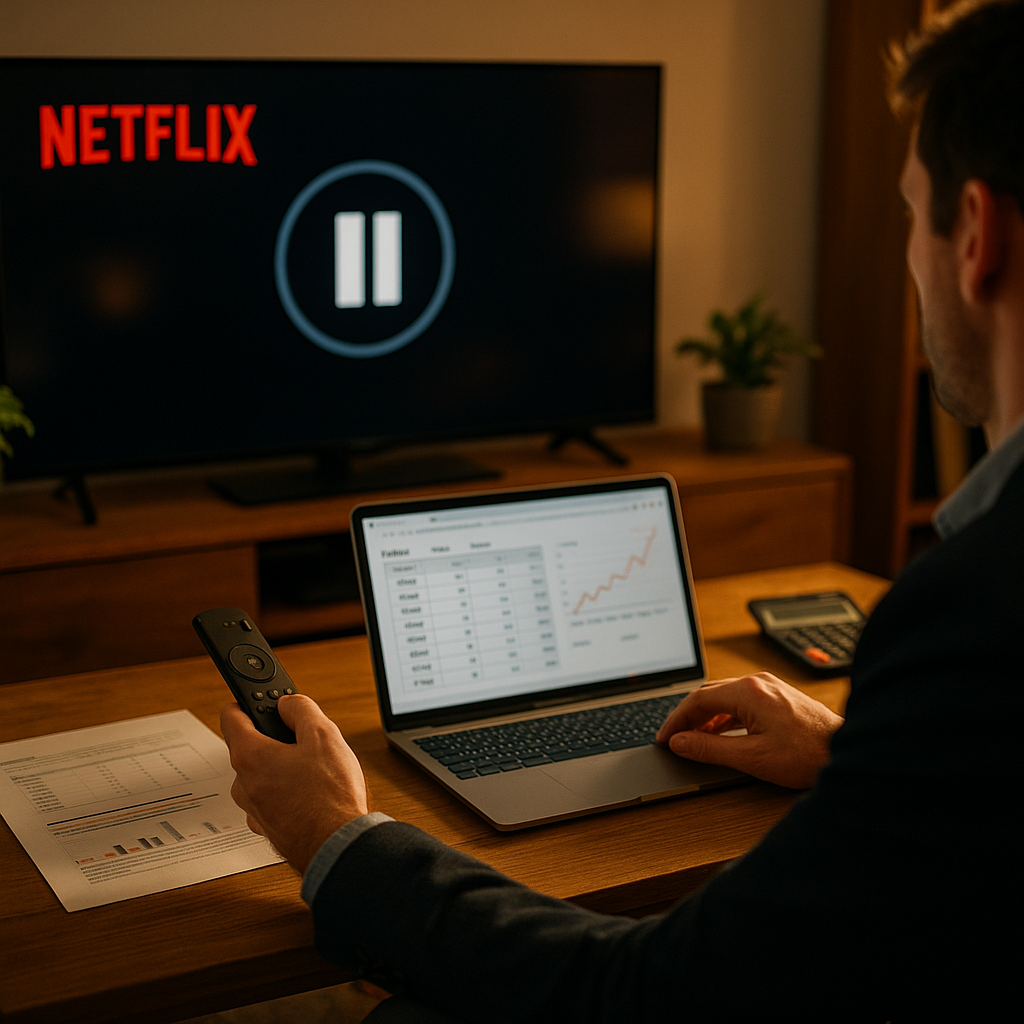
Netflix now pauses over 94 million ad-tier subscribers mid-episode, and every one of those freezes is a bidding opportunity most media buyers still don’t know how to price correctly. Programmatic ad inventory on pause-ads has quietly become one of the most efficient buys in CTV, but the mechanics are nothing like standard video auctions. If you’re still treating pause-ads like a bonus line item on your Netflix insertion order, you’re leaving reach and margin on the table.
What Pause-Ads Actually Are (And Why They Bid Differently)
A pause-ad is the static or lightly animated unit that appears when a viewer hits pause. No pre-roll competition, no skip button, no audio clutter. It’s a full-screen, guaranteed-viewable impression that sits there until the viewer resumes. Netflix rolled these out as part of its ad-tier expansion, and by late this year they’ve become a standard placement inside both direct IO deals and programmatic pipes through Netflix’s partnership with The Trade Desk, Magnite, and Microsoft’s ad platform.
Here’s the part that trips up buyers used to standard CTV: pause-ads aren’t sold on a CPM-per-second-watched basis. They’re sold on a guaranteed-impression basis, because the ad literally cannot be skipped or scrolled past while active. That changes how you should think about bid floors. A 15-second pre-roll on Netflix might run $45-$65 CPM depending on tier and targeting; pause-ad inventory has historically cleared lower, often in the $20-$35 CPM range in programmatic marketplaces, because it lacks motion and sound — but the attention metrics tell a different story.
Pause-ads generate near-100% viewability by definition, since the unit only renders when playback stops and the viewer’s eyes are already on the screen. That’s a structural advantage no skippable pre-roll can match.
Accessing the Inventory: Direct vs. Programmatic Pipes
Netflix still reserves a chunk of premium pause-ad inventory for direct upfront commitments, similar to how it handles pause-ads and live sports slots during major tentpole content. But the programmatic layer has opened up meaningfully. As of this year, buyers can access pause-ad inventory through:
- The Trade Desk — full programmatic guaranteed and private marketplace access, with Netflix-specific deal IDs surfaced in the UI.
- Microsoft Invest / Xandr — Netflix’s original ad-tech partner, still handling a meaningful share of open exchange and PMP deals.
- Magnite — added as a supply-side partner, primarily serving mid-market agencies that don’t have upfront-level Netflix relationships.
If you’re a mid-size brand without a direct sales rep at Netflix, PMP deals through The Trade Desk are your most realistic entry point. Minimum spend commitments vary by market, but agencies report floors around $50K-$100K per quarter to get meaningful pause-ad allocation with frequency capping controls intact.
Creative Specs: The Part Nobody Reads Until Rejection
Pause-ad creative gets rejected constantly, and it’s almost always for the same three reasons: wrong aspect ratio, missing safe zones, or file weight that trips Netflix’s compression pipeline. The specs as of this year:
- Format: Static JPEG/PNG or a short cinemagraph-style animation (max 6 seconds, looping).
- Resolution: 1920×1080 minimum, delivered at 16:9, with a mobile-safe crop for 9:16 devices since Netflix mobile app pause triggers the same unit.
- File size: Under 2MB for static, under 8MB for the looping cinemagraph variant.
- Safe zone: Keep primary logo and CTA text within the center 80% of frame — Netflix overlays its own playback UI elements (progress bar, episode title) along the bottom third.
- Text-to-image ratio: Netflix enforces a soft 20% max text coverage rule, closer to Meta’s old text-overlay guidance than typical CTV standards.
One thing that catches buyers off guard: there’s no audio component, ever. If your creative team hands you a spec sheet built for standard pre-roll, strip the audio track entirely before trafficking. Netflix’s ad server will reject files with embedded audio in the pause-ad slot outright.
Bidding Strategy: How to Actually Win This Inventory Efficiently
Programmatic pause-ad auctions run on a modified second-price model inside most DSPs, but effective CPMs vary wildly by daypart and content genre. A few tactical notes from buyers running live campaigns:
- Bid up during binge windows. Pause frequency spikes during weekend afternoons and post-9pm weeknight viewing. More pauses per session means more impression opportunities, but also more competition for the same eyeballs. Adjust bid floors accordingly rather than running flat CPMs across dayparts.
- Genre-match your creative, not just your targeting. A pause during a true-crime documentary reads differently than a pause during a kids’ show. Netflix’s contextual signals let you exclude or prioritize by genre cluster, and buyers who ignore this see lower engagement on click-to-QR-code creative.
- Frequency cap aggressively. Because the unit is unskippable and highly viewable, over-serving the same household burns goodwill fast. Cap at 2-3 per household per day inside your DSP settings.
- Use deal IDs for brand safety, not just discount pricing. Private marketplace deal IDs give you genre and rating exclusions that open exchange buys don’t. Worth the modest CPM premium if your category has compliance sensitivities.
Compare this to how Google’s bidding algorithm shifts forced advertisers to recalibrate automated bid strategies — Netflix’s pause-ad auction dynamics reward a similar discipline: don’t set-and-forget your bid caps, review weekly.
Measurement: The Attribution Gap Nobody’s Solved Yet
Pause-ads look great on viewability reports and terrible on click-through reports, because there’s nothing to click. Netflix has experimented with QR code overlays and second-screen companion prompts, but adoption is inconsistent across device types (smart TV vs. mobile vs. tablet playback behaves differently).
Most brand-side measurement teams are triangulating pause-ad performance using:
- Brand lift studies via Netflix’s measurement partners (Kantar, Nielsen integration for CTV).
- Incrementality testing against geo-holdout groups.
- Foot traffic and web-visit correlation using mobile ID matching, where permitted.
Don’t expect last-click attribution here. If your finance team demands ROAS math on pause-ads specifically, you’ll need to build a multi-touch model that credits upper-funnel exposure, similar to how brands approach connected TV measurement more broadly. This is fundamentally an awareness and consideration play, not a direct-response channel, no matter how tempting the “unskippable” framing sounds in a pitch deck.
Where This Fits Against Other CTV and Social Buys
Pause-ads shouldn’t replace your existing CTV plan; they should sit alongside it as a low-competition, high-viewability supplement. Buyers running integrated campaigns across streaming and social often find pause-ad CPMs compare favorably to YouTube creator bundle pricing, though the audience composition and intent signals differ substantially. Netflix skews slightly older and higher-income in ad-tier households compared to YouTube’s broader reach, according to Statista’s streaming demographic data.
Agencies managing hybrid budgets across CTV and retail media are also worth watching here — the operational discipline required to manage pause-ad creative specs isn’t far off from what’s needed for retail media shoppable video pilots: strict spec adherence, genre-level targeting, and incrementality-based measurement rather than last-click.
If your team is negotiating upfront commitments for next year’s Netflix plan, loop in whoever handles your upfront negotiation strategy for other platforms. The negotiation levers (minimum spend, genre exclusions, frequency caps) are similar enough that cross-platform playbooks save real time.
The FTC and Disclosure Question
Pause-ads are traditional paid media, not creator content, so FTC disclosure rules around sponsored posts don’t directly apply the way they would to Instagram’s buy-moment algorithm and disclosure requirements. But if your pause-ad creative features a creator or influencer endorsement, standard endorsement guidelines from the FTC still apply to the claims made in that creative. Legal review on any testimonial-style pause-ad copy is non-negotiable.
Next Step
Start with a modest programmatic guaranteed test through The Trade Desk, cap frequency at three per household, and run a 4-week brand lift study before committing upfront dollars. The inventory is priced inefficiently right now relative to its viewability — that won’t last once more buyers figure this out.
FAQs
How much does Netflix pause-ad inventory cost through programmatic channels?
CPMs typically range from $20 to $35 in programmatic marketplaces, lower than standard pre-roll ($45-$65) but with near-guaranteed viewability since the ad only appears when playback is paused.
Which DSPs can access Netflix pause-ad inventory?
The Trade Desk, Microsoft Invest (Xandr), and Magnite all offer programmatic access to Netflix pause-ad inventory, typically through private marketplace deals rather than fully open exchange auctions.
What creative specs does Netflix require for pause-ads?
Static or short looping creative at 1920×1080 (16:9), under 2MB for static files or 8MB for cinemagraphs, no embedded audio, and text kept within the center 80% safe zone to avoid Netflix’s playback UI overlays.
Can you track clicks or conversions from pause-ads?
Not directly — there’s no click mechanism on most pause-ad units. Measurement relies on brand lift studies, incrementality testing, and mobile ID matching for foot traffic or web-visit correlation rather than last-click attribution.
Is pause-ad inventory suitable for direct-response campaigns?
Generally no. It performs best as an upper-funnel awareness and consideration play due to guaranteed viewability, but the lack of a click mechanism makes it a poor fit for direct-response goals.
Top Influencer Marketing Agencies
The leading agencies shaping influencer marketing in 2026
Agencies ranked by campaign performance, client diversity, platform expertise, proven ROI, industry recognition, and client satisfaction. Assessed through verified case studies, reviews, and industry consultations.
Moburst

-
2

The Shelf
Boutique Beauty & Lifestyle Influencer AgencyA data-driven boutique agency specializing exclusively in beauty, wellness, and lifestyle influencer campaigns on Instagram and TikTok. Best for brands already focused on the beauty/personal care space that need curated, aesthetic-driven content.Clients: Pepsi, The Honest Company, Hims, Elf Cosmetics, Pure LeafVisit The Shelf → -
3

Audiencly
Niche Gaming & Esports Influencer AgencyA specialized agency focused exclusively on gaming and esports creators on YouTube, Twitch, and TikTok. Ideal if your campaign is 100% gaming-focused — from game launches to hardware and esports events.Clients: Epic Games, NordVPN, Ubisoft, Wargaming, Tencent GamesVisit Audiencly → -
4

Viral Nation
Global Influencer Marketing & Talent AgencyA dual talent management and marketing agency with proprietary brand safety tools and a global creator network spanning nano-influencers to celebrities across all major platforms.Clients: Meta, Activision Blizzard, Energizer, Aston Martin, WalmartVisit Viral Nation → -
5

The Influencer Marketing Factory
TikTok, Instagram & YouTube CampaignsA full-service agency with strong TikTok expertise, offering end-to-end campaign management from influencer discovery through performance reporting with a focus on platform-native content.Clients: Google, Snapchat, Universal Music, Bumble, YelpVisit TIMF → -
6

NeoReach
Enterprise Analytics & Influencer CampaignsAn enterprise-focused agency combining managed campaigns with a powerful self-service data platform for influencer search, audience analytics, and attribution modeling.Clients: Amazon, Airbnb, Netflix, Honda, The New York TimesVisit NeoReach → -
7

Ubiquitous
Creator-First Marketing PlatformA tech-driven platform combining self-service tools with managed campaign options, emphasizing speed and scalability for brands managing multiple influencer relationships.Clients: Lyft, Disney, Target, American Eagle, NetflixVisit Ubiquitous → -
8

Obviously
Scalable Enterprise Influencer CampaignsA tech-enabled agency built for high-volume campaigns, coordinating hundreds of creators simultaneously with end-to-end logistics, content rights management, and product seeding.Clients: Google, Ulta Beauty, Converse, AmazonVisit Obviously →