


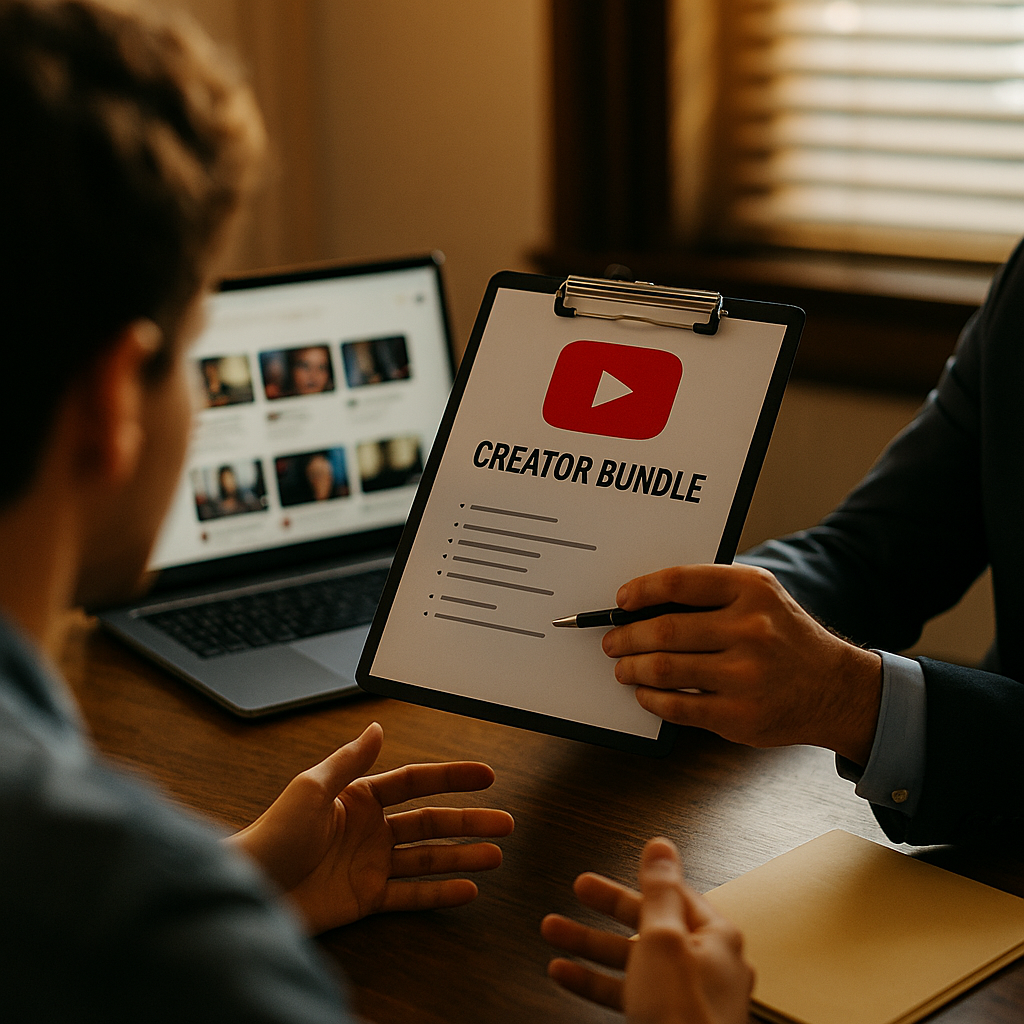
YouTube told upfront buyers that AI-scheduled creator bundles would hit north of 40% of total ad inventory this cycle. That’s not a rounding error — it’s a structural shift in how CPMs get set, and most media buyers are still negotiating like it’s a manual insertion order world. The YouTube Upfronts creator bundle negotiation is now an algorithm-pricing conversation, not a relationship one.
If your team walks into this year’s upfront with last cycle’s playbook, you’ll overpay for placement certainty you don’t actually need, or worse, underbuy the flexibility that makes these bundles worth the premium in the first place.
Why the Bundle Structure Changed
YouTube’s automated placement system now blends creator-adjacent inventory, Shorts, CTV living-room slots, and traditional pre-roll into single packaged buys. The sales team pitches this as “outcome-based simplicity.” Translation: they’ve moved pricing power away from line-item negotiation and into a black-box optimization layer.
That’s not inherently bad. AI scheduling can genuinely improve delivery pacing and audience match. But it also means the CPM you’re quoted upfront is a blended average across placement types that carry wildly different value. A creator-integrated mid-roll on a top-tier channel is not the same as a Shorts pre-roll slot, yet the bundle pricing can obscure that gap entirely.
We covered the core tension in our earlier breakdown of the creator partnership bundle CPM premium, and this cycle’s AI-scheduling layer makes that premium harder to audit, not easier.
The bundle CPM you’re quoted is an average. Your job in negotiation is to unbundle it enough to know what you’re actually paying for each placement tier.
What “AI-Scheduled” Actually Means for Your Media Plan
In practice, AI scheduling means Google’s system decides in real time which creator inventory fills your buy, based on predicted viewability, completion rate, and brand-safety scoring. You set guardrails — audience, budget, frequency caps — and the algorithm fills the rest.
That’s efficient for scale. It’s risky for control. If your brand has strict category exclusions or needs specific creator tiers for compliance reasons (financial services, pharma, alcohol), automated fill can drift toward inventory you never explicitly approved.
Ask your rep directly: what percentage of my bundle is algorithmically substitutable versus creator-locked? Get that number in writing before you sign anything.
Structuring the CPM Negotiation: Five Levers That Actually Move Price
Upfront negotiations reward buyers who show up with structure, not just budget. Here’s where the real leverage sits.
- Tier transparency clauses. Demand a breakdown of CPM by creator tier (mega, mid, micro-adjacent) within the bundle, not just a blended rate. YouTube’s sales teams will resist this. Push anyway — eMarketer’s ad spend benchmarking shows blended CPM reporting consistently masks 15-25% price variance across tiers.
- Make-good triggers tied to AI substitution. If the algorithm swaps a locked creator slot for an alternate due to inventory shortage, you need automatic make-good credit, not a quarterly reconciliation call.
- Frequency cap floors, not ceilings. Everyone negotiates caps to limit overexposure. Fewer buyers negotiate floors that guarantee minimum reach per creator cohort, which protects against the algorithm over-optimizing toward cheap, low-value impressions.
- Brand-safety scoring thresholds in the contract. Get the numeric score, not a vague “premium content” assurance.
- Sunset clauses on underperforming placements. Build in a 30-day review checkpoint where you can reallocate spend out of AI-selected inventory that isn’t hitting agreed benchmarks.
Buyers who negotiate all five typically land 8-12% below rate card on comparable bundles, based on conversations with agency trading desks running this cycle’s upfront. That’s not a guarantee. It’s a pattern, and patterns are what you negotiate from.
The Blended CPM Trap
Here’s the uncomfortable truth: a lot of brands will accept a blended CPM because unpacking it feels like extra work. It isn’t extra work. It’s the entire point of the negotiation.
Think of it like buying a mixed case of wine and only being told the average bottle price. Sounds fine until you realize half the case is table wine and you’re paying premium-vintage rates across the board.
Request a placement-mix forecast alongside the CPM. YouTube’s ad platform can generate this — ask your rep to pull it from the same planning tools they use internally, similar to the reporting layer Google’s ad support documentation describes for Display & Video 360 forecasting.
CTV Is Where the Bundles Get Complicated
Living-room viewing now makes up a meaningful share of YouTube watch time, and creator content increasingly gets scheduled into CTV slots as part of these bundles. That’s a different buying context entirely. Our piece on CTV creator campaigns moving from feed to living room covers the completion-rate and attribution differences in depth, but the short version for negotiation purposes: CTV placements within a bundle should carry a separate CPM line, not get folded into the mobile-feed average.
Why? Because CTV completion rates run higher, viewability is structurally different (no scroll-past), and the ad experience is closer to linear TV than social video. Pricing it identically to a Shorts pre-roll undervalues the CTV inventory and overvalues the Shorts inventory. Neither number is honest.
Negotiation Timeline: When to Push and When to Sign
Upfront season compresses decision windows. Sales teams want commitments locked early to plan inventory allocation. That urgency works against you if you let it.
Realistically, you have more leverage than the calendar suggests. Google needs committed spend to justify the AI-scheduling infrastructure investment to its own leadership. Slow-walking the negotiation by two to three weeks rarely costs you meaningful inventory access, and it gives your team time to model scenarios against Sprout Social’s or your own internal benchmark data.
A practical sequence:
- Request the tier-level CPM breakdown and placement-mix forecast before any verbal commitment.
- Model three scenarios: full AI-scheduled, hybrid (locked creator slots plus algorithmic fill), and fully locked (no algorithmic substitution).
- Price out the hybrid model first. It usually offers the best risk-adjusted CPM.
- Negotiate make-goods and sunset clauses before discussing final rate, not after.
- Get everything in the insertion order, not a side email.
Hybrid structures — part locked creator inventory, part algorithmic fill — consistently outperform fully automated bundles on both cost control and brand-safety compliance.
Compliance and Disclosure Still Matter Here
Automated scheduling doesn’t exempt anyone from FTC disclosure requirements. If your bundle includes creator integrations, those creators still need clear, conspicuous sponsorship disclosure regardless of how the placement got scheduled. Review the FTC’s endorsement guidance before finalizing creator-tier selections, particularly if your bundle spans international markets where ICO rules add another compliance layer.
Build a compliance checkpoint into your AI-scheduling guardrails. Ask specifically whether the algorithm can select creators who haven’t confirmed disclosure compliance for a given campaign. If the answer is unclear, that’s a red flag, not a technicality.
What This Means for Smaller Budgets
Not every brand is negotiating an eight-figure upfront commitment. If you’re working with a leaner budget, the same principles scale down: ask for tier transparency, push for hybrid structures over full automation, and don’t accept blended CPMs without a placement-mix forecast. Smaller commitments actually give you more flexibility to test hybrid models quickly and adjust next cycle based on real performance data rather than sales projections.
For brands weighing YouTube against other creator-driven formats this cycle, it’s worth comparing against structures covered in our Twitch sponsorship deal breakdown and the YouTube Shorts subscriber-conversion playbook, both of which show how platform-specific inventory logic shapes negotiable terms differently than YouTube’s blended bundles.
The next move is straightforward: don’t sign a bundle CPM until you have the tier-level breakdown, the placement-mix forecast, and a hybrid-structure option on the table. That single request will do more for your margin than any amount of rate-card haggling.
Frequently Asked Questions
What is a YouTube creator bundle in the context of upfront negotiations?
It’s a packaged media buy that combines creator-adjacent placements, Shorts, and CTV inventory under a single blended CPM, with an AI system handling real-time placement scheduling across those formats.
How is AI-scheduled inventory different from traditional YouTube ad buys?
Traditional buys let you select specific placements or creators directly. AI-scheduled inventory sets guardrails (audience, budget, brand safety) and lets an algorithm decide which available slots fill your buy in real time, which can improve efficiency but reduces granular control.
Should brands negotiate for tier-level CPM transparency?
Yes. Blended CPMs can mask significant price variance between mega-creator placements, mid-tier inventory, and Shorts pre-roll. Requesting a tier-level breakdown lets buyers evaluate whether the average price actually reflects fair value for each placement type.
What’s a hybrid bundle structure and why does it perform better?
A hybrid structure locks a portion of the buy to specific creator inventory while leaving the remainder open to algorithmic fill. It gives buyers cost efficiency from automation alongside brand-safety and compliance control over a guaranteed inventory segment.
Do FTC disclosure rules still apply to AI-scheduled creator placements?
Yes, disclosure requirements apply regardless of how a placement was scheduled. Brands should confirm their AI-scheduling guardrails exclude creators who haven’t confirmed compliant sponsorship disclosure before campaigns go live.
Top Influencer Marketing Agencies
The leading agencies shaping influencer marketing in 2026
Agencies ranked by campaign performance, client diversity, platform expertise, proven ROI, industry recognition, and client satisfaction. Assessed through verified case studies, reviews, and industry consultations.
Moburst

-
2

The Shelf
Boutique Beauty & Lifestyle Influencer AgencyA data-driven boutique agency specializing exclusively in beauty, wellness, and lifestyle influencer campaigns on Instagram and TikTok. Best for brands already focused on the beauty/personal care space that need curated, aesthetic-driven content.Clients: Pepsi, The Honest Company, Hims, Elf Cosmetics, Pure LeafVisit The Shelf → -
3

Audiencly
Niche Gaming & Esports Influencer AgencyA specialized agency focused exclusively on gaming and esports creators on YouTube, Twitch, and TikTok. Ideal if your campaign is 100% gaming-focused — from game launches to hardware and esports events.Clients: Epic Games, NordVPN, Ubisoft, Wargaming, Tencent GamesVisit Audiencly → -
4

Viral Nation
Global Influencer Marketing & Talent AgencyA dual talent management and marketing agency with proprietary brand safety tools and a global creator network spanning nano-influencers to celebrities across all major platforms.Clients: Meta, Activision Blizzard, Energizer, Aston Martin, WalmartVisit Viral Nation → -
5

The Influencer Marketing Factory
TikTok, Instagram & YouTube CampaignsA full-service agency with strong TikTok expertise, offering end-to-end campaign management from influencer discovery through performance reporting with a focus on platform-native content.Clients: Google, Snapchat, Universal Music, Bumble, YelpVisit TIMF → -
6

NeoReach
Enterprise Analytics & Influencer CampaignsAn enterprise-focused agency combining managed campaigns with a powerful self-service data platform for influencer search, audience analytics, and attribution modeling.Clients: Amazon, Airbnb, Netflix, Honda, The New York TimesVisit NeoReach → -
7

Ubiquitous
Creator-First Marketing PlatformA tech-driven platform combining self-service tools with managed campaign options, emphasizing speed and scalability for brands managing multiple influencer relationships.Clients: Lyft, Disney, Target, American Eagle, NetflixVisit Ubiquitous → -
8

Obviously
Scalable Enterprise Influencer CampaignsA tech-enabled agency built for high-volume campaigns, coordinating hundreds of creators simultaneously with end-to-end logistics, content rights management, and product seeding.Clients: Google, Ulta Beauty, Converse, AmazonVisit Obviously →