


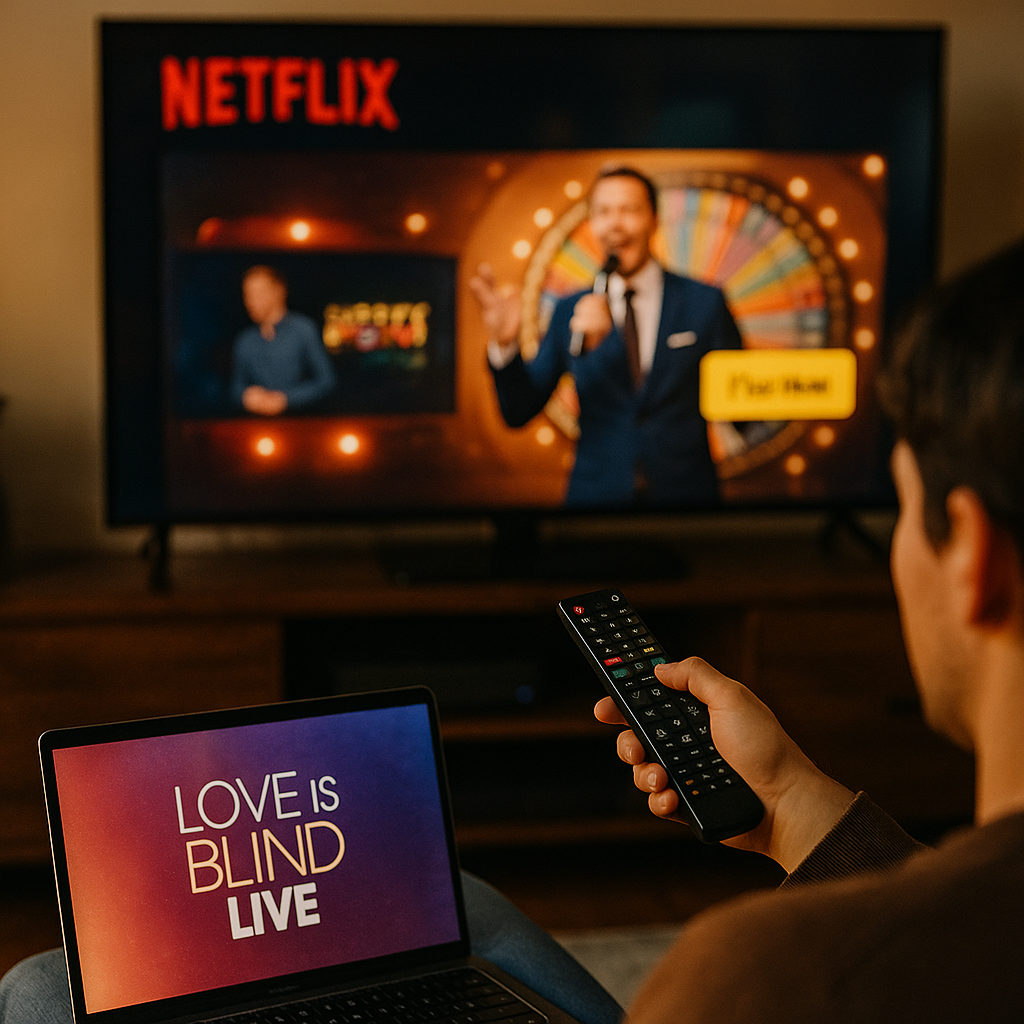
Netflix just posted 85 percent ad revenue growth, and it wasn’t from another price hike on Premium tiers. It came from two inventory formats most media buyers still haven’t fully tested: pause-ads and live-event ad slots. If your Netflix advertising strategy still treats the platform like a scaled-up cable buy, you’re leaving performance on the table.
This isn’t a minor product update. It’s a structural shift in how CTV inventory gets priced, targeted, and measured — and the buyers who move first will lock in the best placements before CPMs catch up to demand.
Why Netflix’s Ad Business Suddenly Matters More
Netflix’s ad-supported tier crossed 190 million monthly active users globally, according to the company’s own investor disclosures, and ad revenue is now one of the fastest-growing lines in its business. That growth didn’t come from adding more mid-roll breaks. It came from Netflix rethinking what an “ad slot” even is.
Pause-ads appear when a viewer hits pause, turning a moment of disengagement into a branded touchpoint. Live-ad slots run during Netflix’s expanding live programming, WWE Raw, NFL games, boxing events, and award shows, where traditional ad-skipping behavior doesn’t apply because the content is happening in real time.
Netflix’s ad tier now reaches more monthly viewers than most linear cable networks combined, but it’s the format innovation, not just scale, driving the 85 percent revenue jump.
For media buyers, this matters because inventory scarcity is easing while targeting precision is improving. That combination rarely happens in CTV. Usually you get one or the other.
Pause-Ads: The Format Nobody Budgeted For Last Year
Pause-ads are exactly what they sound like: a static or lightly animated overlay that appears when a subscriber pauses playback. Netflix reports pause moments happen roughly once every 10-12 minutes of viewing, which means the inventory volume is enormous even if each individual impression feels small.
Here’s why buyers should care. Pause-ads aren’t competing with a 15-second unskippable pre-roll for attention. They’re filling a moment where the viewer has already disengaged from content but hasn’t left the app. That’s a fundamentally different attention state, closer to a billboard than a commercial break.
- Lower cognitive load: viewers aren’t multitasking or half-watching; they made a deliberate choice to stop.
- High completion rate: there’s no skip button, no fast-forward, because the ad only appears in a static state.
- Contextual relevance: Netflix can time pause-ads against genre or title metadata, so a cooking show pause might surface a grocery delivery ad.
Early buyer feedback (shared informally at upfront conversations and confirmed by agency trading desks) suggests pause-ad CPMs are running 20-30 percent below standard mid-roll CTV rates, while brand recall metrics from Netflix’s own measurement partners are competitive with full video completions. If that holds up under third-party verification, it’s a genuinely efficient add-on to a video-heavy plan, not just a novelty line item.
The catch: creative needs to be built for stillness, not motion. A 30-second video ad repurposed as a pause overlay usually looks like an afterthought. Brands seeing the best results are commissioning static or cinemagraph-style assets specifically for this placement, similar to how smart advertisers built dedicated creative for shoppable carousel sequencing rather than recycling existing video frames.
Live Sports and Events: Netflix’s Real Power Move
Pause-ads are clever. Live-ad slots are the bigger strategic bet, and the one that actually threatens traditional broadcast budgets.
Netflix’s push into live programming, NFL Christmas Day games, WWE’s weekly Raw broadcasts, boxing matches, and specials, gives the platform something it never had before: appointment viewing with guaranteed real-time audiences. Live content solves CTV’s biggest measurement headache, which is that streaming viewership is fragmented across time. Live events force synchronous viewing, which means ad slots behave more like traditional linear buys with digital targeting layered on top.
For media buyers used to negotiating linear sports sponsorships, this should feel familiar, just with better data. You get:
- Household-level targeting instead of broad demographic buckets
- Real-time frequency capping across a viewer’s entire Netflix session
- Post-campaign attribution tied to Netflix’s first-party viewing data
- Premium, brand-safe environments with no user-generated content risk
The tradeoff is price. Live-ad slots during marquee events are commanding premiums comparable to top-tier linear sports inventory, sometimes higher, because Netflix knows exactly how much a Christmas Day NFL audience is worth. Buyers coming in expecting standard CTV rates for live inventory are going to be disappointed. This is closer to upfront negotiation territory than programmatic buying.
How the Math Actually Shakes Out
Let’s talk numbers, because “85 percent revenue growth” sounds impressive until you ask what’s driving it. Netflix hasn’t broken out pause-ads versus live-ads versus standard mid-roll in its public disclosures, but industry analysts covering the ad-supported streaming space (via sources like eMarketer’s streaming ad forecasts) point to three compounding factors:
- Volume expansion. More ad-tier subscribers means more inventory across every format, not just new placements.
- Premium pricing on scarce live slots. A handful of marquee live events can generate outsized revenue relative to their share of total impressions.
- Incremental fill from pause-ads. Inventory that didn’t previously exist is now monetized without cannibalizing existing ad breaks.
For a media buyer building a Q1 or annual CTV plan, the practical takeaway is that Netflix should now be evaluated as two distinct inventory pools, not one. Treat pause-ads as an efficient, high-frequency complement to a video-first strategy, similar to how you’d layer in a lower-CPM, high-reach tactic. Treat live-ad slots as premium, appointment-based buys that need to be negotiated early, likely through Netflix’s ad sales team or agency trading desk relationships, not left to programmatic pipes.
If you’re still buying Netflix inventory as one undifferentiated CTV line item, you’re pricing pause-ads and live-ads the same way, and overpaying for one while underutilizing the other.
Measurement Still Has Gaps, So Plan Around Them
Netflix has partnered with measurement providers to validate reach and attention metrics, but the ecosystem is younger than what buyers get from Google or Meta. There’s no equivalent yet to the mature measurement stack advertisers rely on for algorithmic bidding adjustments on search and social.
Practical steps for buyers navigating this gap:
- Request third-party verification (Nielsen, iSpot, or similar) as a line item in your insertion order, not an optional add-on.
- Run small live-slot tests before committing to a full-season sports sponsorship.
- Ask Netflix directly for pause-ad completion and viewability benchmarks segmented by content genre.
- Compare attribution windows against your existing CTV partners, including YouTube’s CTV creator campaign data, to normalize reporting across platforms.
None of this is a reason to sit out. It’s a reason to structure contracts with measurement contingencies built in, the same discipline you’d apply to any emerging ad product from a major platform.
Where This Fits in a Broader CTV Strategy
Netflix isn’t operating in a vacuum. Amazon Prime Video, Disney+, and Hulu are all pushing their own ad-tier innovations, and CTV as a category continues to pull budget from linear TV year over year, a trend well documented by Statista’s connected TV advertising data. Netflix’s differentiation isn’t that it has ads now. It’s that it’s building formats specifically suited to how people actually watch streaming content, pausing, half-watching, tuning in live for big moments, rather than forcing linear-style ad pods into a streaming environment.
Buyers managing multi-platform CTV budgets should treat Netflix’s pause and live formats as test cases for where the rest of the industry is headed. The brands experimenting now, building genre-specific pause creative, locking in early live-event negotiations, will have a data advantage when competitors show up asking for the same premium slots next year.
The immediate next step: audit your current Netflix line items, split pause-ads and live-ad slots into separate budget lines with separate KPIs, and request genre-level pause-ad performance data before your next renewal conversation.
Frequently Asked Questions
What are Netflix pause-ads and how do they work?
Pause-ads are static or lightly animated overlays that appear on screen when a viewer pauses playback on Netflix’s ad-supported tier. They monetize a moment of disengagement without interrupting active viewing, and Netflix can target them contextually based on the content being watched.
Are Netflix live-ad slots more expensive than standard CTV inventory?
Yes, generally. Live-ad slots during marquee events like NFL games or WWE Raw command premiums closer to traditional linear sports sponsorships because they guarantee real-time, synchronous viewership rather than fragmented on-demand consumption.
How is Netflix generating 85 percent ad revenue growth?
The growth comes from a combination of ad-tier subscriber expansion, premium pricing on scarce live-event inventory, and incremental monetization from new formats like pause-ads that don’t cannibalize existing ad breaks.
What measurement partners does Netflix use for ad verification?
Netflix works with third-party measurement providers, including Nielsen and other verification partners, to validate reach and attention metrics, though the measurement ecosystem is still maturing compared to more established digital ad platforms.
Should media buyers prioritize pause-ads or live-ad slots?
It depends on campaign goals. Pause-ads work well as an efficient, high-frequency complement to a broader video strategy at lower CPMs. Live-ad slots suit brands seeking premium, brand-safe placements tied to appointment viewing, but require earlier negotiation and higher budgets.
Top Influencer Marketing Agencies
The leading agencies shaping influencer marketing in 2026
Agencies ranked by campaign performance, client diversity, platform expertise, proven ROI, industry recognition, and client satisfaction. Assessed through verified case studies, reviews, and industry consultations.
Moburst

-
2

The Shelf
Boutique Beauty & Lifestyle Influencer AgencyA data-driven boutique agency specializing exclusively in beauty, wellness, and lifestyle influencer campaigns on Instagram and TikTok. Best for brands already focused on the beauty/personal care space that need curated, aesthetic-driven content.Clients: Pepsi, The Honest Company, Hims, Elf Cosmetics, Pure LeafVisit The Shelf → -
3

Audiencly
Niche Gaming & Esports Influencer AgencyA specialized agency focused exclusively on gaming and esports creators on YouTube, Twitch, and TikTok. Ideal if your campaign is 100% gaming-focused — from game launches to hardware and esports events.Clients: Epic Games, NordVPN, Ubisoft, Wargaming, Tencent GamesVisit Audiencly → -
4

Viral Nation
Global Influencer Marketing & Talent AgencyA dual talent management and marketing agency with proprietary brand safety tools and a global creator network spanning nano-influencers to celebrities across all major platforms.Clients: Meta, Activision Blizzard, Energizer, Aston Martin, WalmartVisit Viral Nation → -
5

The Influencer Marketing Factory
TikTok, Instagram & YouTube CampaignsA full-service agency with strong TikTok expertise, offering end-to-end campaign management from influencer discovery through performance reporting with a focus on platform-native content.Clients: Google, Snapchat, Universal Music, Bumble, YelpVisit TIMF → -
6

NeoReach
Enterprise Analytics & Influencer CampaignsAn enterprise-focused agency combining managed campaigns with a powerful self-service data platform for influencer search, audience analytics, and attribution modeling.Clients: Amazon, Airbnb, Netflix, Honda, The New York TimesVisit NeoReach → -
7

Ubiquitous
Creator-First Marketing PlatformA tech-driven platform combining self-service tools with managed campaign options, emphasizing speed and scalability for brands managing multiple influencer relationships.Clients: Lyft, Disney, Target, American Eagle, NetflixVisit Ubiquitous → -
8

Obviously
Scalable Enterprise Influencer CampaignsA tech-enabled agency built for high-volume campaigns, coordinating hundreds of creators simultaneously with end-to-end logistics, content rights management, and product seeding.Clients: Google, Ulta Beauty, Converse, AmazonVisit Obviously →