


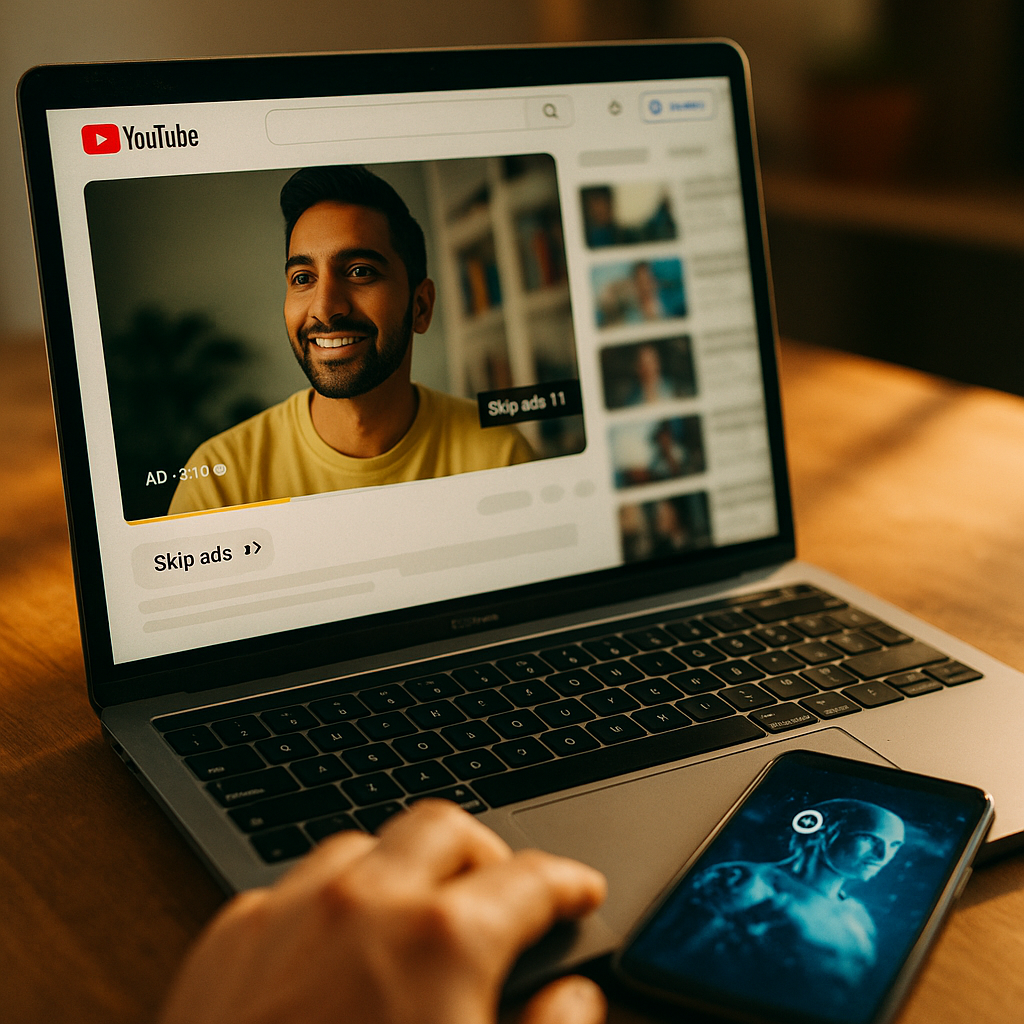
Google says Demand Gen campaigns using AI-generated video variants see conversion lifts of double digits when paired with Lead Form extensions. So why are most brands still forcing viewers through a three-second load screen before they can act? A YouTube Demand Gen campaign built around in-platform messaging skips the landing page entirely, and the data suggests that’s not a compromise. It’s an upgrade.
The Landing Page Was Always the Weak Link
Every marketer knows the funnel math. You spend real money getting someone to click a video ad, then you ask them to wait for a page to render, scan unfamiliar layout, find the form, and fill it out on a phone keyboard they hate. Each step bleeds intent. Google’s own benchmarks put mobile landing page load time as a top driver of bounce, and Demand Gen traffic is overwhelmingly mobile, watched between subway stops and grocery runs.
Landing pages also break the emotional continuity of the ad. A viewer just watched a punchy 15 second video with your product, your voice, your pacing. Then they land on a generic template that looks nothing like what hooked them. That gap is where conversions die.
Every extra tap between the hook and the action is a chance for the viewer to change their mind, and Demand Gen’s in-platform tools exist specifically to close that gap.
This isn’t a new problem. It’s the same friction that pushed TikTok Shop toward native checkout and forced brands to rethink shipping anxiety fixes inside the app itself rather than off-platform. YouTube is finally catching up with its own version.
What In-Platform Messaging Actually Does on Demand Gen
Demand Gen campaigns let you attach Lead Form extensions, message extensions, and click-to-message CTAs directly onto the video unit. Instead of routing a click to a URL, the ad opens a native form or a messaging thread inside YouTube itself, pre-filled with the viewer’s Google account info where permitted. No redirect, no page load, no design mismatch.
Think of it as the difference between handing someone a business card and walking them to your storefront right there in the feed. The form appears over the video, styled to feel like part of the platform, and submission happens in two taps.
- Lead Form extension: best for high-consideration B2B or services where you’re capturing an email or phone number before a sales follow-up.
- Message extension (click-to-WhatsApp or click-to-message): ideal for conversational commerce, appointment booking, or product Q&A.
- Native app deep link: skips the browser entirely and drops the viewer directly into a checkout screen inside your app.
Each of these keeps the viewer inside an environment they already trust. That trust transfer matters more than most media plans account for, and it echoes what’s happening on AI-personalized DMs on WhatsApp and Instagram, where the conversation itself becomes the conversion point.
Structuring the AI Video Ad So the CTA Actually Lands
Here’s where most teams fumble. They build the AI video ad as if it still needs to sell a click to an external page, front-loading brand story and saving the offer for the last frame. Wrong sequence for this format. If the CTA is going to open a form right there in the unit, the video needs to earn that action faster and set up exactly what happens next.
A structure that’s working well right now:
- 0 to 2 seconds: Pattern interrupt tied to the product benefit, not the brand logo. AI video generation tools like Google’s Veo integration inside Demand Gen let you spin ten hook variants from one script in under an hour.
- 2 to 6 seconds: Concrete proof point. A number, a before/after, a specific outcome. This is where Demand Gen’s AI asset generation earns its keep, because you can test proof points against different audience segments without reshooting anything.
- 6 to 10 seconds: Direct address to camera or on-screen text stating exactly what happens when they tap. “Tap to get your quote” is more effective than “Learn more” because it previews the in-platform experience instead of implying a page visit.
- 10 to 15 seconds: Visual cue pointing to where the form or message button will appear. Literally draw the eye down.
Notice there’s no “visit our website” language anywhere in that structure. If your script still says that, the viewer expects a browser tab and gets confused when a form pops up instead. Small mismatch, but it costs completions.
Matching the Message Flow to Funnel Stage
Not every product fits a one-tap lead form. High-ticket B2B services need a longer form with qualifying questions. Impulse-buy consumer goods do better with a message extension that drops straight into a cart link. Get this wrong and you’ll either over-ask a cold audience or under-qualify a warm one. The logic here mirrors the broader framework in matching format to funnel stage, just applied inside a single platform’s ad unit rather than across channels.
For prospecting audiences who’ve never heard of you, keep the form to two fields max: name and email, or name and phone. For remarketing audiences who already watched a longer video or visited your site once, you can afford three or four fields because intent is already higher.
Measurement Gets Weird Without a Landing Page (Here’s How to Fix It)
This is the part that trips up performance teams. Without a landing page, you lose the pixel-based conversion tracking most attribution stacks were built around. Google Ads reports Lead Form and message conversions natively inside the platform, which is good, but it means your marketing mix modeling and CRM matching need a new bridge.
Practical fixes that actually work:
- Push Demand Gen lead form submissions into your CRM via the native Google Ads integration or a Zapier bridge, tagging them with campaign and ad group so sales can report back conversion quality, not just volume.
- Set up offline conversion imports so closed-won revenue flows back into Google Ads for bidding optimization. Without this, Smart Bidding is optimizing for form fills, not revenue, and that’s a gap that compounds over a full quarter.
- Use UTM-free view-through tracking sparingly. It’s tempting to still send some traffic to a landing page just to keep old dashboards happy, but that reintroduces the friction you’re trying to eliminate.
If your reporting stack can’t handle a conversion that never touches a URL, the reporting stack is the problem, not the ad format.
Teams that have already rebuilt around view counting and CPV shifts, like those covered in YouTube’s view counting change, will recognize this pattern. Platform mechanics move faster than legacy attribution models, and the brands that adapt reporting first tend to win the budget arguments internally.
Where This Breaks (Common Mistakes to Avoid)
Skipping the landing page isn’t a free lunch. A few failure modes show up consistently:
- Overloading the form. More than three fields on a cold prospecting audience tanks completion rates. Save the extra questions for a follow-up email.
- Ignoring disclosure requirements. If your AI video ad features a creator or influencer endorsement, in-platform CTAs don’t exempt you from FTC disclosure rules. The sequencing logic from shoppable overlays and disclosure sequencing still applies even when the destination is a native form instead of a shop tag.
- Treating AI video variants as set-and-forget. Generated hooks decay fast. Refresh creative every one to two weeks or watch frequency fatigue eat your CTR.
- Skipping a human review pass. AI-generated scripts occasionally drift into vague or misleading claims. A compliance check before launch saves a much bigger headache later, and it’s the same discipline brands are applying to ad syndication compliance on other platforms.
Industry benchmarks from eMarketer and Statista both point to rising CPMs across video inventory, which makes every friction point in the conversion path more expensive to tolerate. Google’s own Ads Help Center documents the specific setup steps for Lead Form and message extensions, worth bookmarking before your next campaign build.
Frequently Asked Questions
What is YouTube Demand Gen and how is it different from standard video ads?
Demand Gen is Google’s AI-powered campaign type that runs video and image ads across YouTube, Discover, and Gmail, using generative AI to produce multiple creative variants and optimize delivery toward conversion actions like lead forms, all from a single campaign setup.
Can I really skip a landing page entirely with Demand Gen?
Yes. Lead Form extensions and click-to-message CTAs let viewers complete a conversion action inside the YouTube or Discover interface without ever leaving the app, which removes the load time and design mismatch that typically causes drop-off.
Does skipping the landing page hurt SEO or website traffic goals?
It can reduce direct site visits from that specific campaign, so brands running Demand Gen for lead generation should treat it as a separate funnel from organic and paid search traffic rather than expecting it to feed top-of-funnel site metrics.
How do I track ROI without a landing page conversion pixel?
Use Google Ads’ native lead form reporting combined with offline conversion imports from your CRM, so revenue and close rates feed back into bidding optimization instead of relying solely on form-fill volume as a proxy for value.
Is in-platform messaging suitable for ecommerce, not just lead gen?
Yes, particularly through app deep links that drop viewers directly into a checkout flow or a message extension that starts a WhatsApp conversation about product availability, both of which reduce the steps between ad view and purchase.
Start with one Demand Gen campaign, one AI-generated hook set, and a two-field Lead Form. Measure completion rate against your last landing page campaign for the same offer, then scale whichever path actually closed more revenue, not just more clicks.
Frequently Asked Questions
What is YouTube Demand Gen and how is it different from standard video ads?
Demand Gen is Google’s AI-powered campaign type that runs video and image ads across YouTube, Discover, and Gmail, using generative AI to produce multiple creative variants and optimize delivery toward conversion actions like lead forms, all from a single campaign setup.
Can I really skip a landing page entirely with Demand Gen?
Yes. Lead Form extensions and click-to-message CTAs let viewers complete a conversion action inside the YouTube or Discover interface without ever leaving the app, which removes the load time and design mismatch that typically causes drop-off.
Does skipping the landing page hurt SEO or website traffic goals?
It can reduce direct site visits from that specific campaign, so brands running Demand Gen for lead generation should treat it as a separate funnel from organic and paid search traffic rather than expecting it to feed top-of-funnel site metrics.
How do I track ROI without a landing page conversion pixel?
Use Google Ads’ native lead form reporting combined with offline conversion imports from your CRM, so revenue and close rates feed back into bidding optimization instead of relying solely on form-fill volume as a proxy for value.
Is in-platform messaging suitable for ecommerce, not just lead gen?
Yes, particularly through app deep links that drop viewers directly into a checkout flow or a message extension that starts a WhatsApp conversation about product availability, both of which reduce the steps between ad view and purchase.
Top Influencer Marketing Agencies
The leading agencies shaping influencer marketing in 2026
Agencies ranked by campaign performance, client diversity, platform expertise, proven ROI, industry recognition, and client satisfaction. Assessed through verified case studies, reviews, and industry consultations.
Moburst

-
2

The Shelf
Boutique Beauty & Lifestyle Influencer AgencyA data-driven boutique agency specializing exclusively in beauty, wellness, and lifestyle influencer campaigns on Instagram and TikTok. Best for brands already focused on the beauty/personal care space that need curated, aesthetic-driven content.Clients: Pepsi, The Honest Company, Hims, Elf Cosmetics, Pure LeafVisit The Shelf → -
3

Audiencly
Niche Gaming & Esports Influencer AgencyA specialized agency focused exclusively on gaming and esports creators on YouTube, Twitch, and TikTok. Ideal if your campaign is 100% gaming-focused — from game launches to hardware and esports events.Clients: Epic Games, NordVPN, Ubisoft, Wargaming, Tencent GamesVisit Audiencly → -
4

Viral Nation
Global Influencer Marketing & Talent AgencyA dual talent management and marketing agency with proprietary brand safety tools and a global creator network spanning nano-influencers to celebrities across all major platforms.Clients: Meta, Activision Blizzard, Energizer, Aston Martin, WalmartVisit Viral Nation → -
5

The Influencer Marketing Factory
TikTok, Instagram & YouTube CampaignsA full-service agency with strong TikTok expertise, offering end-to-end campaign management from influencer discovery through performance reporting with a focus on platform-native content.Clients: Google, Snapchat, Universal Music, Bumble, YelpVisit TIMF → -
6

NeoReach
Enterprise Analytics & Influencer CampaignsAn enterprise-focused agency combining managed campaigns with a powerful self-service data platform for influencer search, audience analytics, and attribution modeling.Clients: Amazon, Airbnb, Netflix, Honda, The New York TimesVisit NeoReach → -
7

Ubiquitous
Creator-First Marketing PlatformA tech-driven platform combining self-service tools with managed campaign options, emphasizing speed and scalability for brands managing multiple influencer relationships.Clients: Lyft, Disney, Target, American Eagle, NetflixVisit Ubiquitous → -
8

Obviously
Scalable Enterprise Influencer CampaignsA tech-enabled agency built for high-volume campaigns, coordinating hundreds of creators simultaneously with end-to-end logistics, content rights management, and product seeding.Clients: Google, Ulta Beauty, Converse, AmazonVisit Obviously →