


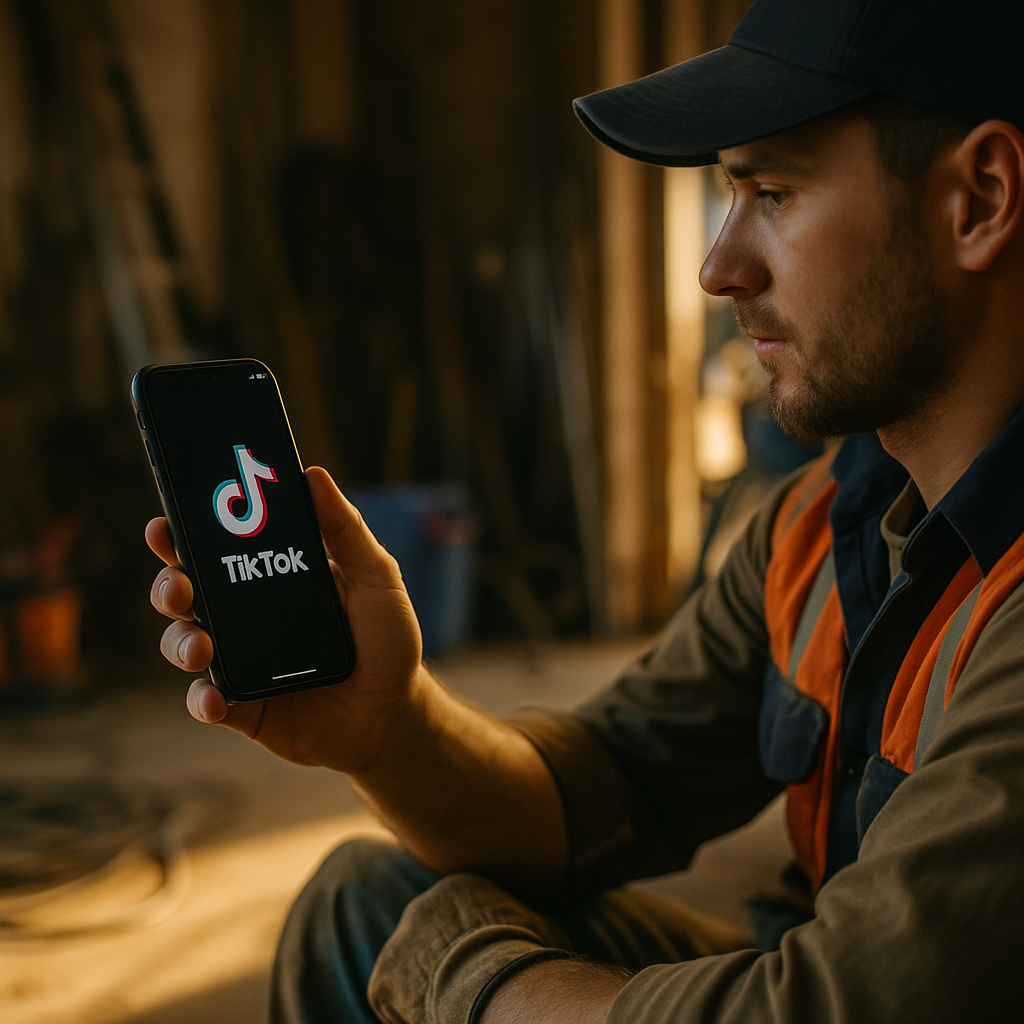
Trade hiring is tight, and many manufacturers still rely on job boards that skilled candidates rarely check. This case study shows how one mid-sized plant built a steady pipeline using TikTok for trade recruiting—without gimmicks or huge budgets. You’ll see the strategy, content, workflow, and metrics that made it work, plus what to copy (and what to avoid). Ready to recruit where talent actually scrolls?
TikTok recruiting strategy for skilled trades: goals, constraints, and audience
Company profile (anonymized for confidentiality): A mid-sized manufacturing firm in the U.S. Midwest with ~350 employees, operating CNC machining, industrial maintenance, welding, and quality inspection functions. The company had modern equipment, competitive pay, and strong benefits, but struggled to reach candidates who didn’t actively search on traditional job boards.
Hiring challenge: The plant needed to fill 18 roles across maintenance tech, CNC operator, welder/fabricator, and quality tech. Prior tactics produced high volume but low fit: job boards drove unqualified applicants, staffing agencies were expensive, and employee referrals plateaued.
Why TikTok: The recruiting team noticed a pattern in exit interviews and candidate conversations: many skilled workers discovered employers via short-form video, not corporate career pages. Internal research also supported the channel shift. A 2024 Pew Research Center update reported that U.S. adults are using TikTok at increasing rates, especially younger adults—an age band where many entry-to-mid career tradespeople sit.
Objectives set for 2025:
- Reduce time-to-fill for priority roles (maintenance and CNC) by 20%.
- Increase qualified applicants per opening by 30% while keeping cost per qualified application below the staffing agency benchmark.
- Build local awareness within a 45-mile radius to support recurring hiring cycles.
Constraints: No dedicated content studio; limited recruiter time; strict safety and IP rules. Leadership required that videos remain accurate, respectful, and aligned with company values—no “trend-chasing” that undermined credibility.
Target audience: Local and regional skilled trades candidates, including career-switchers from retail/warehouse work, community college students, and military veterans. Candidate research identified four common questions that videos had to answer quickly: “What will I do?”, “Is it safe?”, “What will I earn?”, and “Will I be respected and trained?”
Employer branding on TikTok: content pillars that built trust fast
The firm treated TikTok as a practical “preview of the job,” not an entertainment channel. That decision aligned with EEAT: demonstrate real experience, use credible sources, and show the workplace honestly.
Content pillars (with examples):
- Day-in-the-life realism: 20–40 second walkthroughs of a maintenance shift handoff, a CNC setup checklist, and a quality inspection routine. Captions clarified what viewers were seeing and what training was provided.
- Skill proof + learning culture: Short clips showing tool use, preventive maintenance, blueprint reading, and troubleshooting steps—paired with “how we train” notes. This attracted candidates who want growth, not just a paycheck.
- Pay and schedule clarity: Instead of vague “competitive pay,” videos used pay bands by role and shift (where allowed), explained overtime rules, and clarified weekend rotation. This reduced unqualified applicants and improved interview show-up rates.
- Safety credibility: The safety manager appeared in multiple videos to explain PPE, lockout/tagout expectations, and incident reporting culture. The message: “We want you going home healthy every day.”
- Human stories: New hires shared why they joined and what surprised them after 30 days. These clips were structured as simple Q&A to avoid sounding scripted.
Brand guardrails: No filming restricted processes; no proprietary machine settings; no mocking “bad workers.” Every clip included a quick safety compliance check. The team built trust by being transparent about what the job is and what it isn’t.
Format choices that improved credibility: They used on-screen role labels (e.g., “CNC Operator – 2nd shift”), kept audio clear, and avoided exaggerated claims. When discussing pay, they added “varies by experience and shift” to remain accurate and reduce misinterpretation.
Manufacturing recruitment marketing: workflow, compliance, and production system
The firm avoided the common trap of “random posting” by setting a simple operating rhythm that a lean team could maintain.
Team roles:
- Recruiter (channel owner): Planned content calendar, managed comments, routed leads.
- Ops sponsor (plant manager): Ensured access, alignment, and accountability.
- Safety lead: Approved filming areas and reviewed safety statements.
- Employee creators (voluntary): 6 rotating employees who appeared on camera and suggested topics.
Production cadence: Two 60-minute filming blocks per month produced 12–16 clips. Editing happened on a phone with templates. Posting cadence was 3–4 times per week. This balanced consistency with minimal disruption to production.
Compliance checklist (kept on a one-page SOP):
- Confirm PPE visible and correctly worn.
- Never show confidential drawings, customer labels, or proprietary screens.
- Get written consent from any employee on camera.
- Avoid medical, legal, or “guaranteed earnings” claims.
- Include accessibility-friendly captions on every video.
Lead capture design: TikTok was not treated as the application itself. The call-to-action drove candidates to a mobile-first landing page with:
- Role cards (maintenance, CNC, welding, quality) with pay range, schedule, and requirements.
- 2-minute “fast interest form” (name, phone, trade area, years of experience, shift preference).
- Text-to-apply option for candidates who prefer SMS over forms.
Why this mattered: Many skilled trades candidates will watch a video at break, then forget. The frictionless form captured intent while it was fresh, and SMS follow-up met candidates where they already communicate.
Skilled trades hiring funnel: turning views into qualified interviews
The firm designed the funnel to respect candidates’ time and reduce drop-off. They also trained recruiters to treat TikTok leads as warm introductions, not cold applications.
Funnel steps:
- Discover: Local and regional viewers find videos via For You feed, hashtags, and shares.
- Self-qualify: Videos mention core requirements (shift, physical demands, certifications preferred) so candidates can decide quickly.
- Convert: Landing page interest form or text-to-apply.
- Screen: 10–12 minute phone screen focused on trade basics and schedule fit.
- Onsite: Structured tour + skills conversation. For maintenance roles, a scenario-based discussion replaced “trivia questions.”
- Offer + start: Clear start dates and onboarding plan shared during the offer call.
Response-time standard: The recruiting team committed to contacting every qualified TikTok lead within one business day. That single operational choice improved conversion more than any editing trick.
Comment and DM handling: Public comments got short, helpful answers (“Yes, we train on CNC setup; apply via the link in bio”). For pay questions, the recruiter pointed to the landing page where pay bands and shift differentials were explained consistently. DMs were routed to the same interest form to keep records centralized.
Candidate experience improvements based on TikTok feedback: Viewers repeatedly asked about heat, noise, and breaks. The firm created a “working conditions” video series explaining ventilation, hearing protection, and break schedules. This reduced surprise during onsite tours and improved offer acceptance.
Trade recruiting metrics: results, benchmarks, and what actually moved the numbers
The company tracked performance like a marketing campaign and an HR process, using a weekly dashboard shared with operations leadership. Metrics focused on quality, not vanity.
What they measured:
- Video reach within the 45-mile target radius (estimated via analytics and audience location signals).
- Landing page visits and interest-form completion rate.
- Qualified lead rate (met baseline requirements).
- Interview-to-offer and offer-to-accept ratios.
- Time-to-fill and first-90-day retention for TikTok-sourced hires.
Outcomes from the campaign period: Over the first 10 weeks, the account grew from zero to a steady local audience. The firm attributed 41% of qualified leads for priority roles to TikTok traffic, with a noticeably higher interview show-up rate than job-board applicants. Time-to-fill for maintenance and CNC roles improved versus the prior quarter, and early retention signals were positive.
What drove performance (not just “going viral”):
- Clarity beats cleverness: Videos stating pay bands, shift times, and training approach produced fewer leads but more qualified leads.
- Proof of work: Showing real tasks (within compliance limits) increased trust and reduced “tour shock.”
- Fast follow-up: The one-business-day contact standard improved conversions at every step.
- Operations involvement: When supervisors appeared on camera to explain expectations, candidate confidence increased and churn risk decreased.
Risk management and EEAT: The firm documented claims (pay bands, benefits details, safety practices) and ensured every statement was consistent with HR policy. This reduced misinformation and helped maintain credibility with candidates and employees alike.
TikTok ads for manufacturing jobs: scaling with paid reach (without wasting budget)
After proving organic traction, the firm added paid amplification carefully. The goal wasn’t mass exposure; it was targeted reach to nearby trades candidates.
Paid approach:
- Boost only proven organic posts: They promoted videos that already generated saves, shares, and high completion rates, not just high views.
- Geo-focused targeting: Spend stayed concentrated around commuting distance, with separate ad sets for nearby metro areas.
- Role-specific creative: Maintenance ads differed from welding ads. Each creative answered that role’s top objections.
- Conversion tracking: The landing page used UTM parameters so the team could connect spend to qualified leads and hires.
Budget discipline: The firm capped spend until the recruiting team proved it could respond quickly. They increased budget only after maintaining the one-business-day follow-up standard for three consecutive weeks.
What they did not do: No broad “Now Hiring!” ads with generic plant footage. Those drove low-quality clicks and inflated costs. They also avoided overpromising sign-on bonuses as the primary hook; instead, they emphasized stability, training, and clear expectations.
FAQs: TikTok for skilled trades recruiting
Do skilled trades candidates actually use TikTok to find jobs?
Yes—many won’t search “manufacturing careers” daily, but they will watch work-content and local community videos. TikTok works best as awareness and interest capture, then you move candidates into a fast, mobile-friendly hiring flow.
What types of manufacturing roles perform best on TikTok?
Roles with visual tasks and clear progression tend to perform well: CNC operator, maintenance technician, welder/fabricator, machine operator, quality tech, and apprenticeships. Office roles can work, but the strongest engagement comes from “show the work” content.
How often should a manufacturer post to recruit effectively?
Consistency matters more than volume. Many plants can sustain 3–4 posts per week by filming in short monthly batches. If you can only do 2 posts per week, keep the format repeatable and prioritize role clarity and working conditions.
How do you handle safety and confidentiality when filming on the shop floor?
Use a written filming SOP, pre-approved areas, PPE checks, and a safety reviewer. Avoid showing proprietary screens, customer identifiers, or sensitive processes. If a clip can’t be explained publicly, don’t film it.
Should we post pay ranges on TikTok?
If your policy allows it, pay transparency typically improves candidate fit and reduces wasted interviews. Use role-and-shift ranges, add “varies by experience,” and ensure every pay statement matches your official job posting and HR guidelines.
How do you measure ROI for TikTok recruiting?
Track from video to landing page to qualified lead to hire. Use UTM links, a simple interest form, and consistent source tagging in your ATS or recruiting spreadsheet. Compare cost per qualified lead and time-to-fill against job boards and staffing agencies.
This manufacturing firm proved TikTok can deliver serious results when you treat it as a trust-building channel, not a stunt. By showing real work, answering pay and schedule questions upfront, and following up fast, the team increased qualified leads and improved hiring speed. The takeaway for 2025 is simple: build a repeatable content system, protect safety and credibility, and make applying effortless.
Top Influencer Marketing Agencies
The leading agencies shaping influencer marketing in 2026
Agencies ranked by campaign performance, client diversity, platform expertise, proven ROI, industry recognition, and client satisfaction. Assessed through verified case studies, reviews, and industry consultations.
Moburst

-
2

The Shelf
Boutique Beauty & Lifestyle Influencer AgencyA data-driven boutique agency specializing exclusively in beauty, wellness, and lifestyle influencer campaigns on Instagram and TikTok. Best for brands already focused on the beauty/personal care space that need curated, aesthetic-driven content.Clients: Pepsi, The Honest Company, Hims, Elf Cosmetics, Pure LeafVisit The Shelf → -
3

Audiencly
Niche Gaming & Esports Influencer AgencyA specialized agency focused exclusively on gaming and esports creators on YouTube, Twitch, and TikTok. Ideal if your campaign is 100% gaming-focused — from game launches to hardware and esports events.Clients: Epic Games, NordVPN, Ubisoft, Wargaming, Tencent GamesVisit Audiencly → -
4

Viral Nation
Global Influencer Marketing & Talent AgencyA dual talent management and marketing agency with proprietary brand safety tools and a global creator network spanning nano-influencers to celebrities across all major platforms.Clients: Meta, Activision Blizzard, Energizer, Aston Martin, WalmartVisit Viral Nation → -
5

The Influencer Marketing Factory
TikTok, Instagram & YouTube CampaignsA full-service agency with strong TikTok expertise, offering end-to-end campaign management from influencer discovery through performance reporting with a focus on platform-native content.Clients: Google, Snapchat, Universal Music, Bumble, YelpVisit TIMF → -
6

NeoReach
Enterprise Analytics & Influencer CampaignsAn enterprise-focused agency combining managed campaigns with a powerful self-service data platform for influencer search, audience analytics, and attribution modeling.Clients: Amazon, Airbnb, Netflix, Honda, The New York TimesVisit NeoReach → -
7

Ubiquitous
Creator-First Marketing PlatformA tech-driven platform combining self-service tools with managed campaign options, emphasizing speed and scalability for brands managing multiple influencer relationships.Clients: Lyft, Disney, Target, American Eagle, NetflixVisit Ubiquitous → -
8

Obviously
Scalable Enterprise Influencer CampaignsA tech-enabled agency built for high-volume campaigns, coordinating hundreds of creators simultaneously with end-to-end logistics, content rights management, and product seeding.Clients: Google, Ulta Beauty, Converse, AmazonVisit Obviously →