


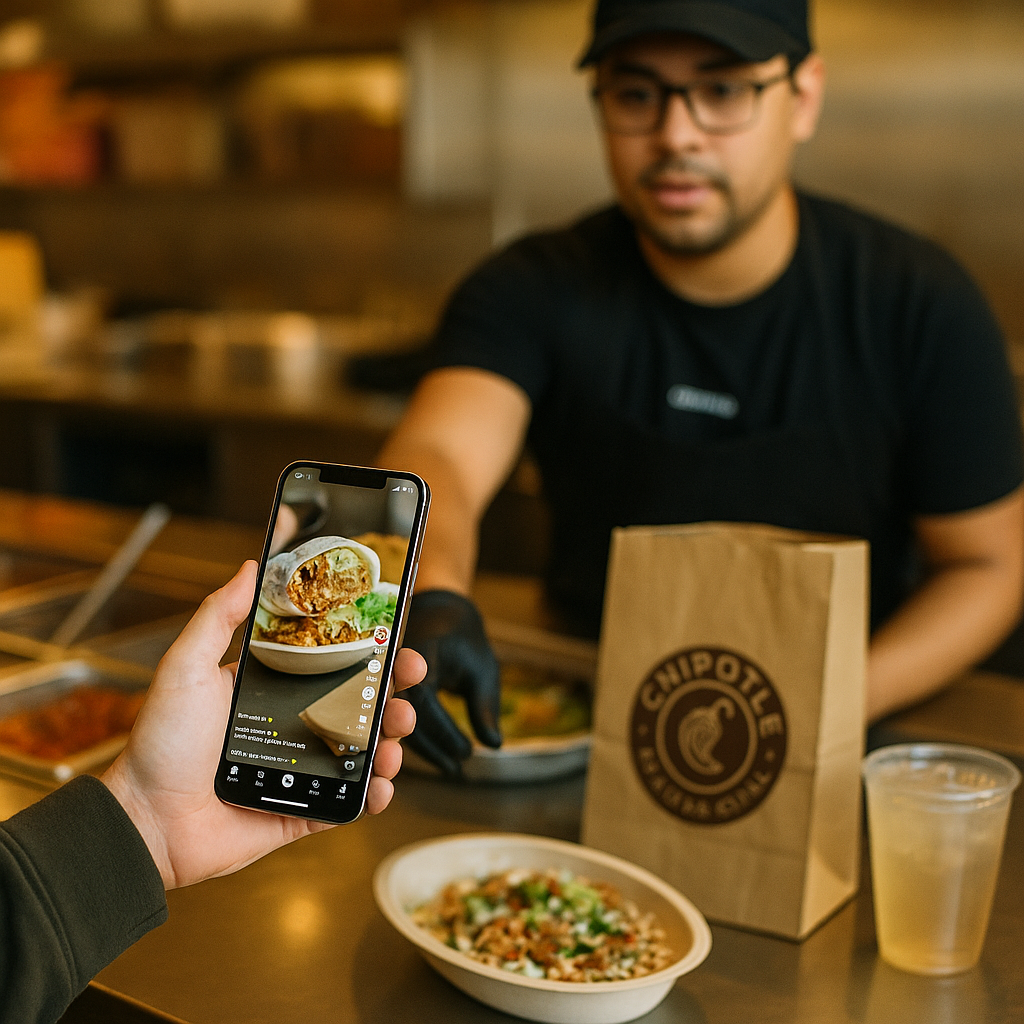
One TikTok Shop link. Same-day delivery. A commission structure built for creators who’d never signed a brand deal in their lives. That’s the short version of how Chipotle’s TikTok Shop affiliate program quietly turned chaotic menu hack content into a measurable order pipeline — and gave brand marketers a new answer to the oldest question in social: how do we prove this actually drives sales?
The Menu Hack Problem Nobody Was Solving
Menu hacks are free marketing. They’ve also been unmeasurable marketing for a decade. Someone discovers a “secret” quesadilla build, films it, gets three million views, and the brand gets… nothing it can point to on a dashboard. No attribution, no revenue line, no way to know if that viral moment moved a single order.
Chipotle had this problem at scale. Menu hack content has circulated on TikTok since the platform mattered to food brands — the “quesarito,” off-menu burrito bowls, secret sauce combos. Engagement was never the issue. Conversion tracking was. Marketing teams could see the views, the comments, the duets. They couldn’t see the receipts.
TikTok Shop’s affiliate infrastructure changed that math. Instead of hoping a hack video nudges someone toward the app three days later, Chipotle could attach a shoppable link directly to the content driving the trend, with commission tied to completed orders. Suddenly a menu hack wasn’t just a vibe. It was a trackable transaction.
How the Affiliate Mechanics Actually Work
Chipotle’s approach leaned on TikTok Shop’s native affiliate marketplace rather than building a bespoke tracking stack from scratch. That’s the part other brands should pay attention to — this wasn’t a six-month engineering project.
- Open affiliate enrollment: Creators, including nano and micro accounts with modest followings, could join the program directly through TikTok Shop and start earning commission on qualifying orders without a formal brand negotiation.
- Commission-per-order structure: Instead of flat sponsorship fees, creators earned a percentage of each order placed through their shoppable link, aligning creator incentive directly with sales rather than views.
- Same-day fulfillment tie-in: Orders routed through delivery partners already integrated with Chipotle’s digital ordering system, meaning the “watch the hack, order the hack” window shrank to minutes, not days.
- Built-in attribution: Every link carried trackable parameters back to the originating video, giving Chipotle’s marketing and analytics teams order-level visibility instead of vanity-metric guesswork.
None of this required Chipotle to pay top-tier creator rates upfront. The commission model shifted risk away from flat sponsorship fees and toward performance — a structural change that matters more than the campaign headlines suggest.
The real innovation wasn’t the menu hacks — those existed for free anyway. It was converting an unmeasurable earned-media phenomenon into a performance channel with order-level attribution, without paying a premium for reach the brand already had.
Why Nano-Creators Did the Heavy Lifting
Here’s what’s easy to miss in the coverage: this wasn’t a celebrity-driven push. The videos that performed best came from accounts with a few thousand to a few hundred thousand followers — people already obsessed with Chipotle’s menu, not brand ambassadors reading from a script.
That tracks with a pattern showing up across the industry. Micro and nano-creators consistently outperform mega-influencers on cost-per-action because their audiences trust the recommendation more than the reach. Influencers Time has covered this dynamic extensively — see how nano-creator grocery hauls beat CPG ad spend on cost-per-action, or how Ryobi’s nano-creator network beat retail media on cost-per-sale. Chipotle’s affiliate program is the quick-service restaurant version of the same insight: smaller creators, real enthusiasm, lower cost, better conversion signal.
The affiliate commission structure made this scalable in a way flat-fee sponsorships never could. Chipotle didn’t need to identify and pay 500 individual creators. It opened the door and let the program self-select for people already making the content.
What “Same-Day Orders” Actually Means for Attribution
Same-day, in this context, isn’t marketing fluff. It’s the attribution window that makes the whole model work. Traditional influencer campaigns measure success in brand lift surveys, engagement rate, or, at best, a delayed promo code redemption weeks later. TikTok Shop’s affiliate infrastructure compresses that entire funnel into hours.
A viewer sees a hack video, taps the shoppable link, and completes checkout within the app ecosystem or through a connected delivery partner — often before the video finishes its next loop in their feed. For a brand’s finance team, that’s the difference between “we think this worked” and “here’s the revenue this specific piece of content generated.”
According to eMarketer, social commerce in the U.S. has been one of the fastest-growing retail channels, with TikTok Shop specifically credited as a major driver of impulse-purchase behavior tied to short-form video. Quick-service restaurants are a near-perfect fit for that behavior pattern: low price point, high impulse potential, existing delivery infrastructure.
The ROI Case Marketing Leaders Should Actually Care About
Strip away the cultural buzz and look at what this program solves operationally. Three things matter for anyone managing a brand’s influencer budget:
- Pay for performance, not promise. Commission-based affiliate structures eliminate the flat-fee gamble on creator content that might underperform. Chipotle only pays out when an order actually clears.
- Attribution replaces estimation. Order-level tracking removes the need for post-hoc modeling or brand lift studies to justify creator spend. The data is native to the platform.
- Earned content becomes owned pipeline. Menu hacks were happening regardless of Chipotle’s involvement. The affiliate layer turned pre-existing organic enthusiasm into a channel the brand could actually report on to leadership.
This is the same logic driving affiliate and shoppable content strategy across categories right now. Vessi turned a single TikTok video into a shop referral engine, and ThredUp’s resale hauls beat paid social on cost-per-action using a similar creator-led, commission-driven model. Chipotle just applied it to a category — quick-service food — where same-day fulfillment already existed as infrastructure, making the loop tighter than almost any other vertical could manage.
Where the Risk Actually Sits
Nothing about this is risk-free, and brand marketers should treat it that way. Affiliate programs open the door to creators the brand hasn’t vetted, using messaging the brand didn’t write, representing a menu the brand didn’t necessarily intend to be hacked. That’s a compliance conversation, not just a growth one.
The FTC’s endorsement guidelines still apply regardless of whether a creator earns a flat fee or a commission. Affiliate links generating income from a brand relationship require disclosure, and TikTok Shop’s built-in affiliate tagging helps here, but it doesn’t remove the brand’s compliance obligation to monitor how creators represent products, ingredients, pricing, or availability.
There’s also a quality-control question quick-service brands can’t ignore: menu hacks sometimes involve substitutions or off-menu builds that don’t match actual nutritional information, pricing, or availability across locations. A viral hack that works in one market and confuses customers in another creates support-ticket volume the marketing team didn’t budget for.
Affiliate commission structures shift financial risk away from the brand, but they don’t remove reputational or compliance risk — someone still has to own creator content quality at scale.
What Other Brands Should Actually Copy
Not every brand has same-day delivery infrastructure or a menu that lends itself to viral hacking. But the underlying playbook translates further than it looks:
- Identify organic content trends before building a paid program around them. Chipotle didn’t invent menu hack content — it monetized an existing behavior.
- Lower the barrier to affiliate entry. Opening enrollment to nano-creators, rather than negotiating individual deals, scales faster and costs less per acquisition.
- Tie commission to completed action, not content delivery. This is the single biggest shift separating affiliate models from traditional sponsorship, and it’s why finance teams are increasingly comfortable approving these budgets.
- Build the compliance layer before scaling, not after. Disclosure requirements and content monitoring get harder to retrofit once thousands of creators are already active in the program.
Brands running loyalty or retail-adjacent programs have found similar wins pairing creator content with measurable in-store or app behavior — see how Lowe’s creator DIY series drove real purchase lift or how a credit union cut cost-per-new-account with nano creators. The category doesn’t matter as much as the mechanic: trackable action, commission-based incentive, and a creator base that’s already motivated by more than the paycheck.
Platforms like TikTok Shop’s ad platform and analytics tools referenced by firms like Sprout Social and HubSpot increasingly build reporting features specifically for this attribution model, which tells you where the industry expects budget to keep flowing.
The Takeaway
Chipotle didn’t create demand for menu hacks — it built the checkout infrastructure to capture demand that already existed. Any brand sitting on unmeasured organic creator content should ask the same question: what’s the shortest path from “viral video” to “trackable order,” and can it be built without a six-figure ad budget?
Frequently Asked Questions
What is TikTok Shop’s affiliate program and how does it work for brands?
TikTok Shop’s affiliate program lets creators attach shoppable links to their content and earn a commission on completed orders. Brands enroll products into the program, set commission rates, and creators — often without a formal negotiated deal — can start promoting and earning based on performance rather than a flat sponsorship fee.
Why did Chipotle use nano-creators instead of celebrity influencers for this program?
Nano and micro-creators already had organic engagement around menu hack content, and their audiences trusted recommendations more readily than celebrity endorsements. The commission-based model also made it economically efficient to scale across hundreds of smaller creators rather than negotiate a handful of expensive celebrity deals.
How does same-day order attribution actually get tracked?
TikTok Shop’s affiliate links carry tracking parameters that connect a specific video to a completed transaction. When paired with a delivery partner’s fulfillment system, brands can see order-level data tied directly to the content that drove it, often within the same day.
Is a commission-based affiliate model less risky than traditional influencer sponsorships?
Financially, yes — brands pay only for completed orders rather than upfront content fees. But affiliate models introduce compliance and quality-control risk, since brands have less control over messaging from a large, open pool of creators and still must ensure FTC disclosure compliance.
Can smaller restaurant or retail brands replicate this strategy without same-day delivery infrastructure?
The core mechanic — open affiliate enrollment, commission tied to completed orders, and attribution-first tracking — works without same-day fulfillment. The speed advantage shrinks, but the measurable-conversion benefit over traditional influencer sponsorships still applies.
Top Influencer Marketing Agencies
The leading agencies shaping influencer marketing in 2026
Agencies ranked by campaign performance, client diversity, platform expertise, proven ROI, industry recognition, and client satisfaction. Assessed through verified case studies, reviews, and industry consultations.
Moburst

-
2

The Shelf
Boutique Beauty & Lifestyle Influencer AgencyA data-driven boutique agency specializing exclusively in beauty, wellness, and lifestyle influencer campaigns on Instagram and TikTok. Best for brands already focused on the beauty/personal care space that need curated, aesthetic-driven content.Clients: Pepsi, The Honest Company, Hims, Elf Cosmetics, Pure LeafVisit The Shelf → -
3

Audiencly
Niche Gaming & Esports Influencer AgencyA specialized agency focused exclusively on gaming and esports creators on YouTube, Twitch, and TikTok. Ideal if your campaign is 100% gaming-focused — from game launches to hardware and esports events.Clients: Epic Games, NordVPN, Ubisoft, Wargaming, Tencent GamesVisit Audiencly → -
4

Viral Nation
Global Influencer Marketing & Talent AgencyA dual talent management and marketing agency with proprietary brand safety tools and a global creator network spanning nano-influencers to celebrities across all major platforms.Clients: Meta, Activision Blizzard, Energizer, Aston Martin, WalmartVisit Viral Nation → -
5

The Influencer Marketing Factory
TikTok, Instagram & YouTube CampaignsA full-service agency with strong TikTok expertise, offering end-to-end campaign management from influencer discovery through performance reporting with a focus on platform-native content.Clients: Google, Snapchat, Universal Music, Bumble, YelpVisit TIMF → -
6

NeoReach
Enterprise Analytics & Influencer CampaignsAn enterprise-focused agency combining managed campaigns with a powerful self-service data platform for influencer search, audience analytics, and attribution modeling.Clients: Amazon, Airbnb, Netflix, Honda, The New York TimesVisit NeoReach → -
7

Ubiquitous
Creator-First Marketing PlatformA tech-driven platform combining self-service tools with managed campaign options, emphasizing speed and scalability for brands managing multiple influencer relationships.Clients: Lyft, Disney, Target, American Eagle, NetflixVisit Ubiquitous → -
8

Obviously
Scalable Enterprise Influencer CampaignsA tech-enabled agency built for high-volume campaigns, coordinating hundreds of creators simultaneously with end-to-end logistics, content rights management, and product seeding.Clients: Google, Ulta Beauty, Converse, AmazonVisit Obviously →