


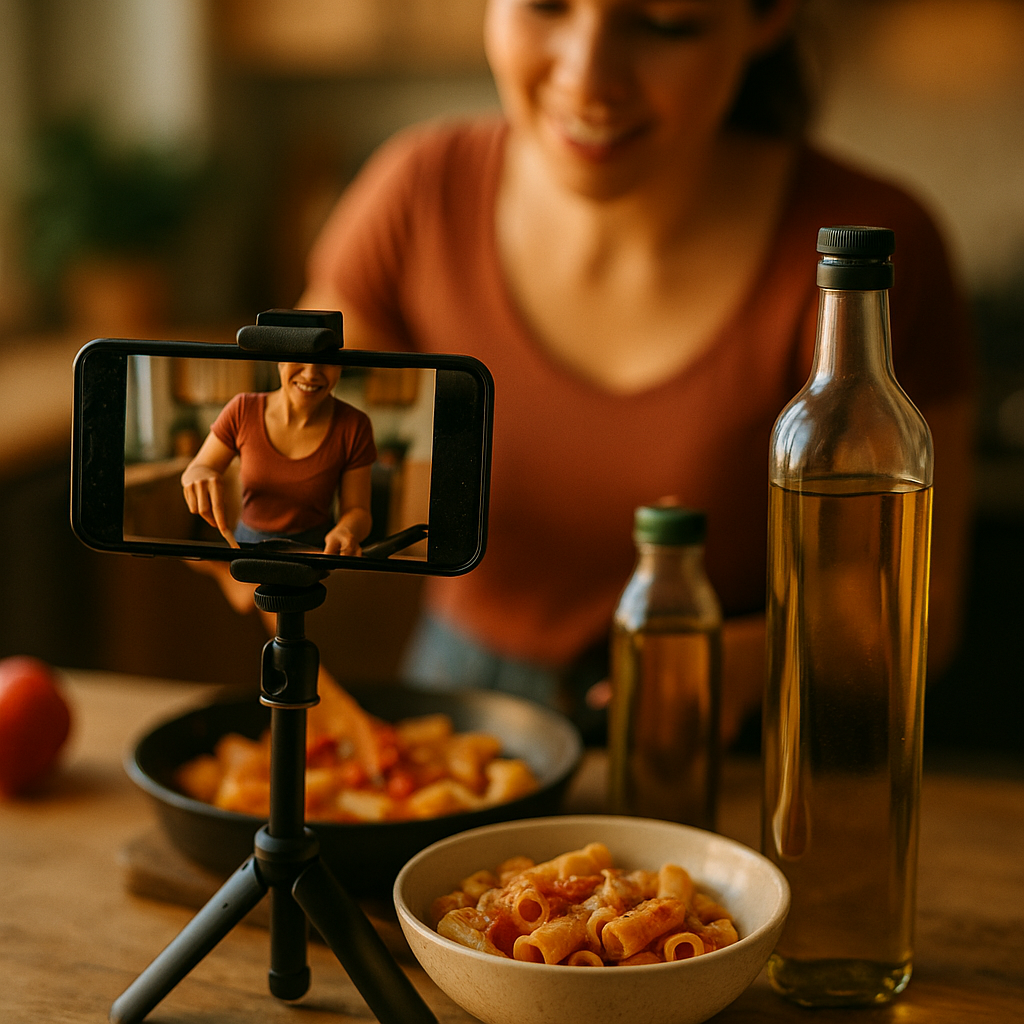
Food videos get watched. Few get bought from. TikTok Shop data has shown recipe content converting at rates well above standard product demos, yet most brands still script recipe style UGC videos like they’re filming a cooking show instead of a sales asset. That’s the gap. Recipe style UGC videos only drive conversion lifts when the script treats the recipe as a vehicle for the product, not the other way around.
This isn’t about hiring better cooks. It’s about writing briefs that force every ingredient shot, every voiceover line, and every cutaway to answer one question: does this make someone want to buy the jar, the sauce, the protein powder, right now?
Why Recipe Content Converts Differently Than Other UGC
Recipe videos carry an implicit promise that most UGC formats don’t: “make this and your life gets a little better tonight.” That’s a stronger purchase trigger than a generic review or unboxing. Viewers aren’t just evaluating a product, they’re mentally rehearsing a meal. Neuroscience aside, the practical marketing reality is simpler: intent is baked into the format. Someone watching a 45 second pasta recipe has already decided they might cook pasta tonight. Your job is to make your product the easiest path to that outcome.
Compare that to ingredient breakdown videos, which build trust through transparency but don’t always push toward an immediate action. Recipe content does both: it builds credibility through demonstrated use, and it closes with a built-in call to action (go make this). That dual function is why CPG and grocery brands have leaned so heavily into the format on TikTok Shop and Instagram Reels.
A recipe script that doesn’t name the product in the first eight seconds is a cooking tutorial, not a conversion asset. Brands lose the sale in the scroll before the dish ever hits the pan.
The Structural Mistake Most Briefs Make
Most creator briefs for food content read like a recipe card: ingredients, steps, plate it, done. That’s backwards for performance video. The script needs a commercial spine running underneath the culinary one. Here’s the structure that’s actually working for brands running paid whitelisting on recipe UGC:
- Hook (0 to 3 seconds): Lead with the finished dish or a jarring claim (“this 2 ingredient sauce replaced my $40 takeout order”), not a slow pan across a kitchen counter.
- Product reveal (3 to 8 seconds): Show the product in hand, label visible, before any chopping begins. This is non negotiable for brand recall in silent autoplay feeds.
- Build (8 to 30 seconds): Fast cuts through prep steps, with the product reappearing at least once more mid recipe, not just at the start.
- Payoff (30 to 45 seconds): The bite, the reaction, the “okay this is actually good” moment. Authenticity here matters more than polish.
- CTA (final 3 to 5 seconds): Direct, specific, and tied to availability (“linked below, I grabbed mine at Target”).
Notice what’s missing: a long ingredient list read aloud, extended cooking time shown in real time, or a wide shot of the whole kitchen. Those are TV cooking show conventions. They kill retention on short form video. If you need a refresher on pacing fast cuts without losing the viewer, the same logic that governs silent first video editing applies directly here, because most recipe content is watched muted on the subway or in a waiting room.
Scripting the Product Into the Recipe, Not Around It
The single biggest conversion lever in recipe UGC is product integration frequency, not creative quality. Brands that require the product to appear in at least three distinct moments (reveal, mid use, final shot with packaging) consistently outperform briefs that only mandate one mention. That’s a scripting discipline, not a filming trick.
Write explicit camera directions into the brief. Don’t just say “show the sauce being added.” Say “hold the bottle at label height for 1.5 seconds while pouring, then cut to the pan.” Creators will follow specificity. They won’t guess at what matters to your brand team or legal reviewers. This is the same principle driving tighter briefs in retail media ad review processes, where vague direction means more revision rounds and slower approval timelines.
There’s also a claims risk hiding inside recipe scripts that marketers routinely miss. If a creator says “this protein powder helped me hit my macros” or “this is basically as good as the restaurant version,” that’s a comparative or efficacy claim. The FTC’s endorsement guidance applies to recipe content exactly as it applies to any other sponsored post. Build approved language into the script itself rather than leaving taste and efficacy claims to improvisation on set.
What the Data Actually Shows
Food and beverage remains one of the strongest performing verticals for social commerce, and eMarketer’s ongoing tracking of social commerce spend shows grocery and CPG categories increasing creator budgets faster than apparel or beauty, two categories that historically dominated influencer spend. Part of that shift is simple: recipe content has a built in repeat purchase loop. Someone who loves the dish buys the ingredient again next week.
Engagement data from Sprout Social’s platform benchmarks also points to food content generating higher save and share rates than most other UGC categories, and saves are a meaningful signal because they indicate intent to act later, not just passive scrolling. A viewer who saves a recipe is a viewer who’s planning a grocery trip. Script toward that behavior by making the product name and where to find it genuinely easy to recall, not buried in a caption nobody reads.
Short form video libraries built from this kind of recipe UGC also compound in value over time. A single strong recipe asset can get repurposed across paid, organic, and retail media placements for months, which is the whole argument behind short form video libraries as a retained asset rather than a one off campaign cost.
Casting Matters More Than Kitchen Setup
Brands overspend on production value and underspend on casting the right creator. A recipe video shot in a modest apartment kitchen with bad lighting but a genuinely charismatic, relatable creator will outperform a studio shoot with a stiff presenter nine times out of ten. Viewers are pattern matching against their own kitchens. If the setup looks too polished, it reads as an ad, and the trust discount kicks in immediately.
Prioritize creators who already post food content organically. Their audience expects recipes from them, so a branded one doesn’t feel like an interruption. This is the same casting logic that applies to educational micro demos, where subject matter fit with the creator’s existing niche drives conversion more reliably than follower count.
For a deeper breakdown of how to structure the actual recipe tutorial beats, from cold open to final plate, our companion piece on recipe style tutorial scripts covers the shot list in more granular detail than we have room for here.
A Quick Note on Comparison and Dupe Angles
A high performing subgenre inside recipe UGC right now is the “better than the expensive version” angle, where a creator recreates a restaurant or premium brand dish using a more affordable product. This format drives strong conversion because it combines the recipe hook with a value argument. But it also carries real legal exposure if the comparison implies equivalence that can’t be substantiated.
If your brand is running this angle, borrow the disclosure and claims discipline from dupe comparison videos. The scripting rules there, specifically around subjective versus objective claims, transfer almost directly to food comparison content.
Measuring Lift, Not Just Views
View counts are the wrong success metric for recipe UGC. Track save rate, link clicks in the first 48 hours, and attributed add to carts if your platform supports post level attribution. HubSpot’s content ROI frameworks are a useful starting point for building this kind of attribution model if your team doesn’t already have one in place for creator content specifically.
Run a simple test before scaling spend: produce two versions of the same recipe script, one with the product named and shown three times, one with only a single mention. The conversion delta will tell you more about your actual scripting standards than any benchmark report.
Frequently Asked Questions
What makes a recipe style UGC video different from a regular food influencer post?
A recipe style UGC video is scripted specifically to drive a commercial action, with the product integrated into multiple key moments of the recipe. A regular food influencer post may feature a product once without a structured conversion path.
How many times should the product appear in a recipe video script?
At minimum three times: during the initial reveal, at least once mid recipe during active use, and again in the final shot alongside the finished dish and visible packaging.
Do recipe UGC videos need FTC disclosure?
Yes. Any sponsored or gifted recipe content featuring a brand’s product requires clear disclosure under FTC endorsement guidelines, regardless of how casual or organic the video feels.
What’s the ideal length for a recipe style UGC video on TikTok or Reels?
Most high performing recipe UGC runs between 30 and 60 seconds. Longer formats work for platforms like YouTube Shorts or as full length recipe content, but short form feeds reward tight pacing.
Should brands script every line of dialogue for recipe creators?
No. Script the structural beats, required product moments, and any claims language, but leave the tone and delivery to the creator. Over scripted dialogue tends to read as inauthentic and underperforms.
Next Step
Pull your three best performing recipe UGC assets from the past quarter and count the product appearances in each. If the top performer has three or more integrated moments and your underperformers have one, you’ve already found your next brief template.
Frequently Asked Questions
What makes a recipe style UGC video different from a regular food influencer post?
A recipe style UGC video is scripted specifically to drive a commercial action, with the product integrated into multiple key moments of the recipe. A regular food influencer post may feature a product once without a structured conversion path.
How many times should the product appear in a recipe video script?
At minimum three times: during the initial reveal, at least once mid recipe during active use, and again in the final shot alongside the finished dish and visible packaging.
Do recipe UGC videos need FTC disclosure?
Yes. Any sponsored or gifted recipe content featuring a brand’s product requires clear disclosure under FTC endorsement guidelines, regardless of how casual or organic the video feels.
What’s the ideal length for a recipe style UGC video on TikTok or Reels?
Most high performing recipe UGC runs between 30 and 60 seconds. Longer formats work for platforms like YouTube Shorts or as full length recipe content, but short form feeds reward tight pacing.
Should brands script every line of dialogue for recipe creators?
No. Script the structural beats, required product moments, and any claims language, but leave the tone and delivery to the creator. Over scripted dialogue tends to read as inauthentic and underperforms.
Top Influencer Marketing Agencies
The leading agencies shaping influencer marketing in 2026
Agencies ranked by campaign performance, client diversity, platform expertise, proven ROI, industry recognition, and client satisfaction. Assessed through verified case studies, reviews, and industry consultations.
Moburst

-
2

The Shelf
Boutique Beauty & Lifestyle Influencer AgencyA data-driven boutique agency specializing exclusively in beauty, wellness, and lifestyle influencer campaigns on Instagram and TikTok. Best for brands already focused on the beauty/personal care space that need curated, aesthetic-driven content.Clients: Pepsi, The Honest Company, Hims, Elf Cosmetics, Pure LeafVisit The Shelf → -
3

Audiencly
Niche Gaming & Esports Influencer AgencyA specialized agency focused exclusively on gaming and esports creators on YouTube, Twitch, and TikTok. Ideal if your campaign is 100% gaming-focused — from game launches to hardware and esports events.Clients: Epic Games, NordVPN, Ubisoft, Wargaming, Tencent GamesVisit Audiencly → -
4

Viral Nation
Global Influencer Marketing & Talent AgencyA dual talent management and marketing agency with proprietary brand safety tools and a global creator network spanning nano-influencers to celebrities across all major platforms.Clients: Meta, Activision Blizzard, Energizer, Aston Martin, WalmartVisit Viral Nation → -
5

The Influencer Marketing Factory
TikTok, Instagram & YouTube CampaignsA full-service agency with strong TikTok expertise, offering end-to-end campaign management from influencer discovery through performance reporting with a focus on platform-native content.Clients: Google, Snapchat, Universal Music, Bumble, YelpVisit TIMF → -
6

NeoReach
Enterprise Analytics & Influencer CampaignsAn enterprise-focused agency combining managed campaigns with a powerful self-service data platform for influencer search, audience analytics, and attribution modeling.Clients: Amazon, Airbnb, Netflix, Honda, The New York TimesVisit NeoReach → -
7

Ubiquitous
Creator-First Marketing PlatformA tech-driven platform combining self-service tools with managed campaign options, emphasizing speed and scalability for brands managing multiple influencer relationships.Clients: Lyft, Disney, Target, American Eagle, NetflixVisit Ubiquitous → -
8

Obviously
Scalable Enterprise Influencer CampaignsA tech-enabled agency built for high-volume campaigns, coordinating hundreds of creators simultaneously with end-to-end logistics, content rights management, and product seeding.Clients: Google, Ulta Beauty, Converse, AmazonVisit Obviously →