


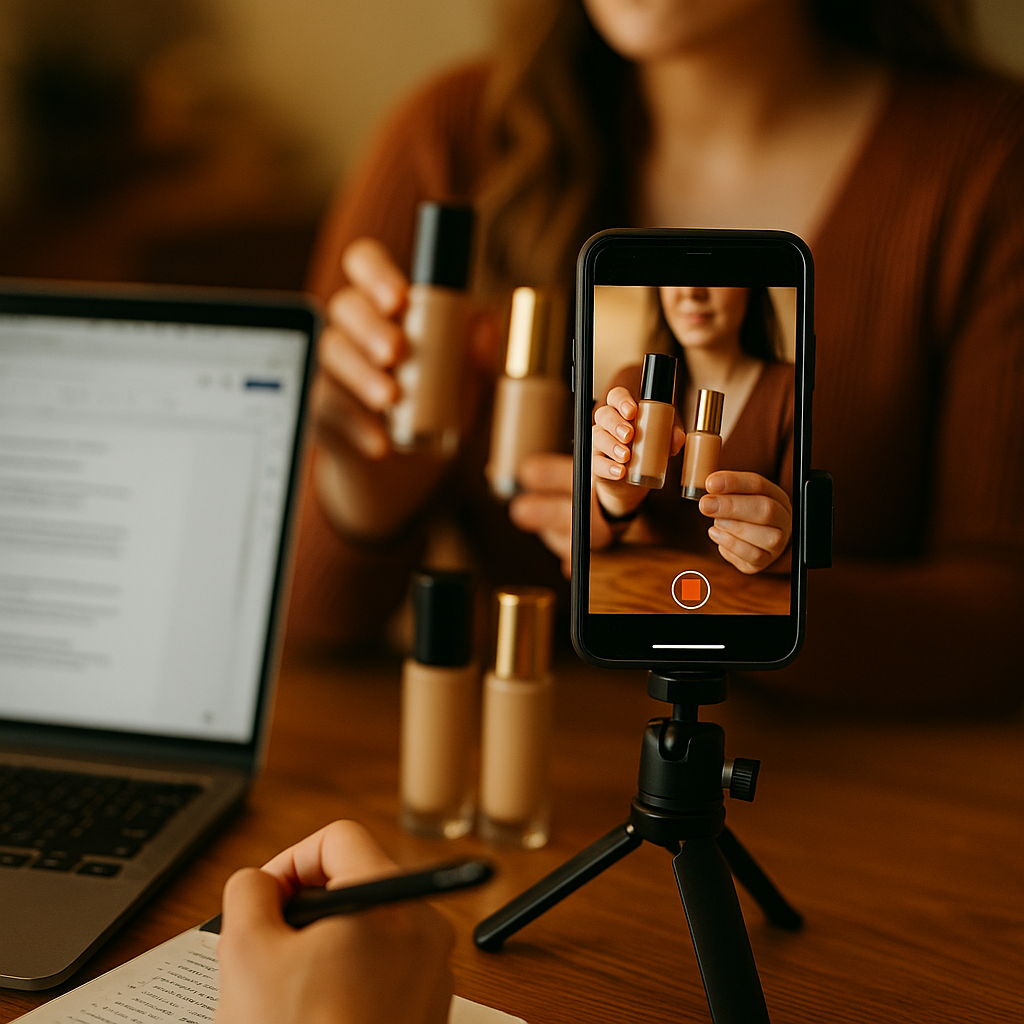
Seventy percent of shoppers now search “dupe for [brand product]” before they search the brand name itself, according to recent retail search trend data. That single shift has turned product dupe comparison videos into one of the highest-intent content formats in the creator economy. Yet most brands still script them like generic reviews, missing the exact search language buyers type into TikTok and Google. Get the structure wrong, and you waste a placement. Get it right, and you own a high-converting query for months.
Why Dupe Content Outperforms Standard Reviews
A dupe comparison video does something a standard product review can’t: it meets the shopper at the moment of price hesitation. The viewer already wants the category. They’re just not sure they want to pay premium cost for it. That’s a bottom-funnel mindset, and it converts differently than top-funnel discovery content.
Search platforms have noticed. TikTok’s own search and discovery tools increasingly surface comparison and “is it worth it” style content higher in results, because engagement signals show users finish these videos at a far higher rate than straight unboxings. Google’s helpful content guidance pushes the same direction: reward content that genuinely answers the query behind the query.
Shoppers searching for a dupe aren’t looking for permission to buy cheap. They’re looking for proof that cheap still performs.
That distinction should drive every scripting decision you make. If the script centers on price alone, it reads as an ad. If it centers on performance parity with a price reveal at the end, it reads as a search result the viewer trusts.
What Search Intent Actually Looks Like Here
Before a single word of script gets written, pull the actual query language. “Dupe for” is only one pattern. Shoppers also search “is [X] the same as [Y],” “alternative to [brand] that actually works,” and “budget version of [product] review.” Each phrasing implies a slightly different intent.
- “Dupe for X” signals the shopper already trusts the category and wants a cheaper source.
- “Is X the same as Y” signals skepticism. They expect you to find the gap.
- “Alternative that works” signals prior disappointment with a cheap product. They want reassurance, not just a price point.
Script writers who ignore these distinctions end up with content that technically mentions “dupe” but doesn’t actually answer what the searcher typed. That’s a missed ranking opportunity and a wasted creator fee. For a deeper breakdown of how claims language interacts with regulatory review, our companion piece on dupe claims that survive FTC review is worth reading alongside this one, since intent matching and compliance now have to happen in the same script pass.
Build the Script Around a Three-Part Proof Structure
The highest-performing dupe comparisons follow a repeatable shape: claim, side-by-side proof, honest gap. Skip the gap and viewers smell a paid script from the first ten seconds. Include it, and you buy credibility that carries through the rest of the video.
Open with the exact search phrase. Literally say it on camera or in text overlay: “Is this really a dupe for [product]?” This isn’t just a hook, it’s a semantic match for the query that helps both TikTok’s search index and Google pick up the video in rich results.
Show the comparison in the first fifteen seconds. Texture, swatch, ingredient label, packaging, whatever the category demands. Viewers decide whether to keep watching based on visual proof, not narration. If your category involves formulation claims, borrow structure from our ingredient breakdown scripting framework, since the same substantiation rules apply.
Name the one place the dupe falls short. Maybe the scent fades faster. Maybe the fabric pills after a few washes. Naming a real limitation does two things: it satisfies FTC expectations around truthful comparative advertising, and it makes the eventual recommendation more believable. Creators who skip this step get flagged by audiences in the comments within hours, which then tanks the video’s completion rate and kills its search performance anyway.
Close with a direct verdict and a reason to act. “Worth switching if you want X, skip it if Y matters to you.” That kind of specific, conditional recommendation matches how people actually phrase their follow-up search: “should I buy the dupe or the original.”
Where This Format Overlaps With Ranking Content Formats
Dupe comparisons share DNA with two other formats brands already use: tier lists and stitched review compilations. If you’re running a multi-SKU comparison across several dupes for one hero product, the tier list scripting approach gives you a cleaner way to rank multiple options without implying false equivalence across the board. And if you’re aggregating creator opinions rather than running a single comparison, the structure in stitched review compilation scripts solves the attribution and sourcing problem that dupe content often runs into.
There’s also a discovery layer worth planning for. As AI shopping assistants and recommendation engines start summarizing comparison content instead of just linking to it, script phrasing matters even more. Structuring your video’s spoken claims and on-screen text so they’re easy for machine summarization to parse correctly is now part of the job, not an afterthought. Our guide on scripting for AI recommendation engines covers the formatting habits that keep your comparison from being misquoted by a chatbot summary.
The Compliance Layer: Don’t Let a Good Hook Become a Legal Problem
Comparative advertising claims carry real regulatory weight. The FTC’s guidance on endorsements and testimonials applies fully here: any comparison claim needs to be substantiated, and any material connection between the brand and creator needs clear disclosure. “Dupe” content sits in a gray zone because it often implicitly criticizes a named competitor’s product, which raises the bar on what you need to prove before publishing.
Practical rule: if the script claims equal performance, you need test data or documented side-by-side use to back it up. If the script claims equal ingredients or formulation, that’s an even higher bar, and vague language like “basically the same” won’t hold up under scrutiny. Build a claims checklist into your creator brief before filming starts, not during legal review after the fact. That single change cuts reshoot requests dramatically.
A dupe video that can’t survive a comparative advertising review isn’t a content asset, it’s a liability sitting in your content library.
Measuring Whether the Script Actually Worked
Views and likes tell you almost nothing about whether a dupe comparison captured search intent. Watch for these signals instead:
- Search traffic attribution, meaning branded and category search volume lifts in the days after the video publishes. Tools referenced in eMarketer’s social commerce research show measurable search lift from well-targeted comparison content.
- Completion rate past the comparison beat, not just the hook. If viewers drop off before the proof segment, your opening claim didn’t match what they searched for.
- Comment sentiment on the “honest gap.” If commenters are arguing about whether your stated limitation is accurate, that’s actually a good sign. It means they’re engaging with the substance, not dismissing the video as an ad.
- Save and share rate. Sprout Social’s engagement benchmarks consistently show comparison and “which one should I buy” content outperforms standard reviews on saves, which correlates with purchase intent far more than likes do.
Feed those signals back into your next creator brief. If a script wins on search lift but underperforms on completion, the hook needs tightening, not the whole format thrown out. If you’re building a recurring library of this content, pair your measurement plan with the approach in short-form video libraries built for organic and paid reuse, since dupe comparisons tend to have unusually long shelf lives once they start ranking.
Next Step
Pull your actual search query data before writing another dupe script, build the claim, proof, and honest-gap structure into every brief, and route the draft through legal before filming, not after. That order of operations is the difference between a video that ranks and one that gets pulled.
FAQs
What makes a dupe comparison video different from a standard product review?
A dupe comparison directly answers a price-hesitation search query by matching a cheaper product against a known premium one, while a standard review simply evaluates a single product on its own merits.
Do dupe comparison videos need FTC disclosure?
Yes. Any paid or gifted relationship with the brand being featured requires clear disclosure, and comparative claims about a competitor’s product need substantiation before publishing.
How long should a dupe comparison script be?
Most high-performing versions run between thirty and sixty seconds, with the comparison proof appearing in the first fifteen seconds to match short attention spans and search platform completion signals.
Should the script always include a negative point about the dupe?
Yes, including one honest limitation builds credibility and helps the content meet comparative advertising standards, rather than reading as an unqualified promotional claim.
How do I find the exact search phrases shoppers use for dupes?
Check platform search autocomplete, review comment sections on existing dupe content, and use tools like Google’s search trends data to see which phrasing variations have the highest volume for your category.
Top Influencer Marketing Agencies
The leading agencies shaping influencer marketing in 2026
Agencies ranked by campaign performance, client diversity, platform expertise, proven ROI, industry recognition, and client satisfaction. Assessed through verified case studies, reviews, and industry consultations.
Moburst

-
2

The Shelf
Boutique Beauty & Lifestyle Influencer AgencyA data-driven boutique agency specializing exclusively in beauty, wellness, and lifestyle influencer campaigns on Instagram and TikTok. Best for brands already focused on the beauty/personal care space that need curated, aesthetic-driven content.Clients: Pepsi, The Honest Company, Hims, Elf Cosmetics, Pure LeafVisit The Shelf → -
3

Audiencly
Niche Gaming & Esports Influencer AgencyA specialized agency focused exclusively on gaming and esports creators on YouTube, Twitch, and TikTok. Ideal if your campaign is 100% gaming-focused — from game launches to hardware and esports events.Clients: Epic Games, NordVPN, Ubisoft, Wargaming, Tencent GamesVisit Audiencly → -
4

Viral Nation
Global Influencer Marketing & Talent AgencyA dual talent management and marketing agency with proprietary brand safety tools and a global creator network spanning nano-influencers to celebrities across all major platforms.Clients: Meta, Activision Blizzard, Energizer, Aston Martin, WalmartVisit Viral Nation → -
5

The Influencer Marketing Factory
TikTok, Instagram & YouTube CampaignsA full-service agency with strong TikTok expertise, offering end-to-end campaign management from influencer discovery through performance reporting with a focus on platform-native content.Clients: Google, Snapchat, Universal Music, Bumble, YelpVisit TIMF → -
6

NeoReach
Enterprise Analytics & Influencer CampaignsAn enterprise-focused agency combining managed campaigns with a powerful self-service data platform for influencer search, audience analytics, and attribution modeling.Clients: Amazon, Airbnb, Netflix, Honda, The New York TimesVisit NeoReach → -
7

Ubiquitous
Creator-First Marketing PlatformA tech-driven platform combining self-service tools with managed campaign options, emphasizing speed and scalability for brands managing multiple influencer relationships.Clients: Lyft, Disney, Target, American Eagle, NetflixVisit Ubiquitous → -
8

Obviously
Scalable Enterprise Influencer CampaignsA tech-enabled agency built for high-volume campaigns, coordinating hundreds of creators simultaneously with end-to-end logistics, content rights management, and product seeding.Clients: Google, Ulta Beauty, Converse, AmazonVisit Obviously →