


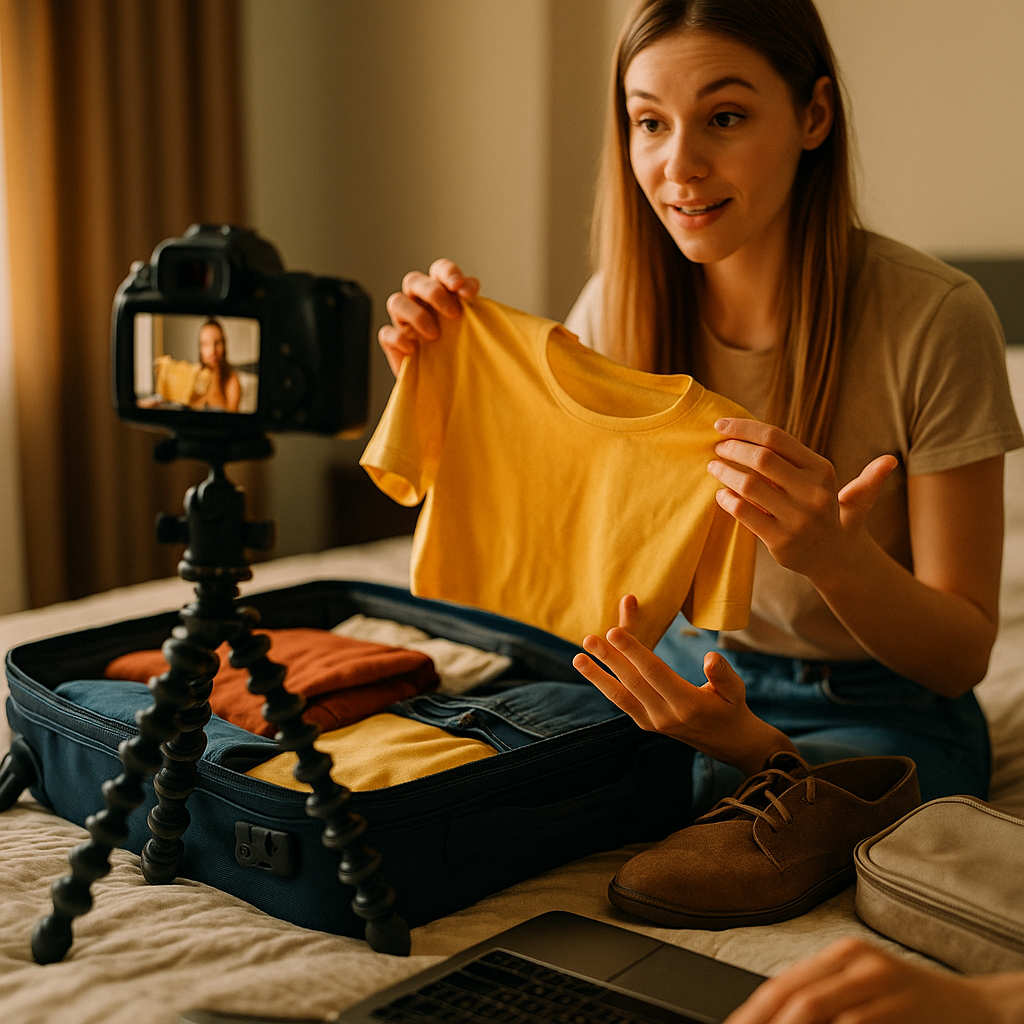
Travel creators posted more than 12 million packing and haul videos across TikTok and Instagram last year, yet most brands still treat the format as filler content between destination reels. That is a mistake. A well-scripted packing and travel haul video converts at rates that rival product demo content because it solves a real pre-trip anxiety: what do I actually need, and does it fit in one bag?
Why This Format Outperforms Generic Travel Content
Packing videos sit at a unique intersection of entertainment and utility. Viewers watch destination b-roll for inspiration, but they watch packing hauls because they are actively planning a trip and need answers now. That intent signal matters enormously for brands selling luggage, travel apparel, skincare minis, or booking platforms.
The format also has built-in rewatchability. Someone browsing for a Europe trip in spring will search “what to pack for Portugal” multiple times across weeks, revisiting the same creator’s video as they finalize their suitcase. Compare that to a scenic vlog, which gets one watch and maybe a like.
Packing hauls convert because they arrive at the exact moment a consumer is making a purchase decision, not months before or after it.
The Search Intent Angle Brands Keep Missing
Treat packing videos like SEO content, not just social content. Creators who title and caption around specific trip types (“carry on only for a 10 day Japan trip” versus generic “my packing haul”) capture search traffic on YouTube and TikTok’s own search function, which eMarketer has flagged as a growing discovery channel for Gen Z and millennial shoppers. This mirrors the intent-matching logic covered in our piece on scripting search intent that converts, where specificity in naming beats broad appeal every time.
Scripting the Hook: First Three Seconds Decide Everything
Packing videos live or die on the hook. Nobody wants to watch someone unzip a suitcase in silence. The highest-performing openers do one of three things: state a constraint (one bag, one week, no checked luggage), promise a payoff (the item that saved my trip), or create mild tension (I almost left this behind and it would have ruined everything).
- Constraint hook: “Everything I packed for 14 days in a 20-liter bag.”
- Payoff hook: “This $12 item got more compliments than my entire outfit.”
- Tension hook: “I almost didn’t bring this and I would have regretted it the whole trip.”
Script the hook word for word before filming. Improvised hooks ramble, and the algorithm punishes slow starts. Treat the first line like ad copy, because that is exactly what it is.
Structuring the Middle: Category Over Chronology
Most amateur packing videos follow the order items go into the bag, which is boring and unpredictable for viewers. Brands should script around categories instead: outerwear, electronics, toiletries, “just in case” items, documents. Categorical structure lets editors insert product placements at predictable beats, which makes sponsorship integration far smoother for the brand team reviewing cuts.
A reliable five-beat structure for a 60 to 90 second haul:
- Hook and context (destination, trip length, bag type)
- Core wardrobe or essentials category
- Sponsored or hero product moment, framed as a personal recommendation
- One unexpected or “smart traveler” item that builds creator credibility
- Closing CTA: link in bio, discount code, or “comment your destination for a packing list”
Notice that the sponsored product sits in the middle, not the end. Viewers drop off steadily throughout these videos, and burying the paid placement at the finish guarantees fewer impressions. This is the same placement logic brands use in recipe style tutorial scripts, where the product appears at the point of highest attention, not as an afterthought.
Writing the Product Integration So It Does Not Feel Like an Ad
The biggest mistake brands make with travel creators is scripting a feature-dump. “This jacket is made of ripstop nylon with a 20,000mm waterproof rating” means nothing to someone deciding what to pack for a weekend trip. Instead, script the integration around the traveler’s actual decision moment.
Compare these two lines:
- Weak: “I’m using the XYZ packing cubes, which are made from recycled polyester.”
- Strong: “I used to just shove everything in and lose it at the bottom of my bag. These cubes mean I can find my charger in three seconds, even at 6am for an early flight.”
The second line sells the outcome, not the material spec. Brief creators to write their own version of this in their own voice rather than reading brand copy verbatim. Authenticity is measurable now: platforms increasingly deprioritize content that reads as scripted ad copy, and audiences disengage from it even faster than the algorithm does.
Compliance: The Part Brands Rush Through
Travel haul videos often involve multiple paid placements in a single clip (the bag, the sunscreen, the compression socks), which raises disclosure complexity. The FTC’s endorsement guidelines require clear and conspicuous disclosure for each material connection, not just a single blanket “ad” tag if the video features products from different, unrelated sponsors.
Script disclosure language into the video itself rather than relying solely on platform tags. A verbal “this trip was partnered with [brand]” at the point of integration, paired with the on-screen disclosure tag, covers brands far better than captions alone, since caption-only disclosure has been challenged as insufficiently conspicuous in prior FTC actions.
If a haul video features three paid products, it needs three moments of disclosure clarity, not one disclaimer buried in the caption.
For a deeper breakdown of multi-brand disclosure structures, our guide on scripting claims that survive FTC review applies directly here, since comparison and haul formats share the same multi-product disclosure burden.
Destination and Cultural Sensitivity Review
Travel content carries reputational risk that product review content does not: a packing video filmed in a culturally sensitive location, or one that implies an endorsement of a destination with political controversy, can generate backlash unrelated to the product itself. Build a lightweight destination review step into your creator brief approval process, separate from the product compliance check. This is less about censorship and more about making sure nobody on the brand side is surprised by a comment section debate that has nothing to do with the luggage.
Platform Differences Change the Script
A packing haul built for TikTok should not be a shorter version of a YouTube video. TikTok and Instagram Reels reward fast cuts and a tight 45 to 75 second runtime, while YouTube Shorts and long-form YouTube reward a slower, more narrative “come pack with me” structure that can run five to ten minutes and include destination context, itinerary talk, and multiple product tie-ins.
Repurposing one hero shoot across formats is efficient, but the script needs format-specific beats built in from the start. HubSpot’s content repurposing research consistently shows that videos edited natively for each platform’s pacing outperform direct reposts, sometimes by a wide margin on watch-through rate.
For brands managing this across dozens of creators, building a short form video library of packing and haul content pays off twice: once organically, and again when the best-performing clips get whitelisted for paid media.
Recurring Creators Build Trip-Planning Authority
Brands that work with the same travel creator across multiple trips build something one-off influencer deals cannot: a recognizable packing persona that audiences trust before the video even starts. If a creator is known for brutal carry-on efficiency, their audience already expects practical, no-fluff recommendations, which shortens the trust-building work your script has to do. This is the same mechanic driving success in persona driven UGC, applied to the travel vertical specifically.
Measuring What Actually Matters
Likes and views are the least useful metrics for this format. Track these instead:
- Saves: the single strongest signal for packing content, since viewers save lists to reference while actually packing weeks later.
- Link clicks within 48 hours of posting: captures the planning-stage purchase window.
- Branded search lift: use Google Search Console or brand tracking tools to spot spikes in product-name searches tied to posting dates.
- Comment-based list requests: “send me the full list” comments indicate strong purchase intent and are a good signal for which creators to re-book.
Saves in particular deserve more weight in your reporting than most platforms give them by default. A video with modest views but a high save rate is quietly doing more bottom-funnel work than a viral clip with low saves.
Start your next travel brand campaign by scripting the hook and the mid-roll product beat before you ever brief a creator on wardrobe or destination, because those two moments decide whether the video earns a save or a scroll past.
FAQs
How long should a packing and travel haul video be?
For TikTok and Instagram Reels, aim for 45 to 75 seconds. For YouTube Shorts or long-form YouTube “come pack with me” content, five to ten minutes performs better because it supports itinerary context and multiple product placements.
How many sponsored products can appear in one haul video?
There is no hard limit, but each distinct paid placement needs its own clear disclosure moment under FTC guidelines. Three or more unrelated sponsors in one video significantly raises disclosure complexity and editing time.
What metric best predicts whether a packing video will drive sales?
Save rate is the strongest predictor, since viewers bookmark packing lists to reference while actually preparing their trip, often weeks after first watching.
Should brands script the exact wording creators use?
No. Brief the outcome and the required disclosure language, but let creators write the integration in their own voice. Scripted-sounding ad copy underperforms and increasingly gets deprioritized by platform algorithms.
Do packing videos work for destinations as well as products?
Yes, destination marketing organizations and booking platforms use the same format to capture pre-trip search intent, though the compliance and disclosure requirements shift toward partnership transparency rather than product claims.
Top Influencer Marketing Agencies
The leading agencies shaping influencer marketing in 2026
Agencies ranked by campaign performance, client diversity, platform expertise, proven ROI, industry recognition, and client satisfaction. Assessed through verified case studies, reviews, and industry consultations.
Moburst

-
2

The Shelf
Boutique Beauty & Lifestyle Influencer AgencyA data-driven boutique agency specializing exclusively in beauty, wellness, and lifestyle influencer campaigns on Instagram and TikTok. Best for brands already focused on the beauty/personal care space that need curated, aesthetic-driven content.Clients: Pepsi, The Honest Company, Hims, Elf Cosmetics, Pure LeafVisit The Shelf → -
3

Audiencly
Niche Gaming & Esports Influencer AgencyA specialized agency focused exclusively on gaming and esports creators on YouTube, Twitch, and TikTok. Ideal if your campaign is 100% gaming-focused — from game launches to hardware and esports events.Clients: Epic Games, NordVPN, Ubisoft, Wargaming, Tencent GamesVisit Audiencly → -
4

Viral Nation
Global Influencer Marketing & Talent AgencyA dual talent management and marketing agency with proprietary brand safety tools and a global creator network spanning nano-influencers to celebrities across all major platforms.Clients: Meta, Activision Blizzard, Energizer, Aston Martin, WalmartVisit Viral Nation → -
5

The Influencer Marketing Factory
TikTok, Instagram & YouTube CampaignsA full-service agency with strong TikTok expertise, offering end-to-end campaign management from influencer discovery through performance reporting with a focus on platform-native content.Clients: Google, Snapchat, Universal Music, Bumble, YelpVisit TIMF → -
6

NeoReach
Enterprise Analytics & Influencer CampaignsAn enterprise-focused agency combining managed campaigns with a powerful self-service data platform for influencer search, audience analytics, and attribution modeling.Clients: Amazon, Airbnb, Netflix, Honda, The New York TimesVisit NeoReach → -
7

Ubiquitous
Creator-First Marketing PlatformA tech-driven platform combining self-service tools with managed campaign options, emphasizing speed and scalability for brands managing multiple influencer relationships.Clients: Lyft, Disney, Target, American Eagle, NetflixVisit Ubiquitous → -
8

Obviously
Scalable Enterprise Influencer CampaignsA tech-enabled agency built for high-volume campaigns, coordinating hundreds of creators simultaneously with end-to-end logistics, content rights management, and product seeding.Clients: Google, Ulta Beauty, Converse, AmazonVisit Obviously →