


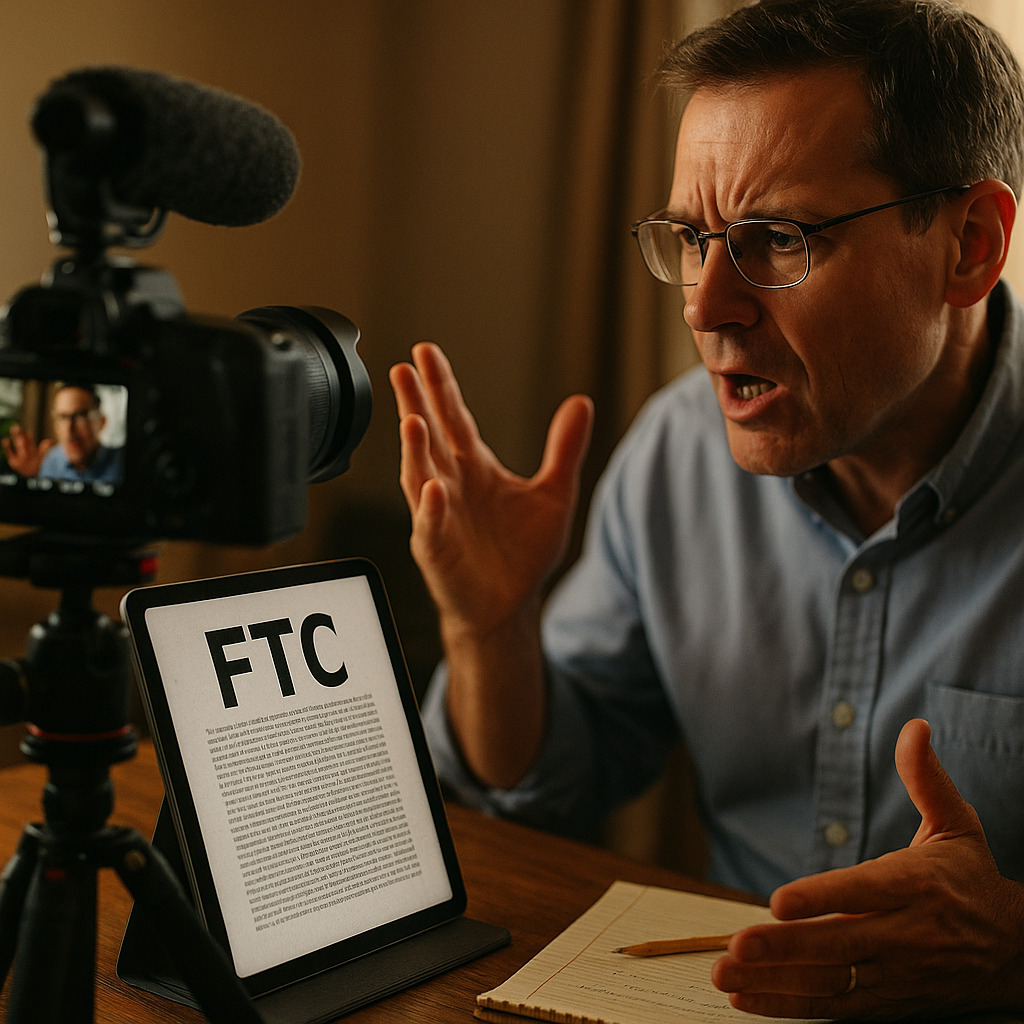
73% of consumers say they trust peer and expert opinions more than brand advertising, according to research cited widely across the marketing industry. So why do most “expert reaction” creator videos still read like infomercials with a lab coat? Expert reaction videos only work when the expertise is real, the reaction is unscripted enough to feel honest, and the brief leaves room for actual scrutiny. Get the structure wrong and you’ve built a disclosure liability, not a credibility asset.
Why Expert Reaction Content Is Having a Moment
Scroll through any beauty, finance, or wellness feed and you’ll spot the format fast: a dermatologist squinting at a serum label, a CPA reacting to a TikTok tax hack, a physical therapist wincing at someone’s deadlift form. The appeal is obvious. Audiences are exhausted by polished brand messaging and increasingly skeptical of creators who seem to shill anything for a check. An expert reaction borrows a different kind of authority, one built on credentials, pattern recognition, and the implicit promise that this person has no reason to lie to you.
That promise is exactly what brands are buying when they sponsor these videos. And it’s exactly what collapses the moment the script feels too tidy.
The Core Tension: Authenticity vs Brand Control
Here’s the uncomfortable truth every brand strategist needs to sit with: the more you script an expert’s reaction, the less it looks like an expert reacting. Viewers have gotten scary good at spotting a “surprised” dermatologist who clearly read from a card. TikTok and Instagram comment sections are merciless about it. Once a single commenter writes “this is obviously an ad script,” the entire value of the format evaporates for that creator, and often for the brand too.
The paradox of expert reaction content is that the more control a brand exerts over the script, the less credible the reaction becomes, and credibility is the entire reason the format exists.
So the job isn’t to write dialogue. It’s to engineer the conditions for a genuine, informed reaction and then structure the edit around what the expert actually says. That’s a fundamentally different briefing process than most agencies are used to running.
Building a Brief That Protects Both Honesty and Brand Message
Most creator briefs fail expert reaction content because they’re written like scripts for lifestyle UGC: scene one, hook, product reveal, CTA. Experts don’t work that way, and forcing them into that structure is how you end up with stilted, obviously-paid content. Instead, structure the brief around information, not dialogue.
- Give the expert the product or claim cold. Don’t pre-brief their opinion. Send the item, the ingredient list, the competitor’s claim, or the viral clip, and let their actual expertise generate the reaction.
- Supply three to five talking points as guardrails, not lines. If you’re sponsoring a nutritionist’s reaction to a protein bar, give her the macros and the sourcing info. Let her decide how to frame it.
- Build in a “what would make this better” beat. Real experts almost always have a caveat. Scripting one in, if it’s true, actually increases trust rather than diluting the message. A dermatologist who says “I’d still patch test this first” sounds more credible, not less.
- Specify the disclosure placement, not the disclosure language. Tell the creator where the #ad tag needs to live and let them phrase it in their own voice, consistent with FTC endorsement guidance.
This approach mirrors what works in other credibility-driven formats. The same principle shows up in ingredient breakdown videos, where the strongest performers let the expert do the explaining instead of reading brand copy verbatim.
Casting Is Your First Credibility Checkpoint
Brands routinely underinvest in vetting and overinvest in follower count. That’s backwards for this format specifically. An expert reaction video lives or dies on whether the audience believes this person actually has the credentials they’re implying. A single comment pointing out a creator isn’t actually board certified, or exaggerated a license, can torch the campaign and expose the brand to its own liability.
Before you sign anything, verify:
- Active licensure or certification, confirmed through a state board or professional registry, not just the creator’s bio claim.
- A content history that shows this expertise predates the brand deal. Audiences can smell a freshly-minted “expert” account built around a single sponsorship.
- Past brand partnerships for conflicts. A cardiologist who reacted positively to three competing supplement brands in the last quarter has a credibility problem that’s about to become yours.
Platforms like Statista track how much weight consumers place on expert and professional endorsements compared to celebrity ones, and the gap keeps widening. That gap is valuable, but it’s fragile. One exposed fake credential and an entire content category takes a trust hit, not just one creator.
Scripting the Edit, Not the Expert
Here’s where the real craft lives. You can’t script what a nutritionist says about a label. You absolutely can script how that footage gets structured after the fact. Shoot long. Capture the full, unscripted reaction, including the pauses, the re-reads, the “huh, that’s actually surprising” moments. Then build the edit around a clear narrative arc:
- The setup. Show the expert receiving the product or claim cold, ideally on camera, so the audience sees the reaction wasn’t pre-loaded.
- The scrutiny. Let them actually examine it. A few extra seconds of someone reading a label closely does more for credibility than any line of dialogue could.
- The verdict. Keep this short and let their natural language carry it. If you find yourself tightening their phrasing to sound more “on brand,” you’re editing the trust out of the video.
- The caveat. Don’t cut the nuance. A video that’s 100% positive with zero qualification reads as paid, even if it isn’t.
This structure borrows heavily from documentary editing conventions, and it’s worth studying how founder origin mini documentaries handle the same tension between narrative control and perceived authenticity. The editing techniques transfer directly.
Disclosure Isn’t Optional, and It’s Getting Scrutinized More
Regulators have been explicit that paid expert content needs the same disclosure treatment as any other sponsored post, arguably more, because the entire value proposition rests on perceived independence. The FTC’s endorsement guidelines apply fully here, and the UK’s ICO has flagged similar concerns around data and claims transparency when health or financial experts are involved.
Brand and legal teams should treat expert reaction content as higher risk than standard UGC, not lower, precisely because the format trades on implied authority. That means:
- Disclosure language needs to appear before the reaction, not buried in a caption below the fold.
- Any credential claimed on camera should be verifiable and documented in your contract file.
- Health, financial, or legal claims need a compliance review pass separate from the standard brand review, ideally with the same rigor applied in retail media ad review processes.
Skipping this step doesn’t just risk a platform strike. It risks the FTC treating the expert’s implied endorsement as a deceptive practice, with penalties attaching to the brand, not just the creator.
Where Expert Reactions Fit in a Broader Content Strategy
Expert reaction videos work best as a trust layer, not a volume play. They’re expensive to produce well, slow to approve given the compliance overhead, and they burn out fast if the same expert keeps appearing in every ad. Treat them as a credibility anchor that supports a broader content library, similar to how stitched review compilations aggregate multiple proof points into one asset.
A smart allocation looks like one or two expert reaction pieces per quarter per product line, paired with higher-volume formats like myth vs fact videos or dupe comparison content that don’t carry the same verification overhead. Use the expert content as the anchor asset in paid amplification, then whitelist it through the expert’s own handle where platform policy allows, which preserves the perceived independence that makes the format work in the first place.
Track performance separately from standard UGC too. Expert reaction content tends to show slower but stickier engagement, more saves, more comment-section debate, fewer impulsive conversions. Measure it against consideration and trust metrics, not just immediate click-through, and benchmark against industry data from sources like eMarketer on how credibility-driven formats perform relative to standard sponsored content.
FAQs
What makes an expert reaction video different from standard influencer UGC?
The format relies on the creator’s professional credentials or specialized knowledge to validate a product or claim, rather than personal taste or lifestyle appeal. That means the bar for disclosure, verification, and compliance review is higher than for typical sponsored content.
Can you script what the expert says on camera?
Not directly. Scripting dialogue destroys the credibility that makes the format valuable. Brands should instead brief the information and context, then let the expert’s genuine reaction drive the actual language and framing.
How do you verify a creator’s claimed expertise before a campaign?
Confirm active licensure or certification through an official registry or state board, review the creator’s content history for consistency with their claimed expertise, and check for conflicting brand partnerships that could undermine their objectivity.
What disclosure rules apply to expert reaction content?
The same FTC endorsement guidelines that apply to all sponsored content apply here, with added scrutiny because the format implies independent professional judgment. Disclosure needs to appear clearly and early in the video, not buried in a caption.
How often should brands run expert reaction campaigns?
Treat it as a quarterly trust-building asset rather than a high-volume format. One or two well-produced, well-vetted expert reaction videos per product line per quarter typically outperform a high-frequency approach that risks overexposing a single expert.
Expert reaction content pays off only when the brief protects the expert’s judgment instead of replacing it. Verify the credentials, script the structure instead of the dialogue, and let the caveats stay in the edit.
Top Influencer Marketing Agencies
The leading agencies shaping influencer marketing in 2026
Agencies ranked by campaign performance, client diversity, platform expertise, proven ROI, industry recognition, and client satisfaction. Assessed through verified case studies, reviews, and industry consultations.
Moburst

-
2

The Shelf
Boutique Beauty & Lifestyle Influencer AgencyA data-driven boutique agency specializing exclusively in beauty, wellness, and lifestyle influencer campaigns on Instagram and TikTok. Best for brands already focused on the beauty/personal care space that need curated, aesthetic-driven content.Clients: Pepsi, The Honest Company, Hims, Elf Cosmetics, Pure LeafVisit The Shelf → -
3

Audiencly
Niche Gaming & Esports Influencer AgencyA specialized agency focused exclusively on gaming and esports creators on YouTube, Twitch, and TikTok. Ideal if your campaign is 100% gaming-focused — from game launches to hardware and esports events.Clients: Epic Games, NordVPN, Ubisoft, Wargaming, Tencent GamesVisit Audiencly → -
4

Viral Nation
Global Influencer Marketing & Talent AgencyA dual talent management and marketing agency with proprietary brand safety tools and a global creator network spanning nano-influencers to celebrities across all major platforms.Clients: Meta, Activision Blizzard, Energizer, Aston Martin, WalmartVisit Viral Nation → -
5

The Influencer Marketing Factory
TikTok, Instagram & YouTube CampaignsA full-service agency with strong TikTok expertise, offering end-to-end campaign management from influencer discovery through performance reporting with a focus on platform-native content.Clients: Google, Snapchat, Universal Music, Bumble, YelpVisit TIMF → -
6

NeoReach
Enterprise Analytics & Influencer CampaignsAn enterprise-focused agency combining managed campaigns with a powerful self-service data platform for influencer search, audience analytics, and attribution modeling.Clients: Amazon, Airbnb, Netflix, Honda, The New York TimesVisit NeoReach → -
7

Ubiquitous
Creator-First Marketing PlatformA tech-driven platform combining self-service tools with managed campaign options, emphasizing speed and scalability for brands managing multiple influencer relationships.Clients: Lyft, Disney, Target, American Eagle, NetflixVisit Ubiquitous → -
8

Obviously
Scalable Enterprise Influencer CampaignsA tech-enabled agency built for high-volume campaigns, coordinating hundreds of creators simultaneously with end-to-end logistics, content rights management, and product seeding.Clients: Google, Ulta Beauty, Converse, AmazonVisit Obviously →