


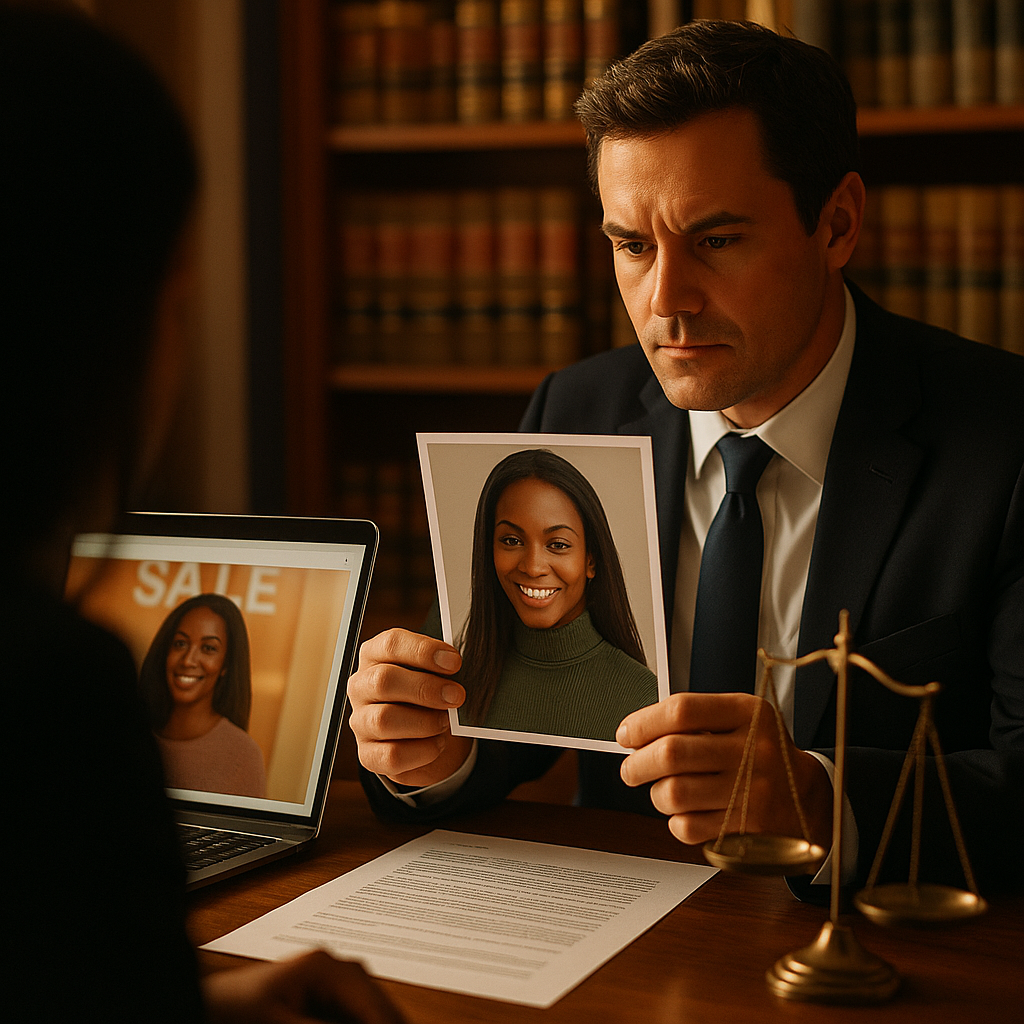
Here’s an uncomfortable number: fifty states, fifty different answers to “can I legally use this person’s face in an ad.” A right of publicity claim that would get laughed out of court in one state can carry statutory damages in the next. Add geo-targeted paid media that pushes the same creator asset into a dozen jurisdictions simultaneously, and you’ve built a legal exposure map you probably never meant to draw.
What Right of Publicity Actually Protects, and Why States Can’t Agree
Right of publicity is the legal doctrine that gives individuals control over the commercial use of their name, image, voice, and likeness. It sounds simple. It isn’t.
Roughly thirty states recognize a right of publicity through statute, common law, or both, but the details diverge wildly. California’s Civil Code Section 3344 requires written consent for commercial use and allows for statutory damages. New York’s Civil Rights Law treats the right narrowly and ties it closely to privacy. Indiana extends postmortem publicity rights for a staggering 100 years. Tennessee’s ELVIS Act, passed to protect musicians from AI voice cloning, now covers voice as a protected attribute, something most older statutes never contemplated.
Some states require express written consent before any commercial use. Others accept implied consent through conduct, meaning a verbal agreement or even participation in a photoshoot might hold up. A handful have no statutory right of publicity at all, leaving everything to common law precedent that can shift case by case.
A creator contract signed under California law does not automatically satisfy the consent requirements of Tennessee, New York, or Indiana once that same ad runs in those states.
That gap is exactly where brands get hurt. A release that’s airtight in one jurisdiction can be legally insufficient the moment the media plan expands.
The Paid Media Problem: One Asset, Fifty Rulebooks
Organic posting rarely triggers a right of publicity fight. Paid media is different. Once you boost a creator’s content or whitelist it to run under the brand’s own ad account, you’ve converted editorial-style content into commercial speech, and commercial speech is exactly what right of publicity statutes were written to regulate.
Geo-targeted campaigns make this worse, not better. A national paid social buy doesn’t respect state lines the way your legal review process might assume it does. Meta’s ad delivery system and TikTok’s ad manager both allow granular geographic targeting, but marketers rarely map that targeting against a state-by-state publicity rights analysis. Should they? Increasingly, yes.
Consider a mid-size DTC brand running a six-figure paid push featuring three creators, each under a standard usage rights agreement executed in the brand’s home state. The campaign scales nationally through TikTok’s ad platform and Meta’s boosted post tools. Nobody flags that one creator’s contract lacks the explicit “commercial use across all media and all territories” language that Indiana and a few other states effectively require to avoid ambiguity. Six months later, a cease and desist letter arrives, not because the creator objects, but because a rights holder dispute over derivative likeness use surfaces in a state where the original agreement never anticipated paid distribution at that scale.
This isn’t hypothetical paranoia. It’s the predictable output of treating creator contracts as boilerplate rather than as instruments that need to travel as far as your media plan does.
Whitelisting Turns a Gray Area Into a Red Flag
Whitelisting, where a brand runs ads directly from a creator’s handle, is now standard practice across influencer programs. It’s also one of the fastest ways to turn a routine usage rights question into a right of publicity exposure, because whitelisted ads often outlive the original campaign window and get redeployed into new geographies without anyone revisiting the original consent language.
We’ve covered the mechanics of this problem before in the context of usage rights expiration, and the publicity rights angle compounds it. An expired usage window is a contract problem. An expired usage window combined with distribution into a state with strict statutory damages is a litigation problem.
The same risk shows up in multi-year UGC libraries, where brands archive creator content for reuse across future campaigns. A piece of content cleared for use in 2024 under one state’s legal standard might not clear the bar in a state that has since tightened its publicity statute, or in a state the brand simply didn’t operate in when the original release was signed.
Where Brands Get Exposed in Practice
- Retargeted ad flights. Creative approved for one region gets reused in a retargeting push that expands targeting parameters without a fresh legal review.
- Franchise and multi-location rollouts. National brands with local franchisees often let individual locations run the same creator asset as local paid ads, multiplying the number of jurisdictions involved without multiplying the legal oversight.
- AI-generated derivative content. Tools that repurpose creator likeness into new formats, voiceovers, or synthetic variations can trigger publicity claims even when the original agreement covered the source footage.
- Postmortem licensing. Campaigns featuring estates or legacy creator content run headlong into wildly inconsistent postmortem publicity terms, from zero protection in some states to a full century in others.
Each of these scenarios shares a root cause: the contract was built for a single-state mental model, and the media plan wasn’t.
Building a Compliance Framework That Travels
The fix isn’t a fifty-state legal memo for every campaign, that’s not operationally realistic for most marketing teams. It’s a tiered framework that matches contract language to the broadest reasonable distribution scenario.
- Default to the strictest standard. Draft usage rights clauses assuming the campaign will run nationally, even if initial media plans target a single region. Expansion is common, and retroactive consent is expensive to chase down.
- Specify commercial use explicitly. Vague “content usage” language doesn’t satisfy states that require clear commercial consent. Spell out paid media, whitelisting, retargeting, and derivative use separately.
- Set a defined term and renewal trigger. Open-ended usage rights age poorly as state laws change. Build in a review date tied to contract renewal, not an indefinite license.
- Track where the ad actually ran, not just where it was planned to run. Media buying platforms generate geographic delivery reports. Pull them and reconcile against your rights documentation quarterly.
- Loop in AI-generated variants separately. If a creative team repurposes creator likeness through generative tools, that derivative needs its own consent trail, not a blanket assumption of coverage.
-
2

The Shelf
Boutique Beauty & Lifestyle Influencer AgencyA data-driven boutique agency specializing exclusively in beauty, wellness, and lifestyle influencer campaigns on Instagram and TikTok. Best for brands already focused on the beauty/personal care space that need curated, aesthetic-driven content.Clients: Pepsi, The Honest Company, Hims, Elf Cosmetics, Pure LeafVisit The Shelf → -
3

Audiencly
Niche Gaming & Esports Influencer AgencyA specialized agency focused exclusively on gaming and esports creators on YouTube, Twitch, and TikTok. Ideal if your campaign is 100% gaming-focused — from game launches to hardware and esports events.Clients: Epic Games, NordVPN, Ubisoft, Wargaming, Tencent GamesVisit Audiencly → -
4

Viral Nation
Global Influencer Marketing & Talent AgencyA dual talent management and marketing agency with proprietary brand safety tools and a global creator network spanning nano-influencers to celebrities across all major platforms.Clients: Meta, Activision Blizzard, Energizer, Aston Martin, WalmartVisit Viral Nation → -
5

The Influencer Marketing Factory
TikTok, Instagram & YouTube CampaignsA full-service agency with strong TikTok expertise, offering end-to-end campaign management from influencer discovery through performance reporting with a focus on platform-native content.Clients: Google, Snapchat, Universal Music, Bumble, YelpVisit TIMF → -
6

NeoReach
Enterprise Analytics & Influencer CampaignsAn enterprise-focused agency combining managed campaigns with a powerful self-service data platform for influencer search, audience analytics, and attribution modeling.Clients: Amazon, Airbnb, Netflix, Honda, The New York TimesVisit NeoReach → -
7

Ubiquitous
Creator-First Marketing PlatformA tech-driven platform combining self-service tools with managed campaign options, emphasizing speed and scalability for brands managing multiple influencer relationships.Clients: Lyft, Disney, Target, American Eagle, NetflixVisit Ubiquitous → -
8

Obviously
Scalable Enterprise Influencer CampaignsA tech-enabled agency built for high-volume campaigns, coordinating hundreds of creators simultaneously with end-to-end logistics, content rights management, and product seeding.Clients: Google, Ulta Beauty, Converse, AmazonVisit Obviously →
This kind of operational discipline overlaps heavily with the broader state privacy law patchwork brands are already managing for data compliance. The muscle memory is the same: map obligations by jurisdiction, document consent precisely, and review before scaling distribution.
Contracts Need a Geography Clause, Not Just a Term Clause
Most influencer agreements include a term (how long the license lasts) and a channel list (where the content can run). Few include explicit geographic scope, and that omission is becoming the single biggest gap in publicity rights risk management.
Add a clause that states, in plain terms, the jurisdictions where paid distribution is authorized, and require written amendment before expanding beyond that list. It’s a small addition that forces a legal conversation before a media buyer accidentally triggers it by widening a targeting radius in an ads manager dashboard.
Brands managing creator identity data at scale are already building this kind of jurisdictional awareness into their broader data governance, as outlined in our look at creator identity graphs. Publicity rights deserve the same structured mapping, not an afterthought bolted onto a standard influencer agreement template.
And when disputes do surface, despite good contract hygiene, brands with scandal and risk coverage in place have a meaningfully better negotiating position than those paying settlements out of marketing budget.
FAQs
Frequently Asked Questions
What is the right of publicity in the context of influencer marketing?
It’s the legal right of an individual, including creators and influencers, to control commercial use of their name, image, voice, and likeness. Brands need explicit consent, usually in contract form, before using a creator’s likeness in paid advertising.
Does a creator contract signed in one state cover ads that run nationally?
Not automatically. State publicity laws vary significantly, and a contract that satisfies consent requirements in one jurisdiction may not meet stricter standards elsewhere. National campaigns should be drafted against the strictest applicable state standard.
How is whitelisting different from organic creator posts for publicity risk?
Whitelisting converts content into direct paid advertising run from the creator’s account, which is squarely the type of commercial use right of publicity statutes regulate. Organic posts carry lower legal exposure because they’re not purchased media.
What should brands include in creator contracts to reduce multi-state exposure?
Explicit commercial use language, a defined geographic scope for paid distribution, a clear license term with renewal triggers, and separate consent coverage for AI-generated derivative content.
Do postmortem publicity rights affect brand campaigns?
Yes, especially for legacy or archival creator content. Postmortem publicity protection ranges from nonexistent to roughly a century depending on the state, which matters for estates, licensing deals, and any campaign using deceased public figures.
Can AI-generated content featuring a creator’s likeness trigger separate right of publicity claims?
Often yes. Laws like Tennessee’s ELVIS Act specifically extend protection to voice and AI-generated likeness, meaning original footage consent doesn’t automatically cover synthetic derivatives.
The next time a media buyer wants to expand a whitelisted creator ad into new states, route it through legal first, not after the spend report shows multi-state delivery. A five-minute contract review beats a six-figure settlement every time.
Top Influencer Marketing Agencies
The leading agencies shaping influencer marketing in 2026
Agencies ranked by campaign performance, client diversity, platform expertise, proven ROI, industry recognition, and client satisfaction. Assessed through verified case studies, reviews, and industry consultations.
Moburst
