


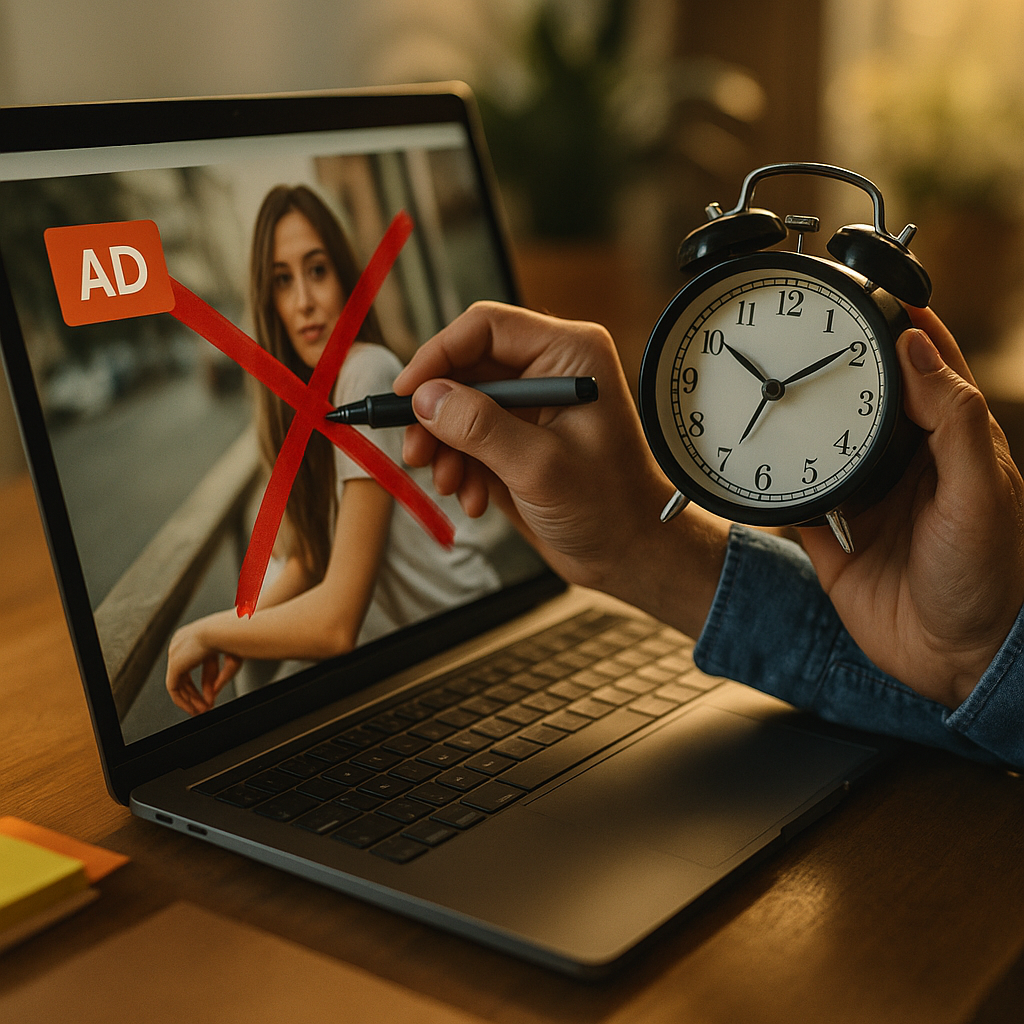
Here’s an uncomfortable number: most brands can’t tell you, off the top of their head, which of their currently running whitelisted ads have already blown past their licensed usage window. A content usage rights expiration clause sounds like boilerplate legal text until the day Meta’s ad library flags a campaign running on a license that lapsed three months ago. Then it’s not boilerplate. It’s a live liability.
Whitelisting (giving a brand access to run paid media through a creator’s handle) has become standard practice for performance marketers chasing authentic-feeling ad units. But the contracts governing how long a brand can actually use that content rarely get the scrutiny they deserve.
Why Usage Rights Expiration Gets Ignored Until It’s a Problem
Most influencer agreements get negotiated under deadline pressure. Legal drafts a template, the creator’s manager redlines the fee, both sides sign, and the campaign launches. Usage duration is usually buried in a single sentence somewhere around paragraph twelve.
The problem is that whitelisted ads don’t behave like organic posts. An organic sponsored post lives its life and fades into a feed. A whitelisted ad can run indefinitely as long as someone on the media buying team keeps the budget flowing. Nobody is manually checking contract end dates against active campaign IDs in Ads Manager. That disconnect between legal terms and media operations is where expiration risk lives.
A usage rights clause that isn’t tied to an operational trigger, like an automated campaign pause date, is just a sentence in a PDF. It won’t stop a media buyer from extending spend past the license window.
Add in the fact that whitelisting arrangements often get renewed, paused, and reactivated across quarters, and you’ve got a recipe for license drift. A creator’s one-year usage grant from Q1 can quietly become an eighteen-month run by the time someone in finance asks why the same ad ID is still spending.
What Actually Happens When Rights Expire Mid-Flight
Three scenarios tend to play out, and none of them are good.
- The creator (or their agent) notices. They send a cease-and-desist, demand a retroactive licensing fee, or escalate publicly. Public escalation is rare but devastating when it happens, especially if the creator has any kind of following that cares about creator rights.
- The platform notices first. Meta and TikTok have both tightened enforcement around branded content tools and partnership ads. An expired authorization in the platform’s own system (separate from your private contract) can get an ad pulled mid-flight, tanking a campaign’s learning phase and wasting pacing budget.
- Nobody notices until an audit. This is the most common outcome, and arguably the riskiest. A procurement audit, a new legal hire, or a creator’s own bookkeeping turns up the discrepancy a year later, and now you’re negotiating a settlement instead of a renewal.
Each of these carries direct cost: legal fees, settlement payments, wasted media spend, and the soft cost of a damaged creator relationship that makes future negotiations harder.
The Anatomy of a Clause That Actually Protects You
A usage rights expiration clause needs to do more than state a date. It needs to define what happens at that date, who’s responsible for tracking it, and what the remedy looks like if the date gets missed.
Strong clauses typically specify:
- A fixed term with explicit start trigger. Is the clock running from contract signature, from content delivery, or from first live impression? These are three different dates and brands regularly confuse them.
- Platform-specific carve-outs. Usage on Meta’s whitelisting tools (Partnership Ads) may need separate authorization language from usage on TikTok Spark Ads, since each platform’s permission system works differently.
- Automatic versus notice-based expiration. Some clauses auto-terminate rights on the end date with no warning required. Others require a notice period. Auto-termination protects the creator; notice-based protects the brand’s media pacing. Negotiate deliberately, don’t default.
- A cure period for inadvertent overrun. Good-faith overruns happen. A clause that allows a short cure window (say, 48 to 72 hours to pause spend) with a defined retroactive fee is far better than a clause silent on remedy, which usually means “whatever the creator’s lawyer decides to demand.”
- Renewal mechanics that don’t rely on memory. Auto-renewal at a pre-agreed rate, with a defined notice window to opt out, removes the guesswork. This overlaps heavily with issues covered in our breakdown of ambassador contract renewal terms, which is worth reading alongside this topic since the same operational gaps apply.
Vague terms like “ongoing use” or “perpetuity unless revoked” might look creator-friendly or brand-friendly depending on who drafted them, but ambiguity cuts both ways in a dispute. Specificity protects everyone, including the relationship.
Where This Intersects With Consent and Ad Variation
Expiration doesn’t exist in isolation. It’s one piece of a broader consent framework that also covers what formats the brand can use, whether AI-generated variations of the creator’s likeness are permitted, and whether the brand can swap in different ad copy against the same visual asset. We’ve covered the consent-scope side of this in detail in our piece on whitelisting consent and ad variation rights, and it’s a natural companion read because expiration dates often get negotiated in the same clause block as variation permissions.
There’s also a repurposing dimension. A brand that wants to pull a whitelisted TikTok ad into a connected TV spot, or repost it on owned social after the paid flight ends, needs usage rights that extend beyond the original paid placement. That’s a separate negotiation from the whitelisting term itself, and conflating the two is a common drafting mistake. Our guide on creator asset repurposing rules walks through how to avoid that trap.
Building an Operational Trigger, Not Just a Legal One
The contract is only half the solution. The other half is making sure someone, or something, actually acts on the expiration date.
Leading in-house teams are now building expiration tracking directly into their media operations stack rather than leaving it in a contract repository nobody checks weekly.
Practical steps that close the gap:
- Tag every whitelisted ad ID with its license end date inside the ad platform’s naming convention or a connected spreadsheet, so media buyers see it at a glance.
- Set a calendar alert 30 days before expiration, giving legal and media buying time to negotiate a renewal or plan a graceful pause.
- Route renewal decisions through a single owner. When legal, brand, and agency each assume someone else is tracking the date, nobody does.
- Audit active campaigns quarterly against the master rights tracker. This is the same discipline recommended in our piece on UGC audit rights and chain of title, and the overlap is not a coincidence: both problems stem from treating usage rights as a one-time checkbox instead of an ongoing operational responsibility.
Agencies managing whitelisting at scale across dozens of creators per client should consider a centralized rights management tool rather than relying on individual account managers to remember contract terms. The operational cost of building this tracking is trivial compared to the cost of a single expired-rights dispute with a creator who has legal counsel and a public platform.
Negotiating Term Length: What’s Reasonable in the Current Market
There’s no universal standard, but patterns have emerged. Short-form performance campaigns on Meta and TikTok commonly license usage for three to six months, reflecting how quickly creative fatigue sets in on paid social. Brand awareness or always-on whitelisting arrangements sometimes stretch to twelve months, usually at a meaningfully higher fee to reflect the extended exclusivity cost to the creator.
Perpetual or “in perpetuity” usage rights are increasingly rare for whitelisted content specifically, even though they remain common for owned UGC content with full buyout. Creators and their agents have gotten savvier about the resale value of their likeness, and most won’t sign away indefinite paid media rights without a correspondingly large one-time fee.
Industry data on influencer marketing spend from eMarketer shows continued growth in branded content budgets, which means more contracts, more renewal cycles, and more opportunities for rights to lapse unnoticed at scale. The volume problem is real: a brand running whitelisting across fifty creators simultaneously has fifty separate expiration clocks ticking, each potentially on a different cadence.
FTC and Platform Compliance Overlap
Usage rights expiration isn’t purely a contract issue, it brushes up against disclosure compliance too. If a whitelisted ad continues running after a creator’s formal relationship with the brand has ended, and the original sponsorship disclosure language becomes stale or misleading, that’s a separate exposure under FTC endorsement guidelines. An expired license paired with an outdated disclosure is a compounding problem, not two separate small ones.
Platforms have their own layer on top of this. Meta’s Partnership Ads system requires the creator to actively authorize brand use, and that authorization can be revoked by the creator independent of what the private contract says. If a creator revokes platform-level authorization before the contractual term ends, the brand has a legal right to the content but no technical ability to run it. That mismatch between legal rights and platform permissions is becoming one of the more common disputes in whitelisting arrangements, and it’s a good reason to review platform authorization settings alongside contract renewal checkpoints, not after.
Next Step
Pull your active whitelisted campaign list this week and cross-check every ad ID against its underlying contract’s expiration date. If you can’t produce that list in under an hour, that’s the actual problem, and it’s worth fixing before legal finds it for you.
FAQs
What is a content usage rights expiration clause in an influencer contract?
It’s the contract provision that defines exactly how long a brand can run a creator’s content in paid media, including whitelisted ads, before the license terminates or requires renewal.
What happens if a brand keeps running a whitelisted ad after the usage rights expire?
The brand is technically using the creator’s likeness without authorization, which can lead to a cease-and-desist, a retroactive licensing demand, a platform-level takedown, or in rare cases a public dispute that damages the brand’s reputation.
How long should whitelisted content usage rights typically last?
Most performance-focused whitelisting agreements run three to six months, while broader brand campaigns may extend to twelve months. Perpetual grants are increasingly uncommon for paid whitelisted use specifically.
Is platform-level authorization the same as contractual usage rights?
No. A contract can grant usage rights while the creator still needs to separately authorize the brand inside tools like Meta’s Partnership Ads. If the creator revokes that platform authorization, the ad stops running even if the contract term hasn’t expired.
Who should be responsible for tracking usage rights expiration dates?
Ideally a single named owner, often within media operations or legal, who maintains a centralized tracker and alerts the team 30 days before any license lapses. Splitting ownership across teams is the most common reason expirations get missed.
Can a brand negotiate a cure period if rights expire accidentally?
Yes, many contracts now include a short cure window, often 48 to 72 hours, allowing the brand to pause spend and settle a retroactive fee rather than facing an open-ended dispute.
FAQs
Top Influencer Marketing Agencies
The leading agencies shaping influencer marketing in 2026
Agencies ranked by campaign performance, client diversity, platform expertise, proven ROI, industry recognition, and client satisfaction. Assessed through verified case studies, reviews, and industry consultations.
Moburst

-
2

The Shelf
Boutique Beauty & Lifestyle Influencer AgencyA data-driven boutique agency specializing exclusively in beauty, wellness, and lifestyle influencer campaigns on Instagram and TikTok. Best for brands already focused on the beauty/personal care space that need curated, aesthetic-driven content.Clients: Pepsi, The Honest Company, Hims, Elf Cosmetics, Pure LeafVisit The Shelf → -
3

Audiencly
Niche Gaming & Esports Influencer AgencyA specialized agency focused exclusively on gaming and esports creators on YouTube, Twitch, and TikTok. Ideal if your campaign is 100% gaming-focused — from game launches to hardware and esports events.Clients: Epic Games, NordVPN, Ubisoft, Wargaming, Tencent GamesVisit Audiencly → -
4

Viral Nation
Global Influencer Marketing & Talent AgencyA dual talent management and marketing agency with proprietary brand safety tools and a global creator network spanning nano-influencers to celebrities across all major platforms.Clients: Meta, Activision Blizzard, Energizer, Aston Martin, WalmartVisit Viral Nation → -
5

The Influencer Marketing Factory
TikTok, Instagram & YouTube CampaignsA full-service agency with strong TikTok expertise, offering end-to-end campaign management from influencer discovery through performance reporting with a focus on platform-native content.Clients: Google, Snapchat, Universal Music, Bumble, YelpVisit TIMF → -
6

NeoReach
Enterprise Analytics & Influencer CampaignsAn enterprise-focused agency combining managed campaigns with a powerful self-service data platform for influencer search, audience analytics, and attribution modeling.Clients: Amazon, Airbnb, Netflix, Honda, The New York TimesVisit NeoReach → -
7

Ubiquitous
Creator-First Marketing PlatformA tech-driven platform combining self-service tools with managed campaign options, emphasizing speed and scalability for brands managing multiple influencer relationships.Clients: Lyft, Disney, Target, American Eagle, NetflixVisit Ubiquitous → -
8

Obviously
Scalable Enterprise Influencer CampaignsA tech-enabled agency built for high-volume campaigns, coordinating hundreds of creators simultaneously with end-to-end logistics, content rights management, and product seeding.Clients: Google, Ulta Beauty, Converse, AmazonVisit Obviously →