


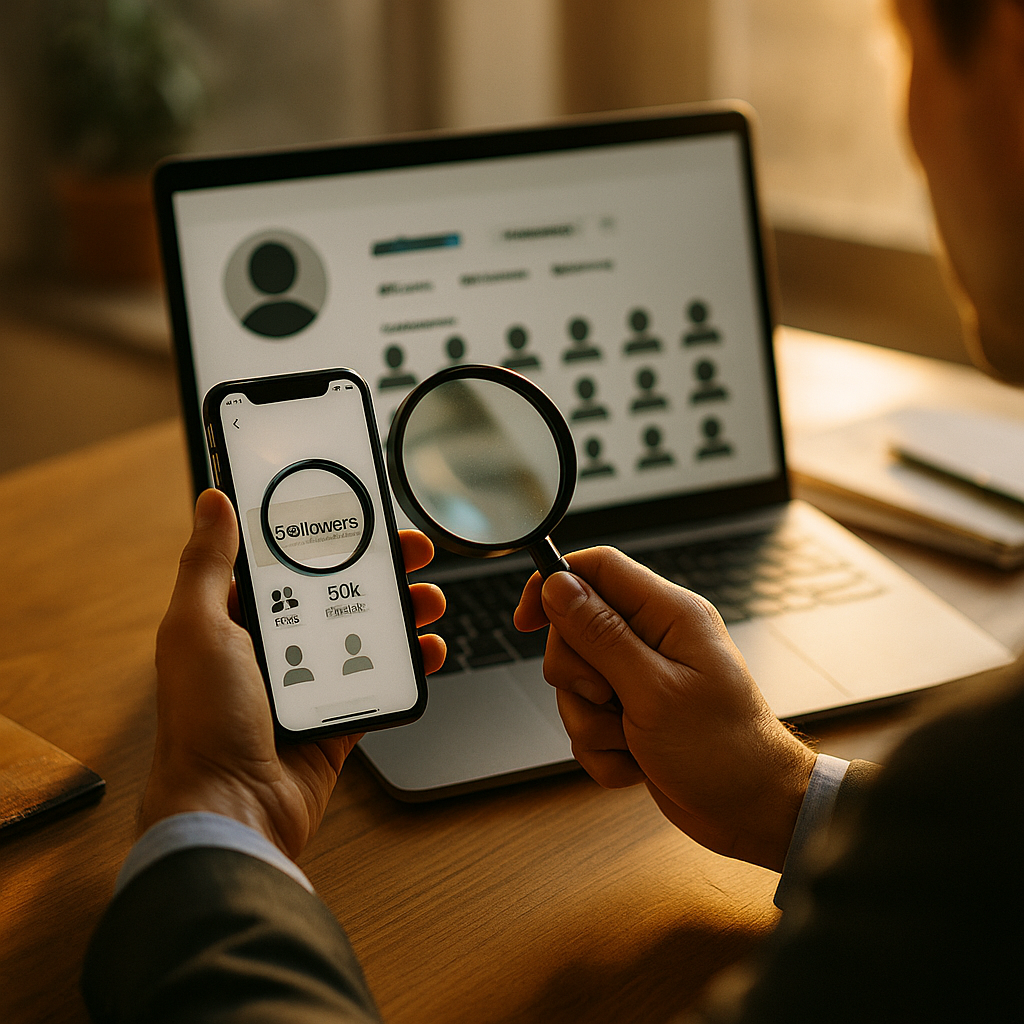
Roughly 15 percent of Instagram accounts are estimated to be bots or inactive profiles, and some creator niches run far higher. If your brand paid for “reach” against that audience without checking, you didn’t just waste budget. You potentially created a disclosure, securities, or shareholder liability problem. Fake follower liability isn’t a hypothetical anymore. It’s a documented line item in FTC enforcement actions and a growing category of client lawsuits against agencies that failed to verify what they bought.
Why This Stopped Being a Vanity Metric Problem
For years, fake followers were framed as an embarrassment, not a legal exposure. A brand overpaid a creator, the campaign underperformed, everyone quietly moved on. That era is over. Regulators and plaintiffs’ attorneys have started treating inflated audience numbers as a form of material misrepresentation, especially when a brand used those numbers to justify spend to a board, a client, or investors.
Think about it from a procurement lens. If a media buyer tells a CFO that a $200,000 campaign reached 4 million verified followers, and it turns out 30 percent of that audience was purchased bots, the company has now reported a false metric internally. If that number ever appears in an investor deck or a public case study, you’re no longer talking about marketing waste. You’re talking about a documentation failure that touches legal, finance, and compliance simultaneously.
Fake follower liability rarely starts with the creator. It starts with the brand’s failure to document what it verified before the check cleared.
What “Liability” Actually Means Here
Let’s be precise, because “liability” gets thrown around loosely in marketing circles. There are three distinct exposure categories brands need to separate:
- Contractual liability: Did the influencer agreement contain follower authenticity warranties? If not, you have almost no recourse when fraud surfaces post-payment.
- Regulatory liability: The FTC has signaled interest in deceptive engagement practices, particularly when brands knowingly or negligently pay for inflated reach and then represent that reach to consumers or shareholders.
- Fiduciary or shareholder liability: Public companies and their agencies face a harder question. Did marketing leadership exercise reasonable diligence before authorizing spend tied to audience metrics?
None of these require proving the creator acted maliciously. A creator can buy followers years before you ever worked with them and not even realize the ratio has shifted. The liability attaches to the brand’s process, not just the influencer’s conduct.
The Documentation Gap Most Brands Don’t Know They Have
Ask your own team this: if a client, auditor, or regulator asked for proof that you verified a creator’s audience before paying for a campaign, could you produce it in under an hour? Most marketing teams can’t. The verification, if it happened at all, lived in a Slack message or a screenshot that nobody archived.
This is the same structural problem showing up across influencer compliance right now. Brands are getting better at matching creators to campaigns using AI tools, but matching accuracy and audience authenticity are two separate questions. A platform can confirm a creator’s niche and engagement rate without ever flagging follower fraud. Treating creator discovery tools as a substitute for fraud verification is one of the most common and costly assumptions in the industry right now.
What Should Be in the File Before Payment
Here’s the practical checklist. If any of these items are missing from your campaign record, you have a documentation gap, not just a risk:
- A third-party audience audit report (HypeAuditor, Modash, or an equivalent fraud detection platform) dated within 30 days of contract signing.
- Engagement rate benchmarks compared against the creator’s category and tier, not a generic industry average.
- A geographic and demographic breakdown of followers, since audience location mismatches are one of the clearest fraud signals.
- A signed contractual warranty from the creator attesting to organic audience growth, with remedies specified for breach.
- Internal sign-off records showing who reviewed the audit and approved spend, timestamped and retained.
- A record of the follower count and engagement rate at the moment of contract execution, not at pitch stage weeks earlier.
That last point matters more than people think. Follower counts shift. A creator pitched at 500,000 followers in January might close a contract in March with a meaningfully different, and differently composed, audience. Document the number that matched the money.
Contracts Are Where Most Brands Leave Themselves Exposed
A follower authenticity clause needs to do three things: define what counts as fraud, specify the audit method used to measure it, and attach a financial remedy. Vague language like “creator warrants genuine engagement” is functionally worthless in a dispute because it doesn’t define a threshold or a measurement standard.
Compare that to language that specifies a maximum acceptable fraud follower percentage (commonly 10 to 15 percent depending on platform and niche), names the audit tool that will be used to measure it, and ties a pro rata refund or make-good content obligation to any breach discovered post-payment. That’s enforceable. That’s documentable. That’s the difference between a brand that can recover funds and one that’s stuck eating the loss.
This overlaps heavily with broader exclusivity and scope language too. If you’re already revisiting creator contract scope and exclusivity terms, add audience authenticity warranties to that same review cycle. Legal teams rarely touch influencer contracts twice in a year, so bundle the fix.
A warranty without a measurement standard is a sentence, not a safeguard. Name the tool, name the threshold, name the remedy.
Agencies and the Paper Trail Problem
If you’re running campaigns through an agency of record, the documentation question gets murkier, not simpler. Who actually ran the audience audit, and did the brand ever see the raw report, or just a summary slide? This is the same accountability gap showing up in automated media buying audit trails, where brands increasingly discover that spend decisions were made by a system or a vendor with no retained log of the underlying verification.
Brands should contractually require agencies to retain and surface fraud audit documentation for every creator paid above a defined spend threshold, say $5,000 per engagement. Below that line, sampling audits are usually proportionate. Above it, full documentation should be non-negotiable, and the retention period should match your standard records policy, typically three to seven years depending on jurisdiction and industry.
Industries Where the Stakes Are Higher
Not every sector carries equal risk here. Financial services and healthcare brands face compounded exposure because audience fraud intersects with existing disclosure obligations. A fin influencer compliance program that doesn’t include audience verification is incomplete, full stop, because inflated reach numbers used in investor-facing materials can trigger securities disclosure problems layered on top of the marketing fraud issue. The same logic extends to any brand citing influencer reach numbers in earnings calls, press releases, or ESG reporting.
Building the Verification Workflow Into Procurement
The fix isn’t complicated, it’s just rarely operationalized. Treat audience verification as a procurement gate, not a marketing nicety. That means:
- Require a fraud audit report as a prerequisite for contract execution, not a post-campaign nice-to-have.
- Set a documented fraud threshold per creator tier (nano, micro, mid, macro) since baseline bot percentages vary significantly by audience size.
- Store audit reports, contracts, and sign-off records in a single retrievable system, not scattered across email and spreadsheets.
- Re-audit for retainer or ambassador relationships at renewal, since audience composition drifts over long engagements. This pairs naturally with reviewing ambassador contract renewal terms anyway.
- Assign a named internal owner for verification sign-off, so there’s a person, not a department, accountable when something goes wrong.
Industry data from eMarketer continues to show influencer budgets climbing year over year, which means the dollar exposure tied to unverified audiences is climbing right alongside it. Platforms like Sprout Social and Meta Business Suite offer some native audience quality signals, but none of them substitute for a dedicated third-party fraud audit when real money is at stake.
Next Step
Before your next influencer payment clears, pull the audit report, the signed warranty clause, and the internal sign-off, and confirm all three exist in a retrievable file. If any are missing, hold the payment until they do. That single habit closes most of the fake follower liability gap that’s currently sitting undocumented across brand marketing budgets.
FAQs
What counts as a fake follower for liability purposes?
Most audit tools and legal frameworks define fake followers as bot accounts, inactive profiles, or purchased followers that don’t engage organically. A common threshold used in contracts is flagging any creator whose fraud percentage exceeds 10 to 15 percent of total audience, though this varies by platform and niche.
Who is legally responsible when a creator’s followers turn out to be fake?
Responsibility depends on contract language. Without a documented audience warranty and audit requirement, brands often have limited recourse against the creator. The brand’s own documentation failure can also create internal liability if spend was authorized without verification.
How often should brands re-audit a creator’s audience?
For one-off campaigns, audit at contract signing. For retainers or ambassador deals, re-audit at each renewal cycle since follower composition shifts over time, sometimes significantly within a single year.
Can a brand get a refund if fake followers are discovered after payment?
Only if the contract specifies a remedy tied to a measurable fraud threshold and audit method. Vague warranty language without defined metrics is difficult to enforce in a dispute.
Do fake follower issues affect FTC disclosure compliance?
Indirectly, yes. If a brand represents inflated reach numbers in consumer-facing claims or investor materials, it can compound into a separate disclosure or deception issue beyond the original audience fraud.
What tools do brands typically use to verify audience authenticity?
HypeAuditor and Modash are among the most commonly cited third-party audit platforms, alongside native analytics from the platforms themselves, though native tools alone are generally insufficient for high-spend campaigns.
Top Influencer Marketing Agencies
The leading agencies shaping influencer marketing in 2026
Agencies ranked by campaign performance, client diversity, platform expertise, proven ROI, industry recognition, and client satisfaction. Assessed through verified case studies, reviews, and industry consultations.
Moburst

-
2

The Shelf
Boutique Beauty & Lifestyle Influencer AgencyA data-driven boutique agency specializing exclusively in beauty, wellness, and lifestyle influencer campaigns on Instagram and TikTok. Best for brands already focused on the beauty/personal care space that need curated, aesthetic-driven content.Clients: Pepsi, The Honest Company, Hims, Elf Cosmetics, Pure LeafVisit The Shelf → -
3

Audiencly
Niche Gaming & Esports Influencer AgencyA specialized agency focused exclusively on gaming and esports creators on YouTube, Twitch, and TikTok. Ideal if your campaign is 100% gaming-focused — from game launches to hardware and esports events.Clients: Epic Games, NordVPN, Ubisoft, Wargaming, Tencent GamesVisit Audiencly → -
4

Viral Nation
Global Influencer Marketing & Talent AgencyA dual talent management and marketing agency with proprietary brand safety tools and a global creator network spanning nano-influencers to celebrities across all major platforms.Clients: Meta, Activision Blizzard, Energizer, Aston Martin, WalmartVisit Viral Nation → -
5

The Influencer Marketing Factory
TikTok, Instagram & YouTube CampaignsA full-service agency with strong TikTok expertise, offering end-to-end campaign management from influencer discovery through performance reporting with a focus on platform-native content.Clients: Google, Snapchat, Universal Music, Bumble, YelpVisit TIMF → -
6

NeoReach
Enterprise Analytics & Influencer CampaignsAn enterprise-focused agency combining managed campaigns with a powerful self-service data platform for influencer search, audience analytics, and attribution modeling.Clients: Amazon, Airbnb, Netflix, Honda, The New York TimesVisit NeoReach → -
7

Ubiquitous
Creator-First Marketing PlatformA tech-driven platform combining self-service tools with managed campaign options, emphasizing speed and scalability for brands managing multiple influencer relationships.Clients: Lyft, Disney, Target, American Eagle, NetflixVisit Ubiquitous → -
8

Obviously
Scalable Enterprise Influencer CampaignsA tech-enabled agency built for high-volume campaigns, coordinating hundreds of creators simultaneously with end-to-end logistics, content rights management, and product seeding.Clients: Google, Ulta Beauty, Converse, AmazonVisit Obviously →