


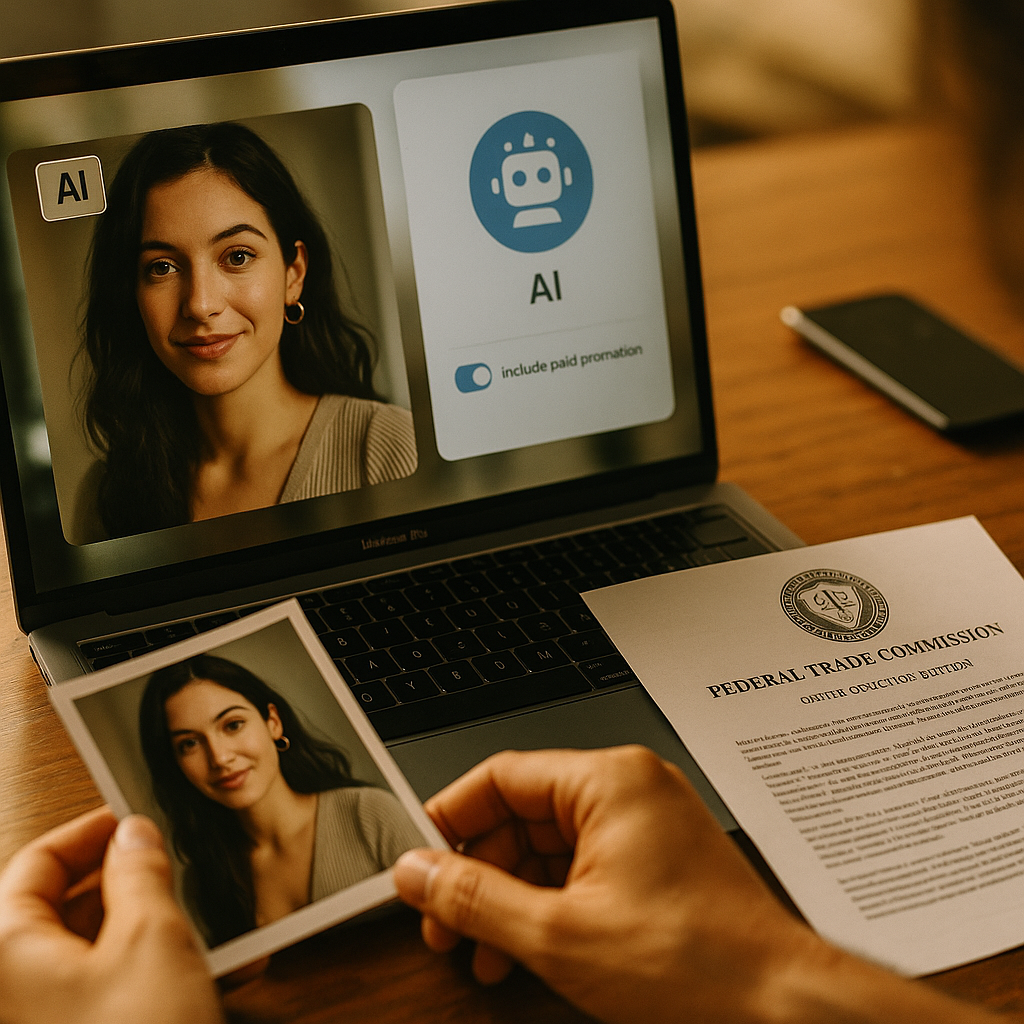
Here’s an uncomfortable question for every brand running influencer programs through AI matching platforms: if an algorithm selected the creator, who’s on the hook when the disclosure is missing? The FTC doesn’t care that a machine made the match. Disclosure requirements still land squarely on the brand, the platform, and the creator, regardless of how the pairing happened. Automated discovery is reshaping influencer sourcing, but it hasn’t touched the compliance obligations underneath it.
The Automation Illusion
AI-powered creator discovery tools like those built into Aspire, CreatorIQ, and Grin promise faster matching, better audience fit, and lower cost per campaign. They’re good at it, too. Feed in a brand brief and an algorithm will surface hundreds of creators ranked by engagement quality, audience overlap, and brand safety score in minutes. That used to take a human team weeks.
But here’s where marketers get sloppy. There’s a quiet assumption floating around trade Slack channels and agency decks that automation somehow dilutes legal responsibility. It doesn’t. The FTC’s Endorsement Guides apply to the relationship between brand and creator, not to the sourcing method. Whether a human strategist hand-picked a creator from a spreadsheet or an algorithm surfaced them from a database of two million profiles, the disclosure rules are identical.
Algorithmic sourcing changes how you find creators. It does nothing to change who’s liable when a disclosure is missing.
What the FTC Actually Requires, No Matter Who Picks the Creator
The core rule hasn’t changed in years: any material connection between a brand and an endorser must be disclosed clearly and conspicuously. That means #ad or #sponsored placed where a viewer can’t miss it, not buried in a hashtag pile at the bottom of a caption. The FTC’s guidance is explicit that platform defaults, like Instagram’s “Paid Partnership” tag, don’t automatically satisfy the disclosure requirement on their own. Brands still need to verify disclosure language in the actual content.
Where AI selection complicates things is scale. When a platform auto-matches fifty nano creators for a single campaign, nobody is manually reviewing fifty pieces of content before they go live. That’s a volume problem, and it’s exactly where compliance gaps open up.
Consider a mid-size DTC brand running a seeding campaign through an AI matching tool that selected 80 creators based on audience affinity scores. The brand’s legal team assumed the platform handled disclosure compliance as part of its “brand safety” feature. It didn’t. Of the 80 posts, 14 lacked adequate disclosure language. The brand, not the software vendor, received the FTC inquiry letter. That’s not a hypothetical, it’s the pattern showing up across enforcement actions over the last several cycles.
Platform Terms Don’t Transfer Legal Liability
Read the terms of service on any AI creator-matching platform and you’ll find a clause disclaiming responsibility for content compliance. That’s standard, and it’s also irrelevant to your regulatory exposure. A software vendor’s indemnification language protects them from you, not you from the FTC. If you’re relying on a platform’s “compliance checker” feature as your sole disclosure safeguard, you’re building your risk management on a feature that exists primarily to reduce platform liability, not yours.
This is the same dynamic we’ve covered when looking at AI-generated ad variations, where automated content creation outpaces manual review capacity. The tooling accelerates production. Compliance review has to scale alongside it, not get left behind.
Where AI Selection Actually Introduces New Risk
It’s not just about disclosure language anymore. AI matching tools introduce a few risk vectors that didn’t exist when humans manually vetted every creator relationship.
First, there’s the black box problem. If a brand can’t explain why an algorithm selected a particular creator, and that creator later turns out to have a history of undisclosed sponsorships or brand safety issues, the brand still owns that reputational and legal exposure. “The AI picked them” is not a defense regulators or consumers accept.
- Audience mismatch at scale: algorithms optimize for engagement metrics, not always for audience age verification. This matters enormously for categories with legal audience restrictions, similar to the exposure covered in our piece on sponsored content and child audience risk.
- Jurisdictional blind spots: a matching tool optimized for US engagement data might surface creators based in the EU or UK without flagging the different disclosure standards those markets enforce, an issue we unpacked in our review of broadcast standards versus social disclosure.
- Classification confusion: algorithmic sourcing often pulls heavily from the nano and micro tier, where creators may not understand their disclosure obligations at all, a gap we explored in nano creator classification risk.
None of this means AI matching is inherently risky. It means the risk profile shifted from “did we pick the wrong creator” to “did we build a review process that can keep pace with automated selection.” Those are very different problems requiring very different fixes.
Building a Disclosure Checkpoint Into the AI Workflow
Smart brands aren’t abandoning AI matching tools. They’re wrapping a compliance layer around them. Here’s what that typically looks like in practice.
Before a single piece of content goes live, every AI-selected creator should pass through a standardized disclosure briefing, not just a contract signature. A one-line clause in a creator agreement referencing “FTC compliance” isn’t enough. Creators need explicit, platform-specific disclosure instructions: where the tag goes, what language to use, and examples of non-compliant posts pulled from actual enforcement cases.
Second, treat algorithmic output as a shortlist, not a final roster. Someone with compliance training should spot-check the AI’s selections against known risk factors, prior brand safety flags, audience demographics, and geographic disclosure variance, before contracts go out. This doesn’t need to slow the program down much. A few hours of human review against a hundred-creator shortlist is a rounding error compared to the cost of a regulatory inquiry.
Treat every AI-generated creator shortlist as a draft, not a decision. The algorithm finds fit. A human still needs to confirm compliance readiness.
Third, build disclosure verification into your post-launch QA, not just your pre-launch brief. According to industry benchmarking from eMarketer, influencer marketing spend continues climbing year over year as brands push more budget into creator-led campaigns, which means the volume of content needing disclosure review is growing just as fast. A spot-check sampling methodology, reviewing a percentage of live posts within 48 hours of launch, catches problems before they compound across a campaign’s full run.
Contractual Language That Actually Protects You
Your creator agreements need to explicitly state that disclosure compliance is the creator’s and brand’s shared responsibility regardless of how the creator was sourced. Vague boilerplate referencing “all applicable laws” doesn’t hold up well under scrutiny. Spell out the specific disclosure format required, the platforms it applies to, and the consequences for non-compliance, including payment holds tied to compliant posting.
This connects directly to broader retainer and auto-renewal structures too. If you’re locking creators into ongoing paid relationships sourced through automated matching, review how those terms interact with the kind of consumer protection exposure we detailed in creator retainer auto-renewal rules. Automated sourcing and automated contract renewal create compounding blind spots if nobody’s reviewing either layer.
What Regulators and Platforms Are Signaling Next
Regulatory bodies have been increasingly vocal about algorithmic accountability across advertising generally, and influencer marketing isn’t exempt from that scrutiny. The UK’s Information Commissioner’s Office has flagged automated decision-making transparency as a growing enforcement priority, and that framing extends naturally to AI-driven creator selection tools operating in UK and EU markets. Brands running cross-border campaigns through AI matching platforms should expect disclosure scrutiny to tighten, not loosen, as these tools become standard practice rather than novelty.
Meanwhile, major platforms are experimenting with their own disclosure detection systems. Expect native platform tools to flag likely undisclosed partnerships using the same kind of machine learning that powers creator matching in the first place. That’s a double-edged sword. It could catch violations brands miss internally, but it also means platform-side enforcement might outpace brand-side compliance programs if brands don’t get ahead of it now.
For marketers managing multi-market programs, the smartest move is building a disclosure audit cadence that doesn’t depend on any single platform’s internal checks. Pull a sample of live content weekly, verify disclosure placement against current FTC and regional standards, and document the review. That paper trail matters enormously if a regulator ever asks how your program manages compliance at scale.
FAQs
Does FTC disclosure law treat AI-selected creators differently than manually chosen ones?
No. The FTC’s Endorsement Guides apply based on the material connection between brand and creator, not the sourcing method. An algorithm selecting a creator doesn’t change the disclosure requirement or reduce the brand’s responsibility for compliance.
Who is liable if an AI matching platform selects a creator who fails to disclose properly?
The brand remains primarily liable, along with the creator. Platform terms of service typically disclaim the vendor’s responsibility for content compliance, meaning the legal exposure sits with the brand running the campaign, not the software provider.
Can a platform’s built-in compliance checker replace manual disclosure review?
It shouldn’t be the only safeguard. Automated compliance features reduce platform liability more than brand liability. Brands should treat these tools as a first filter and still conduct human spot-checks on live content, especially for high-volume campaigns.
How often should brands audit disclosure compliance on AI-sourced campaigns?
A weekly sampling review of live content is a reasonable baseline for active campaigns, with closer to real-time checks in the first 48 hours after launch when most disclosure errors tend to surface.
Do disclosure requirements vary by region for AI-matched international creators?
Yes. AI matching tools often surface creators across multiple jurisdictions without flagging regional differences. Brands running cross-border campaigns need to verify disclosure standards for each market, since UK, EU, and US requirements differ in specific language and placement expectations.
FAQs
The next time your team evaluates an AI creator-matching tool, ask the vendor one direct question: what happens after the algorithm picks the creator? If the answer doesn’t include a human compliance checkpoint, build one yourself before the next campaign launches.
Top Influencer Marketing Agencies
The leading agencies shaping influencer marketing in 2026
Agencies ranked by campaign performance, client diversity, platform expertise, proven ROI, industry recognition, and client satisfaction. Assessed through verified case studies, reviews, and industry consultations.
Moburst

-
2

The Shelf
Boutique Beauty & Lifestyle Influencer AgencyA data-driven boutique agency specializing exclusively in beauty, wellness, and lifestyle influencer campaigns on Instagram and TikTok. Best for brands already focused on the beauty/personal care space that need curated, aesthetic-driven content.Clients: Pepsi, The Honest Company, Hims, Elf Cosmetics, Pure LeafVisit The Shelf → -
3

Audiencly
Niche Gaming & Esports Influencer AgencyA specialized agency focused exclusively on gaming and esports creators on YouTube, Twitch, and TikTok. Ideal if your campaign is 100% gaming-focused — from game launches to hardware and esports events.Clients: Epic Games, NordVPN, Ubisoft, Wargaming, Tencent GamesVisit Audiencly → -
4

Viral Nation
Global Influencer Marketing & Talent AgencyA dual talent management and marketing agency with proprietary brand safety tools and a global creator network spanning nano-influencers to celebrities across all major platforms.Clients: Meta, Activision Blizzard, Energizer, Aston Martin, WalmartVisit Viral Nation → -
5

The Influencer Marketing Factory
TikTok, Instagram & YouTube CampaignsA full-service agency with strong TikTok expertise, offering end-to-end campaign management from influencer discovery through performance reporting with a focus on platform-native content.Clients: Google, Snapchat, Universal Music, Bumble, YelpVisit TIMF → -
6

NeoReach
Enterprise Analytics & Influencer CampaignsAn enterprise-focused agency combining managed campaigns with a powerful self-service data platform for influencer search, audience analytics, and attribution modeling.Clients: Amazon, Airbnb, Netflix, Honda, The New York TimesVisit NeoReach → -
7

Ubiquitous
Creator-First Marketing PlatformA tech-driven platform combining self-service tools with managed campaign options, emphasizing speed and scalability for brands managing multiple influencer relationships.Clients: Lyft, Disney, Target, American Eagle, NetflixVisit Ubiquitous → -
8

Obviously
Scalable Enterprise Influencer CampaignsA tech-enabled agency built for high-volume campaigns, coordinating hundreds of creators simultaneously with end-to-end logistics, content rights management, and product seeding.Clients: Google, Ulta Beauty, Converse, AmazonVisit Obviously →