


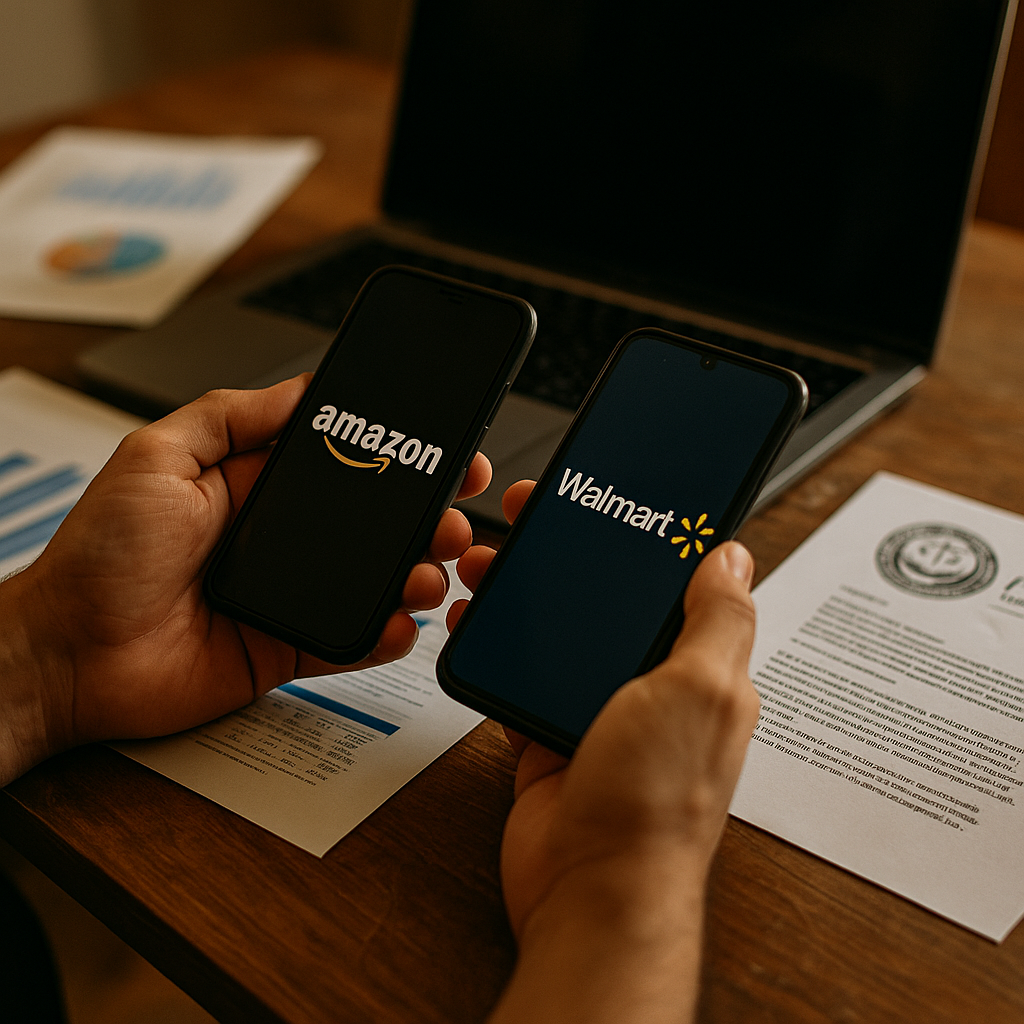
Retail media ad spend crossed $60 billion in the United States this year, and a growing share of it now flows through creator content, yet most brand compliance teams still can’t tell you how Amazon’s disclosure rules differ from Walmart Connect’s. That gap is not academic. It’s where FTC enforcement letters come from. Retail media creator disclosure rules are evolving faster than most legal teams can track, and treating Amazon and Walmart as interchangeable platforms is a mistake that shows up in audits.
Retail Media Is Not Social Media, and the Rules Reflect That
Disclosure on Instagram or TikTok is largely governed by the FTC’s Endorsement Guides, with the platform acting mostly as a neutral pipe. Retail media networks are different. Amazon and Walmart are both the retailer, the ad platform, and in many cases the merchant of record. That triple role changes the liability calculus.
When a creator posts a storefront link or a shoppable video that lives inside Amazon’s ecosystem or Walmart Connect’s sponsored placements, the retailer has its own commercial interest in the transaction. Regulators view that as a material connection on top of whatever brand relationship already exists. Brands that only train creators on generic FTC disclosure language, “#ad” and nothing else, are missing a layer of risk that’s specific to retail media.
Amazon’s Disclosure Mechanics: Built Into the Storefront
Amazon’s approach to creator disclosure is largely product-first. The Amazon Influencer Program requires creators to maintain a storefront, and any content linking back to that storefront carries an implicit commercial relationship that Amazon expects to be disclosed independently of brand-specific sponsorship.
- Storefront commissions: Creators earn on qualifying purchases, which itself triggers FTC material connection disclosure obligations, separate from any direct brand payment.
- Live shopping and Inspire content: Video posted to Amazon’s shoppable feed must carry disclosure at the point of viewing, not buried in a bio link.
- Brand-sponsored amplification: When a brand pays a creator to drive traffic to an Amazon listing, that’s a second, distinct disclosure obligation stacked on top of the affiliate relationship.
The practical effect: a single piece of Amazon-linked content can carry two separate disclosure triggers, affiliate commission and brand sponsorship, and both need to be visible, not just one buried hashtag. This is the same layered-disclosure logic covered in our breakdown of affiliate link disclosure requirements, and it applies with extra force inside Amazon’s ecosystem because the retailer itself profits from the click.
A creator who discloses the brand deal but forgets the Amazon affiliate commission has only told the audience half the story, and the FTC treats that as an incomplete disclosure, not a technicality.
Walmart Connect’s Creator Rules: Looser Framework, Same Exposure
Walmart Connect takes a more decentralized approach. Rather than a single creator storefront program like Amazon’s, Walmart leans on its Spark Good Shopping (influencer seeding) initiatives, sponsored content partnerships, and a growing network of affiliate-style creator links tied to Walmart.com listings. The disclosure burden sits more heavily on the brand and agency, because Walmart Connect doesn’t bake disclosure prompts into a unified creator-facing tool the way Amazon’s storefront interface does.
That sounds like it should make compliance easier. It doesn’t. Fewer built-in guardrails means more manual review, and more manual review means more room for creators to get it wrong. Brands running Walmart Connect campaigns often assume the retailer’s own terms of service cover disclosure adequately. They don’t. Walmart’s platform terms protect Walmart, not the brand, and definitely not the creator who posts an undisclosed sponsored haul video.
Agencies that have run both programs report that Walmart Connect campaigns require roughly the same disclosure rigor as any direct-to-brand sponsorship deal, with the added wrinkle that creators often don’t realize Walmart’s affiliate commission structure counts as a material connection at all.
Side by Side: Where the Two Platforms Actually Diverge
- Disclosure UI: Amazon embeds disclosure prompts into storefront and live content tools. Walmart Connect leaves disclosure implementation largely to brand and agency contracts.
- Commission transparency: Amazon’s affiliate rates are publicly documented, making material connection easier to prove. Walmart’s creator commission structures vary by program and are less standardized.
- Content review: Amazon applies automated and manual review to Influencer Program content before it’s eligible for monetization. Walmart’s review process is less uniform across its various creator initiatives.
- Audit trail: Amazon’s storefront analytics give brands a built-in record of what was posted and when. Walmart Connect campaigns often rely on third-party platforms like Sprout Social or agency reporting for that documentation.
Neither platform is more “compliant” by design. They’re just structured differently, and that structural difference is exactly what trips up brands running parallel campaigns across both.
Where Brands Actually Get Burned
The real-world failure mode isn’t ignorance of FTC basics. Most mid-size and enterprise brands have disclosure language in their creator contracts by now. The failure is assuming that contract language transfers automatically to retail media execution.
A few recurring patterns show up in compliance post-mortems:
- Treating storefront links as “just affiliate links.” Teams apply standard affiliate disclosure guidance without accounting for the added brand sponsorship layer stacked on top, a gap we’ve mapped in detail around AI creator matching and disclosure tracking tools.
- Assuming nano and micro creators understand commission disclosure. Smaller creators running Amazon storefronts often don’t realize their affiliate earnings alone trigger disclosure obligations independent of any brand deal, a classification issue similar to what we cover in nano creator classification risk.
- No unified tracking across retail platforms. Brands running simultaneous Amazon and Walmart Connect programs frequently use separate teams for each, with no shared disclosure audit log.
- Repurposing retail content without re-disclosing. A creator’s Amazon haul video gets clipped and reused in paid social without the retail-specific disclosure carrying over, a pattern closely related to issues raised in creator asset repurposing rules.
None of these are exotic edge cases. They’re the standard operating failures of fast-moving retail media teams that scaled creator partnerships before building the compliance infrastructure to match.
Building a Disclosure Workflow That Actually Scales
The fix isn’t more legalese in creator contracts. It’s operational. Brands that handle this well tend to do three things consistently.
First, they map disclosure obligations by platform before a campaign launches, not after. Amazon and Walmart Connect each get their own checklist, not a shared generic one. Second, they build disclosure verification into the content approval step, not just the contract signing step, catching missing disclosures before content goes live rather than after a complaint. Third, they centralize reporting so legal and compliance teams can see disclosure status across every retail media channel in one dashboard, something eMarketer’s retail media research suggests is still rare even among large advertisers.
If your compliance team can’t pull a single report showing disclosure status across Amazon and Walmart Connect campaigns simultaneously, you don’t have a disclosure program. You have two disconnected guesses.
It also helps to build creator education that’s platform-specific rather than generic. A ten-minute onboarding video explaining exactly how Amazon’s storefront commission disclosure differs from a standard brand-paid disclosure prevents more violations than another clause in a contract nobody rereads. Agencies running BFSI-adjacent influencer programs have had to build similarly rigorous sign-off chains, as outlined in our look at BFSI influencer sign off frameworks, and that same discipline translates directly to retail media.
FAQs
Frequently Asked Questions
Do Amazon and Walmart Connect have their own disclosure rules separate from the FTC?
No. Both platforms operate under the FTC’s Endorsement Guides. What differs is each platform’s internal tools and processes for surfacing and enforcing disclosure, not the underlying legal standard.
Does an Amazon storefront commission count as a material connection even without a brand sponsorship?
Yes. Earning affiliate commission on qualifying purchases is itself a material connection under FTC guidance, regardless of whether a separate brand payment exists.
Is Walmart Connect less regulated than Amazon’s Influencer Program?
Not legally, but operationally Walmart Connect provides fewer built-in disclosure prompts, which shifts more of the compliance burden onto brands and agencies managing the campaign.
Can a brand be held liable if a creator fails to disclose a retail media partnership?
Yes. The FTC has pursued both creators and the brands that compensate them, particularly when the brand had the ability to enforce disclosure requirements and failed to do so.
Should disclosure training differ for Amazon versus Walmart Connect campaigns?
Ideally, yes. Because the platforms structure commissions and content review differently, generic disclosure training misses platform-specific triggers that creators need to understand.
Next step: audit your current creator contracts for retail media language specifically, don’t assume your general FTC disclosure clause covers Amazon storefront commissions or Walmart Connect sponsorships. If it doesn’t name the platform, it probably doesn’t cover the risk.
Top Influencer Marketing Agencies
The leading agencies shaping influencer marketing in 2026
Agencies ranked by campaign performance, client diversity, platform expertise, proven ROI, industry recognition, and client satisfaction. Assessed through verified case studies, reviews, and industry consultations.
Moburst

-
2

The Shelf
Boutique Beauty & Lifestyle Influencer AgencyA data-driven boutique agency specializing exclusively in beauty, wellness, and lifestyle influencer campaigns on Instagram and TikTok. Best for brands already focused on the beauty/personal care space that need curated, aesthetic-driven content.Clients: Pepsi, The Honest Company, Hims, Elf Cosmetics, Pure LeafVisit The Shelf → -
3

Audiencly
Niche Gaming & Esports Influencer AgencyA specialized agency focused exclusively on gaming and esports creators on YouTube, Twitch, and TikTok. Ideal if your campaign is 100% gaming-focused — from game launches to hardware and esports events.Clients: Epic Games, NordVPN, Ubisoft, Wargaming, Tencent GamesVisit Audiencly → -
4

Viral Nation
Global Influencer Marketing & Talent AgencyA dual talent management and marketing agency with proprietary brand safety tools and a global creator network spanning nano-influencers to celebrities across all major platforms.Clients: Meta, Activision Blizzard, Energizer, Aston Martin, WalmartVisit Viral Nation → -
5

The Influencer Marketing Factory
TikTok, Instagram & YouTube CampaignsA full-service agency with strong TikTok expertise, offering end-to-end campaign management from influencer discovery through performance reporting with a focus on platform-native content.Clients: Google, Snapchat, Universal Music, Bumble, YelpVisit TIMF → -
6

NeoReach
Enterprise Analytics & Influencer CampaignsAn enterprise-focused agency combining managed campaigns with a powerful self-service data platform for influencer search, audience analytics, and attribution modeling.Clients: Amazon, Airbnb, Netflix, Honda, The New York TimesVisit NeoReach → -
7

Ubiquitous
Creator-First Marketing PlatformA tech-driven platform combining self-service tools with managed campaign options, emphasizing speed and scalability for brands managing multiple influencer relationships.Clients: Lyft, Disney, Target, American Eagle, NetflixVisit Ubiquitous → -
8

Obviously
Scalable Enterprise Influencer CampaignsA tech-enabled agency built for high-volume campaigns, coordinating hundreds of creators simultaneously with end-to-end logistics, content rights management, and product seeding.Clients: Google, Ulta Beauty, Converse, AmazonVisit Obviously →