


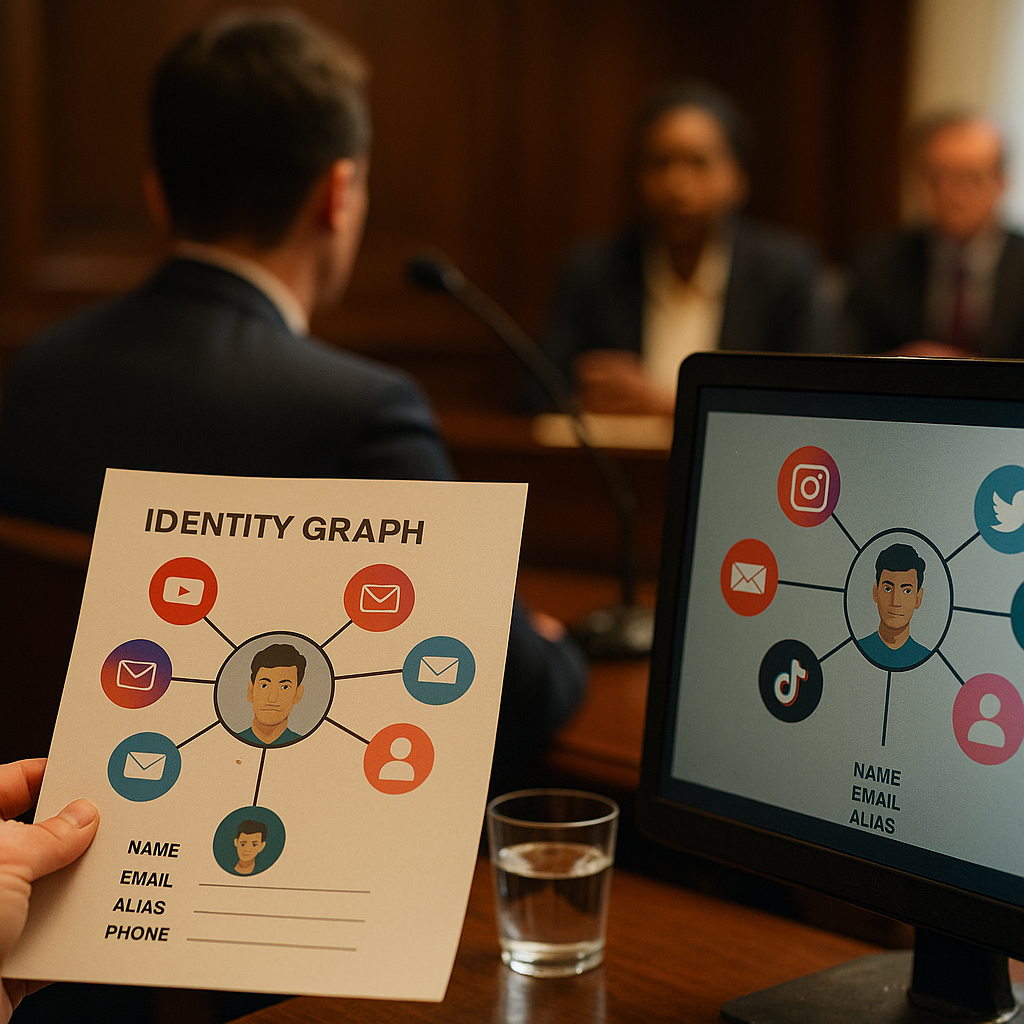
One unmatched identifier is a nuisance. Ten million of them are a lawsuit. Creator data platforms now stitch together emails, hashed phone numbers, device IDs, and social handles to build a single view of an influencer’s audience, yet most legal teams have never reviewed how that matching actually happens. Identity resolution has quietly become the most powerful, least governed function inside the creator marketing stack. Regulators are starting to notice. Brands should notice first.
The Convenience Everyone Wanted, The Oversight Nobody Built
Identity resolution exists to solve a real problem. A single creator campaign might touch TikTok, Instagram, YouTube, an affiliate link tracker, and a brand’s own CRM. Without stitching those signals together, a marketer can’t tell whether the same follower clicked a promo code, watched a story, and later converted on-site. So creator data platforms (CDPs built or retrofitted for influencer marketing) deploy probabilistic and deterministic matching to merge fragmented identifiers into one profile.
That’s the pitch, anyway. The reality is messier. Matching logic often runs as a black box inside a vendor’s infrastructure, invisible to the brand’s privacy team and frequently undocumented even internally. Ask your platform vendor exactly which signals feed the match key and how long unmatched records are retained. If the answer is vague, that’s your governance gap.
Identity resolution was built to solve an attribution problem. It has quietly become a data governance problem that most brands haven’t staffed for.
What Identity Resolution Actually Does in a Creator Stack
At a technical level, identity resolution takes disparate identifiers (hashed emails, cookie IDs, mobile ad IDs, social platform tokens) and probabilistically or deterministically links them to a single “person” or household node. In creator marketing specifically, this means connecting:
- A creator’s follower who clicked an affiliate link on mobile
- The same person who later redeemed a promo code on desktop
- Their eventual purchase record in the brand’s commerce platform
- Their engagement history across multiple creator partnerships
Done well, this powers genuinely useful measurement: incrementality modeling, creator-level LTV, and cross-platform attribution that actually holds up. Done carelessly, it builds a shadow profile of a consumer who never consented to being tracked across five different creators’ sponsored content, which is precisely the scenario our piece on unified customer profiles flagged as a looming consent problem.
Where the Governance Gap Actually Opens Up
Three failure points show up again and again in vendor audits.
First, purpose drift. Data collected to measure one campaign’s performance gets folded into a persistent identity graph used for every future campaign, with no fresh consent basis. Our earlier coverage of CDP identity resolution and purpose limitation walked through exactly how this violates core privacy principles under both GDPR and most US state frameworks, yet it remains standard practice at a surprising number of mid-market platforms.
Second, retention without a kill switch. Unmatched or low-confidence identity records often sit indefinitely because nobody owns the deletion policy. If a creator’s audience member requests erasure, can your platform actually locate and purge every node tied to that identity graph? Most brands find out the answer is “not easily” only after receiving the request, a scenario covered in detail in our piece on right to erasure requests.
Third, vendor subprocessor sprawl. Identity resolution vendors frequently route match requests through third-party enrichment providers to fill gaps, each one a new subprocessor with its own data handling practices. If that chain isn’t documented in your data processing agreements, you have no audit trail when something goes wrong.
Why Regulators Are Circling Now
This isn’t speculative risk. State privacy laws modeled on California’s framework now cover a majority of the US population, and enforcement priorities are shifting toward data brokers and identity graph operators specifically, not just the brands that hire them. The Federal Trade Commission has signaled repeatedly that opaque data matching practices sit squarely in its enforcement crosshairs, particularly where children’s data or sensitive categories are involved. Meanwhile, the UK’s Information Commissioner’s Office has published specific guidance on profiling and automated matching that US-based platforms serving UK audiences ignore at their own risk.
Add the emerging patchwork of state-level rules and the picture gets more complicated fast. Our breakdown of the SECURE Data Act compliance playbook is a useful starting point if your legal team hasn’t yet mapped which state obligations apply to your creator data flows. Separately, the piece on the state privacy patchwork explains why a single national compliance posture no longer cuts it.
A compliant identity graph in California can still be a liability in Illinois. Patchwork regulation means patchwork exposure, and creator data platforms rarely architect for that reality by default.
The Cost of Waiting Isn’t Hypothetical
Marketing leaders tend to treat governance as a cost center until it becomes a crisis. Consider what’s actually at stake: a mismatched identity record that misattributes a minor’s engagement to an adult profile, a creator audience member who gets served ads based on inferred health data they never disclosed, or a regulator discovering that a “deleted” profile still exists in a backup identity graph three vendors removed from the original platform. Each of these has already happened somewhere in adjacent ad tech. Creator marketing’s turn is coming, and the
According to eMarketer, influencer marketing spend continues to climb as a share of total marketing budgets, which means the volume of identity data flowing through these platforms is scaling right alongside it. More spend, more data, more exposure. It’s a straight line, and few brands have budgeted compliance headcount to match the growth curve.
Building an Identity Resolution Stack You Can Actually Defend
Closing the gap doesn’t require abandoning identity resolution. It requires treating it like the regulated data function it already is. A few concrete moves:
- Demand a matching methodology disclosure. Any vendor worth the contract should explain, in plain language, what signals feed the match key and what confidence threshold triggers a merge.
- Set a retention clock on unmatched records. Low-confidence or orphaned identity fragments shouldn’t live forever by default. Thirty to ninety days is a reasonable starting benchmark for most creator campaign use cases.
- Map every subprocessor in the identity chain. If an enrichment provider touches the data, it belongs in your processing agreement, full stop.
- Build a real deletion workflow. Test it before a regulator or a consumer forces you to. Our checklist on compliance at scale is a reasonable template to adapt for identity data specifically.
- Separate measurement identity from marketing identity. Data collected purely for incrementality testing shouldn’t automatically flow into retargeting pools without a fresh consent check.
None of this is glamorous work. It also isn’t optional much longer. Brands that get ahead of it now will be negotiating from a position of strength when regulators start asking platform vendors to show their work, rather than scrambling to retrofit consent records after the fact.
FAQs
What is identity resolution in a creator data platform?
Identity resolution is the process of matching fragmented identifiers (emails, device IDs, social handles, cookies) into a single profile so marketers can track a person’s engagement across multiple creators, platforms, and touchpoints.
Why is identity resolution a compliance risk for brands?
Because the matching logic often runs on vendor infrastructure with little transparency, data collected for one purpose (campaign measurement) can end up repurposed for ongoing profiling without fresh consent, which violates purpose limitation principles under most modern privacy laws.
Which regulations most directly affect creator identity data?
State-level privacy laws in the US, GDPR for EU and UK audiences, and FTC enforcement guidance on data brokers and profiling all apply, depending on where the audience and the brand are based.
Can brands audit a creator data platform’s identity resolution practices?
Yes. Brands should request documentation on matching methodology, retention periods for unmatched records, and a full list of subprocessors involved in enrichment or matching before signing a contract.
How long should unmatched identity records be retained?
There’s no single legal mandate, but most privacy counsel recommends thirty to ninety days for low-confidence or unmatched records, with automatic deletion built into the platform rather than manual review.
Next step: pull your current creator data platform’s vendor agreement this week and check for a documented matching methodology and subprocessor list. If either is missing, that’s the conversation to have before your next contract renewal, not after a regulator asks first.
Top Influencer Marketing Agencies
The leading agencies shaping influencer marketing in 2026
Agencies ranked by campaign performance, client diversity, platform expertise, proven ROI, industry recognition, and client satisfaction. Assessed through verified case studies, reviews, and industry consultations.
Moburst

-
2

The Shelf
Boutique Beauty & Lifestyle Influencer AgencyA data-driven boutique agency specializing exclusively in beauty, wellness, and lifestyle influencer campaigns on Instagram and TikTok. Best for brands already focused on the beauty/personal care space that need curated, aesthetic-driven content.Clients: Pepsi, The Honest Company, Hims, Elf Cosmetics, Pure LeafVisit The Shelf → -
3

Audiencly
Niche Gaming & Esports Influencer AgencyA specialized agency focused exclusively on gaming and esports creators on YouTube, Twitch, and TikTok. Ideal if your campaign is 100% gaming-focused — from game launches to hardware and esports events.Clients: Epic Games, NordVPN, Ubisoft, Wargaming, Tencent GamesVisit Audiencly → -
4

Viral Nation
Global Influencer Marketing & Talent AgencyA dual talent management and marketing agency with proprietary brand safety tools and a global creator network spanning nano-influencers to celebrities across all major platforms.Clients: Meta, Activision Blizzard, Energizer, Aston Martin, WalmartVisit Viral Nation → -
5

The Influencer Marketing Factory
TikTok, Instagram & YouTube CampaignsA full-service agency with strong TikTok expertise, offering end-to-end campaign management from influencer discovery through performance reporting with a focus on platform-native content.Clients: Google, Snapchat, Universal Music, Bumble, YelpVisit TIMF → -
6

NeoReach
Enterprise Analytics & Influencer CampaignsAn enterprise-focused agency combining managed campaigns with a powerful self-service data platform for influencer search, audience analytics, and attribution modeling.Clients: Amazon, Airbnb, Netflix, Honda, The New York TimesVisit NeoReach → -
7

Ubiquitous
Creator-First Marketing PlatformA tech-driven platform combining self-service tools with managed campaign options, emphasizing speed and scalability for brands managing multiple influencer relationships.Clients: Lyft, Disney, Target, American Eagle, NetflixVisit Ubiquitous → -
8

Obviously
Scalable Enterprise Influencer CampaignsA tech-enabled agency built for high-volume campaigns, coordinating hundreds of creators simultaneously with end-to-end logistics, content rights management, and product seeding.Clients: Google, Ulta Beauty, Converse, AmazonVisit Obviously →