


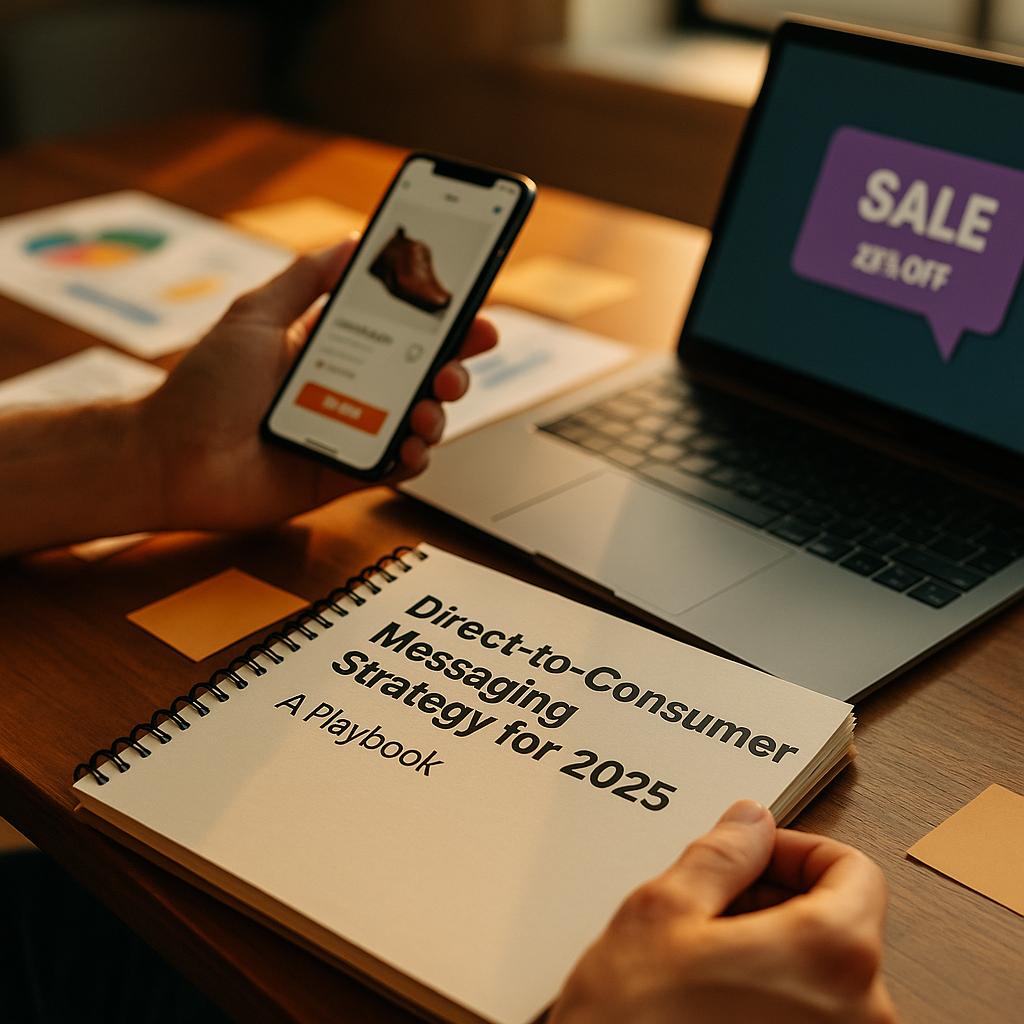
In 2025, brands can no longer rely on crowded feeds and rising ad costs to build lasting customer relationships. A Playbook for Direct to Consumer via Specialized Messaging Apps shows how to use chat-first channels to acquire, convert, and retain buyers with faster feedback loops and higher intent conversations. This guide covers strategy, compliance, measurement, and execution—so you can launch confidently and scale without burning trust. Ready to turn messages into revenue?
D2C messaging strategy: choose the right specialized messaging apps
Specialized messaging apps sit between email and social: more immediate than inbox marketing and more personal than public posts. The goal is not “be everywhere,” but to build a deliberate D2C messaging strategy that matches customer intent, product type, and operational capacity.
Start with the use case, not the app. Map the moments where a conversation removes friction:
- Discovery support: product matching, sizing, compatibility checks, ingredient questions, gift selection.
- Conversion help: cart rescue, financing questions, delivery dates, promo clarification, bundling.
- Post-purchase: setup, returns, warranty, refill reminders, reorder flows, loyalty.
- Community and education: tutorials, live drops, waitlists, VIP early access.
Then choose app types that fit those moments. In 2025, most D2C brands will mix a “service-first” channel with a “broadcast + engagement” channel:
- Service-first: WhatsApp Business Platform, Apple Messages for Business, RCS Business Messaging (where supported), in-app chat. Best for high-intent questions and support-to-sales.
- Broadcast + engagement: Telegram channels, LINE official accounts, Kakao, WeChat (region-dependent). Best for drops, content, creator partnerships, and segmented announcements.
- Privacy-forward communities: Discord servers, Slack communities (niche), or closed group messaging where customers want peer support and deeper participation.
Selection checklist: audience concentration by region, verified business identity, automation features, CRM integrations, analytics, support for rich media, and opt-in mechanics. If your team can’t respond fast, prioritize channels where automation and clear expectations prevent frustration.
Customer acquisition in messaging apps: opt-in, landing paths, and lead magnets
Unlike social followers, messaging subscribers require explicit permission. That’s a strength: your list becomes a high-intent asset. Effective customer acquisition in messaging apps comes from clear value exchange and low-friction entry points.
Build opt-in routes that match shopping behavior:
- On-site prompts: “Text us for fit help in under 2 minutes” or “Message for restock alerts.” Tie the CTA to a specific benefit.
- Checkout opt-in: add a consented checkbox for order updates plus marketing (separate consents). Explain frequency.
- QR codes: on packaging, inserts, receipts, pop-ups, events, and retail partners. A QR that opens a chat beats a long URL.
- Paid ads to click-to-message: run intent-focused creative that sets expectations (“Ask before you buy” / “Get a routine recommendation”).
- Creator and affiliate links: drive audiences into a dedicated chat keyword flow (“Message ‘CREATOR10’”). This helps attribution.
Use lead magnets designed for chat. Messaging subscribers want immediacy, not a 30-page PDF. Offer:
- Interactive quizzes: “Find your shade,” “Build your bundle,” “Choose your starter kit.”
- Concierge perks: early access, back-in-stock alerts, delivery upgrades, appointment-style support.
- Micro-education: a 5-message mini course, setup checklist, or care routine delivered over a day.
Answer follow-up questions upfront: Tell people how often you’ll message, what they’ll receive, and how to stop messages. If you hide that, opt-ins drop and complaints rise.
Conversational commerce automation: flows that convert without feeling robotic
Conversational commerce automation works when it feels like a helpful shortcut—not a maze. Design for speed, clarity, and graceful handoffs to humans.
Core flows every D2C brand should implement:
- Welcome + preference capture: confirm consent, ask 1–3 questions (category interest, budget range, goals), then deliver value immediately.
- Product finder: guided questions that narrow options and end with 1–3 recommendations, each with a clear next step (buy, compare, ask).
- Cart and browse recovery: trigger only with permission and reasonable timing. Offer help first (“Need sizing?”) before discounting.
- Order updates: proactive shipping and delivery messages reduce “Where is my order?” tickets and build confidence.
- Returns and exchanges: self-serve start, policy clarity, instant label delivery, and an easy path to talk to an agent.
- Replenishment and reorder: timed reminders with one-tap reorder or bundle suggestions.
Design rules that protect conversion and trust:
- Keep choices limited: 2–4 buttons per step. Too many branches feel like work.
- Use human escalation intelligently: route to agents when intent is high (purchase questions), risk is high (complaints), or the user repeats themselves.
- Personalize with restraint: use declared preferences and purchase history; avoid “creepy” inferences. Explain why you’re asking for information.
- Optimize for mobile attention: short messages, scannable bullets, and one clear action per message.
Commerce integration: connect your messaging layer to product catalog, inventory, and order management so agents and automation can quote accurate availability, delivery estimates, and return eligibility. If the app can’t reflect reality, you’ll create more support load than you remove.
Messaging app compliance and trust: consent, privacy, and brand safety
Messaging is intimate. That’s why messaging app compliance and trust must be treated as a revenue driver, not a legal afterthought. Customers will leave quickly if they feel spammed or watched.
Operational trust basics:
- Explicit opt-in: capture clear consent for marketing messages. Separate transactional updates from promotional content where required.
- Easy opt-out: make “STOP,” “Unsubscribe,” or a menu option work instantly. Confirm the change.
- Frequency promises: set expectations (“2–4 messages per month”) and stick to them.
- Data minimization: collect only what you need to deliver the experience. Store it securely and limit access.
- Identity and verification: use verified business profiles where available to reduce fraud risk and increase response rates.
Privacy and platform rules: In 2025, enforcement is tighter across regions and platforms. Follow local laws (for example, consent requirements and marketing restrictions), and align with each app’s business messaging policies. Build a review process for templates, promotions, and automated flows so compliance is repeatable as you scale.
Brand safety in conversations: Create guardrails for agents and AI: prohibited claims, refund policy language, safety disclaimers for regulated categories, and escalation protocols for sensitive issues. Log changes to scripts and automation so you can audit what customers actually received.
Answer the reader’s likely concern: “Will compliance slow us down?” Done well, it speeds you up. Clear consent and clean segmentation improve deliverability, reduce complaints, and keep your channel usable long-term.
Retention and loyalty through messaging: segmentation, community, and lifecycle value
Messaging shines after the first purchase because it can deliver ongoing value in small, timely moments. Strong retention and loyalty through messaging comes from lifecycle thinking: what does a customer need next, and when?
Segment based on behavior, not just demographics:
- New customers: onboarding, setup tips, reassurance, “how to get the best result” education.
- Repeat buyers: replenishment reminders, bundle offers, early access to new releases.
- High-intent browsers: concierge support, comparisons, social proof, back-in-stock alerts.
- At-risk customers: proactive service check-ins, easy returns, satisfaction prompts.
Build loyalty mechanics that fit chat:
- VIP tiers and early access: deliver time-sensitive links and purchase windows inside the app.
- Referral prompts: after a positive support interaction or high satisfaction response, offer a simple share link and a clear reward.
- UGC and community loops: invite customers to share results, setups, or styling. Curate and repost with permission.
Reduce support-to-retention leakage: Many brands treat support as cost center, but messaging converts frustration into loyalty when done fast. Set response-time targets, empower agents with policies (refund thresholds, replacements), and send closure messages that confirm the outcome.
Make “human” visible: Even if automation starts the conversation, show names, roles, and concise signatures when a person joins. Customers buy from people when the stakes are high.
Analytics and ROI for messaging apps: attribution, testing, and dashboards
To scale responsibly, you need proof that messaging drives incremental value. Strong analytics and ROI for messaging apps combines channel metrics (deliverability, response) with business metrics (conversion, repeat rate) and operational metrics (ticket deflection, handle time).
Track a practical metric stack:
- List health: opt-in rate by source, unsubscribe rate, complaint rate, deliverability.
- Engagement: read rate where available, reply rate, time-to-first-response, conversation completion.
- Commerce: assisted conversion rate, revenue per subscriber, average order value for messaged vs non-messaged cohorts.
- Support efficiency: deflection rate, cost per resolved conversation, CSAT, repeat contact rate.
Attribution that works in the real world:
- Use unique links and codes: per campaign, per creator, and per segment.
- Mark “assisted” vs “last-click”: many messaging interactions influence purchase after the session ends.
- Run holdouts: keep a small eligible group unmessaged to estimate true incremental lift.
Testing cadence: A/B test message timing, offer framing, button order, and whether “help-first” beats “discount-first.” Promote winners into templates and retire losers quickly. Document learnings so new team members don’t repeat old experiments.
Operational dashboard: Combine marketing and support views. The best D2C messaging programs align both teams around one truth: revenue and retention improve when the customer gets fast, accurate answers.
FAQs
Which specialized messaging app is best for D2C brands?
The best app is the one your customers already use and that supports verified business messaging, automation, and integrations with your commerce stack. Many brands pair a service-first channel (for high-intent questions) with a broadcast channel (for drops and announcements) to balance conversion and reach.
How do we avoid spamming customers in messaging apps?
Set expectations at opt-in, limit frequency, segment by intent, and prioritize helpful messages over constant promotions. Make opt-out immediate and respect quiet hours where appropriate. If engagement drops or unsubscribes spike, reduce volume and improve relevance before adding more campaigns.
Do we need agents, or can automation handle everything?
Automation can handle common questions, order updates, and guided product discovery, but you still need human support for complex issues, complaints, and high-consideration purchases. The highest ROI usually comes from automation that triages and assists agents rather than replacing them.
How do we measure ROI from messaging when attribution is messy?
Use unique links and promo codes, label conversations as “assisted,” and run holdout tests to estimate incremental lift. Track cohort performance over time (repeat rate and revenue per subscriber) to capture longer-term impact beyond last-click conversions.
What should our first 30 days look like?
Week 1: choose one primary channel, set up verified identity, connect catalog/orders, and draft compliance-safe templates. Week 2: launch a welcome flow and order updates. Week 3: add a product finder and human escalation rules. Week 4: start one lifecycle campaign (reorder or onboarding) and build a dashboard with baseline benchmarks.
How do we keep messaging compliant in multiple regions?
Centralize consent language, maintain template review workflows, and configure region-specific rules for opt-in, promotional messaging, and data retention. Align with platform policies and involve legal/compliance early, especially for regulated products or health-related claims.
Specialized messaging apps give D2C brands a direct line to high-intent customers—if you treat permission as your competitive advantage. In 2025, winning programs combine clear opt-in value, automation that shortens decisions, fast human help when it matters, and rigorous measurement. Focus on one channel, nail core flows, and scale with trust. When conversations feel useful, customers return—and they bring others with them.
Top Influencer Marketing Agencies
The leading agencies shaping influencer marketing in 2026
Agencies ranked by campaign performance, client diversity, platform expertise, proven ROI, industry recognition, and client satisfaction. Assessed through verified case studies, reviews, and industry consultations.
Moburst

-
2

The Shelf
Boutique Beauty & Lifestyle Influencer AgencyA data-driven boutique agency specializing exclusively in beauty, wellness, and lifestyle influencer campaigns on Instagram and TikTok. Best for brands already focused on the beauty/personal care space that need curated, aesthetic-driven content.Clients: Pepsi, The Honest Company, Hims, Elf Cosmetics, Pure LeafVisit The Shelf → -
3

Audiencly
Niche Gaming & Esports Influencer AgencyA specialized agency focused exclusively on gaming and esports creators on YouTube, Twitch, and TikTok. Ideal if your campaign is 100% gaming-focused — from game launches to hardware and esports events.Clients: Epic Games, NordVPN, Ubisoft, Wargaming, Tencent GamesVisit Audiencly → -
4

Viral Nation
Global Influencer Marketing & Talent AgencyA dual talent management and marketing agency with proprietary brand safety tools and a global creator network spanning nano-influencers to celebrities across all major platforms.Clients: Meta, Activision Blizzard, Energizer, Aston Martin, WalmartVisit Viral Nation → -
5

The Influencer Marketing Factory
TikTok, Instagram & YouTube CampaignsA full-service agency with strong TikTok expertise, offering end-to-end campaign management from influencer discovery through performance reporting with a focus on platform-native content.Clients: Google, Snapchat, Universal Music, Bumble, YelpVisit TIMF → -
6

NeoReach
Enterprise Analytics & Influencer CampaignsAn enterprise-focused agency combining managed campaigns with a powerful self-service data platform for influencer search, audience analytics, and attribution modeling.Clients: Amazon, Airbnb, Netflix, Honda, The New York TimesVisit NeoReach → -
7

Ubiquitous
Creator-First Marketing PlatformA tech-driven platform combining self-service tools with managed campaign options, emphasizing speed and scalability for brands managing multiple influencer relationships.Clients: Lyft, Disney, Target, American Eagle, NetflixVisit Ubiquitous → -
8

Obviously
Scalable Enterprise Influencer CampaignsA tech-enabled agency built for high-volume campaigns, coordinating hundreds of creators simultaneously with end-to-end logistics, content rights management, and product seeding.Clients: Google, Ulta Beauty, Converse, AmazonVisit Obviously →