


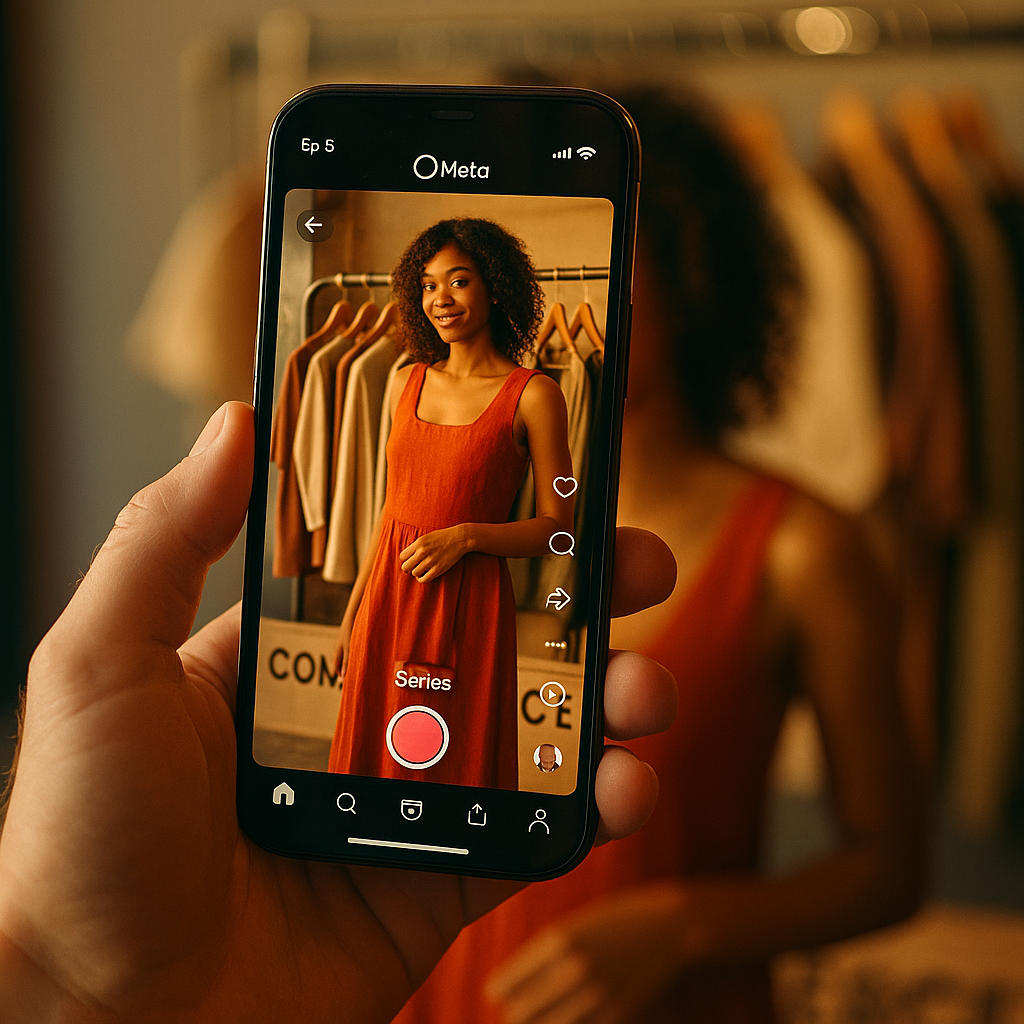
What if your best-performing sponsored Reel was actually the weakest version of itself — because it had no sequel? Meta’s test of a native Series feature for Reels is quietly rewriting the mechanics of episodic Reels strategy for commerce brands, and most marketing teams are still briefing creators as if it’s a one-shot game.
Why One-Off Posts Are a Structural Problem, Not a Creative One
The instinct to blame underperforming sponsored content on creative quality is understandable. Bad hooks, weak CTAs, mismatched talent — these are real issues. But the deeper problem is architectural. A single sponsored Reel, no matter how well-crafted, enters the feed as an isolated signal. The algorithm sees one engagement event. The viewer gets one exposure. The brand gets one opportunity to move someone from cold to converted.
That’s a brutal ask for any product category with more than a 30-second consideration cycle. Think skincare routines, kitchen appliances, wellness supplements, home goods. These are purchase decisions that require repeated exposure, demonstrated use cases, and accumulated trust. A standalone sponsored post is being asked to do the work of an entire funnel in 60 seconds.
Episodic content compounds. Each episode in a creator series builds on prior viewer intent signals, giving the algorithm more behavioral data to optimize delivery — and giving the brand more surface area to convert at different stages of consideration.
The one-off format was never broken as a tactic. It’s broken as a strategy.
What Meta’s Series Feature Actually Changes
Meta’s Series feature for Reels — currently in limited testing — allows creators to group individual Reels into labeled, sequenced collections that surface as a connected content unit on their profile and, critically, within the recommendation engine. For commerce brands, this is not a cosmetic update. It’s a distribution architecture change.
Here’s what shifts operationally. When a viewer engages with Episode 1 of a creator’s branded series, Meta can now feed Episode 2 into their recommendation queue with higher confidence of relevance. The engagement data from the first episode informs delivery of the second. Saves, shares, DM forwards, and completion rates from Episode 1 become the targeting intelligence for Episode 2. This is a fundamentally different loop than running two separate sponsored posts and hoping the same person sees both.
For brands managing Reels attribution windows, the Series mechanic also creates a more defensible conversion story. Instead of attributing a purchase to a single touchpoint, brands can potentially trace a buyer’s journey across multiple episodes — the kind of multi-touch data that has historically been impossible to reconstruct from organic creator content.
The feature also changes the profile page experience. A creator running a branded series now has a dedicated content hub on their profile, which means brand discovery can happen through profile browsing rather than purely through feed or Explore. That’s a new surface — and new surfaces mean new audience segments you weren’t previously reaching.
Briefing for Episodic: What Changes in the Creator Brief
If you’re managing creator programs and you’ve started briefing for Series content, you’ve likely already hit the first structural problem: most creator briefs are written for a single deliverable. Episode 1 through Episode 6 cannot be briefed the same way you’d brief a one-off post.
The brief architecture needs to account for a few things that don’t exist in single-post briefs:
- Narrative continuity: What story thread carries across episodes? This isn’t about scripting every line — it’s about establishing a premise in Episode 1 that creates genuine curiosity about Episode 2.
- Conversion sequencing: Different episodes should target different funnel stages. Episode 1 is awareness and intrigue. Episode 3 or 4 is where you introduce product utility with specificity. Episode 5 or 6 is where you bridge to purchase with social proof or a direct CTA.
- Hook variation: Each episode needs its own hook. A viewer landing on Episode 4 without having seen the prior three should still be able to orient quickly and stay.
- Save-bait architecture: Saves are particularly valuable for Series content because they create a return behavior. Brief creators to deliver genuine value that rewards saving — a recipe, a checklist, a before/after that viewers will want to reference later. For a deeper breakdown on briefing for engagement signals, briefing for DMs and saves is worth reviewing.
One thing that trips up even experienced brand teams: the temptation to front-load product mentions into every episode. Resist it. Episodic content earns trust through delayed gratification. The brand that lets a creator build genuine audience investment before pushing a conversion moment will consistently outperform the brand that turns every episode into an ad.
Commerce Mechanics That Emerge From Series Format
Beyond discovery, the Series format unlocks several commerce mechanics that are genuinely new for Instagram-based influencer programs.
Progressive product reveal. A kitchenware brand can brief a creator to introduce a product in Episode 1 through a problem-framing video (“why my sheet pan meals always fail”), reveal the product in Episode 2 as a solution test, demonstrate real results in Episode 3, and deliver a discount code in Episode 4 exclusively to viewers who’ve followed the series. This is a narrative purchase funnel running inside organic creator content.
Audience self-segmentation. Viewers who watch through to Episode 4 or 5 are demonstrably higher-intent than those who engaged with Episode 1 only. This behavioral segmentation is actionable: brands running paid amplification alongside organic Reels can retarget deep-series viewers with conversion-stage ads, creating a paid-organic loop that a one-off post cannot generate.
Creator as category educator. For brands selling in categories with high purchase complexity (supplements, tech accessories, specialty food), episodic content gives creators the space to actually educate. A 60-second sponsored post cannot explain why a magnesium glycinate formulation matters versus magnesium oxide. A five-episode series can — and that education drives higher LTV customers, not just first-time buyers.
For brands already testing native commerce integrations elsewhere, the parallels are instructive. The creator sync approach used in CPG retail demonstrates how sequential content exposure ahead of a point-of-sale moment meaningfully lifts conversion rates compared to single-touch campaigns.
Platform Comparison: Why This Doesn’t Work the Same Way on TikTok
TikTok has playlist functionality, and creators use it. But the algorithmic behavior is different in a way that matters for brands. TikTok’s recommendation engine is optimized aggressively for individual video performance. A video in a playlist that underperforms on its own merits gets deprioritized regardless of its position in a series. Meta’s Series feature, by contrast, appears to weight group engagement signals — meaning the collective performance of a series influences individual episode distribution.
This makes Instagram Series stickier for episodic brand content than TikTok playlists, at least in the current testing configuration. The comparison isn’t abstract: brands running concurrent programs on both platforms should understand that their budget allocation between TikTok and Instagram may need to shift if Series content becomes a primary commerce driver on Meta’s platform.
That said, TikTok Shop’s integration depth still gives it a transactional edge at the bottom of the funnel. The play for many commerce brands will be episodic Series content on Instagram for awareness and consideration, with TikTok Shop driving the final purchase step. Two platforms, two jobs.
Measurement Framework for Episodic Campaigns
Standard influencer KPIs — reach, impressions, engagement rate — are insufficient for Series content. You need episode-level analytics and cross-episode behavioral tracking.
The metrics that actually tell you whether an episodic strategy is working:
- Episode-to-episode retention rate: What percentage of viewers who watched Episode 1 can be confirmed as viewers of Episode 2, 3, and beyond? This is the core health metric for a Series campaign.
- Series save rate: Saves on Series content indicate intent to return. High save rates on early episodes are a leading indicator of conversion intent.
- Profile visit rate post-episode: Viewers who visit the creator’s profile after watching an episode are actively seeking more Series content. This is high-intent discovery behavior.
- Conversion attribution by episode: If you’re running promo codes or UTM-tagged links, map conversion events to specific episodes. This tells you which stage of the funnel is actually closing buyers.
Meta for Business is still developing native analytics for the Series feature, but brands running early tests are layering in third-party tools alongside creator-reported data to build episode-level dashboards. It’s imperfect, but the directional signal is clear enough to optimize against.
For external benchmarking on short-form video engagement norms, Sprout Social’s benchmarks and eMarketer’s social commerce data provide useful baseline comparisons, even if they don’t yet segment specifically for Series-format content.
The brands that will win with Reels Series are not the ones that produce the most episodes — they’re the ones that design the clearest viewer journey from curiosity to conversion before Episode 1 is ever filmed.
Compliance and Disclosure in a Series Format
One underexamined operational issue: FTC disclosure requirements apply to every episode in a sponsored series, not just the first one. A creator who discloses the brand partnership in Episode 1 but drops the disclosure in Episodes 3 and 4 creates compliance risk for the brand. Brief creators explicitly on this, and include episode-level disclosure requirements as a deliverable in the contract. The FTC’s endorsement guidelines are unambiguous on this point, and “the audience already knows from Episode 1” is not a defensible position. For brands building out Series programs at scale, this is the kind of operational detail that needs to be in your standard SOW template, not addressed post-production.
The brief structure for episodic content is also worth standardizing across your creator roster. For reference frameworks on what well-structured creator briefs look like at scale, the deep dive on Instagram Series briefs, retention, and commerce covers the operational specifics in detail.
Start by auditing one active creator relationship and mapping whether their content could be restructured into a six-episode series. If the answer is yes, that’s your pilot — brief it, measure episode retention, and let the data make the case for scaling.
Frequently Asked Questions
What is Meta’s Series feature for Reels?
Meta’s Series feature is a testing-phase tool that allows creators to group individual Reels into sequenced, labeled collections. These collections surface as connected content units on creator profiles and can influence how the recommendation algorithm delivers subsequent episodes to viewers who engaged with earlier ones. For commerce brands, it creates a new format for episodic branded content that has different distribution mechanics than standalone sponsored posts.
How does episodic Reels content improve conversion rates for commerce brands?
Episodic content allows brands to sequence their messaging across the purchase funnel. Early episodes build awareness and trust, middle episodes demonstrate product utility, and later episodes can introduce social proof and direct CTAs. Each episode also generates behavioral data (saves, completions, DMs) that the algorithm uses to deliver the next episode more precisely. This creates compounding conversion mechanics that a single sponsored post cannot replicate.
How should creator briefs change for a Reels Series campaign?
Series briefs need to account for narrative continuity, conversion sequencing across episodes, episode-specific hooks that work for new viewers landing mid-series, and save-bait content designed to create return behavior. Each episode should have its own creative objective tied to a specific funnel stage, rather than trying to accomplish all funnel goals in a single video. Disclosure requirements must also be specified for every episode individually.
Is Instagram’s Series format better than TikTok playlists for branded content?
For episodic commerce content specifically, Instagram’s Series feature appears to weight collective series engagement in its algorithm, whereas TikTok optimizes aggressively for individual video performance regardless of playlist position. This makes Instagram Series better suited for multi-episode brand storytelling. TikTok Shop still holds a transactional advantage at the bottom of the funnel, so the strongest approach for many commerce brands is to use Instagram Series for awareness and consideration, and TikTok for conversion.
What metrics should brands track for an episodic Reels strategy?
Key metrics include episode-to-episode viewer retention rate, series save rate (indicating intent to return), profile visit rate following each episode, and conversion attribution mapped to specific episodes via promo codes or UTM links. Standard engagement rate metrics are insufficient on their own and should be supplemented with episode-level analytics and cross-episode behavioral data where available.
Do FTC disclosure rules apply to every episode in a sponsored series?
Yes. The FTC requires material relationship disclosures in every piece of sponsored content, including each individual episode of a series. A disclosure in Episode 1 does not satisfy the requirement for Episodes 2 through 6. Brands should include explicit, episode-level disclosure requirements in creator contracts and SOW templates to avoid compliance risk.
Top Influencer Marketing Agencies
The leading agencies shaping influencer marketing in 2026
Agencies ranked by campaign performance, client diversity, platform expertise, proven ROI, industry recognition, and client satisfaction. Assessed through verified case studies, reviews, and industry consultations.
Moburst

-
2

The Shelf
Boutique Beauty & Lifestyle Influencer AgencyA data-driven boutique agency specializing exclusively in beauty, wellness, and lifestyle influencer campaigns on Instagram and TikTok. Best for brands already focused on the beauty/personal care space that need curated, aesthetic-driven content.Clients: Pepsi, The Honest Company, Hims, Elf Cosmetics, Pure LeafVisit The Shelf → -
3

Audiencly
Niche Gaming & Esports Influencer AgencyA specialized agency focused exclusively on gaming and esports creators on YouTube, Twitch, and TikTok. Ideal if your campaign is 100% gaming-focused — from game launches to hardware and esports events.Clients: Epic Games, NordVPN, Ubisoft, Wargaming, Tencent GamesVisit Audiencly → -
4

Viral Nation
Global Influencer Marketing & Talent AgencyA dual talent management and marketing agency with proprietary brand safety tools and a global creator network spanning nano-influencers to celebrities across all major platforms.Clients: Meta, Activision Blizzard, Energizer, Aston Martin, WalmartVisit Viral Nation → -
5

The Influencer Marketing Factory
TikTok, Instagram & YouTube CampaignsA full-service agency with strong TikTok expertise, offering end-to-end campaign management from influencer discovery through performance reporting with a focus on platform-native content.Clients: Google, Snapchat, Universal Music, Bumble, YelpVisit TIMF → -
6

NeoReach
Enterprise Analytics & Influencer CampaignsAn enterprise-focused agency combining managed campaigns with a powerful self-service data platform for influencer search, audience analytics, and attribution modeling.Clients: Amazon, Airbnb, Netflix, Honda, The New York TimesVisit NeoReach → -
7

Ubiquitous
Creator-First Marketing PlatformA tech-driven platform combining self-service tools with managed campaign options, emphasizing speed and scalability for brands managing multiple influencer relationships.Clients: Lyft, Disney, Target, American Eagle, NetflixVisit Ubiquitous → -
8

Obviously
Scalable Enterprise Influencer CampaignsA tech-enabled agency built for high-volume campaigns, coordinating hundreds of creators simultaneously with end-to-end logistics, content rights management, and product seeding.Clients: Google, Ulta Beauty, Converse, AmazonVisit Obviously →