


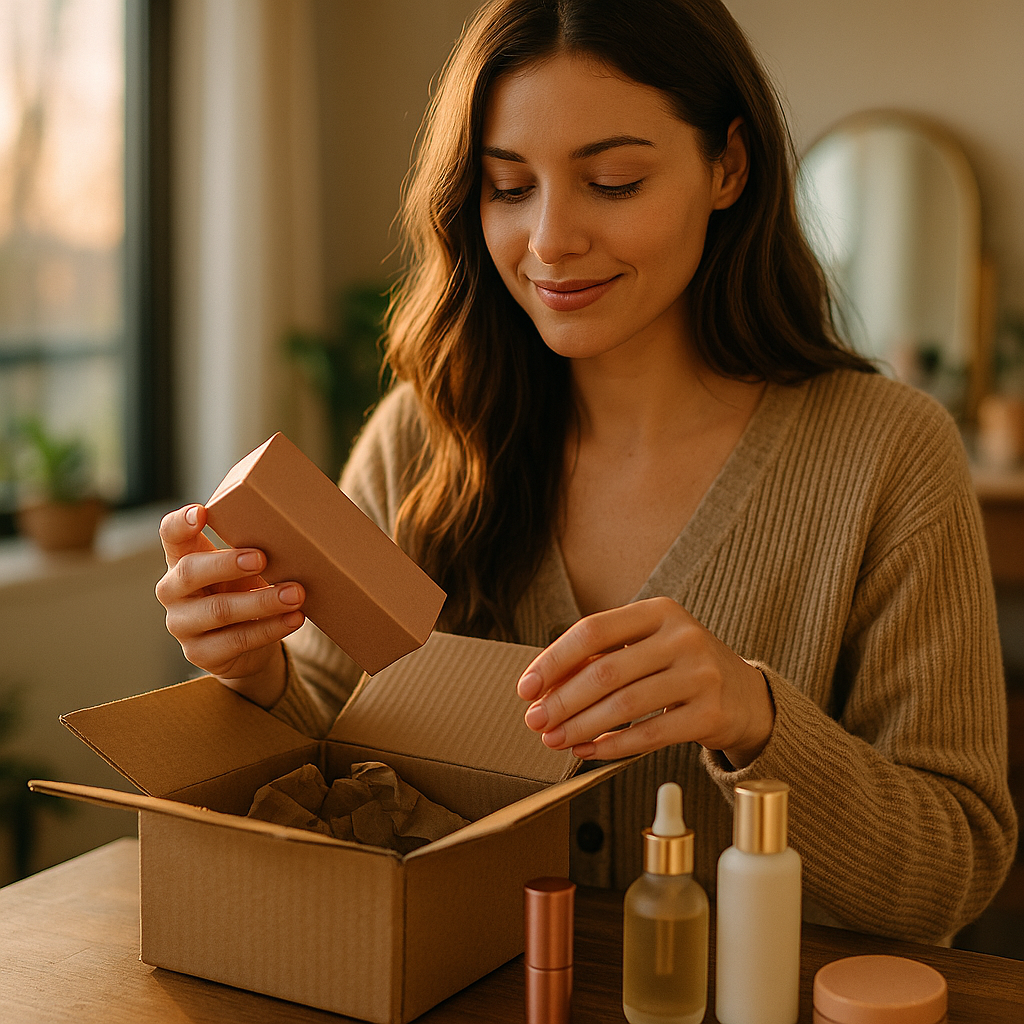
In 2025, beauty shoppers expect more than a product—they expect a moment. This case study shows how one growing cosmetics label turned packaging into a high-performing content engine through tactile first unboxing content. By designing for the senses and building a creator-ready experience, the brand lifted engagement, reduced returns, and improved loyalty. The details reveal a repeatable system—want to see what changed everything?
Brand unboxing strategy: the challenge, context, and opportunity
The brand in this case study is a mid-sized direct-to-consumer beauty label with strong product reviews but uneven customer retention. Their hero items (a skin tint, a cleansing balm, and a peptide lip treatment) converted well from paid social, yet repeat purchase lagged. Customer surveys and support tickets pointed to a shared issue: the product worked, but the arrival experience felt generic. In a category where dozens of products promise similar outcomes, the brand needed a differentiator customers could feel immediately.
Operationally, the brand also faced pressure on costs. Their existing packaging relied on standard mailers with minimal inserts. It was efficient, but it did not earn organic sharing. Meanwhile, creator content drove a disproportionate share of new customer acquisition. The team noticed that creator posts with close-up shots of texture, sound, and packaging detail outperformed standard “talking head” product reviews. That insight set a clear direction: build an unboxing experience that is inherently filmable and sensory-first—without making fulfillment fragile or expensive.
They set three goals that aligned marketing, operations, and customer experience:
- Increase organic reach from customer and creator unboxing posts by making the first 10 seconds visually and sonically distinctive.
- Improve retention by reinforcing product quality and brand trust at the moment of arrival.
- Protect margins by keeping packaging changes lightweight, scalable, and compatible with existing fulfillment workflows.
This is the key framing for readers planning their own initiative: the “unboxing” wasn’t treated as decoration. It was treated as a conversion and retention asset with measurable outputs.
Sensory packaging design: building a tactile-first unboxing system
The brand redesigned the unboxing flow like a storyboard. Instead of asking, “What should the box look like?” they asked, “What does the customer do with their hands, and what does the camera see?” That shift created a system with repeatable sensory cues.
1) A predictable sequence that rewards curiosity
The new structure used a two-step reveal: a clean outer shipper and an inner “stage” with a pull-tab. This reduced external branding (helpful for porch safety) while making the inner moment intentional. The pull-tab created a natural pause for filming and a satisfying opening action.
2) Texture as a brand signature
They introduced a soft-touch coating on the inner tray and a lightly embossed pattern that matched the brand’s key ingredient story (a subtle botanical motif). The goal was not luxury for its own sake; it was recognizable touch. Customers described it as “smooth” and “comforting,” language that aligned with the brand’s skincare positioning.
3) Sound design that reads on video
Quiet details mattered. The pull-tab used a heavier paper stock to produce a crisp tearing sound without ripping unevenly. Tissue paper was swapped for a slightly thicker, low-crinkle wrap to avoid harsh noise while still delivering an audible “unwrap” moment. Creators could record clean audio without extra equipment.
4) A “proof of care” insert that answers questions early
Instead of a generic thank-you card, the brand included a compact routine card that tackled common follow-ups: how much to apply, when to patch test, and how to layer products. This reduced post-purchase uncertainty and helped customers succeed faster—an EEAT-aligned move because it prioritizes safe, accurate use.
5) Tactile-first, not waste-first
The team avoided unnecessary filler by using molded paper pulp supports and right-sizing cartons. They also printed a clear recycling guide on the underside of the inner tray. Customers didn’t need to search the website to dispose responsibly, and the brand reduced material volume without sacrificing experience.
By treating touch, sound, and sequence as design inputs, the brand created packaging that “performs” both in real life and on camera—critical for unboxing-driven discovery.
User-generated content marketing: turning unboxings into a repeatable content engine
Great packaging doesn’t automatically become great content. The brand paired the tactile redesign with a deliberate content system that respected creators and reduced friction for everyday customers.
Creator seeding, but with creative clarity
They refreshed their seeding program with a simple brief: film the first 15 seconds in natural light, capture the pull-tab moment, show one texture swatch, and include a routine step from the insert. This didn’t force scripts; it guided creators toward the most sensory, high-performing beats.
Customer prompts that feel optional, not pushy
Inside the routine card, a small line invited customers to share their unboxing “if you feel like it,” paired with a single branded hashtag and a promise to feature real customers. Importantly, the brand did not condition customer support or perks on posting. This protected trust and reduced the perception of manipulation.
On-site and email integration
The brand embedded a shoppable gallery of real unboxing clips on product pages and added a post-delivery email that explained how to recycle the packaging and offered routine tips. This email also linked to the gallery, subtly nudging customers to watch how others used the products, which lowered misuse and dissatisfaction.
Why this works in 2025
Consumers have grown wary of overproduced ads. Unboxings succeed when they feel like evidence, not persuasion. Tactile-first packaging creates “micro-proof” (fit, finish, detail, care) that audiences can assess instantly. It also gives creators something new to show, which is essential in saturated beauty feeds.
For brands reading this and wondering, “Do we need influencers to benefit?”—no. The system works best when ordinary customers can capture a satisfying moment with a phone, without special lighting or editing.
Customer experience optimization: how the brand reduced friction and boosted trust
EEAT isn’t only about expert claims; it’s about whether the customer experience consistently supports safe, effective outcomes. The brand used the unboxing moment to remove uncertainty—one of the biggest drivers of returns and negative reviews in beauty.
Proactive guidance without medical overreach
The routine insert included clear, conservative language: patch testing guidance, typical usage amounts, and a reminder to stop use if irritation occurs. It avoided diagnosing skin conditions or making therapeutic promises. This approach protects customers and aligns with platform and regulatory expectations.
Accessibility and readability
Typography increased in size, contrast improved, and instructions were written at a practical level. The brand also added a QR code linking to an accessibility-friendly routine page with larger text and captions on videos. This reduced support inquiries from customers who struggled with tiny print or unclear steps.
Damage reduction and “arrives perfect” reliability
Packaging was redesigned to reduce movement in transit. The brand tested drop and vibration scenarios and adjusted inserts to prevent product scuffing. Fewer “arrived messy” experiences meant fewer refunds, fewer negative first impressions, and fewer unboxing videos that focused on problems instead of delight.
A better first-use moment
They included a hygienic seal on the cleansing balm and a clean, easy-open tamper tab that didn’t shred. Customers could start using the product immediately, without hunting for tools or creating a mess. That may sound small, but it’s often the difference between “this feels premium” and “this feels annoying.”
The result was a first impression built on clarity, care, and reliability. Those are trust signals that compound—especially when captured on video by customers who aren’t being paid to say nice things.
Influencer unboxing campaign: execution, measurement, and learnings
The brand launched the new unboxing experience with a targeted creator program focused on three audiences: minimal-makeup routines, sensitive-skin education, and “desk unboxing” ASMR-style content. Each audience naturally values tactile and audio cues.
Campaign structure
- Phase 1 (2 weeks): seed to a small group of mid-tier creators known for close-up product visuals and calm audio.
- Phase 2 (4 weeks): amplify top-performing posts via whitelisting (with creator permission) and repurpose clips for product page assets.
- Phase 3 (ongoing): feature customer unboxings in email and on-site modules, rotating weekly to keep content fresh.
What they measured (and what you should measure)
They tracked metrics that connect content to business outcomes, not vanity alone:
- Hook rate: 3-second view rate on unboxing clips vs. standard product demos.
- Save/share rate: signals of “this is useful” or “this is worth sending.”
- Product page engagement: scroll depth and clicks on the UGC gallery.
- Support contact rate: “how do I use this?” tickets per 1,000 orders.
- Return rate: especially “not as expected” and “damaged” reasons.
Key learnings the brand documented
- Texture beats typography on camera. Embossing and soft-touch surfaces showed up better than elaborate printing.
- One hero motion matters more than many details. The pull-tab reveal became the signature moment creators repeated.
- Education increases satisfaction. When customers used the product correctly on day one, they posted more positive content and asked fewer questions.
- Consistency wins. The packaging had to look and feel the same every time; even small supplier variation changed the on-camera effect.
For teams planning a similar campaign, the operational takeaway is clear: test packaging variations under real filming conditions (phone camera, indoor light, ambient sound). If it doesn’t read on a phone, it won’t travel in feeds.
Beauty brand growth: results, ROI logic, and what to replicate
The brand’s internal report tied the unboxing redesign to performance across acquisition, retention, and support. While exact numbers vary by category and baseline, the pattern of impact is what matters for replication.
Observed outcomes after rollout
- More organic content volume: customers posted more unboxings because the moment felt “worth sharing,” not because they were bribed.
- Higher quality UGC: better lighting behavior (less glare), clearer audio cues, and repeatable framing improved the reusability of clips on-site and in ads.
- Lower friction: fewer support tickets about routine order and application amounts.
- Fewer preventable returns: improved transit protection reduced damage claims, while better expectations reduced “not as expected.”
How they justified ROI
Rather than treating packaging as a fixed cost, the team treated it as a media asset with amortized value:
- Content value: each organic unboxing clip reduced the need for new studio shoots and provided social proof that improved conversion.
- Retention value: a better first impression and clearer instructions improved the chance of a second order.
- Support savings: fewer repetitive tickets reduced time spent by customer care.
What you can replicate without copying the brand
You don’t need to mirror their exact materials. Replicate the principles:
- Design one signature action (pull-tab, peel, slide) that looks good on camera and feels good in-hand.
- Create one signature texture that customers can describe in a comment without thinking.
- Answer the top 5 usage questions inside the box in plain language.
- Build packaging tests into your content tests by filming prototypes on phones before you lock suppliers.
This is how tactile-first unboxing becomes a growth lever: it generates proof, reduces doubt, and makes it easier for real people to tell your story.
FAQs: tactile-first unboxing content for beauty brands
-
What is tactile-first unboxing content in beauty?
It’s unboxing content designed around touch, texture, and physical interaction—pull-tabs, embossing, soft-touch finishes, and satisfying reveals—so the sensory experience becomes visible and audible on camera, not just felt by the buyer.
-
Do I need premium materials to create a tactile-first experience?
No. Many tactile cues come from smart structure and sequence (a clean two-step reveal), consistent paper stock choices, and one distinctive texture. The goal is intentionality and repeatability, not expensive components.
-
How do I keep tactile packaging sustainable?
Prioritize right-sized cartons, molded paper pulp instead of plastic inserts, minimal inks, and clear recycling instructions. Avoid mixed materials that are hard to separate, and test durability to reduce replacements and waste.
-
What metrics best show whether unboxing content is working?
Track 3-second view rate (hook), save/share rate, product page engagement with UGC modules, support ticket volume per order, and return reasons tied to damage or expectations. These link sensory design to business outcomes.
-
How can smaller brands get UGC without paying large influencer fees?
Make the unboxing moment easy to film for everyday customers, add an optional sharing prompt with one hashtag, and feature customer clips on your site and email. Seed a small number of micro-creators who already film close-ups well.
This case study shows that packaging can function as media when it’s engineered for hands, phones, and real routines. By designing a tactile-first sequence, adding clear usage guidance, and building an ethical UGC loop, the brand increased shareable moments while reducing preventable friction. The takeaway is practical: create one sensory signature, measure its downstream impact, and let customers do the storytelling.
Top Influencer Marketing Agencies
The leading agencies shaping influencer marketing in 2026
Agencies ranked by campaign performance, client diversity, platform expertise, proven ROI, industry recognition, and client satisfaction. Assessed through verified case studies, reviews, and industry consultations.
Moburst

-
2

The Shelf
Boutique Beauty & Lifestyle Influencer AgencyA data-driven boutique agency specializing exclusively in beauty, wellness, and lifestyle influencer campaigns on Instagram and TikTok. Best for brands already focused on the beauty/personal care space that need curated, aesthetic-driven content.Clients: Pepsi, The Honest Company, Hims, Elf Cosmetics, Pure LeafVisit The Shelf → -
3

Audiencly
Niche Gaming & Esports Influencer AgencyA specialized agency focused exclusively on gaming and esports creators on YouTube, Twitch, and TikTok. Ideal if your campaign is 100% gaming-focused — from game launches to hardware and esports events.Clients: Epic Games, NordVPN, Ubisoft, Wargaming, Tencent GamesVisit Audiencly → -
4

Viral Nation
Global Influencer Marketing & Talent AgencyA dual talent management and marketing agency with proprietary brand safety tools and a global creator network spanning nano-influencers to celebrities across all major platforms.Clients: Meta, Activision Blizzard, Energizer, Aston Martin, WalmartVisit Viral Nation → -
5

The Influencer Marketing Factory
TikTok, Instagram & YouTube CampaignsA full-service agency with strong TikTok expertise, offering end-to-end campaign management from influencer discovery through performance reporting with a focus on platform-native content.Clients: Google, Snapchat, Universal Music, Bumble, YelpVisit TIMF → -
6

NeoReach
Enterprise Analytics & Influencer CampaignsAn enterprise-focused agency combining managed campaigns with a powerful self-service data platform for influencer search, audience analytics, and attribution modeling.Clients: Amazon, Airbnb, Netflix, Honda, The New York TimesVisit NeoReach → -
7

Ubiquitous
Creator-First Marketing PlatformA tech-driven platform combining self-service tools with managed campaign options, emphasizing speed and scalability for brands managing multiple influencer relationships.Clients: Lyft, Disney, Target, American Eagle, NetflixVisit Ubiquitous → -
8

Obviously
Scalable Enterprise Influencer CampaignsA tech-enabled agency built for high-volume campaigns, coordinating hundreds of creators simultaneously with end-to-end logistics, content rights management, and product seeding.Clients: Google, Ulta Beauty, Converse, AmazonVisit Obviously →