


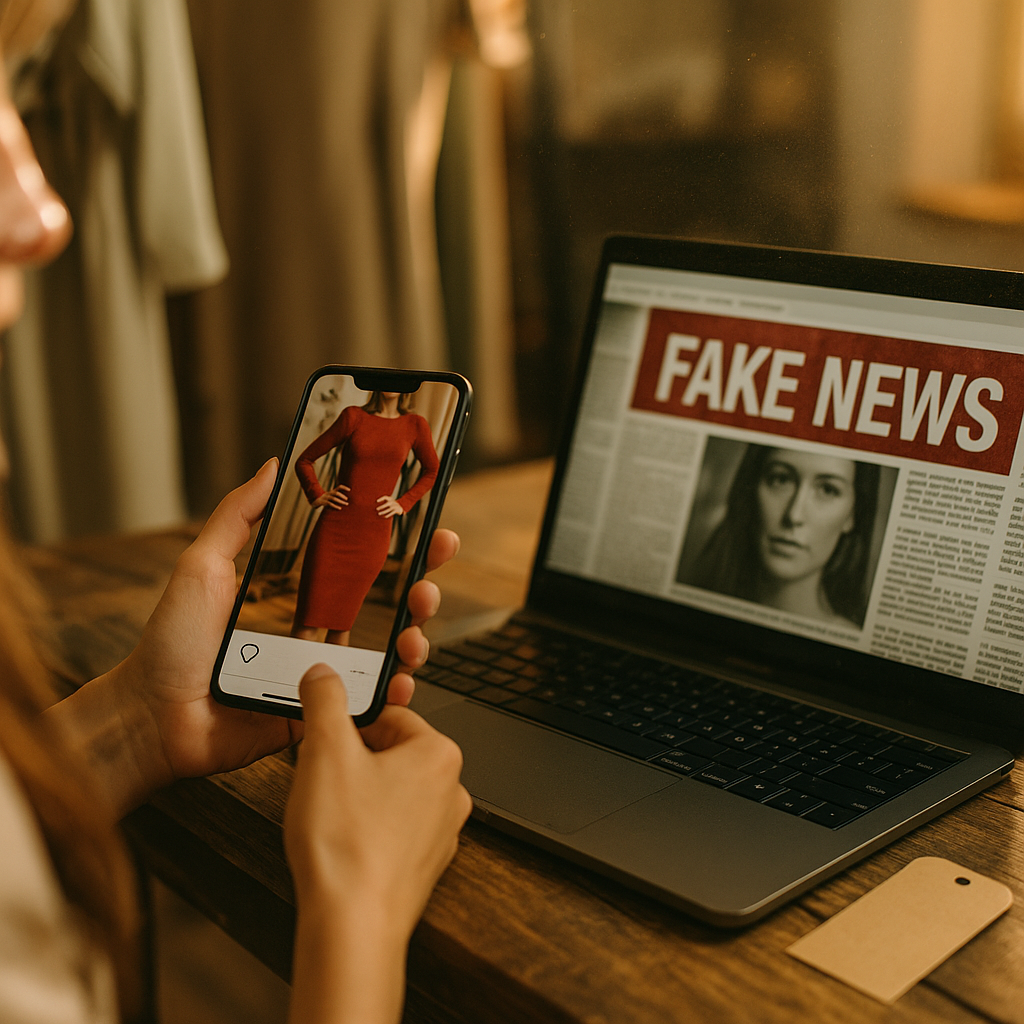
In 2025, brands can lose trust in hours when false claims spread faster than facts. This case study on viral misinformation crisis shows how one mid-sized fashion label protected customers, stabilized sales, and rebuilt credibility without escalating panic. You’ll see the exact decisions, messaging, and operational moves that turned a runaway rumor into a controlled narrative—plus the safeguards that prevented a repeat.
Viral misinformation in fashion: What triggered the crisis
A contemporary fashion label we’ll call Arden & Row built its reputation on premium basics, transparent sourcing, and an active community on short-form video platforms. The crisis began with a stitched video claiming the brand’s best-selling cotton tee contained “industrial resin,” linking it to skin irritation. The post used edited screenshots of a lab report, a cropped customer email, and a sped-up “reaction” montage that made the claim feel urgent and personal.
Within 12 hours, the misinformation jumped from social platforms to private group chats, then to a few influencer roundups framed as “consumer safety concerns.” The label’s customer service inbox flooded with refund demands and anxious questions. A wholesale partner asked for a statement before placing the next order, and a marketplace temporarily reduced product visibility due to “elevated dispute risk.”
Two dynamics made the situation volatile:
- High emotion, low friction sharing: The rumor was simple (“toxic resin”), easy to repeat, and designed to trigger protective instincts.
- Evidence theater: The edited “lab report” created the illusion of proof, making silence look like guilt.
Arden & Row’s leadership avoided a common mistake: treating the issue as a PR annoyance. They treated it as a customer safety perception event that needed fast validation, coordinated communication, and durable documentation.
Fashion brand crisis response: The first 24 hours
The first day focused on speed, accuracy, and internal alignment. The label activated a cross-functional response group led by the COO, with a single decision owner and clear responsibilities for communications, legal review, customer support, and supply chain verification.
They executed a structured 24-hour plan:
- Freeze speculation: Team members were instructed not to comment from personal accounts and to route all inquiries to a central intake.
- Capture the rumor trail: Screenshots, post URLs, timestamps, and engagement metrics were documented to support platform reports and partner briefings.
- Verify product facts: The sourcing manager pulled material specs, dye and finish declarations, and recent quality control results for the specific SKU, colorways, and production lots being mentioned.
- Draft a public holding statement: Short, calm, and specific—acknowledging concern, stating what is known, what is being checked, and when the next update will land.
- Prepare customer support scripts: Agents received an FAQ and a decision tree for refunds, medical concerns, and product identification by lot code.
By hour 10, Arden & Row posted a pinned update across major channels and on a dedicated website page. It included: (1) the claim summarized in plain language; (2) their current verified facts; (3) immediate steps customers could take if they experienced irritation (stop use, consult a clinician, contact support); and (4) a promised update time within the next day.
Crucially, they avoided over-denial. They did not say “this is impossible” or attack the original poster. They said, in effect: we take this seriously, we’re checking the exact lots, and we’ll show our evidence. That posture reduced escalation while buying time to assemble proof.
Reputation management for fashion labels: Evidence, transparency, and tone
In misinformation events, “trust” is rebuilt through verifiable documentation, not inspirational language. Arden & Row used three layers of proof designed for different audiences: customers, partners, and platforms.
1) Customer-facing proof (simple and scannable)
They published a one-page explainer with:
- A clear list of materials used in the tee and what each component does (fiber, dyes, softeners), written in non-technical language.
- Images showing where to find the lot code and how to identify affected colorways.
- A plain statement of what the brand does not use, aligned to their supplier declarations.
2) Partner proof (detailed and contractual)
Wholesale partners and marketplaces received a separate packet that included supplier declarations, QA summaries, and chain-of-custody documentation. The goal was to prevent de-listings or paused purchase orders driven by uncertainty.
3) Platform proof (policy-aligned)
They filed reports citing manipulated media and misinformation policies, attaching the “original vs edited” comparisons. They did not rely on outrage; they relied on policy language and documentation.
Arden & Row’s tone followed three rules:
- Respect the audience’s concern: They treated worried customers as reasonable, not gullible.
- Separate people from claims: They challenged the allegation, not the individual.
- Be precise: They did not make broad safety claims beyond what they could document.
This is where EEAT matters in practice: the label demonstrated experience by referencing their actual QA workflow, expertise through clear explanations vetted by their product team, authoritativeness with third-party documentation, and trustworthiness through timelines and follow-through.
Social media crisis communication: Correcting without amplifying
Arden & Row needed to correct the record without sending the rumor to new audiences. They used a “contain and redirect” content strategy.
Contain: Instead of duetting the viral clip (which would algorithmically boost it), they posted original videos addressing the concern in neutral terms: “You may have seen a claim about our cotton tee. Here are the facts and how to check your lot code.” They pinned the videos and turned comments into a structured intake channel.
Redirect: Every post, reply, and story linked to one canonical page on their site. That page became the citation point for journalists, partners, and customers. It was updated at scheduled times so people knew when to return.
Comment moderation with receipts: They used a light-touch moderation policy: remove doxxing and threats, leave criticism, and respond to common questions with short answers plus a link. They also trained staff to avoid argumentative back-and-forth that makes screenshots travel.
They added an “Ask us anything” live session hosted by the head of product and the customer care manager. That pairing signaled both technical knowledge and empathy. The live session followed a clear structure:
- What we know and don’t know yet
- How we test and document materials
- What to do if you have irritation
- How refunds and returns work during this review
The label also addressed a likely follow-up question directly: “If you’re confident, why offer refunds?” Their answer was pragmatic: customer comfort matters, and refunds reduce friction while facts are validated. This reduced anger, lowered chargebacks, and signaled confidence rather than fear.
Misinformation takedown strategy: Legal, platform, and community levers
Not every false post can be removed, and over-lawyering can backfire. Arden & Row used a tiered approach that balanced speed, cost, and reputational risk.
Tier 1: Platform reporting and correction
They filed policy-based reports with evidence of manipulation. Where takedown wasn’t granted, they pursued labels, reduced distribution, or removal of specific false “proof” assets.
Tier 2: Creator outreach
They contacted a small number of accounts that were repeating the claim in good faith. The message was short: here is the documentation, here is the canonical page, and we can answer questions on record. Several creators posted updates clarifying that the “lab report” looked altered.
Tier 3: Formal legal notices for high-impact defamation
Only the accounts selling “exposure packages” tied to the rumor received legal notices. This avoided looking like a brand trying to silence ordinary customers while still addressing coordinated harm.
Tier 4: Community reinforcement
They empowered loyal customers by making it easy to share correct information: a downloadable “myth vs fact” card and a short video clip with captions. Importantly, they asked supporters not to harass anyone and to keep comments factual. That kept the community from becoming a second crisis.
Another follow-up question they answered publicly: “Why not share the full lab report?” They explained that they could share key excerpts and certification summaries without exposing supplier proprietary details, and they offered to share fuller documentation with partners under NDA. That balance increased trust while protecting operations.
Brand trust recovery plan: Long-term fixes and measurable outcomes
Once the immediate fire was contained, Arden & Row shifted to preventing recurrence and proving durability. They treated the event as a systems test: where did uncertainty enter, and how could they reduce the time from rumor to proof?
They implemented five long-term changes:
- Public “Materials & Testing” hub: A permanent site section explaining fibers, dyes, trims, and safety practices with SKU-level references where feasible.
- Lot-level traceability for customers: A simple lookup tool allowing customers to enter a lot code and see factory region, material composition, and care guidance.
- Incident playbook: Pre-approved holding statements, response roles, partner templates, and escalation thresholds for misinformation, safety allegations, and counterfeit claims.
- Customer care upgrades: A dedicated “product concerns” channel with faster triage and a standing policy for temporary refunds when a safety claim is under review.
- Third-party validation cadence: Scheduled audits and publishable summaries to shorten future verification cycles.
They also tracked recovery using practical indicators rather than vanity metrics:
- Support load and sentiment: Volume of tickets about the rumor, average handle time, and percentage resolved on first contact.
- Commerce health: Chargeback rate, refund rate, and conversion on the affected product page after corrections were published.
- Search behavior: The ratio of branded queries tied to the rumor versus neutral or product-intent queries.
The biggest lesson was operational: fast transparency requires organized documentation before you need it. The brand’s prior investment in supplier declarations and QC logs made it possible to respond with evidence instead of generic reassurance.
FAQs
What is the first thing a fashion brand should do during a misinformation spike?
Confirm the exact claim, capture the content trail, and activate a single response owner. Publish a short holding statement that acknowledges concern, states what you’re verifying, and commits to a specific update time.
Should brands respond publicly to viral false accusations?
Yes, when the claim affects customer safety, product integrity, or purchasing decisions. Respond with a calm, evidence-led update and direct people to one canonical page. Avoid content formats that boost the original rumor.
How do you correct misinformation without amplifying it?
Create original posts that summarize the issue in neutral terms, pin them, and link to a central resource page. Do not repost the viral clip or repeat sensational phrasing. Use consistent language across channels.
When should a fashion label involve legal counsel?
Involve counsel early for review of statements and documentation, then escalate to formal notices only for coordinated or high-impact defamatory activity. Overuse of legal threats can trigger backlash and extend the story cycle.
What evidence helps rebuild trust fastest?
SKU- and lot-specific documentation, supplier declarations, QC summaries, and third-party audit excerpts. Pair technical proof with clear customer actions (how to identify product lots, how to request support, and what to do if symptoms occur).
How long does brand trust recovery take after a misinformation event?
It depends on severity and proof speed. Recovery accelerates when brands publish verifiable evidence quickly, maintain update timelines, and implement visible long-term safeguards like traceability tools and a public testing hub.
Arden & Row contained the rumor by moving faster than speculation while staying precise, humane, and evidence-led. The brand built a single source of truth, equipped support teams, and used platform and partner channels to reduce real commercial damage. The takeaway is simple: prepare documentation and a response playbook before you need them, then communicate with proof on a predictable schedule.
Top Influencer Marketing Agencies
The leading agencies shaping influencer marketing in 2026
Agencies ranked by campaign performance, client diversity, platform expertise, proven ROI, industry recognition, and client satisfaction. Assessed through verified case studies, reviews, and industry consultations.
Moburst

-
2

The Shelf
Boutique Beauty & Lifestyle Influencer AgencyA data-driven boutique agency specializing exclusively in beauty, wellness, and lifestyle influencer campaigns on Instagram and TikTok. Best for brands already focused on the beauty/personal care space that need curated, aesthetic-driven content.Clients: Pepsi, The Honest Company, Hims, Elf Cosmetics, Pure LeafVisit The Shelf → -
3

Audiencly
Niche Gaming & Esports Influencer AgencyA specialized agency focused exclusively on gaming and esports creators on YouTube, Twitch, and TikTok. Ideal if your campaign is 100% gaming-focused — from game launches to hardware and esports events.Clients: Epic Games, NordVPN, Ubisoft, Wargaming, Tencent GamesVisit Audiencly → -
4

Viral Nation
Global Influencer Marketing & Talent AgencyA dual talent management and marketing agency with proprietary brand safety tools and a global creator network spanning nano-influencers to celebrities across all major platforms.Clients: Meta, Activision Blizzard, Energizer, Aston Martin, WalmartVisit Viral Nation → -
5

The Influencer Marketing Factory
TikTok, Instagram & YouTube CampaignsA full-service agency with strong TikTok expertise, offering end-to-end campaign management from influencer discovery through performance reporting with a focus on platform-native content.Clients: Google, Snapchat, Universal Music, Bumble, YelpVisit TIMF → -
6

NeoReach
Enterprise Analytics & Influencer CampaignsAn enterprise-focused agency combining managed campaigns with a powerful self-service data platform for influencer search, audience analytics, and attribution modeling.Clients: Amazon, Airbnb, Netflix, Honda, The New York TimesVisit NeoReach → -
7

Ubiquitous
Creator-First Marketing PlatformA tech-driven platform combining self-service tools with managed campaign options, emphasizing speed and scalability for brands managing multiple influencer relationships.Clients: Lyft, Disney, Target, American Eagle, NetflixVisit Ubiquitous → -
8

Obviously
Scalable Enterprise Influencer CampaignsA tech-enabled agency built for high-volume campaigns, coordinating hundreds of creators simultaneously with end-to-end logistics, content rights management, and product seeding.Clients: Google, Ulta Beauty, Converse, AmazonVisit Obviously →