


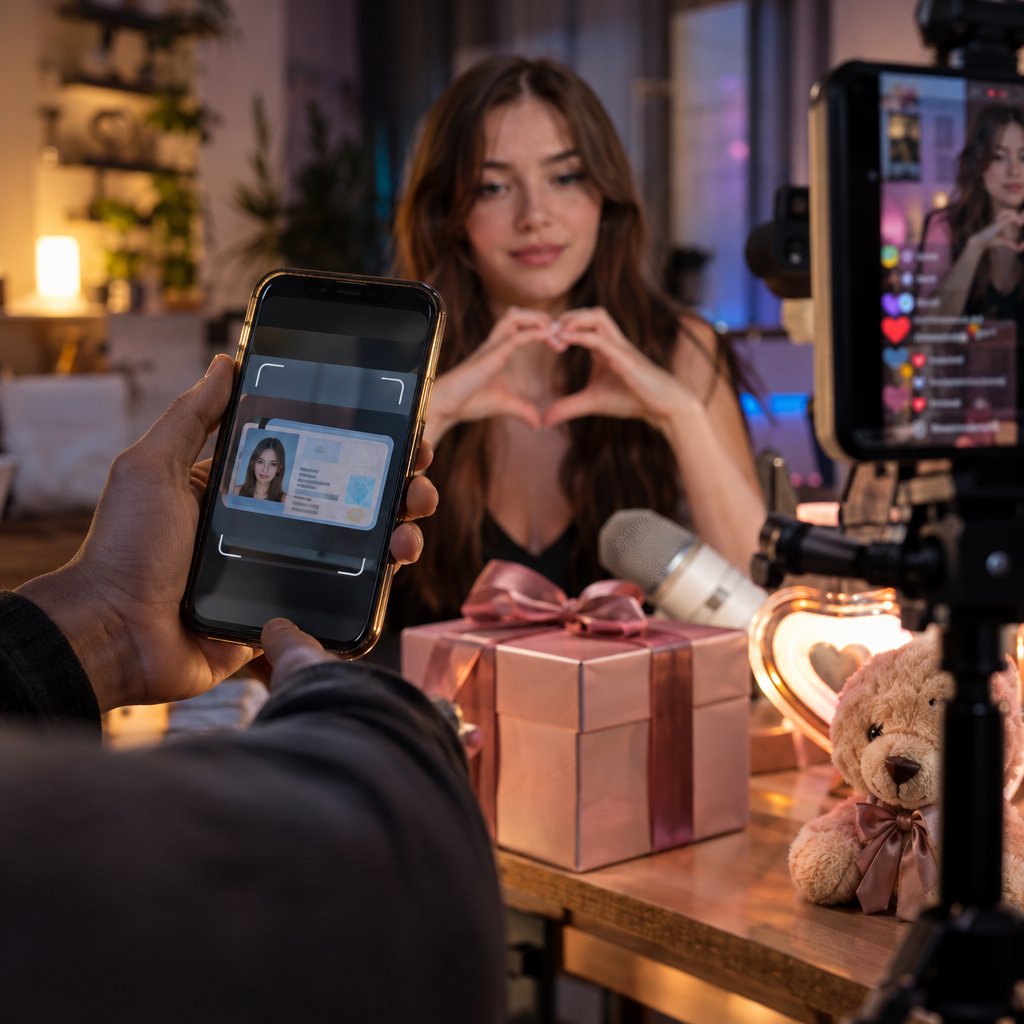
One underage gifter on a sponsored livestream can turn a six-figure campaign into a federal investigation. Virtual gift age verification sits at the center of nearly every livestream shopping and creator gifting program today, yet most brand teams still treat it as a platform problem rather than a brand problem. It isn’t. If your campaign touches TikTok LIVE, Shopify livestreams, or any gifting economy, age verification is now your liability too.
Why Virtual Gifting Turned Into a Legal Minefield
Virtual gifting used to be a creator monetization quirk. Now it’s a financial transaction system with real regulatory teeth. TikTok’s virtual gift economy alone generated an estimated $6 billion in revenue in 2024, and every dollar of that passed through a purchase, send, or receive action that platforms are legally required to age gate.
The history here matters for brands because it explains why enforcement has gotten so aggressive. TikTok’s rules used to be looser. Users between 13 and 16 could once send gifts, and anyone over 16 could receive them, before the platform tightened everything to an 18-plus standard for purchasing, sending, and receiving. That shift wasn’t cosmetic. It was a direct response to reports of minors being pressured into sending money to streamers, and it set the template every other platform has since copied.
The stakes escalated again recently. Court filings reported in late October revealed that TikTok employees warned executives that children were being paid in virtual gifts to appear in sexual content on Live, with internal staff raising concerns about age checks that went unaddressed for years. If that’s the environment regulators and plaintiffs’ attorneys are looking at, brands that sponsor livestream gifting without their own verification checks are standing in the blast radius of a much bigger story.
If a platform’s own safety staff can’t keep underage users out of a gifting economy, a brand’s influencer agreement and a platform’s terms of service are not enough protection on their own.
What the Rules Actually Say (And Where They Disagree)
Brands need to stop assuming “18+” means the same thing everywhere. TikTok’s own policy language is explicit: users must be at least 18 years old, or the age of majority in their jurisdiction, whichever is older, to buy, use, or collect Coins and Diamonds. That “whichever is older” clause is the part brand legal teams keep missing. In some markets, the age of majority is 19 or 21, which means a campaign that’s compliant in one country can be a violation in another.
Here’s the layered structure that trips up most marketing teams:
- Account creation: 13+ in most markets, with teen accounts defaulting to private and limited features.
- Hosting a livestream: 18+ on TikTok (19 in South Korea), after the platform moved off its older 16+ threshold.
- Purchasing, sending, or receiving virtual gifts: 18+, enforced through a mix of self-declaration, facial age estimation, and document verification.
- Monetization and payout eligibility: 18+, plus account standing requirements and, in many cases, a minimum follower threshold.
These tiers mean a creator can legally go live and still be blocked from the exact gifting mechanic your campaign is built around. That’s not a hypothetical. It’s the most common reason sponsored livestream campaigns quietly underperform: the brand assumed gifting was live and functional, and nobody confirmed it before air.
What Brands Must Confirm Before a Single Dollar Moves
Treat this like a pre-flight checklist, not a legal afterthought. Before any livestream gifting campaign goes live, confirm the following:
- The host’s verified age status, not just their stated birthdate. Platforms increasingly require document verification or facial age estimation to unlock gifting, and a host stuck in “unverified” limbo can’t legally receive what your campaign is paying for.
- Which verification method the platform used. Facial age estimation, credit card authorization, and government ID each carry different assurance levels, and your contract should specify which methods are acceptable for campaign eligibility.
- Jurisdictional age-of-majority conflicts for any international audience segment the campaign targets, since a US-compliant 18+ gate may not satisfy a market with a higher threshold.
- Whether minors can appear on camera at all, even as background presence. This is one of the most overlooked rules, and it intersects directly with how platforms handle COPPA compliance for creator data when a livestream inadvertently captures a child’s image or voice.
- The host’s gifting eligibility status, separate from their LIVE eligibility. These are two different gates, and confirming one does not confirm the other, as outlined in our breakdown of host age and follower vetting rules.
- Disclosure timing within the gifting flow, especially if the campaign pairs gifts with promotional redemption. The sequencing requirements here are close cousins of the issues covered in our piece on live shopping disclosure timing.
Casting Scores Aren’t the Same as Compliance Scores
Marketing teams love a clean eligibility dashboard, and TikTok Shop’s LIVE eligibility scoring has made casting faster. But a high casting score tells you a creator is likely to convert sales, not that their account is cleared for gifting transactions involving minors or age-gated financial flows. Brands that rely solely on platform eligibility scores for casting decisions are often skipping the separate, manual step of confirming gifting-specific age verification, which platforms don’t always surface clearly in creator-facing dashboards.
This gap matters because of how FTC enforcement actually works. The agency doesn’t limit its scrutiny to platforms. COPPA holds operators liable for the collection of personal information that occurs on or through their sites and services, even if the operator itself doesn’t directly collect it. Translate that to a livestream gifting campaign: if your brand commissions the stream, sets the creative brief, and benefits from the gifting mechanic, regulators can treat you as a party to the compliance failure, not a bystander to it.
A platform’s age gate protects the platform. It does not automatically protect the brand that paid for the campaign sitting behind that gate.
Why Your Influencer Contracts Need an Age Verification Clause
Most brand-creator agreements still treat age as a single yes/no checkbox at onboarding. That’s outdated. The FTC’s own staff guidance makes clear that marketers bear primary responsibility for preventing harm connected to child-directed advertising, noting that advertisers design these commercial relationships and are in the best position to prevent harm to children. That standard extends naturally to gifting mechanics layered on top of sponsored content.
Your influencer agreements should now require:
- A warranty that the host’s account has passed platform-level 18+ verification specifically for gifting features, not just general account age.
- A disclosure obligation if the host’s gifting eligibility changes mid-campaign (suspension, re-verification, or regional restriction).
- An indemnification clause covering campaign exposure if the host’s age status was misrepresented, similar in structure to the audit language discussed in our review of creator platform data audits and brand liability.
- Retention terms for any age-verification documentation your agency or vendor collects as proof of compliance, since regulators will ask for records, not assurances.
Building a Defensible Audit Trail
If a regulator or plaintiff’s attorney ever asks “what did the brand confirm, and when,” you need an answer better than “the platform handled it.” That means capturing, at minimum: the verification method used, the date it was confirmed, the creator’s gifting eligibility status at campaign launch, and any mid-campaign changes to that status. Store this alongside your standard FTC endorsement disclosure records, since the two compliance obligations increasingly get reviewed together, a dynamic we’ve also covered in the context of paid partnership disclosure compliance. A gifting campaign with clean disclosure but no age verification paperwork is only half-protected.
The Bottom Line for Brand Teams
Treat virtual gift age verification as a pre-launch gate, not a platform assumption. Before your next livestream gifting campaign goes live, get written confirmation of the host’s verified gifting eligibility, build an indemnification clause into the contract, and keep a documented audit trail. If your compliance team can’t produce that paperwork in an afternoon, the campaign isn’t ready to air.
FAQs
What age does TikTok require for sending or receiving virtual gifts?
TikTok requires users to be at least 18, or the age of majority in their jurisdiction if that’s higher, to purchase, send, or receive virtual gifts, separate from the 18+ threshold for hosting a livestream.
Is a creator’s LIVE eligibility the same as their gifting eligibility?
No. A creator can be approved to host a livestream while still being restricted from gifting features if their account hasn’t passed the platform’s specific 18+ gifting verification, which is a separate check from general LIVE access.
Can brands be held liable if a creator’s age verification was false?
Brands can face exposure, particularly under COPPA and FTC endorsement rules, if they commissioned, directed, or financially benefited from a campaign involving a misrepresented or unverified host, since regulators focus on who designed and profited from the commercial relationship.
Do age-of-majority differences across countries affect global livestream campaigns?
Yes. A campaign compliant in one market under an 18+ standard may not meet a higher age-of-majority threshold elsewhere, so international campaigns need jurisdiction-specific verification checks rather than a single global assumption.
What documentation should brands keep for virtual gift age verification?
Brands should retain records of the verification method used, the date of confirmation, the host’s gifting eligibility status at launch, and any changes to that status during the campaign, stored alongside standard FTC disclosure documentation.
Top Influencer Marketing Agencies
The leading agencies shaping influencer marketing in 2026
Agencies ranked by campaign performance, client diversity, platform expertise, proven ROI, industry recognition, and client satisfaction. Assessed through verified case studies, reviews, and industry consultations.
Moburst

-
2

The Shelf
Boutique Beauty & Lifestyle Influencer AgencyA data-driven boutique agency specializing exclusively in beauty, wellness, and lifestyle influencer campaigns on Instagram and TikTok. Best for brands already focused on the beauty/personal care space that need curated, aesthetic-driven content.Clients: Pepsi, The Honest Company, Hims, Elf Cosmetics, Pure LeafVisit The Shelf → -
3

Audiencly
Niche Gaming & Esports Influencer AgencyA specialized agency focused exclusively on gaming and esports creators on YouTube, Twitch, and TikTok. Ideal if your campaign is 100% gaming-focused — from game launches to hardware and esports events.Clients: Epic Games, NordVPN, Ubisoft, Wargaming, Tencent GamesVisit Audiencly → -
4

Viral Nation
Global Influencer Marketing & Talent AgencyA dual talent management and marketing agency with proprietary brand safety tools and a global creator network spanning nano-influencers to celebrities across all major platforms.Clients: Meta, Activision Blizzard, Energizer, Aston Martin, WalmartVisit Viral Nation → -
5

The Influencer Marketing Factory
TikTok, Instagram & YouTube CampaignsA full-service agency with strong TikTok expertise, offering end-to-end campaign management from influencer discovery through performance reporting with a focus on platform-native content.Clients: Google, Snapchat, Universal Music, Bumble, YelpVisit TIMF → -
6

NeoReach
Enterprise Analytics & Influencer CampaignsAn enterprise-focused agency combining managed campaigns with a powerful self-service data platform for influencer search, audience analytics, and attribution modeling.Clients: Amazon, Airbnb, Netflix, Honda, The New York TimesVisit NeoReach → -
7

Ubiquitous
Creator-First Marketing PlatformA tech-driven platform combining self-service tools with managed campaign options, emphasizing speed and scalability for brands managing multiple influencer relationships.Clients: Lyft, Disney, Target, American Eagle, NetflixVisit Ubiquitous → -
8

Obviously
Scalable Enterprise Influencer CampaignsA tech-enabled agency built for high-volume campaigns, coordinating hundreds of creators simultaneously with end-to-end logistics, content rights management, and product seeding.Clients: Google, Ulta Beauty, Converse, AmazonVisit Obviously →