


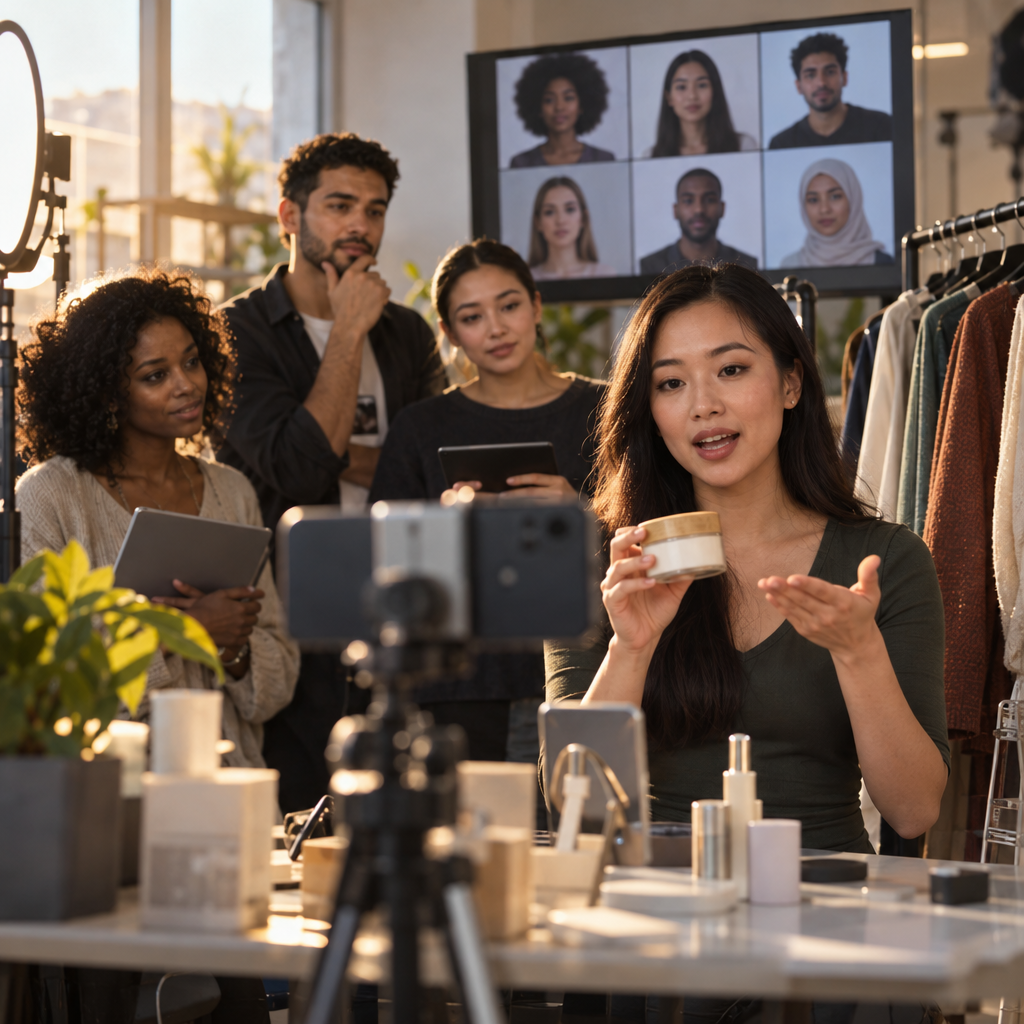
Livestream shopping now generates 26% of all TikTok Shop GMV, up from 14% two years ago. You’d think that growth would widen the pool of creators brands can tap to host. It hasn’t. TikTok Shop’s new eligibility rules for commerce livestreams now gate access by compliance scores, not just audience size, and that single shift is rewriting how brands and agencies cast for LIVE.
If your casting brief still reads “find me someone with 50K+ followers and good engagement,” you’re already behind. TikTok has quietly made follower count the least important number on a creator’s profile.
The Scores That Now Decide Who Gets the LIVE Button
Followers still matter for the baseline. Affiliate creators must have at least 1,000 followers, with no minimum follower requirement to bind with TikTok Shop as an official or marketing account. But that’s the entry ticket, not the eligibility rule that actually governs commerce livestreams today.
The real gatekeepers are two scores most brand teams have never heard of: the Promotion Performance Score (PPS) and the Creator Health Rating (CHR). Under TikTok’s own Affiliate Marketing Policy, creators promoting products in designated categories must clear a Promotion Performance Score of 3.5 or higher and a Creator Health Rating above 150, on top of passing platform compliance checks and not being under a LIVE ban or temporary suspension.
A creator can have 80,000 followers and still be locked out of your product category if their Promotion Performance Score or Creator Health Rating falls short. Follower count no longer guarantees the LIVE button works the way brands expect.
That matters because PPS and CHR aren’t static. They move with every livestream, every flagged claim, every order that gets refunded. A creator who was eligible last month can lose category access this month, often without the brand’s marketing team ever finding out until a scheduled LIVE won’t let them add the product.
Pilot Program Creators: Technically Eligible, Practically Benched
Here’s where casting gets more complicated for brands chasing fast-growing niche creators. TikTok automatically enrolls Affiliate Creators with fewer than 5,000 followers in the Affiliate Creator Pilot Program for at least 30 days after verification. During that window, their capabilities are capped hard.
Pilot creators get access only to products with a Shop Performance Score of 95% or higher, a posting limit of up to 3 shoppable product videos per day and 3 shoppable LIVEs per week, and no eligibility to join campaigns. Extended pilot creators, flagged through platform compliance checks, face an even tighter ceiling: a posting limit of up to 3 shoppable product videos per week and 1 shoppable LIVE per week.
Translate that into a casting decision: if you sign a rising creator at 3,200 followers for a LIVE campaign launching next week, they may only be able to host one qualifying livestream in that window, and only if your product’s Shop Performance Score clears 95%. Graduation out of the program requires reaching at least 5,000 followers and remaining in the program for at least 30 days, or qualifying for an early unlock by passing the probation quiz and reaching at least 176 Creator Health Rating points.
This is a direct casting constraint. Brands who were used to sourcing from a wide tier of micro and nano creators now need to check pilot status before committing budget, not after the contract is signed.
Category Gatekeeping Makes Casting a Per-Product Decision
The eligibility rules don’t apply uniformly across every product a brand sells. TikTok Shop has carved out 17 specified categories where affiliate creators must be eligible before promoting products, and that eligibility check runs every time a creator tries to add a product to a showcase, a LIVE, or a video anchor. Fail the check, and the platform generates an automated notification explaining why the product cannot be added.
Some categories go further than scores. TikTok explicitly restricts certain sensitive and newer verticals, including Sexual Wellness, Performance Enhancers, and newer categories like Collectible Coins and Digital Games, to invited creators only, and these categories are not currently open for applications or access requests. A beauty creator with a stellar track record in skincare cannot simply pivot into a restricted supplement livestream because the brand wants to cross-sell.
For brands running multi-category catalogs, this means a single creator’s eligibility status is no longer one flag. It’s a matrix: eligible for apparel, borderline for beauty, locked out of supplements, depending on their CHR trajectory and sales history in each vertical. This is exactly the kind of category-specific compliance risk we’ve flagged before for regulated product categories, and it now extends well beyond the obviously sensitive verticals.
Why Follower Count Was Never the Right Casting Filter
Brands have leaned on follower count as a proxy for reach and reliability for years. TikTok Shop’s affiliate economics make it clear why that proxy is breaking down: affiliate and creator content now accounts for roughly 42% of total TikTok Shop GMV, nearly half of all platform sales flowing through people who don’t own the products they’re promoting. At that scale, TikTok has every incentive to police quality through behavior data rather than vanity metrics, and that’s precisely what CHR and PPS do.
From a brand risk standpoint, this is actually good news if you build it into your vetting process early. A creator with a high CHR has a documented track record of clean content, low violation counts, and sustained order volume, three things that used to require a manual agency audit. Now they’re visible, score based, and updated in near real time. We covered the mechanics of this kind of audit trail in our breakdown of TikTok Shop affiliate audits and strict liability exposure, and the new eligibility scoring only reinforces why brands can’t treat affiliate vetting as a one-time check.
It also changes the calculus for co-hosted and multi-person LIVE formats, where host eligibility and age verification already carry separate compliance requirements. We’ve written previously about how TikTok’s host age and follower rules close vetting gaps for brands casting LIVE talent, and the PPS and CHR thresholds layer directly on top of those baseline checks rather than replacing them.
Building a Casting Checklist That Actually Matches the Rules
Brand and agency teams need a new pre-production step before any commerce LIVE gets scheduled. Here’s what that checklist should include:
- Verify pilot status first. Any creator under 5,000 followers may be capped at one or three LIVEs per week, depending on extended pilot status.
- Confirm category eligibility per product, not per creator. A creator eligible for one SKU may be blocked from another in the same campaign.
- Ask for CHR and PPS screenshots during casting calls. These scores aren’t always visible to brands directly, so building it into the creator brief protects the timeline.
- Check Shop Performance Score on your own listings. Pilot creators can only promote products scoring 95% or higher, which means your own seller account health now gates who can cast for you.
- Build in a buffer for score volatility. A creator eligible at contract signing can lose category access before the scheduled stream date.
Timing the compliance disclosures around these restrictions matters just as much as clearing the eligibility bar itself. Our guide on LIVE shopping disclosure timing and script structure walks through how to sequence FTC-required disclosures within a livestream that’s already operating under tighter platform constraints.
There’s also a data governance angle brands tend to overlook. Every time you pull a creator’s eligibility status, order history, or CHR trajectory into your own CRM or vetting spreadsheet, you’re handling platform-sourced creator data that comes with its own retention and audit obligations. That’s the exact gap we unpacked in our piece on creator platform data audits and brand liability, and it’s worth folding into the same casting workflow rather than treating it as a separate legal exercise.
What This Means for Budget Planning
None of this is reason to pull back from LIVE as a channel. The growth numbers argue the opposite: LIVE converts at roughly 3.7 times the rate of standard feed content on TikTok Shop, and that gap isn’t closing. What’s changing is the lead time brands need to budget for casting. A campaign that used to go from brief to livestream in a week now needs an eligibility verification step baked into the production calendar, because a creator’s status can shift between the pitch and the shoot date.
Agencies that build eligibility checks into their standard creator onboarding, rather than discovering a block mid-campaign, will keep their launch calendars intact. Everyone else will spend next quarter rebooking streams.
FAQs
What is a Creator Health Rating and why does it affect brand casting?
Creator Health Rating is TikTok Shop’s score for a creator’s compliance history and content quality. Brands casting for commerce livestreams now need to confirm a creator’s CHR clears the threshold for the product category before signing, since a low score can block that creator from adding specific products to a LIVE.
Can a brand still cast a creator who hasn’t hit 5,000 followers?
Yes, but that creator will likely be in TikTok’s Affiliate Creator Pilot Program, which limits them to a small number of shoppable LIVEs per week and restricts them to products from sellers with high Shop Performance Scores. Factor these caps into the campaign timeline before booking.
Do eligibility rules apply the same way across every product category?
No. TikTok Shop applies category-specific eligibility checks for a set of designated categories, and some categories are invite-only regardless of a creator’s scores. Brands selling across multiple categories should verify eligibility per product, not just per creator.
How often do Promotion Performance Score and Creator Health Rating change?
Both scores update based on ongoing activity, including recent sales, violations, and content quality, which means a creator’s eligibility can shift between when a brand books them and when the livestream airs.
Does a high follower count still matter for commerce livestreams?
Follower count still determines whether a creator can access LIVE features at all, but it no longer determines whether they can promote a specific product once they’re live. Compliance scores now carry more weight in casting decisions than audience size.
Next step: Before your next TikTok Shop LIVE campaign goes into production, add a mandatory eligibility check (pilot status, CHR, PPS, and category access) to your creator brief template, not your contract review stage, so a blocked product never surfaces on launch day.
Top Influencer Marketing Agencies
The leading agencies shaping influencer marketing in 2026
Agencies ranked by campaign performance, client diversity, platform expertise, proven ROI, industry recognition, and client satisfaction. Assessed through verified case studies, reviews, and industry consultations.
Moburst

-
2

The Shelf
Boutique Beauty & Lifestyle Influencer AgencyA data-driven boutique agency specializing exclusively in beauty, wellness, and lifestyle influencer campaigns on Instagram and TikTok. Best for brands already focused on the beauty/personal care space that need curated, aesthetic-driven content.Clients: Pepsi, The Honest Company, Hims, Elf Cosmetics, Pure LeafVisit The Shelf → -
3

Audiencly
Niche Gaming & Esports Influencer AgencyA specialized agency focused exclusively on gaming and esports creators on YouTube, Twitch, and TikTok. Ideal if your campaign is 100% gaming-focused — from game launches to hardware and esports events.Clients: Epic Games, NordVPN, Ubisoft, Wargaming, Tencent GamesVisit Audiencly → -
4

Viral Nation
Global Influencer Marketing & Talent AgencyA dual talent management and marketing agency with proprietary brand safety tools and a global creator network spanning nano-influencers to celebrities across all major platforms.Clients: Meta, Activision Blizzard, Energizer, Aston Martin, WalmartVisit Viral Nation → -
5

The Influencer Marketing Factory
TikTok, Instagram & YouTube CampaignsA full-service agency with strong TikTok expertise, offering end-to-end campaign management from influencer discovery through performance reporting with a focus on platform-native content.Clients: Google, Snapchat, Universal Music, Bumble, YelpVisit TIMF → -
6

NeoReach
Enterprise Analytics & Influencer CampaignsAn enterprise-focused agency combining managed campaigns with a powerful self-service data platform for influencer search, audience analytics, and attribution modeling.Clients: Amazon, Airbnb, Netflix, Honda, The New York TimesVisit NeoReach → -
7

Ubiquitous
Creator-First Marketing PlatformA tech-driven platform combining self-service tools with managed campaign options, emphasizing speed and scalability for brands managing multiple influencer relationships.Clients: Lyft, Disney, Target, American Eagle, NetflixVisit Ubiquitous → -
8

Obviously
Scalable Enterprise Influencer CampaignsA tech-enabled agency built for high-volume campaigns, coordinating hundreds of creators simultaneously with end-to-end logistics, content rights management, and product seeding.Clients: Google, Ulta Beauty, Converse, AmazonVisit Obviously →