


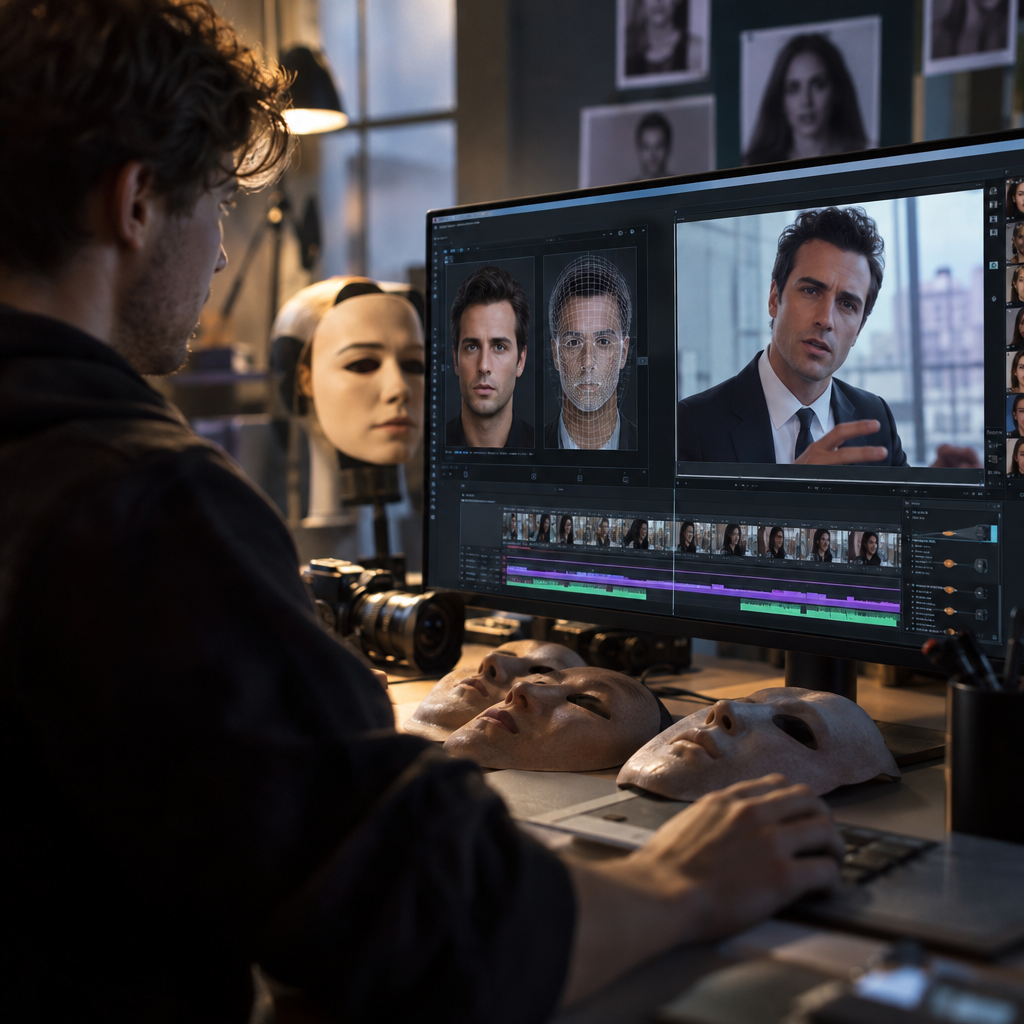
Seventy-two percent of Americans say they’ve seen a fake celebrity or influencer endorsement online. Security firm McAfee surveyed 8,600 people globally and found 72% of Americans had seen a fake celebrity or influencer endorsement, and one in 10 lost money or personal data, averaging $525 a person. That’s not a cybersecurity footnote. It’s a marketing problem sitting on your desk right now. Deepfake creator content, synthetic likenesses, cloned voices, and AI-altered influencer footage running through paid social, has moved from novelty to litigation risk faster than most brand safety checklists have been updated.
What “Deepfake Creator Content” Actually Means for Brands
Strip away the sci-fi framing and a deepfake, in a marketing context, is simply synthetic media that makes a real, identifiable person appear to say or do something they didn’t. That’s different from a fully original virtual influencer, which has no underlying human to infringe. It’s also different from a creator using AI tools to edit their own footage. The exposure starts the moment a brand, an agency, or a production vendor manipulates a real creator’s face, voice, or body without documented, specific consent for that exact use.
This isn’t theoretical. In a complaint filed on June 9 in federal court in California, influencer Molly Tranchin accused the brand EBY of posting an unauthorized altered video that depicted her exposing her breasts through one of the company’s sheer bras without her knowledge or approval, after EBY allegedly posted an unauthorized “altered video (or deepfake)” instead of the content she actually delivered. Tranchin claims EBY had the ability to publish content directly through her Instagram account under a whitelisting arrangement, meaning followers encountered the manipulated video as though she had posted it herself. That single detail, a standard paid-partnership access tool turned into a distribution channel for unauthorized synthetic content, is the exact mechanism most brands overlook when they negotiate whitelisting rights.
The Legal Patchwork No Compliance Calendar Can Keep Up With
There is no single federal “deepfake law” that governs commercial use of a creator’s likeness. Instead, brands are navigating a stack of state right-of-publicity statutes, a narrow federal criminal law aimed at intimate imagery, and a pending federal bill that hasn’t crossed the finish line.
Tennessee set the early pace. A recent amendment to Tennessee’s publicity statute makes a person liable to a civil action if they publish, perform, distribute, transmit, or otherwise make available to the public an individual’s voice or likeness with knowledge that the use was not authorized. Beyond right of publicity, the same unauthorized use can trigger overlapping claims. A plaintiff who owns an image, audio, video, or other protected work copied to create a deepfake may bring a copyright infringement claim, and a plaintiff whose mark, including a product or person’s name, is improperly used in a deepfake may bring a trademark claim. That means a single unauthorized synthetic ad can expose a brand to publicity, copyright, and trademark claims simultaneously, each with its own damages calculation.
Federal movement has been slow and incomplete. The NO FAKES Act, which would create a national framework, has not become law. The Senate Judiciary Committee unanimously advanced the bill to combat AI digital replicas of a person’s voice or visual likeness, which would create a new federal intellectual property right giving every individual the right to control how their likeness is used in digital replicas and would hold individuals and companies liable if they produce or distribute an unauthorized digital replica. Read more on how these clauses are already reshaping creator contracts in our AI likeness and voice clauses coverage.
The NO FAKES Act proposes statutory damages ranging from $5,000 to $25,000 for each violative replica, with protections extending to employees, executives, students, consumers, and private citizens, not just celebrities. If it passes, that’s not a Hollywood problem. It’s an exposure line item for any brand running synthetic creator content at scale.
Who’s Actually On the Hook, Your Agency or You?
Brands love to assume the production vendor or the agency that touched the footage absorbs the liability. That assumption rarely survives contact with a courtroom. Right-of-publicity and endorsement claims attach to whoever benefits commercially from the unauthorized content, which is almost always the brand named in the ad, regardless of who technically clicked “generate” in the AI tool.
Platforms are already treating this as an enforcement priority of their own. Meta filed lawsuits against four scam operations spanning three countries, targeting advertisers who used AI-generated deepfakes and celebrity impersonation to run fraudulent ads reaching users across Facebook and Instagram. That’s platform self-interest, not brand protection. Your vendor contracts, sourcing pipelines, and whitelisting agreements are where the actual exposure sits, and they deserve the same scrutiny we outlined in AI creator sourcing liability and whitelisted Reels ads.
The FTC’s Disclosure Stack You Can’t Opt Out Of
Even when a synthetic endorsement doesn’t cross into unauthorized likeness territory, say, a licensed AI avatar or a fully disclosed synthetic spokesperson, the FTC’s endorsement framework still applies in full. The FTC updated its Endorsement Guides to address deceptive advertising concerning AI-generated content and synthetic endorsers, expanding the scope of what counts as an “endorsement” and an “endorser” to encompass AI-generated content and synthetic personas. The FTC has made clear that advertisers are responsible for ensuring the truthfulness of endorsements, regardless of whether they are delivered by human influencers or synthetic endorsers.
In practice, that means brands running AI-assisted or AI-generated creator content now owe two layers of disclosure, not one: the standard material-connection disclosure, and a separate disclosure that the endorser itself isn’t a real person speaking from genuine experience. Skipping either one lands squarely inside Section 5 deceptive-practice territory. We’ve mapped the practical mechanics of this in AI avatar endorsements and the production-side cost implications in AI ad copy liability.
Consumers aren’t waiting for regulators to sort this out. Surfshark’s research team estimates consumers worldwide may have lost as much as $3.7 billion to deepfake scams, with social media impersonation accounting for roughly half. Every undisclosed synthetic endorsement your brand runs adds to the pool of consumer distrust your actual creator partnerships have to swim against.
A Pre-Campaign Deepfake Checklist for Marketing Leads
Most of this exposure is preventable with contract language and a review step, not a legal overhaul. Before your next campaign touches generative AI anywhere near a real creator’s face or voice, run through this:
- Require explicit, use-specific written consent for any AI alteration of a creator’s likeness, voice, or body, not a blanket “content usage rights” clause buried in a master services agreement.
- Audit whitelisting and paid-partnership access permissions separately from content creation permissions. The ability to boost a post is not the same as the right to alter it.
- Build a second disclosure into every synthetic or AI-augmented endorsement, distinct from the standard #ad tag, confirming the endorser or alteration is AI-generated.
- Flag any campaign using likeness of a recognizable third party for legal review against the state where the content will run, since right-of-publicity statutes vary sharply.
- Confirm with every production vendor and agency, in writing, whether generative AI touched the creator’s face, voice, or body at any stage, and retain that documentation.
Treat this the same way you’d treat any other contract gap: as an audit item, not a legal afterthought.
FAQs
Can a brand be sued for using a deepfake of a creator who originally agreed to a partnership?
Yes. Consent for a standard content partnership doesn’t automatically cover AI alteration of that creator’s likeness. As the EBY lawsuit filed by influencer Molly Tranchin shows, a brand can face right-of-publicity, defamation, and breach-of-contract claims even when the underlying relationship was legitimate, if the final content exceeds what was approved.
Does the NO FAKES Act currently protect brands or creators?
Neither, yet. It remains pending federal legislation. The Senate Judiciary Committee has advanced the bill, but it has not passed either chamber, so brands currently rely on the existing patchwork of state right-of-publicity laws and contract terms.
Is an AI-generated virtual influencer the same legal risk as a deepfake of a real creator?
No. A fully original virtual influencer has no real person behind it, so likeness and publicity claims don’t apply in the same way. The risk shifts to FTC disclosure: the audience still needs to know the endorser isn’t a real human, which is a separate compliance obligation from unauthorized likeness use.
What should an influencer contract include to prevent deepfake exposure?
A specific, affirmative consent clause covering AI alteration of likeness, voice, or body, separate from general content usage rights. It should name the permitted AI uses, require creator approval of any AI-altered final cut before publication, and set clear limits on whitelisting and paid-media access.
Who bears liability when an agency or production vendor creates the unauthorized deepfake?
The brand usually can’t fully offload this risk. Right-of-publicity and FTC endorsement claims typically attach to the advertiser that benefits commercially from the content, regardless of which vendor technically produced it, which is why vendor contract audits matter as much as creator contracts.
The gap here isn’t a lack of awareness that deepfakes exist. It’s the assumption that existing influencer contracts, whitelisting agreements, and vendor terms already cover AI alteration. They don’t. Pull your current creator and production agreements this quarter and check for explicit, use-specific AI consent language before your next campaign becomes the next case study.
Top Influencer Marketing Agencies
The leading agencies shaping influencer marketing in 2026
Agencies ranked by campaign performance, client diversity, platform expertise, proven ROI, industry recognition, and client satisfaction. Assessed through verified case studies, reviews, and industry consultations.
Moburst

-
2

The Shelf
Boutique Beauty & Lifestyle Influencer AgencyA data-driven boutique agency specializing exclusively in beauty, wellness, and lifestyle influencer campaigns on Instagram and TikTok. Best for brands already focused on the beauty/personal care space that need curated, aesthetic-driven content.Clients: Pepsi, The Honest Company, Hims, Elf Cosmetics, Pure LeafVisit The Shelf → -
3

Audiencly
Niche Gaming & Esports Influencer AgencyA specialized agency focused exclusively on gaming and esports creators on YouTube, Twitch, and TikTok. Ideal if your campaign is 100% gaming-focused — from game launches to hardware and esports events.Clients: Epic Games, NordVPN, Ubisoft, Wargaming, Tencent GamesVisit Audiencly → -
4

Viral Nation
Global Influencer Marketing & Talent AgencyA dual talent management and marketing agency with proprietary brand safety tools and a global creator network spanning nano-influencers to celebrities across all major platforms.Clients: Meta, Activision Blizzard, Energizer, Aston Martin, WalmartVisit Viral Nation → -
5

The Influencer Marketing Factory
TikTok, Instagram & YouTube CampaignsA full-service agency with strong TikTok expertise, offering end-to-end campaign management from influencer discovery through performance reporting with a focus on platform-native content.Clients: Google, Snapchat, Universal Music, Bumble, YelpVisit TIMF → -
6

NeoReach
Enterprise Analytics & Influencer CampaignsAn enterprise-focused agency combining managed campaigns with a powerful self-service data platform for influencer search, audience analytics, and attribution modeling.Clients: Amazon, Airbnb, Netflix, Honda, The New York TimesVisit NeoReach → -
7

Ubiquitous
Creator-First Marketing PlatformA tech-driven platform combining self-service tools with managed campaign options, emphasizing speed and scalability for brands managing multiple influencer relationships.Clients: Lyft, Disney, Target, American Eagle, NetflixVisit Ubiquitous → -
8

Obviously
Scalable Enterprise Influencer CampaignsA tech-enabled agency built for high-volume campaigns, coordinating hundreds of creators simultaneously with end-to-end logistics, content rights management, and product seeding.Clients: Google, Ulta Beauty, Converse, AmazonVisit Obviously →