


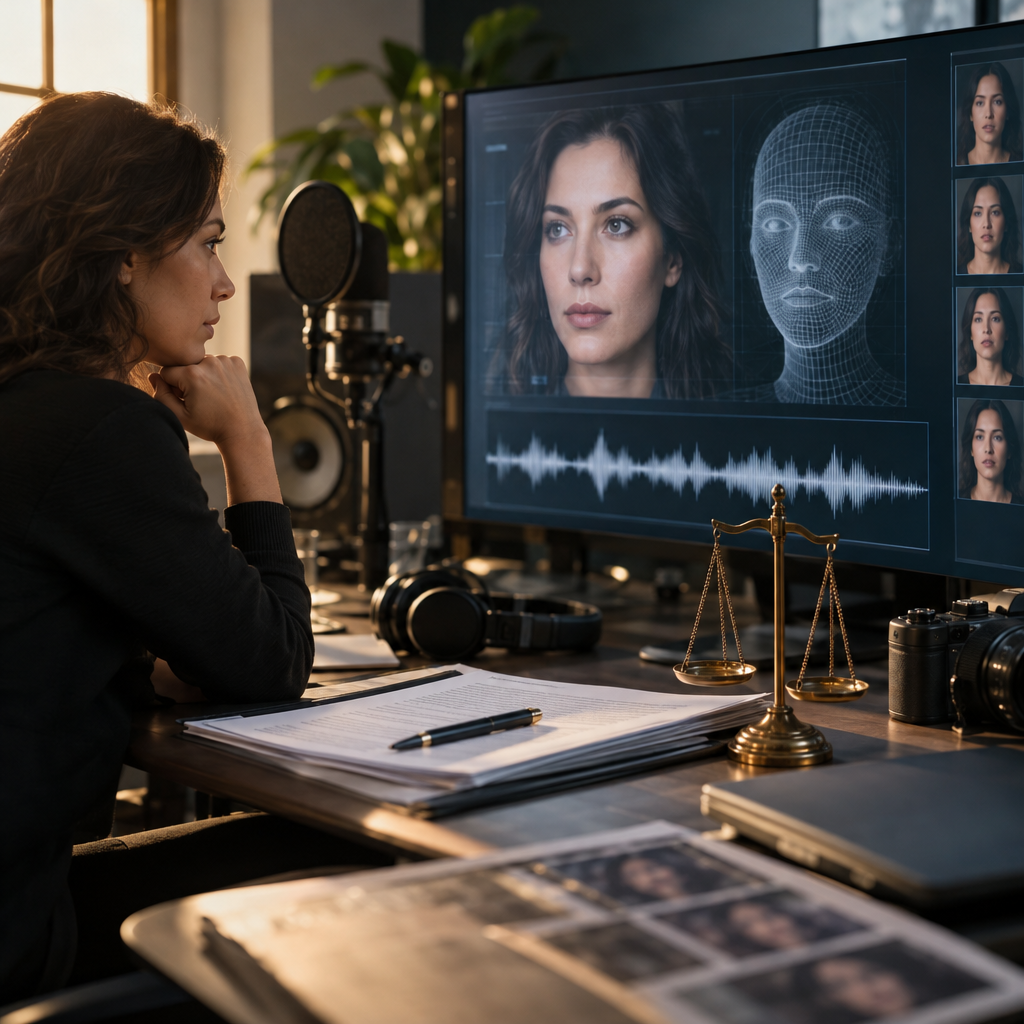
Here’s an uncomfortable stat for anyone running a creator program: most brand contracts signed in the last three years grant “likeness” rights using language written before anyone could clone a voice from eleven seconds of audio. Auditing creator contracts for AI likeness and voice clause loopholes isn’t a legal nicety anymore. It’s the difference between a defensible AI campaign and a federal lawsuit waiting to happen.
If your legal team hasn’t touched your standard influencer agreement template since before generative AI tools went mainstream, you have a problem. Not a hypothetical one. An active one, sitting in every contract you’ve signed that includes the words “likeness,” “voice,” or “all media now known or hereafter devised.”
The Boilerplate Everyone Signed Without Reading Closely
Standard talent releases were drafted for a world of photo shoots and TV spots. They grant broad, future-proof rights because lawyers wanted to avoid renegotiating every time a new distribution format showed up. That instinct made sense for streaming and social video. It makes considerably less sense for AI.
Many publicity releases, talent agreements and influencer contracts, especially forms drafted before the current wave of AI tools, do not clearly state what a company may do with a person’s likeness once AI enters the workflow. That gap isn’t a drafting oversight brands can shrug off. This gap matters, and it matters most for brands, because when a contract is ambiguous about AI replica rights, the default legal assumption increasingly favors the creator, not the company that wrote the clause.
The practical failure mode looks like this: a brand repurposes a creator’s UGC into a synthetic voiceover for a new market, assuming the original “all media now known or hereafter devised” language covers it. It doesn’t, at least not reliably. Many standard releases were written before AI replica technology was a realistic concern, and often contain broad language granting rights to a person’s image and likeness in any media now known or hereafter devised, but under digital replica laws, that catch-all language is unlikely to satisfy the specific-description requirement for an AI digital replica.
Silence in an old contract doesn’t mean permission. It means an unresolved liability that nobody priced in when the deal was signed.
Why California Changed the Math
California’s AB 2602 is the clearest signal of where this is heading nationally. California generally requires specific, informed consent, negotiated with an attorney or union representative present, before a production can use an AI-generated digital replica of a performer’s voice or likeness, and broad, boilerplate release language usually isn’t enough on its own, applying to crew and background talent as well as principal cast. For brands running influencer campaigns with California-based creators, or campaigns that reach California audiences, that standard is the new floor, not an outlier.
The scenario that should worry every brand counsel: a background performer’s face from an older shoot turns up in a newer AI-generated asset for an unrelated project, and the original release never mentioned AI use at all. Swap “background performer” for “creator” and “production” for “brand,” and you have a near-identical exposure sitting inside your asset library right now. Our earlier look at asset reuse rights covers the broader licensing version of this same problem.
What a Contract Audit Should Actually Flag
Forget reading every contract line by line hoping something jumps out. An efficient audit searches for specific terms and specific modifiers. The terms alone aren’t dangerous. The modifiers around them are.
- Perpetual, irrevocable, worldwide: applied to likeness, voice, or persona rights, these words strip any future leverage to limit, revoke, or renegotiate AI use.
- Sublicensable: lets your agency, a media buyer, or a third-party AI vendor use the creator’s likeness without coming back to the brand, let alone the creator, for approval.
- Training data / machine learning: the single highest-risk phrase pairing in any creator agreement. It converts a one-time usage grant into permission to build a reusable model of the person.
- Derivative works, broadly defined: without an AI-specific carve-out, “derivative works” language written for photo retouching can be stretched to cover a fully synthetic version of the creator.
- Silent on revocation: contracts that never mention how (or whether) AI usage rights can be pulled back mid-term leave a brand exposed to using a model long after the relationship has soured.
Industry practice is already shifting in response. The most important emerging protection is the kill switch clause, a contractual provision that lets a creator revoke a brand’s AI usage rights mid-deal, stopping a brand from continuing to generate or deploy AI content based on the creator’s likeness if the usage goes outside agreed scope. If your current templates have no mechanism resembling this, you’re negotiating from a position that will look outdated within a year.
The flip side matters just as much for brand risk management: when broad AI language shows up in a contract, the fix is specificity. Name the platforms where AI output can appear, set an expiration date on the license, require written approval before any AI-generated likeness goes live, and add a revocation mechanism. That same specificity protects the brand, not just the creator. A narrowly scoped grant is far easier to defend in a dispute than a sweeping one that a court later decides nobody actually understood at signing.
The Federal Floor Is Moving, and It’s Moving Fast
Brands that treat this as a slow-moving legal trend are misreading the pace. The U.S. Senate Committee on the Judiciary unanimously advanced the NO FAKES Act on June 18, 2026, an effort to combat the ability for generative AI to create digital replicas of a person’s voice or visual likeness without that person’s consent. The bill grants every person, famous or not, a licensable property right in their own voice and visual likeness, creating individual ownership over how AI-generated versions of their voice or image can be created or distributed.
Crucially for brand legal teams, the bill doesn’t wait for a single federal standard to override state protections entirely. In recent years, eight states, Tennessee, California, Illinois, New York, Utah, Arkansas, Montana, and Washington, have enacted legislation specifically addressing AI-generated digital replicas of a person’s voice or likeness. That patchwork doesn’t disappear if the federal bill passes. The Tennessee ELVIS Act, for example, would not be preempted by the NO FAKES Act, meaning multi-state campaigns still need multi-state contract language, not a single national template.
New York has already moved on this independently of federal action. New York’s law, effective June 9, 2026, requires conspicuous disclosure when advertising features an AI-generated synthetic performer, and applies to any ad reaching New York consumers regardless of where the advertiser is based, with civil penalties for violations. If you run a national campaign and assume your production state’s rules govern, you’re wrong, and this is exactly the kind of assumption an audit needs to catch before launch rather than after a complaint. Our piece on state AI liability exposure walks through how this patchwork compounds across campaigns running in multiple states at once.
Disclosure Gaps Make the Contract Problem Worse
An airtight likeness clause doesn’t protect you if the resulting content violates disclosure rules, and the FTC has made clear that contractual liability shifting doesn’t work the way brands hope. Brands and agency teams should treat creator liability as independent: the May 2026 guidance reaffirms that creators bear independent liability for endorsement content they produce, including AI-augmented content, and brand-creator contracts allocating liability to the brand do not bind the FTC.
That matters for contract audits because it changes what “good” language looks like. A clause that simply assigns all compliance responsibility to the creator doesn’t make the brand’s FTC exposure disappear. The FTC’s AI endorsement guidance covers synthetic influencers, AI-generated testimonials, and AI-edited creator content with disclosure mandates and penalties reaching 53,088 dollars per violation, with creator liability running joint with brands.
A contract clause that shifts disclosure liability to the creator doesn’t shift it away from the FTC’s view of the brand. Joint liability means joint exposure, no matter what the indemnification language says.
The audit fix here overlaps directly with the likeness work: any AI-generated or AI-augmented asset using a creator’s identity needs a documented, specific consent record tied to that exact use, not a general “content featuring the creator” license written before the AI step existed. For brands managing synthetic spokesperson campaigns alongside real creator partnerships, our coverage of AI avatar disclosure requirements breaks down the labeling side of this same compliance stack.
Building the Audit Into Your Standard Workflow
A one-time contract sweep isn’t enough. AI usage rights get exercised long after signing, often by a different team than the one that negotiated the deal. The audit needs to be a recurring process, not a project.
- Inventory every active agreement that grants rights to a creator’s name, image, voice, or likeness, including older contracts still governing content in your asset library.
- Flag high-risk term combinations using the modifier checklist above, and route anything with “perpetual,” “irrevocable,” or “training data” language to legal review before any AI tool touches that creator’s content.
- Separate AI-assisted from AI-replica assets. Routine editing, color correction, or script generation is a different risk category than a synthetic version of the creator’s actual face or voice. Treat them with different approval paths.
- Assign a single owner for likeness-consent tracking, the same way most programs already assign ownership for usage-rights expiration dates.
- Rebuild your standard template with AI-specific definitions, scoped grants, expiration dates, and a revocation mechanism, rather than patching old boilerplate with a single new sentence.
This is also where vendor contracts deserve the same scrutiny as creator contracts. If an AI sourcing platform or UGC vendor touches a creator’s voice or likeness anywhere in the production chain, your liability doesn’t stop at the brand-creator agreement. Our guide to vendor contract liability covers the upstream version of this exact gap, and the data retention questions that follow from it connect directly to the training data clause issue flagged earlier. If your organization has already weathered a data-related verdict scare, the lessons from recent data clause litigation apply almost directly to likeness and voice data as well.
What “Good” Language Actually Looks Like
A defensible AI clause names the specific use, not a category. It states which platforms the output can appear on, how long the license runs, whether it’s exclusive, and what compensation attaches if usage expands beyond the original scope. It requires written sign-off before any AI-generated asset featuring the creator goes live. And it includes a clear path for the creator, or the brand, to terminate AI usage rights if the relationship ends or the use drifts outside what was agreed. None of this is exotic. It’s the same specificity brands already apply to usage rights windows and exclusivity terms. AI just raises the stakes for getting it wrong.
Next step: pull your five highest-spend creator contracts this week, run them against the modifier checklist above, and route anything flagged to legal before your next AI-assisted campaign ships. The gap won’t close itself, and the regulatory window to fix it quietly is shrinking fast.
Frequently Asked Questions
What is an AI likeness clause loophole in a creator contract?
It’s broad or outdated language, often phrases like “all media now known or hereafter devised,” that brands assume covers AI-generated content but that courts and new state laws increasingly treat as insufficient to authorize a digital replica of a creator’s voice or face.
Does older “likeness” language in existing contracts already cover AI use?
Generally, no. Broad catch-all language written before AI replica technology existed typically doesn’t satisfy the specific-description standards now required under laws like California’s AB 2602, which demands informed, specific consent for AI digital replicas.
What is the NO FAKES Act and why does it matter for brand contracts?
It’s a federal bill advanced by the Senate Judiciary Committee that would create a property right allowing individuals to control AI-generated replicas of their voice and visual likeness, with liability for unauthorized creation or distribution, and it would not preempt existing state laws like Tennessee’s ELVIS Act.
Can a contract shift FTC disclosure liability entirely to the creator?
No. FTC guidance treats creator and brand liability as joint for AI-generated or AI-augmented endorsement content, meaning indemnification language in a contract does not eliminate the brand’s own exposure to enforcement action.
What’s the single highest-risk phrase to search for in a contract audit?
“Training data” or “machine learning” paired with likeness, voice, or persona rights. That combination can turn a one-time usage grant into permission to build a reusable AI model of the creator, often without the creator realizing it at signing.
How often should brands re-audit creator contracts for AI clause risk?
Treat it as a recurring process tied to any new AI tool adoption or campaign launch, not a one-time sweep, since AI usage rights are often exercised long after a contract is signed by a different team than the one that negotiated it.
FAQs
Top Influencer Marketing Agencies
The leading agencies shaping influencer marketing in 2026
Agencies ranked by campaign performance, client diversity, platform expertise, proven ROI, industry recognition, and client satisfaction. Assessed through verified case studies, reviews, and industry consultations.
Moburst

-
2

The Shelf
Boutique Beauty & Lifestyle Influencer AgencyA data-driven boutique agency specializing exclusively in beauty, wellness, and lifestyle influencer campaigns on Instagram and TikTok. Best for brands already focused on the beauty/personal care space that need curated, aesthetic-driven content.Clients: Pepsi, The Honest Company, Hims, Elf Cosmetics, Pure LeafVisit The Shelf → -
3

Audiencly
Niche Gaming & Esports Influencer AgencyA specialized agency focused exclusively on gaming and esports creators on YouTube, Twitch, and TikTok. Ideal if your campaign is 100% gaming-focused — from game launches to hardware and esports events.Clients: Epic Games, NordVPN, Ubisoft, Wargaming, Tencent GamesVisit Audiencly → -
4

Viral Nation
Global Influencer Marketing & Talent AgencyA dual talent management and marketing agency with proprietary brand safety tools and a global creator network spanning nano-influencers to celebrities across all major platforms.Clients: Meta, Activision Blizzard, Energizer, Aston Martin, WalmartVisit Viral Nation → -
5

The Influencer Marketing Factory
TikTok, Instagram & YouTube CampaignsA full-service agency with strong TikTok expertise, offering end-to-end campaign management from influencer discovery through performance reporting with a focus on platform-native content.Clients: Google, Snapchat, Universal Music, Bumble, YelpVisit TIMF → -
6

NeoReach
Enterprise Analytics & Influencer CampaignsAn enterprise-focused agency combining managed campaigns with a powerful self-service data platform for influencer search, audience analytics, and attribution modeling.Clients: Amazon, Airbnb, Netflix, Honda, The New York TimesVisit NeoReach → -
7

Ubiquitous
Creator-First Marketing PlatformA tech-driven platform combining self-service tools with managed campaign options, emphasizing speed and scalability for brands managing multiple influencer relationships.Clients: Lyft, Disney, Target, American Eagle, NetflixVisit Ubiquitous → -
8

Obviously
Scalable Enterprise Influencer CampaignsA tech-enabled agency built for high-volume campaigns, coordinating hundreds of creators simultaneously with end-to-end logistics, content rights management, and product seeding.Clients: Google, Ulta Beauty, Converse, AmazonVisit Obviously →