


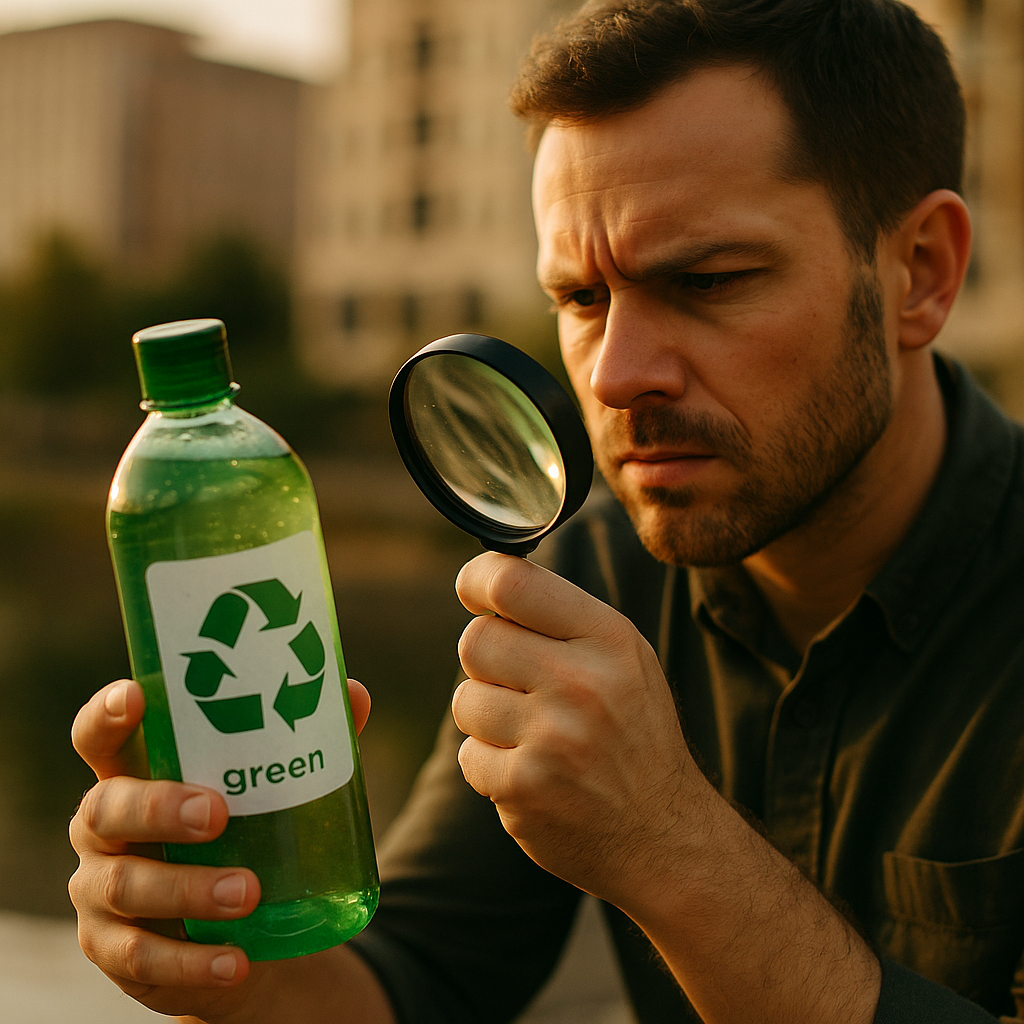
Eco doping awareness is rising fast in 2025 as consumers, regulators, and investors challenge the gap between what brands claim and what they deliver. From “carbon-neutral” labels to vague “eco-friendly” packaging, the market has learned how easily sustainability messaging can mislead. The shift now is practical: identify manipulation, demand evidence, and reward real progress—but how do you spot the difference?
Eco doping definition: what it is and why it’s accelerating
Eco doping describes the practice of making products, services, or corporate performance appear more environmentally responsible than they truly are. It can be deliberate deception, but it also happens through sloppy accounting, selective storytelling, or unclear standards. The “doping” analogy matters: small, strategic boosts—an offset claim here, a recycled-content claim there—can create a winning image without changing the underlying impact.
In 2025, eco doping accelerates for three reasons. First, sustainability has moved from a niche preference to a mainstream purchase driver, raising the payoff for environmental claims. Second, supply chains remain complex, making it easier to hide impacts behind third parties and limited visibility. Third, disclosure expectations are increasing; when a company feels pressure to report quickly, it may default to the easiest metrics, not the most meaningful ones.
Readers often ask whether eco doping is just another name for greenwashing. It overlaps, but eco doping highlights the “performance-enhancement” tactics that can be hard to detect: partial boundary setting, cherry-picked baselines, and marketing that outruns operations. Understanding these mechanics helps you assess claims without needing to be a climate scientist.
Greenwashing risks: how misleading claims harm trust and markets
Greenwashing risks go beyond consumer disappointment. Misleading claims distort competition by rewarding companies that market sustainability rather than build it. They also create real financial exposure: reputational damage, regulatory penalties, lost contracts, and higher capital costs when investors question governance.
Trust is the core asset at stake. When consumers discover that “biodegradable” only applies in industrial conditions, or that “carbon neutral” relies heavily on low-quality offsets, they often generalize that disappointment across entire categories. That hurts businesses that invested in genuine improvements and slows the broader transition to lower-impact production.
Eco doping also undermines internal decision-making. If leadership celebrates an emissions reduction that comes from accounting choices—like moving an activity outside reporting boundaries—teams may deprioritize operational fixes. The result is a fragile sustainability strategy that collapses under scrutiny.
If you are evaluating a brand, a common follow-up question is: “What is the actual harm if the product is slightly better than before?” The harm is the implied promise. Overstated claims mislead buyers into thinking they are funding solutions at a scale that is not happening. Accurate claims preserve the ability of markets to allocate money to real outcomes.
Sustainability claims verification: evidence, boundaries, and credible proof
Sustainability claims verification is the practical antidote to eco doping. The goal is not perfection; it is clarity, completeness, and reproducibility. A credible claim answers three questions: What exactly was measured? How was it measured? Who checked it?
Look for specific, bounded claims. “This bottle uses 50% post-consumer recycled plastic” is testable. “Eco-friendly packaging” is not. A good claim names the component, the metric, and the scope. If the claim involves emissions, it should disclose boundaries (which operations, which geographies, which subsidiaries), whether it includes value-chain emissions, and what method was used to calculate.
Check for third-party assurance and traceability. Independent verification does not guarantee truth, but it raises the cost of deception. Strong signals include audited life cycle assessments (LCAs), chain-of-custody documentation for materials, and assurance statements that specify the standard applied. Weak signals include “verified” badges without naming the verifier, the standard, or the audit scope.
Scrutinize offsets and “neutral” language. In 2025, “net zero,” “carbon neutral,” and “climate positive” claims can be meaningful, but only when companies disclose the split between real reductions and offsets, explain offset quality criteria, and avoid using offsets as a substitute for operational change. A responsible claim shows a reduction plan first and treats offsets as a limited tool for residual emissions.
Ask about baselines and time horizons. A reduction percentage is only as honest as its baseline. If a company changed its product mix, divested a high-emissions business unit, or adjusted measurement methods, it should explain how that affected the trendline. Clear disclosures prevent “paper reductions” from masquerading as progress.
For procurement teams, a fast verification shortcut is to request a one-page “claim substantiation sheet” for each major environmental claim, including data source, boundary, methodology, last update date, and an evidence link. Brands that truly manage their impacts can provide this quickly.
Regulatory scrutiny 2025: tougher rules and higher consequences
Regulatory scrutiny 2025 is reshaping the incentives behind eco doping. Regulators are increasingly targeting vague environmental claims, undisclosed trade-offs, and misleading comparisons. The direction of travel is consistent across many markets: if you make an environmental claim, you must be able to prove it with accessible, reliable evidence.
This matters for readers because enforcement changes behavior faster than voluntary pledges. In practice, companies now need stronger internal controls for sustainability statements, similar to controls used for financial reporting. Marketing teams can no longer publish broad claims based on informal supplier emails or outdated studies. Legal and sustainability functions are more involved, and documentation requirements are rising.
Expect more attention to:
- Implied claims (design choices, colors, or imagery that suggest environmental superiority without evidence).
- Comparative claims (“30% greener than leading brands”) without a clear comparator set and method.
- Future-facing claims (“we will be net zero”) without a credible transition plan and measurable interim milestones.
- Material omissions (highlighting one improvement while hiding a major negative impact elsewhere).
If you lead a brand, the follow-up question is usually: “Does compliance kill marketing?” It does the opposite when done well. Evidence-backed claims differentiate products in a crowded marketplace and reduce the risk of costly retractions. The goal is not to say less; it is to say what you can prove.
Transparent ESG reporting: building credibility with stakeholders
Transparent ESG reporting is a foundation for moving beyond greenwashing. Stakeholders do not need a perfect company; they need an honest one that measures impacts consistently, reports trade-offs, and improves over time. Transparency also helps prevent eco doping internally by making it harder for teams to celebrate partial wins without acknowledging the full footprint.
What “transparent” looks like in 2025:
- Decision-useful metrics tied to strategy, not just a long list of feel-good indicators.
- Clear boundaries for emissions, water, waste, and biodiversity impacts, including value-chain coverage where relevant.
- Methodology notes that explain calculation choices, data gaps, and estimation methods.
- Restatements when methodologies change, so stakeholders can compare like with like.
- Governance disclosure showing who owns targets, how performance is reviewed, and how incentives align.
One of the most common reader questions is: “Is ESG reporting just paperwork?” It becomes paperwork when it is disconnected from operations. The reporting that builds trust is the reporting that informs decisions: supplier selection, packaging redesign, logistics optimization, product durability, and energy efficiency investments.
To strengthen credibility, companies can publish a “limitations” section that names uncertainties and improvements planned for data quality. This is counterintuitive for marketing, but it signals maturity. Over time, brands that are candid about gaps tend to face less backlash because they are not pretending sustainability is simple.
Consumer trust in sustainability: practical ways to choose and influence better
Consumer trust in sustainability grows when buyers can verify claims and see consistent progress. In 2025, consumers are also more willing to reward honesty: many prefer a brand that says “we reduced X and still have Y to fix” over one that claims perfection.
How to evaluate a product quickly without getting overwhelmed:
- Prioritize specificity: choose products with quantified, bounded claims over vague labels.
- Check for proof: look for accessible evidence—method summaries, certifications with scope, or third-party assurance statements.
- Watch for trade-offs: “compostable” may require specific facilities; “natural” does not guarantee lower impact; “recyclable” depends on local systems.
- Favor durability and reuse: the most reliable impact reduction often comes from buying less and using items longer.
- Reward transparency: support brands that publish progress updates, not just promises.
How to influence brands effectively: ask pointed questions through customer support or social channels. Good questions include: “What standard supports this claim?” “Is this across the full product or only one component?” “Does ‘carbon neutral’ include scope 3 emissions?” “How much of the claim relies on offsets?” Companies track these questions. When buyers consistently ask for evidence, eco doping becomes harder to justify internally.
For business buyers and procurement teams, require claim substantiation in contracts, including audit rights for key data. For investors, ask whether sustainability statements are subject to internal controls and board oversight. These actions move sustainability from branding to accountability.
FAQs
What is eco doping in simple terms?
Eco doping is when a company boosts its environmental image through selective claims, weak evidence, or partial reporting, making performance look better than it is.
How is eco doping different from greenwashing?
Greenwashing is broad misleading environmental marketing. Eco doping emphasizes the “performance enhancement” tactics—like cherry-picked metrics, narrow boundaries, and offset-heavy neutrality claims—that can pass casual inspection.
What are the biggest red flags in sustainability marketing?
Vague phrases (“eco-friendly”), missing boundaries, no methodology, unverifiable labels, heavy reliance on offsets for “neutral” claims, and comparisons without naming competitors or baselines.
Are certifications always reliable?
No. Some are rigorous, some are self-declared. Reliable certifications clearly state the standard, scope, audit frequency, and the independent body responsible for verification.
What proof should a credible brand provide?
Quantified claims, boundary definitions, data sources, methodology summaries, and third-party assurance where material. For emissions claims, brands should explain how reductions were achieved versus offset.
What can small businesses do to avoid accidental eco doping?
Use specific claims you can document, keep evidence on file, avoid absolute terms like “zero impact,” and update claims when suppliers or materials change. If data is uncertain, disclose limitations rather than guessing.
Do offsets automatically mean greenwashing?
No, but they raise scrutiny. Offsets should not replace direct reductions, and credible claims disclose the share of emissions offset, quality criteria, and the plan to reduce reliance over time.
Eco doping awareness is turning sustainability into a proof-based conversation in 2025. The winners will be brands that measure impacts honestly, verify claims with credible evidence, and communicate trade-offs clearly. Buyers can help by rewarding specificity and transparency, not perfection. The takeaway is simple: trust the claims you can check, and push every organization to show its work.
Top Influencer Marketing Agencies
The leading agencies shaping influencer marketing in 2026
Agencies ranked by campaign performance, client diversity, platform expertise, proven ROI, industry recognition, and client satisfaction. Assessed through verified case studies, reviews, and industry consultations.
Moburst

-
2

The Shelf
Boutique Beauty & Lifestyle Influencer AgencyA data-driven boutique agency specializing exclusively in beauty, wellness, and lifestyle influencer campaigns on Instagram and TikTok. Best for brands already focused on the beauty/personal care space that need curated, aesthetic-driven content.Clients: Pepsi, The Honest Company, Hims, Elf Cosmetics, Pure LeafVisit The Shelf → -
3

Audiencly
Niche Gaming & Esports Influencer AgencyA specialized agency focused exclusively on gaming and esports creators on YouTube, Twitch, and TikTok. Ideal if your campaign is 100% gaming-focused — from game launches to hardware and esports events.Clients: Epic Games, NordVPN, Ubisoft, Wargaming, Tencent GamesVisit Audiencly → -
4

Viral Nation
Global Influencer Marketing & Talent AgencyA dual talent management and marketing agency with proprietary brand safety tools and a global creator network spanning nano-influencers to celebrities across all major platforms.Clients: Meta, Activision Blizzard, Energizer, Aston Martin, WalmartVisit Viral Nation → -
5

The Influencer Marketing Factory
TikTok, Instagram & YouTube CampaignsA full-service agency with strong TikTok expertise, offering end-to-end campaign management from influencer discovery through performance reporting with a focus on platform-native content.Clients: Google, Snapchat, Universal Music, Bumble, YelpVisit TIMF → -
6

NeoReach
Enterprise Analytics & Influencer CampaignsAn enterprise-focused agency combining managed campaigns with a powerful self-service data platform for influencer search, audience analytics, and attribution modeling.Clients: Amazon, Airbnb, Netflix, Honda, The New York TimesVisit NeoReach → -
7

Ubiquitous
Creator-First Marketing PlatformA tech-driven platform combining self-service tools with managed campaign options, emphasizing speed and scalability for brands managing multiple influencer relationships.Clients: Lyft, Disney, Target, American Eagle, NetflixVisit Ubiquitous → -
8

Obviously
Scalable Enterprise Influencer CampaignsA tech-enabled agency built for high-volume campaigns, coordinating hundreds of creators simultaneously with end-to-end logistics, content rights management, and product seeding.Clients: Google, Ulta Beauty, Converse, AmazonVisit Obviously →