


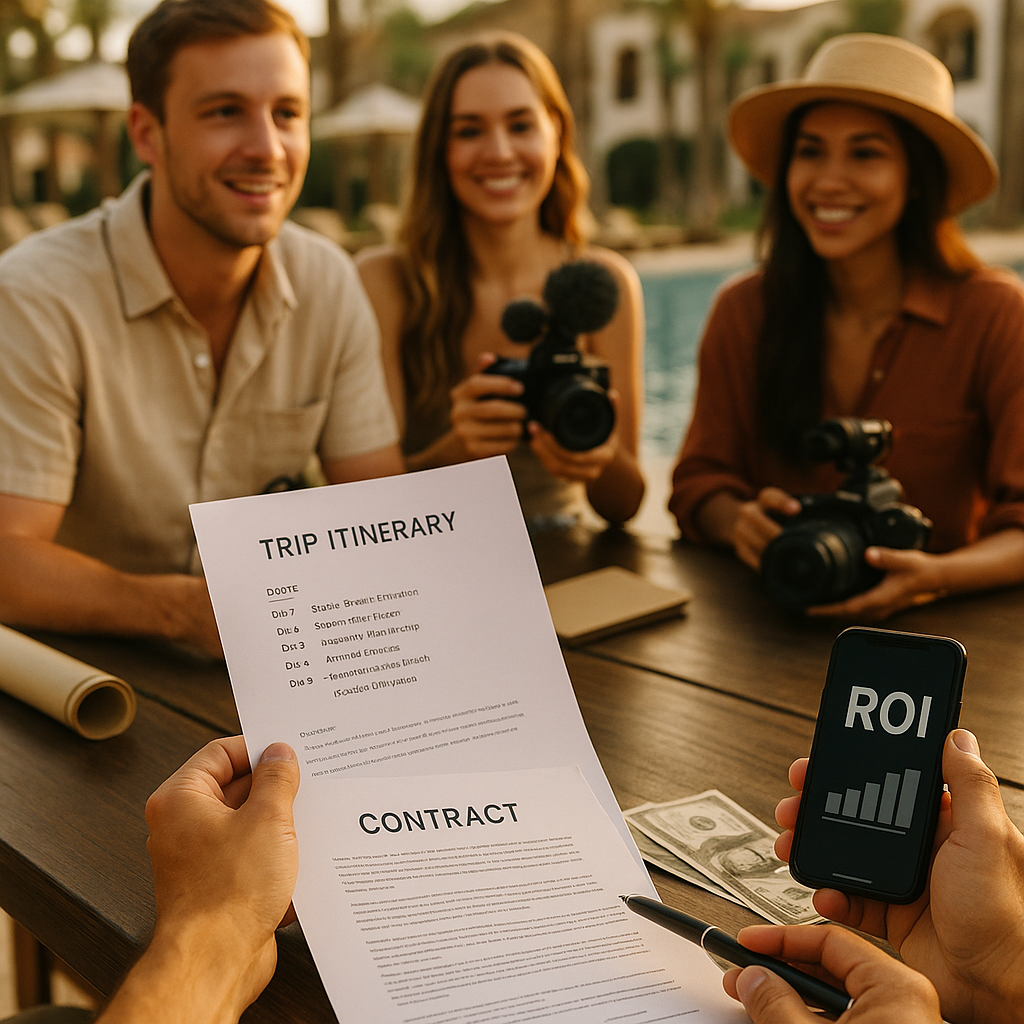
The Brand Trip Arms Race Has a Scaling Problem
Seventy-three percent of marketers who ran creator brand trips in the past eighteen months say they plan to double the number of creators involved, according to CreatorIQ’s benchmark data. But here’s the uncomfortable truth: the playbook most teams are copying — the splashy, curated, twenty-creator getaway — was never designed to scale. Virgin Voyages proved that multi-creator brand trips generate massive earned media. What it didn’t prove is that every brand can replicate that model at two, five, or ten times the volume without the logistics collapsing. Scaling multi-creator brand trips requires a fundamentally different operational architecture than running a single aspirational activation.
Why the “Just Add More Creators” Approach Breaks Down
The instinct is understandable. One trip with fifteen creators performed well, so let’s do three trips with fifty creators each. But volume introduces non-linear complexity.
Travel logistics don’t scale linearly. Fifteen creators flying into one hub means fifteen flight itineraries, dietary requirements, roommate dynamics, and content schedules. Fifty means combinatorial chaos — especially when creators span different time zones, follower tiers, and content verticals. The coordination overhead triples before you even touch creative briefs.
Then there’s the content collision problem. When twenty creators are all posting from the same resort pool on the same afternoon, audiences notice. The content feels manufactured. Engagement drops. The very authenticity that makes brand trips valuable evaporates at scale unless you deliberately stagger posting windows, diversify content angles, and create genuinely distinct experiences within the same event footprint.
The brands winning at high-volume creator events aren’t running bigger trips — they’re running modular micro-experiences under one operational umbrella, each designed for a distinct audience segment and content format.
Operational Logistics: Building the Infrastructure Layer
Let’s get tactical. Scaling multi-creator brand trips demands three operational pillars that most marketing teams underestimate.
1. Tiered experience design. Instead of one monolithic itinerary, build parallel tracks. A beauty brand hosting forty creators at a product launch might run a “deep-dive formulation lab” track for science-focused creators, a “get-ready-with-me suite” for lifestyle creators, and a “behind-the-brand founder dinner” for long-form storytellers. Each track shares venue and logistics infrastructure but produces wildly different content. This approach also lets you apply modular video production principles — one event, dozens of distinct content outputs.
2. A dedicated creator operations lead. This isn’t the influencer marketing manager. This is someone who thinks like an event producer: managing ground transportation manifests, on-site content capture schedules, creator hospitality needs, and real-time problem-solving. For events with more than twenty-five creators, you need this role or you’ll burn out your marketing team.
3. Tech stack for coordination. Spreadsheets break at scale. Teams running high-volume creator events are using platforms like Notion databases with automated reminders, Slack channels segmented by creator cohort, and tools like Grin or GRIN alternatives for contract and deliverable tracking. Some are building custom Airtable workflows that connect travel logistics to content delivery timelines.
One often-missed detail: wifi and charging infrastructure. It sounds trivial until thirty creators are simultaneously trying to upload 4K video from a venue with inadequate bandwidth. Scout connectivity before you sign the venue contract.
Contract Structures That Protect You at Volume
A single-creator partnership agreement doesn’t hold up when you’re contracting thirty or fifty creators for the same activation. The contract framework needs to address scenarios that only emerge at scale.
Content exclusivity windows. When multiple creators attend the same event, you need clear boundaries on when and where they post. Staggered exclusivity — Creator Cohort A posts Days 1-3, Cohort B posts Days 4-6 — prevents the content flood problem and extends the campaign’s organic reach window.
Cancellation and replacement clauses. At volume, no-shows happen. Build contracts that allow substitution with a comparable creator within a defined follower-count and engagement-rate band. Include forfeiture terms for cancellations within a specified window — typically fourteen to twenty-one days.
Usage rights tiers. Not every creator’s content will perform equally. Structure contracts with a base usage right (organic repost for thirty days) and an optional paid media escalation clause that lets you amplify top-performing content through whitelisted ads without renegotiating. This is especially critical if you’re planning to feed event content into a UGC content engine.
Group content provisions. Brand trips inevitably produce collaborative content — creators filming together, group shots, joint live streams. Your contract must specify who owns collaborative content, how each creator can use it, and whether the brand has independent rights to repurpose group footage.
One more thing: payment structures. For high-volume events, consider a hybrid model — a base appearance fee plus performance bonuses tied to content engagement or conversion metrics. This aligns incentives and gives you a lever for revenue attribution from the start.
FTC Disclosure at Scale: Where Most Brands Get Sloppy
Here’s where risk escalates fast. One creator forgetting a #ad disclosure on a single sponsored post is a manageable compliance gap. Twenty creators across two hundred pieces of content over a five-day activation? That’s a pattern the Federal Trade Commission notices.
The FTC’s updated endorsement guidelines make it unambiguous: if a brand provides anything of value — travel, accommodation, meals, products, experiences — that constitutes a material connection requiring clear disclosure. “Gifted trip” doesn’t cut it. “#BrandPartner” buried in a hashtag stack doesn’t cut it. The disclosure must be clear, conspicuous, and unavoidable.
At scale, disclosure compliance can’t rely on creator goodwill. Build it into your operational workflow: pre-formatted caption templates, mandatory disclosure language in contracts with financial penalties for non-compliance, and a real-time monitoring system that flags posts missing required disclosures within sixty minutes of publishing.
For international activations, the complexity multiplies. The UK’s ASA and ICO regulations differ from FTC guidelines. EU-based creators face additional transparency requirements. If you’re flying creators in from multiple jurisdictions, your legal team needs jurisdiction-specific disclosure templates — not a one-size-fits-all hashtag.
Appoint someone on-site whose sole job is compliance monitoring during the event window. Not an intern. Someone with authority to directly message a creator and say, “Your last Reel is missing the required disclosure. Please update within thirty minutes or we’ll need to escalate per our agreement.”
Performance Tracking Beyond Vanity Metrics
The ROI conversation around brand trips has historically been fuzzy. “We got 50 million impressions” sounds impressive until the CFO asks what it actually drove.
High-volume creator events demand a multi-layer measurement framework:
- Content volume and quality scoring. Track total deliverables against contracted minimums. Use an internal quality rubric — brand alignment, production value, narrative structure — to score each piece. This data informs future creator selection.
- Engagement velocity. Don’t just measure total engagement. Measure how quickly engagement accumulates in the first two, six, and twenty-four hours. Rapid initial engagement signals algorithmic amplification potential, which matters for brands planning to boost top content through story arc formats optimized for completion.
- Earned media value with decay tracking. EMV is imperfect, but it’s still a useful directional metric. Track how long event content generates earned impressions after the trip ends. The best activations produce content that keeps surfacing for weeks; mediocre ones spike and flatline within seventy-two hours.
- Conversion attribution. Assign unique UTMs, promo codes, or affiliate links per creator. For e-commerce brands, integrate with Shopify or your commerce platform’s attribution dashboard to track actual revenue generated per creator per piece of content.
- Sentiment and brand lift. Use social listening tools like Sprout Social to measure shifts in brand sentiment during and after the activation window. Compare against a pre-event baseline.
The most sophisticated teams are also tracking “creator network effects” — did attending creators mention the brand organically in the weeks following the event? Did their peers (uninvited creators) reference the trip? These second-order signals indicate whether your activation penetrated creator culture or just produced a batch of sponsored content.
What Comes After the Trip
The biggest mistake in scaling multi-creator brand trips isn’t logistical. It’s treating the event as the end rather than the beginning. Every activation should feed a content flywheel: event footage becomes remixable brand assets, top-performing creators become long-term ambassadors, and performance data sharpens your next activation’s creator selection, venue choice, and experience design.
Build the post-event workflow before the event happens. That’s the difference between a brand trip and a scalable experiential program.
FAQs
How many creators is too many for a single brand trip activation?
There’s no universal cap, but operational complexity increases non-linearly beyond twenty-five creators at a single venue. Most brands scaling beyond that threshold split into cohort-based micro-experiences running on parallel tracks within the same event infrastructure, keeping each cohort between ten and twenty creators for manageable logistics and differentiated content output.
What contract terms are most important for multi-creator brand trips?
Staggered content exclusivity windows, cancellation and substitution clauses, tiered usage rights with paid media escalation options, group content ownership provisions, and hybrid payment structures that combine base fees with performance bonuses are the most critical terms when contracting at volume.
How do you ensure FTC disclosure compliance across dozens of creators simultaneously?
Build compliance into your operational workflow rather than relying on individual creators. Provide pre-formatted caption templates with disclosure language, include financial penalties for non-compliance in contracts, and assign a dedicated on-site compliance monitor who flags and escalates missing disclosures within sixty minutes of publishing.
What metrics should brands track to measure brand trip ROI?
Track content volume against contracted minimums, engagement velocity in the first two to twenty-four hours, earned media value with decay curves, per-creator conversion attribution through unique UTMs or promo codes, brand sentiment shifts via social listening, and second-order creator network effects in the weeks following the event.
How do international creator activations affect disclosure requirements?
Disclosure regulations vary by jurisdiction. US-based activations require FTC-compliant disclosures, UK creators must follow ASA guidelines, and EU creators face additional transparency requirements. Brands hosting international creator events need jurisdiction-specific disclosure templates and legal review for each participating creator’s home market.
Top Influencer Marketing Agencies
The leading agencies shaping influencer marketing in 2026
Agencies ranked by campaign performance, client diversity, platform expertise, proven ROI, industry recognition, and client satisfaction. Assessed through verified case studies, reviews, and industry consultations.
Moburst

-
2

The Shelf
Boutique Beauty & Lifestyle Influencer AgencyA data-driven boutique agency specializing exclusively in beauty, wellness, and lifestyle influencer campaigns on Instagram and TikTok. Best for brands already focused on the beauty/personal care space that need curated, aesthetic-driven content.Clients: Pepsi, The Honest Company, Hims, Elf Cosmetics, Pure LeafVisit The Shelf → -
3

Audiencly
Niche Gaming & Esports Influencer AgencyA specialized agency focused exclusively on gaming and esports creators on YouTube, Twitch, and TikTok. Ideal if your campaign is 100% gaming-focused — from game launches to hardware and esports events.Clients: Epic Games, NordVPN, Ubisoft, Wargaming, Tencent GamesVisit Audiencly → -
4

Viral Nation
Global Influencer Marketing & Talent AgencyA dual talent management and marketing agency with proprietary brand safety tools and a global creator network spanning nano-influencers to celebrities across all major platforms.Clients: Meta, Activision Blizzard, Energizer, Aston Martin, WalmartVisit Viral Nation → -
5

The Influencer Marketing Factory
TikTok, Instagram & YouTube CampaignsA full-service agency with strong TikTok expertise, offering end-to-end campaign management from influencer discovery through performance reporting with a focus on platform-native content.Clients: Google, Snapchat, Universal Music, Bumble, YelpVisit TIMF → -
6

NeoReach
Enterprise Analytics & Influencer CampaignsAn enterprise-focused agency combining managed campaigns with a powerful self-service data platform for influencer search, audience analytics, and attribution modeling.Clients: Amazon, Airbnb, Netflix, Honda, The New York TimesVisit NeoReach → -
7

Ubiquitous
Creator-First Marketing PlatformA tech-driven platform combining self-service tools with managed campaign options, emphasizing speed and scalability for brands managing multiple influencer relationships.Clients: Lyft, Disney, Target, American Eagle, NetflixVisit Ubiquitous → -
8

Obviously
Scalable Enterprise Influencer CampaignsA tech-enabled agency built for high-volume campaigns, coordinating hundreds of creators simultaneously with end-to-end logistics, content rights management, and product seeding.Clients: Google, Ulta Beauty, Converse, AmazonVisit Obviously →