


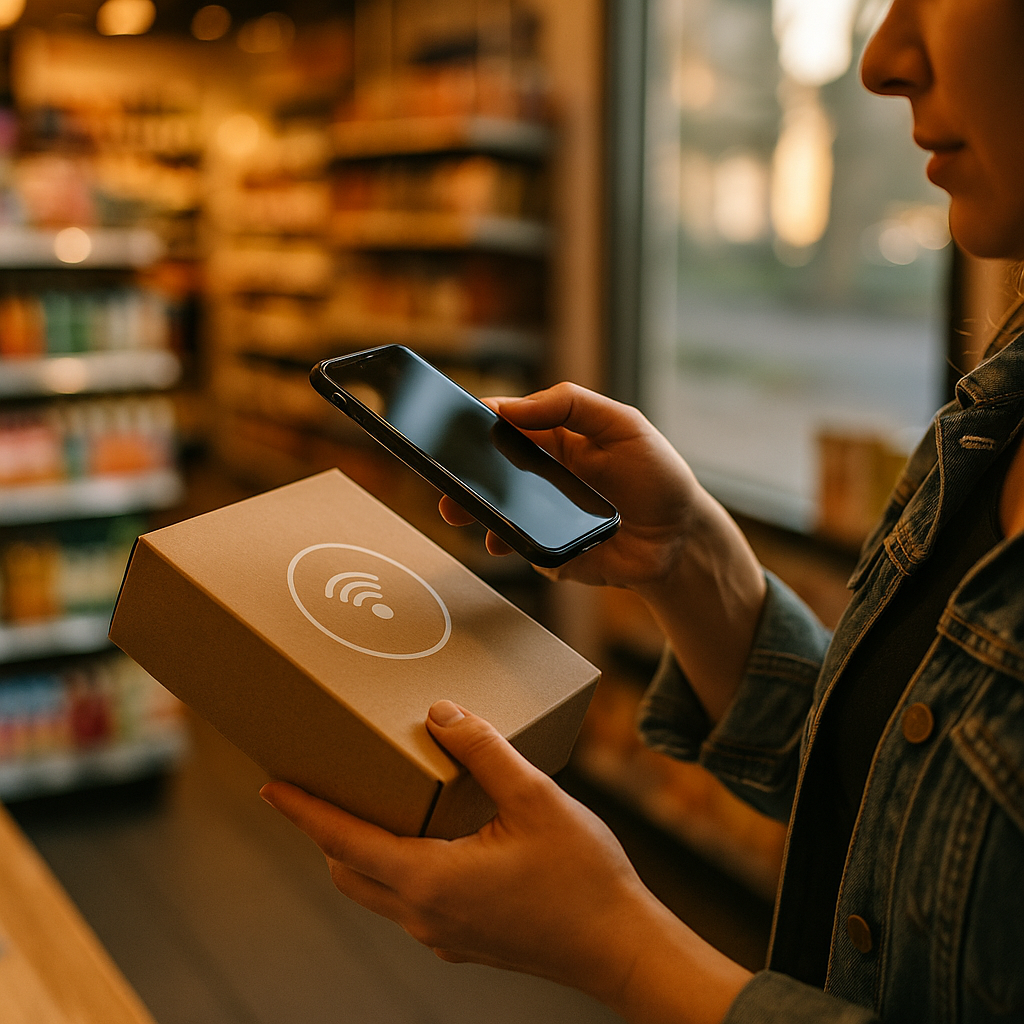
In 2025, loyalty is won after the sale, not at checkout. This case study shows how one mid-market retailer used NFC embedded packaging to turn every product into a re-engagement channel—without relying on discounts or noisy ad retargeting. You’ll see the strategy, rollout, metrics, and governance behind the program, plus practical steps to replicate it. The surprising part: the packaging wasn’t the gimmick—it was the system.
Retail retention strategy: the business problem and baseline
The retailer in this case study sells premium personal care products through its own ecommerce site and a network of regional stores. Its leadership team faced a common retention challenge: first-time buyers were satisfied but not returning quickly enough, and the brand’s paid acquisition costs were rising. They had already optimized the basics—post-purchase email flows, replenishment reminders, and loyalty points—yet repeat purchase rates were flat.
Internally, the team identified three constraints that limited retention improvements:
- Channel saturation: Email and SMS engagement declined as inbox competition increased, especially for replenishment nudges.
- Weak product-to-profile linkage: Many products were bought as gifts or in-store, so the brand could not reliably connect a specific product experience to a known customer.
- Limited “moment of truth” access: The customer’s highest intent moment happened at unboxing and first use—yet the brand had little influence then.
Before adding any new tech, the retailer documented a baseline: repeat purchase rate over 60–90 days, loyalty enrollment rate by channel, customer support contact rate per 1,000 orders, and review submission rate. This mattered for two reasons: it prevented “vanity wins,” and it set up clean measurement once packaging became interactive.
The retention goal was specific: increase second-purchase conversion and accelerate time-to-reorder, while keeping customer experience frictionless. The team decided to test packaging as a new owned channel because it is present at the exact moment of product use—and it reaches customers even when other channels do not.
NFC packaging technology: what they embedded and why it mattered
The retailer chose near-field communication (NFC) tags embedded into product packaging—placed under a small printed callout that read “Tap to verify + personalize.” The tag was not a novelty add-on; it was designed as a durable, repeatable touchpoint that worked for both ecommerce and in-store purchases.
Key implementation choices made the program practical:
- Tag type and placement: NFC inlay embedded between carton layers to reduce tampering and protect aesthetics.
- Tap experience: A mobile web landing page (no app required) to minimize friction.
- Unique IDs: Each unit had a unique identifier to support authentication, segmentation, and fraud monitoring.
- Fallback access: A printed QR code was included on the inside flap for customers with NFC disabled.
The team avoided a common mistake: sending every tap to a generic marketing page. Instead, the landing page detected context (first tap vs. returning tap, product type, purchase channel if known) and served content aligned to customer intent. First tap focused on authenticity, setup, and getting the best results. Subsequent taps emphasized replenishment timing, usage tips, and personalized bundles.
Because retention depends on trust, authentication was a core benefit. Customers could confirm that the item was genuine, see batch details, and learn storage/use guidance. This reduced anxiety for premium products and created a credible reason to tap beyond promotions.
Customer experience design: interactive packaging that earns repeat buys
The retailer treated interactive packaging as a guided journey, not a single landing page. The journey was built around three moments: unboxing, first use, and the “it’s working” stage when customers are most open to repurchase.
1) Unboxing: fast value, not a form. The first screen delivered immediate utility—“Verify product” plus a 20-second setup guide. Only after the customer saw value did the experience offer an optional next step: “Save your preferences for faster refills.”
2) First use: reduce friction and prevent returns. For products with common usage errors, the tap experience offered a quick “Do this, not that” carousel and a “chat with an expert” button that opened a lightweight support form. This lowered avoidable dissatisfaction that typically shows up as negative reviews or returns.
3) The outcome stage: personalization and replenishment. After a customer tapped again days later, the page shifted to progress-based guidance: how to adjust usage, how to pair with complementary items, and when to reorder. Rather than a blunt “Buy again,” the call-to-action offered a personalized refill plan with two options: subscribe-and-save or a one-time refill with a recommended quantity.
To address the reader’s likely question—“Won’t customers ignore it?”—the team designed for motivation. The tap prompt offered three benefits customers actually care about:
- Proof of authenticity (high trust value, especially for premium items)
- Better results through correct usage and pairing
- Convenient refills based on the customer’s routine
Another likely question is “Does this create more work for customer service?” The opposite happened because the landing pages preempted common issues with clear instructions, batch-specific notes, and a structured support intake that captured product ID automatically—reducing back-and-forth.
First-party data and personalization: turning taps into profiles (ethically)
NFC taps can create a powerful bridge between an offline product and a digital relationship, but only if data collection is transparent and respectful. The retailer prioritized consent and clarity, aligning the program with privacy expectations in 2025.
The data approach followed three principles:
- Progressive profiling: Ask for the minimum needed at each step. First tap required no personal data.
- Explicit consent: Email/SMS opt-in was separate from service messages like order status or support updates.
- Customer control: A “Manage my data” link allowed preference updates and opt-out choices.
When customers chose to personalize, they could save two or three details that materially improved outcomes: skin/hair type, sensitivity concerns, and preferred scent intensity. The system then mapped that to product education and reorder recommendations.
On the backend, the retailer connected tap events to its customer data platform using pseudonymous IDs until a customer opted in. For in-store and gifted purchases, this was the missing link: the packaging created a path to become a known customer without forcing a cashier-led sign-up or a high-friction app download.
Importantly, the team used data for helpfulness, not surveillance. They did not build invasive tracking; they focused on content relevance, replenishment timing, and support quality. That decision supported EEAT: customers could see why the brand asked for information and how it improved their experience.
Retention metrics and ROI: what changed after launch
The retailer ran a controlled rollout: two hero SKUs with NFC packaging, two comparable SKUs as controls, and a phased expansion by region. They measured outcomes at the SKU and cohort level to avoid attributing broader seasonal effects to the packaging initiative.
They tracked four metric groups:
- Engagement: tap rate per unit, repeat tap rate, time-to-first-tap, and content completion (e.g., setup guide finished).
- Conversion: second-purchase conversion within the target window, subscribe-and-save adoption, and attach rate for recommended bundles.
- Support and trust: authentication checks, counterfeit flags, return rate, and customer support contacts per 1,000 units.
- Unit economics: margin impact, cost per retained customer, and payback period relative to tag + experience costs.
The most meaningful result was not simply “more taps.” It was higher-quality re-engagement: customers who tapped and completed the usage guidance converted at a significantly higher rate than customers who only saw a promotion. The retailer also saw a measurable lift in loyalty enrollment from in-store buyers, because the packaging finally gave them a self-serve enrollment path.
To answer another common follow-up—“How do you calculate ROI when packaging costs more?”—the retailer treated the incremental packaging cost as a media spend replacement. They compared:
- Incremental gross profit from increased repeat purchases and subscriptions
- Reduction in paid retargeting required to achieve the same repeat rate
- Operational savings from fewer support contacts and lower return rates
The program proved especially efficient for replenishable products. For non-replenishable seasonal items, the retailer used NFC to drive cross-sell into evergreen categories, focusing on education and matching rather than urgency-based discounts.
Implementation playbook and governance: scaling NFC embedded packaging safely
After validating the pilot, the retailer built a cross-functional playbook to scale. This is where many programs fail: the tag works, but governance, content operations, and retailer readiness lag behind.
The scaling plan included:
- Packaging operations: Standardized tag placement, supplier QA, and serialization rules to avoid duplicate IDs.
- Content operations: A modular library of tap experiences by product family—authentication, setup, routine builder, refill plan—so the team could launch new SKUs without reinventing flows.
- Security: Monitoring for unusual tap patterns (e.g., repeated taps in distant geographies) to flag potential diversion or counterfeits.
- Legal and privacy review: Clear consent language, data retention policies, and a documented purpose for each data field collected.
- Retail partner coordination: Training store staff to mention “Tap to verify” at checkout without overselling it as a gimmick.
They also planned for edge cases. If a customer tapped before purchase in a store, the experience offered product benefits and verification without pushing a refill plan. If a customer tapped months later, the page emphasized safe usage, expiration guidance if applicable, and updated recommendations.
Finally, the team ensured credibility: the tap page included brand contact details, support hours, and clear language about what the technology does. That transparency reduced skepticism and improved adoption.
FAQs
What is NFC embedded packaging?
NFC embedded packaging includes an NFC tag placed inside or on a product package. When a customer taps it with a compatible smartphone, it opens a web experience such as product verification, setup guidance, personalization, or reordering—without requiring an app.
Do customers need a special app to use NFC packaging?
No. Most modern smartphones can read NFC tags and open a mobile web page automatically. Many retailers also include a QR code as a fallback for customers who have NFC disabled.
How does NFC packaging improve retention?
It creates a direct, post-purchase channel at the moment of product use. By delivering helpful guidance, authentication, and convenient replenishment options, it increases satisfaction and makes the second purchase easier—especially for customers who are hard to reach via email or ads.
What should the first tap experience include?
Lead with immediate value: authenticity verification, quick-start instructions, and product-specific tips. Avoid forcing account creation before the customer receives value; use progressive profiling only after trust is established.
Is NFC packaging secure and privacy-friendly?
It can be. Use unique IDs, limit data collection to what’s necessary, provide explicit opt-in for marketing, and offer a clear way to manage preferences. Treat tap data as first-party data with strict retention and access controls.
How do you measure ROI for NFC embedded packaging?
Compare incremental profit from higher repeat purchases, subscription adoption, and cross-sell against the incremental cost of tags and experience management. Include operational impacts like fewer support contacts and reduced returns, and compare outcomes to a control group when possible.
Which products benefit most from NFC embedded packaging?
Replenishable and routine-based products tend to see the strongest retention lift because customers benefit from usage guidance and timed refills. Premium items also benefit because authentication and provenance build trust.
By treating NFC as an owned channel rather than a novelty, this retailer improved retention through trust, guidance, and convenient replenishment—not louder promotions. The case study shows a repeatable pattern: design the tap journey around real customer intent, measure against a baseline, and scale with governance. The takeaway is simple: when packaging becomes interactive, every unit can act like a service touchpoint that earns the next purchase.
Top Influencer Marketing Agencies
The leading agencies shaping influencer marketing in 2026
Agencies ranked by campaign performance, client diversity, platform expertise, proven ROI, industry recognition, and client satisfaction. Assessed through verified case studies, reviews, and industry consultations.
Moburst

-
2

The Shelf
Boutique Beauty & Lifestyle Influencer AgencyA data-driven boutique agency specializing exclusively in beauty, wellness, and lifestyle influencer campaigns on Instagram and TikTok. Best for brands already focused on the beauty/personal care space that need curated, aesthetic-driven content.Clients: Pepsi, The Honest Company, Hims, Elf Cosmetics, Pure LeafVisit The Shelf → -
3

Audiencly
Niche Gaming & Esports Influencer AgencyA specialized agency focused exclusively on gaming and esports creators on YouTube, Twitch, and TikTok. Ideal if your campaign is 100% gaming-focused — from game launches to hardware and esports events.Clients: Epic Games, NordVPN, Ubisoft, Wargaming, Tencent GamesVisit Audiencly → -
4

Viral Nation
Global Influencer Marketing & Talent AgencyA dual talent management and marketing agency with proprietary brand safety tools and a global creator network spanning nano-influencers to celebrities across all major platforms.Clients: Meta, Activision Blizzard, Energizer, Aston Martin, WalmartVisit Viral Nation → -
5

The Influencer Marketing Factory
TikTok, Instagram & YouTube CampaignsA full-service agency with strong TikTok expertise, offering end-to-end campaign management from influencer discovery through performance reporting with a focus on platform-native content.Clients: Google, Snapchat, Universal Music, Bumble, YelpVisit TIMF → -
6

NeoReach
Enterprise Analytics & Influencer CampaignsAn enterprise-focused agency combining managed campaigns with a powerful self-service data platform for influencer search, audience analytics, and attribution modeling.Clients: Amazon, Airbnb, Netflix, Honda, The New York TimesVisit NeoReach → -
7

Ubiquitous
Creator-First Marketing PlatformA tech-driven platform combining self-service tools with managed campaign options, emphasizing speed and scalability for brands managing multiple influencer relationships.Clients: Lyft, Disney, Target, American Eagle, NetflixVisit Ubiquitous → -
8

Obviously
Scalable Enterprise Influencer CampaignsA tech-enabled agency built for high-volume campaigns, coordinating hundreds of creators simultaneously with end-to-end logistics, content rights management, and product seeding.Clients: Google, Ulta Beauty, Converse, AmazonVisit Obviously →