


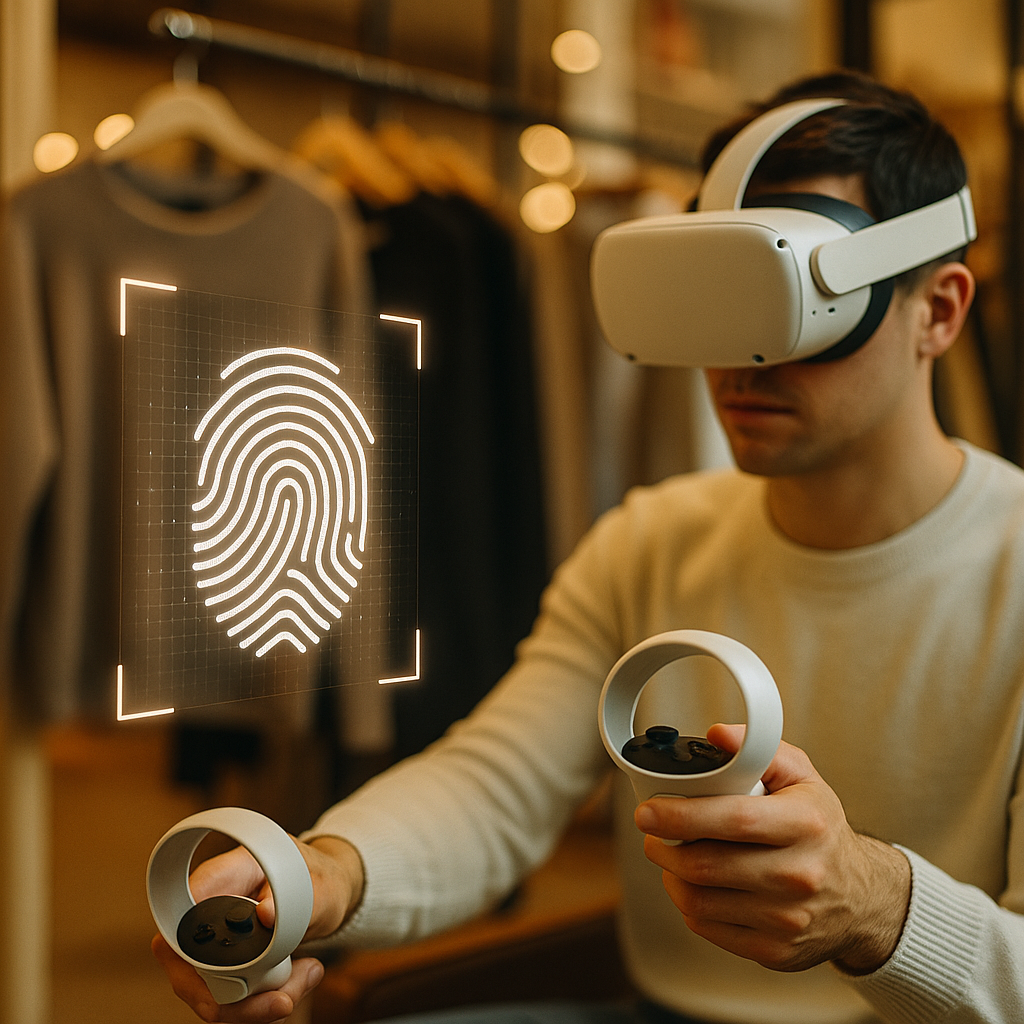
Virtual reality shopping is moving from novelty to mainstream, and the stakes for personal data protection are rising fast. In 2025, shoppers expect immersive experiences without surrendering sensitive signals from their bodies and behaviors. This guide to Navigating Biometric Data Privacy in Virtual Reality Shopping Hubs explains what gets collected, why it matters, and how to control it—before you step into your next virtual mall.
Biometric data privacy: what VR shopping hubs collect (and why)
VR shopping hubs work by translating human movement and attention into a responsive environment. That responsiveness often depends on biometric and biometric-adjacent data. Understanding the categories is the first step to making informed choices.
Common biometric data in VR commerce includes:
- Eye tracking and gaze patterns (where you look, how long you fixate, saccades, pupil dilation). Used for foveated rendering, product placement testing, and attention analytics.
- Facial expressions (smiles, frowns, micro-expressions) captured via inward-facing cameras or inferred from sensors. Used to drive avatars, measure emotional reactions, and personalize experiences.
- Voiceprints and speech characteristics (tone, cadence, accent, stress markers). Used for voice search, customer support, and identity verification.
- Body movement and gait (hand tracking, head movement, posture, walking patterns). Used for navigation, “try-on” interactions, and anti-fraud signals.
- Physiological signals (heart rate, skin conductance) when devices or peripherals support it. Used for wellness add-ons, adaptive experiences, or experimental marketing research.
In VR, these data streams are not merely “inputs”; they can become identifiers. A persistent pattern of movement, gaze, and voice can be highly distinctive, enabling re-identification even if a platform claims data is “anonymized.” If the hub links those signals to purchase history, location, device IDs, or payment tokens, the privacy impact compounds.
Why do platforms want this data? Typically for performance (rendering efficiency), security (account protection), personalization (recommendations, sizing), and measurement (conversion analytics). Each use case can be legitimate, but each also raises questions you should expect the platform to answer: What is collected? Is it necessary? How long is it retained? Who can access it?
Virtual reality shopping hubs: key risks shoppers and brands must manage
Biometric data in VR is sensitive because it can reveal health status, emotional responses, disabilities, stress levels, and more—often without the person realizing the inference is possible. The highest-impact risks in VR shopping environments tend to fall into six buckets.
- Unwanted profiling and manipulation: Attention and emotion analytics can be used to test which visuals or messages trigger impulse decisions. When combined with dynamic pricing or “limited time” nudges, this can cross the line into coercive design.
- Re-identification: Even if a hub strips obvious identifiers, unique behavioral patterns (gait + hand motion + gaze timing) may re-link the data to a person when combined with other datasets.
- Security breaches: Biometric templates are difficult to change; you can’t “reset” your face or gait the way you reset a password. A leak can have long-lasting consequences.
- Secondary use and data sharing: Data collected for rendering or avatar animation can later be used for marketing, sold, or shared with analytics vendors unless strict limits exist.
- Children and sensitive groups: VR hubs may attract minors and vulnerable users. Collecting biometrics from them often triggers stricter legal duties and higher ethical expectations.
- Cross-context tracking: When one account is used across social VR, gaming, and shopping, the hub can correlate identity, interests, and behavior across contexts, amplifying privacy risk.
Brands operating storefronts in VR face their own follow-up questions: “Do we receive biometric data from the platform?” and “Are we responsible if the platform misuses it?” In many cases, the platform is the primary collector, but brands may still receive aggregated analytics, session recordings, heatmaps, or “engagement scores.” If those outputs can be linked to individuals, they can become regulated personal data.
VR eye tracking consent: how to make it meaningful and compliant
Consent in VR cannot be buried in a long policy or a single “Accept” button at first launch. Because biometric signals are continuous and high-dimensional, meaningful consent needs to be specific, informed, and easy to change.
What good consent looks like in VR shopping:
- Just-in-time prompts: Ask at the moment of first use. Example: when a user enters “virtual try-on,” prompt for face or body scanning with clear purpose and retention info.
- Separate toggles by data type: Eye tracking for rendering should not automatically enable eye tracking for advertising measurement. Use distinct switches with plain-language labels.
- Equal experience where possible: If users decline biometrics, provide a functional alternative (manual sizing, controller navigation) unless the feature truly cannot work without the data.
- Revocation that actually stops collection: Turning a toggle off should stop capture and delete or de-identify previously collected data where feasible, with transparent exceptions (e.g., fraud logs).
- Clear retention windows: “We store raw gaze vectors for X hours for performance debugging, then keep only aggregated metrics” is more trustworthy than “as long as necessary.”
Practical check for shoppers: If a VR hub asks for eye tracking access, look for a screen that distinguishes “device performance” from “personalization/ads.” If it doesn’t, assume the broadest use and decide accordingly.
Practical check for operators: Consent should be auditable. Store records of what a user agreed to, when, and which version of the notice was displayed. This supports accountability if regulators or partners ask for proof.
Data minimization in VR retail: retention, anonymization, and security controls
Data minimization is the most reliable privacy strategy in immersive commerce: collect less, keep it for less time, and protect it better. In VR shopping, this principle needs to be translated into concrete engineering and governance decisions.
Minimize at the source:
- Prefer on-device processing for eye tracking, hand tracking, and expression detection when possible. Send only what is needed to run the experience.
- Use derived, bounded outputs instead of raw streams. For example, send “selected item ID” rather than continuous gaze coordinates.
- Disable default recording of sessions, audio, and movement unless a user explicitly opts in (e.g., to save a fitting profile).
Retention that matches purpose:
- Short-lived raw data: Keep raw biometric streams only long enough to provide the feature or resolve immediate technical issues.
- Aggregated analytics by design: Convert data into cohort-based metrics that cannot reasonably be traced to a single person.
- Deletion workflows: Provide a self-serve path to delete profiles (including derived templates) and confirm completion.
Anonymization with caution:
In VR, “anonymized” often means “pseudonymized.” Movement signatures, voice characteristics, and gaze rhythms can re-identify users, especially when combined with purchases or device identifiers. If you cannot confidently prevent re-identification, treat the data as personal and apply full protections.
Security controls that fit biometric sensitivity:
- Encrypt in transit and at rest, with strict key management and separation of duties.
- Least-privilege access: Limit who can access raw signals, and log access with real-time alerts for unusual behavior.
- Template protection: If biometric templates are stored, protect them like credentials—segmented storage, hardened environments, and rapid incident response plans.
- Vendor risk management: If analytics providers process engagement or gaze data, require contractual limits, security attestations, and deletion commitments.
For readers wondering “What’s the one control that matters most?”: in practice, keeping raw biometric data off servers (or retaining it for the shortest time possible) reduces both breach impact and temptation for secondary use.
Privacy by design for immersive commerce: governance, auditing, and transparency
EEAT-aligned privacy content is not about slogans; it’s about demonstrable practices. Whether you are a VR platform operator, a retailer with a virtual storefront, or a developer integrating SDKs, strong governance is what makes privacy claims credible.
Operational practices that build trust:
- Data mapping: Maintain a living inventory of what biometric signals are collected, where they flow, and which teams and vendors touch them.
- Purpose limitation: Document the allowed uses (e.g., “avatar animation,” “fraud prevention”) and block unapproved uses in code and contracts.
- Independent reviews: Use internal privacy/security reviews for each new feature that touches biometrics. For higher-risk features, obtain third-party assessments and publish summaries.
- Dark pattern avoidance: Do not pressure users into enabling biometrics via degraded performance, confusing language, or repeated pop-ups. Make “No” durable.
- Incident readiness: Prepare playbooks for biometric-related incidents, including user notifications, containment steps, and vendor coordination.
Transparency that answers real questions:
Most users don’t want legal prose; they want clear answers: What do you collect? For what purpose? Who sees it? How long do you keep it? How do I turn it off? Provide an in-VR privacy panel with readable summaries and deeper links, plus an external page for researchers and regulators.
Special note for retailers inside third-party hubs:
If you run a branded store within a VR marketplace, ask the platform for a data-sharing specification. Ensure your team understands whether you receive session identifiers, replay clips, voice transcripts, or biometric-derived engagement metrics. If you don’t need it, decline it. If you do, publish a clear explanation and offer opt-outs.
Consumer rights in VR platforms: choices, access requests, and red flags
Shoppers in 2025 have rising expectations—and in many regions, legal rights—around access, deletion, correction, portability, and opting out of certain data uses. Even where laws differ, the practical steps for protecting yourself in VR are similar.
Actions shoppers can take immediately:
- Audit permissions: In headset and app settings, review camera, microphone, eye tracking, body tracking, and health-related permissions. Turn off anything not essential.
- Use guest mode when available: If you want to browse without personalization, choose guest sessions and avoid linking social accounts.
- Limit saved profiles: Avoid saving face/body scans for “quick try-on” unless you trust the provider’s retention and deletion controls.
- Request copies and deletion: Use the platform’s privacy center to request your data. Ask specifically for biometric-derived profiles, not just purchase history.
- Watch for cross-context linkage: If one toggle controls data across gaming, social VR, and shopping, treat it as a higher-risk ecosystem.
Red flags in VR shopping hubs:
- Biometrics required to enter the store without a clear technical reason.
- Vague purposes like “improving our services” without details.
- No retention information or no deletion pathway for templates/profiles.
- “Anonymized” claims paired with individualized recommendations and persistent identifiers.
- Third-party ad network access to real-time sensor streams or precise behavioral telemetry.
For readers asking, “Should I stop using VR shopping entirely?”: you don’t have to. The smarter approach is to choose platforms that offer granular controls, clear explanations, minimal default collection, and independent security posture indicators.
FAQs: biometric privacy in VR shopping
Is eye tracking in VR considered biometric data?
Often, yes. Eye tracking can uniquely identify people and can reveal sensitive information about attention and possible health conditions. Even when used for performance features, it should be treated as sensitive and controlled with clear settings and purpose limits.
Can a VR shopping hub sell my biometric data?
It depends on the platform’s policies and applicable laws, but you should assume sharing is possible unless it is explicitly prohibited. Look for statements that restrict selling or sharing biometric signals and verify there are opt-outs for advertising measurement and analytics.
What’s the difference between raw biometric data and biometric templates?
Raw data is the original stream (e.g., continuous gaze coordinates or camera images). A template is a processed representation used for recognition or repeated matching. Templates can be less bulky than raw data but may be more dangerous if breached because they enable identification at scale.
Do retailers inside VR malls receive my biometric information?
Sometimes they receive only aggregated analytics; sometimes they can receive session-level metrics that may be linkable to you. A trustworthy hub should disclose what merchants can access and provide controls to limit merchant-level tracking.
How can I shop in VR with better privacy without losing functionality?
Start by disabling nonessential tracking (ad measurement, personalization) while keeping performance-related features if separated. Use guest sessions, avoid saving biometric profiles, and choose hubs that offer in-VR privacy dashboards with real-time indicators when sensors are active.
What should companies do before launching a VR “virtual try-on” feature?
Perform a privacy and security review focused on necessity, local processing, retention limits, and user choice. Provide just-in-time consent, store the minimum possible data, secure any templates like credentials, and publish a clear explanation of how scans are used and deleted.
VR commerce will keep expanding in 2025, and biometric signals will remain central to immersive convenience. The safest path is not blind trust or blanket avoidance, but disciplined control: collect less, separate purposes, and give users real choices. Whether you’re shopping or building, prioritize transparent consent, short retention, and strong security—then enjoy the experience with confidence.
Top Influencer Marketing Agencies
The leading agencies shaping influencer marketing in 2026
Agencies ranked by campaign performance, client diversity, platform expertise, proven ROI, industry recognition, and client satisfaction. Assessed through verified case studies, reviews, and industry consultations.
Moburst

-
2

The Shelf
Boutique Beauty & Lifestyle Influencer AgencyA data-driven boutique agency specializing exclusively in beauty, wellness, and lifestyle influencer campaigns on Instagram and TikTok. Best for brands already focused on the beauty/personal care space that need curated, aesthetic-driven content.Clients: Pepsi, The Honest Company, Hims, Elf Cosmetics, Pure LeafVisit The Shelf → -
3

Audiencly
Niche Gaming & Esports Influencer AgencyA specialized agency focused exclusively on gaming and esports creators on YouTube, Twitch, and TikTok. Ideal if your campaign is 100% gaming-focused — from game launches to hardware and esports events.Clients: Epic Games, NordVPN, Ubisoft, Wargaming, Tencent GamesVisit Audiencly → -
4

Viral Nation
Global Influencer Marketing & Talent AgencyA dual talent management and marketing agency with proprietary brand safety tools and a global creator network spanning nano-influencers to celebrities across all major platforms.Clients: Meta, Activision Blizzard, Energizer, Aston Martin, WalmartVisit Viral Nation → -
5

The Influencer Marketing Factory
TikTok, Instagram & YouTube CampaignsA full-service agency with strong TikTok expertise, offering end-to-end campaign management from influencer discovery through performance reporting with a focus on platform-native content.Clients: Google, Snapchat, Universal Music, Bumble, YelpVisit TIMF → -
6

NeoReach
Enterprise Analytics & Influencer CampaignsAn enterprise-focused agency combining managed campaigns with a powerful self-service data platform for influencer search, audience analytics, and attribution modeling.Clients: Amazon, Airbnb, Netflix, Honda, The New York TimesVisit NeoReach → -
7

Ubiquitous
Creator-First Marketing PlatformA tech-driven platform combining self-service tools with managed campaign options, emphasizing speed and scalability for brands managing multiple influencer relationships.Clients: Lyft, Disney, Target, American Eagle, NetflixVisit Ubiquitous → -
8

Obviously
Scalable Enterprise Influencer CampaignsA tech-enabled agency built for high-volume campaigns, coordinating hundreds of creators simultaneously with end-to-end logistics, content rights management, and product seeding.Clients: Google, Ulta Beauty, Converse, AmazonVisit Obviously →