


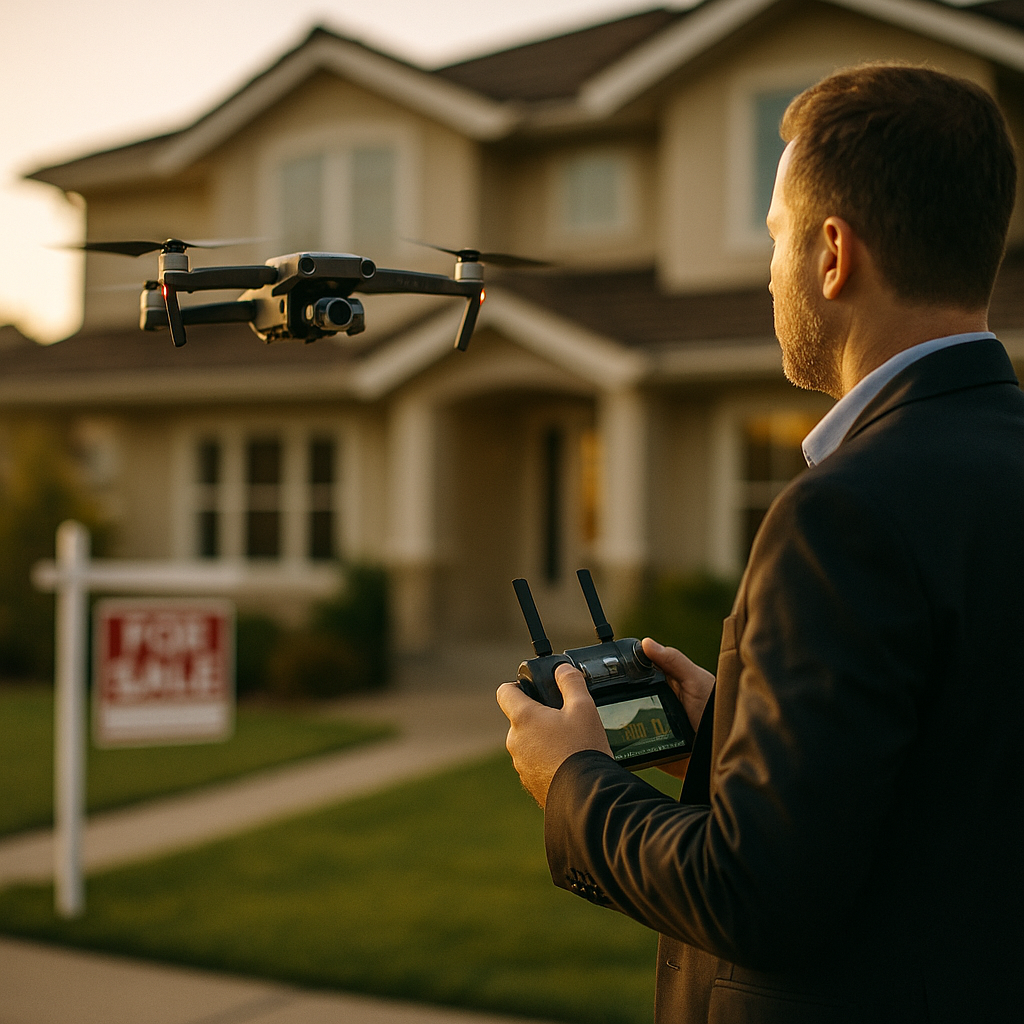
In 2025, property buyers expect proof, not promises. This case study shows how one regional brokerage used drone footage, 360 tours, and disciplined distribution to create faster decisions and cleaner leads. The primary keyword—real estate drone video marketing—fits because visuals drove measurable sales outcomes, not just prettier listings. Want to see what changed, what it cost, and what worked?
Drone real estate photography: the business challenge and baseline metrics
HarborView Realty (a mid-sized, multi-office brokerage in a coastal metro) faced a familiar problem: high listing volume, uneven agent marketing quality, and shrinking attention spans across portals and social platforms. Buyers were requesting virtual tours more often, while sellers were comparing agencies by their ability to “make the property look premium.” The brand’s marketing director also noticed that price reductions were clustering around homes where buyers arrived with unrealistic expectations about views, lot lines, and proximity to amenities.
Before the new program, HarborView relied on a standard kit: interior photos, a short walk-through video (shot on a phone or basic gimbal), and a floor plan for only higher-end listings. The baseline over the previous two quarters showed:
- Longer time-to-offer for mid-market homes because buyers needed multiple showings to confirm layout, light, and neighborhood context.
- Inconsistent lead quality from portals—many inquiries were “curiosity clicks” that never scheduled a showing.
- Seller churn at renewal time when expectations were not met or when a competing agency promised more sophisticated media.
The goal was not to create cinematic art. The goal was operational: improve buyer understanding before they showed up, increase qualified inquiries, and standardize listing presentation so that every agent benefited from the brand’s credibility.
360 virtual tour for real estate: the content strategy and buyer journey
HarborView mapped the buyer journey into three moments where visual clarity changes behavior:
- Discovery: buyers scroll quickly. They need a reason to stop.
- Consideration: buyers compare multiple homes and ask, “Will this fit our daily life?”
- Decision: buyers need confidence—layout, condition, and context must feel verified.
The team built a listing content stack designed to answer the questions buyers typically ask in messages and showings:
- Drone overview (30–60 seconds) to show approach roads, lot boundaries, slope, proximity to parks/water, and surrounding density. This reduced the “surprise factor” that often kills interest after the first visit.
- 360 virtual tour to let buyers self-qualify on layout, room connections, and natural light. The tour included labels for room dimensions and key upgrades (roof age, HVAC type, window replacements) so the tour delivered practical information, not just visuals.
- Short vertical highlights (15–25 seconds) for social, built from the same shoot day. These clips focused on one claim at a time (for example, “east-facing balcony,” “walkable to transit,” “renovated kitchen workflow”) to avoid vague marketing language.
Importantly, HarborView defined what media should not do. The brand prohibited deceptive wide-angle distortion and banned “beauty-only” color grading that made interiors look brighter than reality. This protected trust with buyers and reduced the risk of disappointment at showings—an EEAT-aligned choice because it prioritizes accuracy and usefulness.
The marketing director also introduced a simple rule: each piece of media must answer a buyer question. If a clip did not clarify something a buyer cares about—space, flow, condition, privacy, parking, noise exposure—it was cut.
Real estate videography with drones: production workflow, compliance, and costs
HarborView tested two operating models: outsourcing all video versus building a hybrid team. They chose a hybrid approach that balanced speed, quality control, and risk management.
Team setup:
- A contracted drone operator for aerial work and complex airspace coordination.
- An in-house content producer trained to capture interiors and 360 tours, manage shot lists, and keep projects on schedule.
- A part-time editor (contract) using brand templates to produce consistent outputs quickly.
Compliance and safety were treated as non-negotiable. The brokerage documented flight permissions, respected no-fly zones, and kept standard operating procedures for weather, bystanders, and client privacy. They also built a “neighbor privacy checklist” to avoid filming private backyards or identifiable people.
Standard package pricing was created so agents could stop improvising. Instead of every agent choosing a different vendor, the brand offered three tiers:
- Essentials: professional photos + 360 tour.
- Signature: Essentials + drone overview + vertical highlights.
- Showcase: Signature + guided 360 walkthrough narration and neighborhood “context reel.”
Cost control came from batching and templates. The producer scheduled “shoot routes” by neighborhood, and the editor used repeatable motion graphics (address card, floor plan overlay, key features). That approach reduced rework and prevented agents from requesting endless custom edits.
To answer a common follow-up question—does drone and 360 replace showings?—HarborView positioned it as a filter, not a substitute. The aim was fewer wasted showings and more serious ones. Agents reported that when buyers did tour in person, conversations shifted from “Where is the second bedroom?” to “How quickly can we move?”
Real estate marketing ROI: distribution, SEO, and lead capture
HarborView treated media as a publishing system, not a one-time upload. Their distribution plan focused on the channels where buyers already search, while also building long-term search visibility for the brokerage.
On-site SEO structure:
- Each listing page embedded the 360 tour above the fold and placed the drone video near the map section to connect visuals with location.
- Pages used descriptive, human-first copy (schools, commute options, noise considerations, parking) to match buyer search intent and reduce thin content.
- Media files used clear naming conventions and descriptive text so the site remained accessible and search-friendly.
Lead capture design:
- A “Request the full disclosure pack” form was added beneath the 360 tour. It offered practical documents (inspection summary if available, upgrade list, HOA basics, utility estimates when permitted) rather than generic “Contact us.”
- Buyers could book a showing from within the tour page, reducing friction after they had already explored the home.
Portal and social strategy:
- Portals received the cleanest version: accurate walk-through and 360 links to qualify buyers.
- Social received vertical clips that highlighted one benefit and directed viewers to the full 360 tour on the website—moving attention from rented platforms to owned assets.
HarborView also built “neighborhood evergreen pages” featuring drone context reels and concise guides (parking norms, beach access rules, trailheads, commute realities). This supported EEAT by demonstrating local expertise and gave the brand durable pages that could rank beyond individual listings.
In internal reporting, the team tracked three types of ROI, not just one:
- Marketing ROI: cost per qualified inquiry and conversion to showing.
- Sales ROI: time-to-offer and list-to-sale price stability.
- Brand ROI: seller appointment win rate and agent adoption of standard packages.
Luxury real estate drone video: results, insights, and what surprised the team
After rolling out the Signature and Showcase packages to most listings above a defined price threshold—and selectively to mid-market homes with views, acreage, or complex layouts—HarborView saw consistent improvements in buyer behavior.
What improved (based on the brokerage’s internal dashboards across multiple offices):
- Higher-quality inquiries: messages included specific references to the tour (“We saw the office nook by the stairs…”) which indicated deeper engagement.
- Fewer “wrong-fit” showings: agents spent less time on buyers who misunderstood layout, elevation, or neighborhood density.
- More confident seller conversations: listing presentations shifted from subjective claims to tangible proof—agents could show consistent examples of how the brand markets homes.
What surprised them was where drone footage mattered most. It was not only for luxury waterfront homes. Drone context solved problems on ordinary properties too—corner lots, properties near commercial corridors, homes with steep driveways, and any listing where “privacy” or “distance to amenities” required verification. Buyers appreciated transparency, even when the context was imperfect.
What did not work at first:
- Overlong videos: early edits tried to include every room twice. Completion rates dropped. The fix was tight sequencing: exterior context, key living spaces, primary suite, and a closing shot that anchors location.
- Too much music, not enough information: buyers wanted clarity on upgrades and layout. The team added on-screen labels and brief, factual captions.
- Agent-by-agent customization: letting each agent choose a different style slowed production and diluted brand trust. Templates increased speed and consistency.
To strengthen EEAT further, HarborView standardized a “truth check” before publishing: verify that captions match disclosures, avoid unsubstantiated superlatives, and confirm that any neighborhood claims (walk time, access) are realistic. This reduced compliance risk and improved buyer trust.
Real estate 360 video tour: implementation checklist for other brokerages
If you want to replicate HarborView’s results, focus on system design, not gear obsession. A simple camera can outperform a complex setup when the workflow is reliable and the information is accurate.
Implementation checklist:
- Define the goal: fewer wasted showings, faster decisions, better seller win rate, or higher lead quality. Choose one primary goal and two secondary goals.
- Standardize packages: create tiers with clear deliverables and timelines so agents stop reinventing marketing for every listing.
- Build a shoot-day playbook: shot list, lighting basics, declutter guidance for sellers, and a 10-minute “context capture” plan for the neighborhood.
- Get compliance right: use qualified operators where required, respect privacy, and document permissions.
- Optimize the listing page: place 360 tours prominently, add practical captions, and pair drone footage with maps and context.
- Measure what matters: track inquiry quality, showing-to-offer conversion, and time-to-offer. Don’t rely on views alone.
Common reader question: Should every listing get drone and 360? Not necessarily. Prioritize homes where context or layout is a frequent objection: large lots, view corridors, multi-level floor plans, unique renovations, rural access, and any property where the neighborhood setting is a major part of the value.
FAQs
Do drone videos actually help sell homes faster?
They can, when the footage clarifies context buyers care about (lot lines, views, approach roads, proximity to amenities) and when it’s paired with accurate listing information. Drone video works best as a qualifier that reduces uncertainty before a showing.
What’s the difference between a 360 tour and a standard walkthrough video?
A walkthrough video is linear—viewers watch what you show them. A 360 tour is interactive—buyers explore at their own pace, revisit rooms, and check transitions between spaces. That self-serve behavior often produces more qualified inquiries.
How do you use 360 tours without misleading buyers?
Use realistic camera heights, avoid extreme distortion, label key features accurately, and align captions with disclosures. Show the honest context—tight hallways, smaller bedrooms, or nearby roads—so buyers arrive with correct expectations.
Where should the drone and 360 content live for best results?
Host the most complete experience on your own website listing page to capture leads and control presentation. Then distribute shorter versions to portals and social platforms that drive viewers back to the full tour and showing scheduler.
Is drone footage only for luxury listings?
No. It’s especially useful for properties where location context is the product: corner lots, acreage, hillside homes, proximity to commercial areas, or any listing where privacy, parking, or access is a concern.
What should a brokerage measure to prove ROI?
Track inquiry-to-showing conversion, showing-to-offer conversion, time-to-offer, share-of-listings using the standardized package, and seller appointment win rate. Views and likes are secondary unless they correlate with qualified actions.
HarborView Realty’s rollout shows that drones and 360 tours succeed when they answer buyer questions, standardize quality, and lead viewers to clear next steps. In 2025, transparency is a competitive advantage: accurate visuals reduce uncertainty and improve lead quality. Treat media as a repeatable system—production, compliance, distribution, and measurement—and your listings can convert with fewer wasted showings.
Top Influencer Marketing Agencies
The leading agencies shaping influencer marketing in 2026
Agencies ranked by campaign performance, client diversity, platform expertise, proven ROI, industry recognition, and client satisfaction. Assessed through verified case studies, reviews, and industry consultations.
Moburst

-
2

The Shelf
Boutique Beauty & Lifestyle Influencer AgencyA data-driven boutique agency specializing exclusively in beauty, wellness, and lifestyle influencer campaigns on Instagram and TikTok. Best for brands already focused on the beauty/personal care space that need curated, aesthetic-driven content.Clients: Pepsi, The Honest Company, Hims, Elf Cosmetics, Pure LeafVisit The Shelf → -
3

Audiencly
Niche Gaming & Esports Influencer AgencyA specialized agency focused exclusively on gaming and esports creators on YouTube, Twitch, and TikTok. Ideal if your campaign is 100% gaming-focused — from game launches to hardware and esports events.Clients: Epic Games, NordVPN, Ubisoft, Wargaming, Tencent GamesVisit Audiencly → -
4

Viral Nation
Global Influencer Marketing & Talent AgencyA dual talent management and marketing agency with proprietary brand safety tools and a global creator network spanning nano-influencers to celebrities across all major platforms.Clients: Meta, Activision Blizzard, Energizer, Aston Martin, WalmartVisit Viral Nation → -
5

The Influencer Marketing Factory
TikTok, Instagram & YouTube CampaignsA full-service agency with strong TikTok expertise, offering end-to-end campaign management from influencer discovery through performance reporting with a focus on platform-native content.Clients: Google, Snapchat, Universal Music, Bumble, YelpVisit TIMF → -
6

NeoReach
Enterprise Analytics & Influencer CampaignsAn enterprise-focused agency combining managed campaigns with a powerful self-service data platform for influencer search, audience analytics, and attribution modeling.Clients: Amazon, Airbnb, Netflix, Honda, The New York TimesVisit NeoReach → -
7

Ubiquitous
Creator-First Marketing PlatformA tech-driven platform combining self-service tools with managed campaign options, emphasizing speed and scalability for brands managing multiple influencer relationships.Clients: Lyft, Disney, Target, American Eagle, NetflixVisit Ubiquitous → -
8

Obviously
Scalable Enterprise Influencer CampaignsA tech-enabled agency built for high-volume campaigns, coordinating hundreds of creators simultaneously with end-to-end logistics, content rights management, and product seeding.Clients: Google, Ulta Beauty, Converse, AmazonVisit Obviously →