


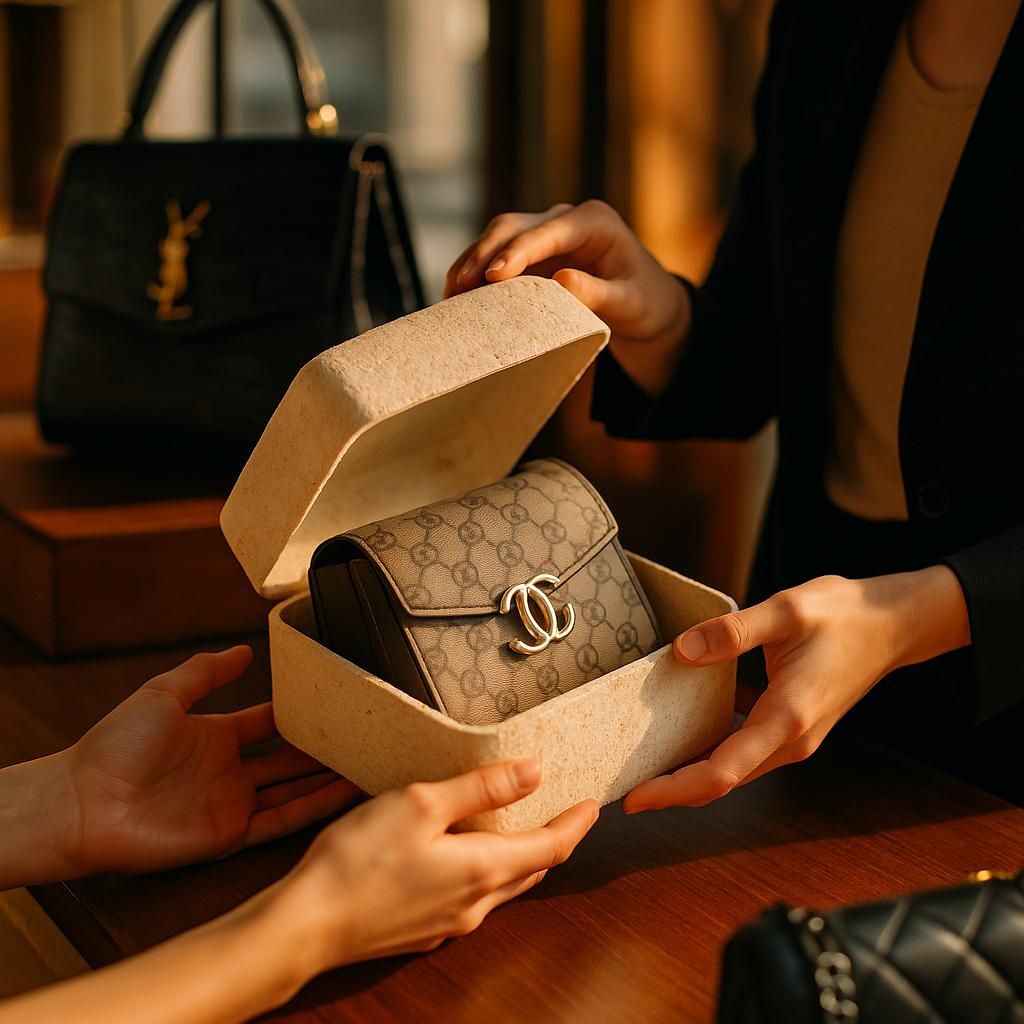
Luxury brands face a hard contradiction in 2025: customers expect pristine presentation, while regulators and investors demand measurable waste reduction. This case study explains how Ecovative used mycelium packaging to meet both goals without sacrificing the unboxing experience. You’ll see the product decisions, client objections, proof points, and rollout steps that helped convert premium accounts—and what your team can copy next.
Luxury sustainable packaging: the market pressure and the premium opportunity
Luxury packaging has historically relied on rigid plastics, dense foams, laminates, and high-ink finishes that protect products and signal status. In 2025, that “more material equals more value” playbook is colliding with three forces that luxury teams can’t ignore.
First, regulation is tightening. Extended producer responsibility (EPR) programs and packaging waste rules are expanding across key markets, pushing brands to prove recyclability, reduce problematic materials, and finance end-of-life costs. Even when luxury items ship in small volumes, the per-unit packaging impact is high, and the scrutiny is intense.
Second, corporate procurement is changing. Many luxury houses now operate inside global groups with sustainability scorecards. Packaging teams increasingly need auditable data: material composition, carbon footprint, supplier traceability, and third-party certifications. Vague “eco” claims no longer pass internal review.
Third, consumer expectations have matured. Premium buyers still want a flawless unboxing, but they also dislike waste and greenwashing. They look for packaging that feels intentional, not apologetic. That creates a premium opportunity: if a brand can make sustainability visible, tactile, and credible, it can enhance perceived value rather than dilute it.
This is the gap Ecovative targeted: not “cheaper packaging,” but better packaging—protective, designable, and aligned with luxury brand risk standards.
Mycelium packaging material: what Ecovative built and why it appealed to luxury
Mycelium is the root-like structure of fungi. Ecovative’s approach uses mycelium as a natural binder that grows through agricultural byproducts, forming a lightweight, foam-like structure. From a luxury client’s perspective, the material matters less than the outcomes: protection performance, fit-and-finish, repeatability, and credible sustainability.
Why the material profile resonates with premium buyers:
- Soft-touch protection with structure. Mycelium packaging can cushion, brace, and immobilize products, reducing scuffs and micro-movements that ruin luxury presentation.
- Distinctive texture. Instead of hiding the material, luxury brands can make it a signature element. The organic surface reads as crafted, not mass-produced foam.
- Material story that’s easy to understand. “Grown” packaging is intuitive for consumers and gives communications teams a clear narrative without resorting to confusing chemistry claims.
- End-of-life alignment. Mycelium-based protective packaging is commonly positioned for compostability scenarios, which helps brands replace foams that are difficult to recycle at home. Luxury brands still need to match claims to local infrastructure, but the direction of travel is clear.
Luxury procurement also evaluates supplier maturity. Ecovative’s credibility comes from operating as a specialist in mycelium materials with repeatable processes, testing discipline, and the ability to collaborate with packaging engineers. Luxury clients are not buying novelty; they are buying reduced risk.
Eco-friendly luxury brands: how Ecovative addressed objections and won trust
Premium accounts rarely say yes on the first meeting. They ask hard questions because the cost of failure is high: damaged goods, brand embarrassment, and supply disruption. Ecovative’s win pattern typically depends on answering five objections with evidence, not enthusiasm.
Objection 1: “Will it protect like EPS or molded pulp?”
Ecovative positions mycelium as an engineered protective component, not a decorative insert. The conversation stays in packaging engineering terms: drop performance, vibration, compression, and fit. Luxury teams want to know what happens after weeks in a parcel network and multiple handoffs. Winning requires structured testing: lab drops plus real lane trials, with clear pass/fail criteria agreed in advance.
Objection 2: “Will it look consistent?”
Luxury brands fear variation. Ecovative counters by setting expectations early: mycelium has a natural aesthetic, but it can be standardized in form factor, density ranges, and surface outcomes within defined tolerances. The key is to treat it like any material specification, with quality checkpoints and acceptance sampling. Luxury clients respond when the supplier speaks in measurable controls.
Objection 3: “Will it shed, smell, or contaminate the product?”
The “luxury nose test” is real. Ecovative succeeds when it validates odor neutrality for the application, demonstrates clean handling, and designs inserts to avoid friction points that could dust or abrade. This is also where packaging format matters: wrapping, tissue, or barriers can be integrated to match luxury presentation standards.
Objection 4: “What about scaling and lead times?”
Luxury launches are date-driven. Ecovative wins trust by planning capacity, clarifying tooling/mold timelines, and offering phased adoption. Instead of promising instant full conversion, the company helps brands target high-impact SKUs first (gift sets, fragile items, seasonal launches), then expand once operations stabilize.
Objection 5: “Can we defend the sustainability claims?”
Legal and compliance teams demand precision. Successful projects use careful language backed by documentation: material inputs, production methods, and disposal guidance that matches customer realities. Ecovative’s role is to support the client’s substantiation needs so marketing does not overreach.
Across these objections, a consistent theme emerges: Ecovative sells risk reduction through proof. Luxury clients sign when their internal stakeholders—packaging engineering, quality, sustainability, legal, and brand—can all say “yes” for their own reasons.
Protective packaging innovation: the pilot-to-rollout playbook Ecovative used
Luxury packaging programs typically move through gated stages. Ecovative’s success comes from treating each stage as a deliverable with clear decision criteria, not an open-ended experiment.
1) Select a high-visibility, high-waste use case.
Ecovative often targets protective inserts currently made from foam, because that swap creates immediate sustainability impact while preserving protection. Luxury gift sets, fragrance, skincare glass, and small leather goods are common candidates because the insert shapes are well-defined and the unboxing moment is important.
2) Co-design the insert around the product and the brand.
Winning luxury clients requires more than “it fits.” The insert must support brand cues: clean edges, intentional reveal, and alignment with outer packaging. Ecovative’s approach emphasizes custom-fit geometry so the product sits with confidence, not wobble. Teams also address consumer handling: how the item is lifted out, where fingers go, and whether the insert can be removed cleanly.
3) Run performance tests that mirror real distribution.
Lab validation is necessary but not sufficient. The strongest pilots add lane testing: shipments through actual carriers, typical fulfillment practices, and real seasonal conditions. The goal is to surface failure modes early: corner impacts, compression in overpacked cages, humidity shifts, or box size mismatch.
4) Validate manufacturing and QA.
Luxury clients expect tight tolerances. Ecovative’s rollout discipline includes defined inspection points, packaging line compatibility checks, and clear storage/handling guidance. This is where projects can stall if a brand’s co-packer needs process changes. Ecovative wins when it anticipates these operational constraints and designs around them.
5) Build the internal business case.
Luxury buyers will pay for performance, but they still want clarity. A credible case includes: damage reduction projections, avoided costs from foam alternatives, EPR or compliance benefits, and brand value. Procurement also needs supplier reliability data. Ecovative strengthens the story by giving clients documentation they can share internally, reducing the burden on sustainability managers.
6) Launch with consumer communication that matches reality.
Luxury brands are cautious about claims. The best launches provide clear disposal instructions, explain why the material looks different than foam, and frame the tactile texture as a design choice. When consumers understand what they are holding, the “premium” feeling increases rather than decreases.
Brand storytelling and packaging design: turning sustainability into a luxury cue
Luxury clients don’t just buy performance; they buy signal. Ecovative’s mycelium packaging works best when the brand integrates it into a coherent design narrative that feels exclusive and intentional.
Make the material a feature, not an apology.
If mycelium is hidden under layers of paper to look like conventional foam, the brand loses the differentiation. Many luxury brands instead use a “gallery” approach: the product sits in a minimal outer box, and the mycelium insert becomes a sculptural cradle. The texture suggests craft and material honesty—two cues that increasingly define modern luxury.
Use precise language that passes legal review.
In 2025, sustainability messaging needs restraint. Strong brands avoid broad statements like “100% eco.” They use specific, verifiable phrasing, supported by supplier documentation, and they tailor disposal guidance to the markets they ship to. This protects the brand and prevents consumer confusion.
Answer the buyer’s silent questions inside the unboxing.
Luxury consumers wonder: “Why does this look different?” and “What do I do with it?” A small insert card or printed inner flap can explain that the packaging is grown from natural inputs, designed for protection, and intended for responsible end-of-life. That reduces support tickets and improves satisfaction.
Link the packaging choice to product values.
Mycelium packaging tends to resonate most when it mirrors the product story: natural ingredients, craftsmanship, limited editions, or a brand’s material innovation. When packaging and product values align, the change feels like an upgrade rather than a compromise.
Packaging procurement strategy: pricing, supply chain, and how luxury brands can replicate the win
If you want the same outcome—premium clients adopting a new protective material—focus on procurement realities. Ecovative’s case highlights practical steps that reduce friction and speed adoption.
Start with a portfolio strategy, not a blanket conversion.
Luxury teams should segment SKUs by fragility, volume, and brand visibility. Begin where mycelium delivers the clearest value: foam replacements, high damage-risk items, and high-visibility gift sets. This approach creates internal momentum and avoids overextending operations.
Plan for tooling and design iterations.
Custom protective packaging is a product in itself. Budget time for sampling, tolerance tuning, and line trials. Define who owns decisions at each gate: packaging engineering for performance, brand for aesthetics, sustainability for claims, and procurement for commercial terms.
Model total cost, not unit cost.
Mycelium inserts may not always beat foam on per-piece price. Luxury brands justify the switch through total value: reduced damage and returns, improved customer experience, avoided compliance risks, and stronger brand preference. Put these factors into a shared scorecard so the decision isn’t reduced to cents.
Secure documentation early for EEAT-level credibility.
Helpful, trustworthy content—and trustworthy procurement—depend on evidence. Ask for material specifications, safety and handling guidance, and substantiation support for any environmental claims you plan to make. Align internal legal review before launch messaging is drafted.
Prepare operations for a new material.
Train co-packers on how to handle inserts, store them, and avoid damaging edges during packing. Confirm how the insert interacts with tissue, ribbons, and other luxury elements. The best outcomes happen when the packaging line is designed around the insert, not forced to tolerate it.
Takeaway for procurement leaders: the winning move is to treat mycelium packaging as a premium protective system with measurable requirements, not as a sustainability add-on.
FAQs: Ecovative and mycelium packaging for luxury clients
-
What is mycelium packaging, in simple terms?
It is protective packaging grown using fungal mycelium as a natural binder that forms a lightweight, foam-like structure around a mold. It is designed to replace conventional protective foams in certain use cases.
-
Why would a luxury brand choose mycelium over traditional foam?
Luxury brands choose it to reduce reliance on hard-to-recycle foams while maintaining protection and creating a distinctive, premium tactile experience. It can also support more credible sustainability storytelling when claims are properly substantiated.
-
Does mycelium packaging protect fragile luxury products during shipping?
It can, when the insert is engineered for the product and validated through drop, compression, and lane testing. Protection depends on fit, geometry, and the full packaging system, not the material alone.
-
How do brands manage consistency and quality control with a grown material?
They define measurable specifications (dimensions, density ranges, tolerances), run acceptance sampling, and conduct packaging line trials. Treating it like any other engineered component helps ensure repeatability.
-
Is mycelium packaging compostable everywhere?
End-of-life options depend on local infrastructure and the specific product design. Brands should provide disposal guidance that matches the markets they ship to and avoid broad claims that consumers cannot act on.
-
What is the best way to start a pilot for luxury applications?
Start with one or two high-visibility SKUs that currently use foam inserts, co-design a custom cradle, agree on test criteria, and run both lab and real-world distribution trials. Use results to build an internal scorecard for scaling.
Luxury brands in 2025 don’t adopt new materials because they sound interesting; they adopt them because they reduce risk and elevate the brand experience. Ecovative won luxury clients by engineering mycelium inserts to perform, documenting claims to satisfy legal and sustainability teams, and designing an unboxing narrative that feels premium. The takeaway is practical: prove protection, control quality, and communicate honestly—then sustainability becomes a luxury advantage.
Top Influencer Marketing Agencies
The leading agencies shaping influencer marketing in 2026
Agencies ranked by campaign performance, client diversity, platform expertise, proven ROI, industry recognition, and client satisfaction. Assessed through verified case studies, reviews, and industry consultations.
Moburst

-
2

The Shelf
Boutique Beauty & Lifestyle Influencer AgencyA data-driven boutique agency specializing exclusively in beauty, wellness, and lifestyle influencer campaigns on Instagram and TikTok. Best for brands already focused on the beauty/personal care space that need curated, aesthetic-driven content.Clients: Pepsi, The Honest Company, Hims, Elf Cosmetics, Pure LeafVisit The Shelf → -
3

Audiencly
Niche Gaming & Esports Influencer AgencyA specialized agency focused exclusively on gaming and esports creators on YouTube, Twitch, and TikTok. Ideal if your campaign is 100% gaming-focused — from game launches to hardware and esports events.Clients: Epic Games, NordVPN, Ubisoft, Wargaming, Tencent GamesVisit Audiencly → -
4

Viral Nation
Global Influencer Marketing & Talent AgencyA dual talent management and marketing agency with proprietary brand safety tools and a global creator network spanning nano-influencers to celebrities across all major platforms.Clients: Meta, Activision Blizzard, Energizer, Aston Martin, WalmartVisit Viral Nation → -
5

The Influencer Marketing Factory
TikTok, Instagram & YouTube CampaignsA full-service agency with strong TikTok expertise, offering end-to-end campaign management from influencer discovery through performance reporting with a focus on platform-native content.Clients: Google, Snapchat, Universal Music, Bumble, YelpVisit TIMF → -
6

NeoReach
Enterprise Analytics & Influencer CampaignsAn enterprise-focused agency combining managed campaigns with a powerful self-service data platform for influencer search, audience analytics, and attribution modeling.Clients: Amazon, Airbnb, Netflix, Honda, The New York TimesVisit NeoReach → -
7

Ubiquitous
Creator-First Marketing PlatformA tech-driven platform combining self-service tools with managed campaign options, emphasizing speed and scalability for brands managing multiple influencer relationships.Clients: Lyft, Disney, Target, American Eagle, NetflixVisit Ubiquitous → -
8

Obviously
Scalable Enterprise Influencer CampaignsA tech-enabled agency built for high-volume campaigns, coordinating hundreds of creators simultaneously with end-to-end logistics, content rights management, and product seeding.Clients: Google, Ulta Beauty, Converse, AmazonVisit Obviously →