


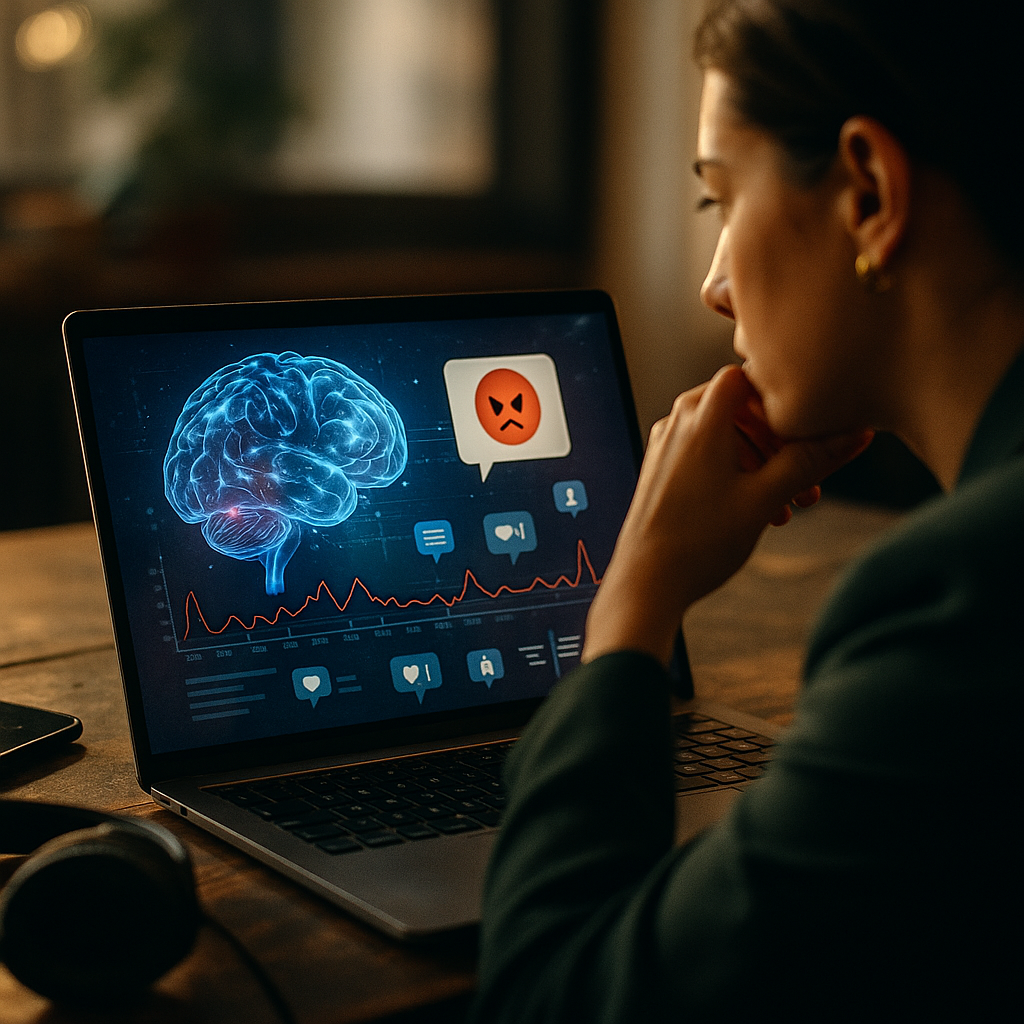
AI Powered Narrative Hijacking Detection helps brands spot and stop coordinated attempts to twist their stories, values, and customer expectations across social, news, and creator ecosystems. In 2025, attention moves faster than corporate comms, and narrative attacks often look like “authentic conversation” until damage is done. This guide explains how detection works, what to monitor, and how to respond without amplifying misinformation—before the next spark becomes a wildfire.
Brand protection strategy: what narrative hijacking is and why it’s rising
Narrative hijacking happens when external actors steer public conversation about your brand toward a goal that benefits them: reputational harm, political leverage, financial fraud, or competitive disruption. Unlike standard negative feedback, hijacking has an intent to reshape meaning—often by reframing a real event, stitching together unrelated clips, or injecting false claims into legitimate discussions.
In 2025, three forces make narrative hijacking more frequent and more effective:
- Frictionless content creation: Short-form video editing, voice cloning, and templated “exposé” formats reduce the effort needed to create persuasive narratives.
- Algorithmic amplification: Engagement-driven feeds can reward outrage, creating a rapid escalation path from niche communities to mainstream coverage.
- Fragmented trust: Audiences may trust creators or private groups more than official brand channels, especially during uncertainty.
Brands often ask: “Isn’t this just crisis communications?” Not exactly. Crisis comms is what you do after an issue breaks. A brand protection strategy for narrative hijacking focuses on early detection, intent assessment, and precision response—so you don’t overreact, underreact, or inadvertently spread the claim further.
Social listening and misinformation: the signals humans miss at scale
Traditional social listening tracks mentions, sentiment, share of voice, and influencer reach. Those metrics still matter, but they frequently miss narrative hijacking because hijackers rarely rely on direct brand mentions. Instead, they use:
- Dog whistles and euphemisms: Nicknames, misspellings, and coded phrases that evade keyword alerts.
- Indirect association: “A major retailer” or “that airline” paired with recognizable imagery.
- Meme formats: Screenshots, stitched clips, and image macros where the text exists inside media, not in searchable captions.
- Cross-platform propagation: A claim originates in a small forum, moves to creators, then hits mainstream platforms and search.
Narrative hijacking also differs from everyday criticism by its coordination patterns—sudden repetition of the same framing, synchronized posting windows, or clusters of accounts that share unusually similar phrasing. Humans can identify these patterns, but not fast enough when the volume spikes or when the attack spreads across channels and languages.
For brand teams, the practical question is: “What should we monitor?” In addition to mentions, monitor themes (what people claim happened), frames (how they interpret it), and calls to action (boycotts, doxxing, harassment, refund runs, or “report this brand” campaigns). Misinformation often becomes damaging when it turns into action.
AI risk monitoring: how narrative hijacking detection works in 2025
AI risk monitoring for narrative hijacking blends machine learning, language models, and graph analytics to detect not just words, but the story behind them. A robust system typically includes these capabilities:
- Semantic clustering: Groups posts by meaning, even when the wording differs. This surfaces emerging storylines before they trend.
- Narrative trajectory tracking: Measures how a storyline evolves—new “evidence,” shifting villains, or changing demands—often indicating manipulation.
- Multi-modal analysis: Extracts signals from images, video frames, and audio transcripts to catch claims embedded in media.
- Source and network analysis: Maps who seeded the story, who amplified it, and which communities bridge it into broader audiences.
- Anomaly detection: Flags unusual surges in volume, velocity, or coordination relative to your baseline.
Brands also need classification that matches operational decisions. A helpful detection model doesn’t just label something as “negative.” It distinguishes, for example:
- Legitimate complaint: Real customer experience requiring support remediation.
- Rumor: Unverified claim with organic spread; may warrant clarification.
- Misinformation: False claim that can be disproven with evidence; response should be measured to avoid amplification.
- Impersonation/fraud narrative: Scams using your brand name; requires rapid security and platform escalation.
- Coordinated manipulation: Repeated framing from linked accounts; requires cross-functional incident handling.
Expect your legal and comms leaders to ask: “Can we trust AI?” Use an analyst-in-the-loop approach. AI should prioritize and summarize evidence, but trained reviewers validate high-impact alerts. This aligns with EEAT: expertise governs the final decision, and the system produces auditable reasoning rather than opaque labels.
Another follow-up: “Will AI create false alarms?” Good programs set tiered thresholds. Low-confidence alerts go to monitoring queues; high-confidence, high-impact alerts trigger escalation only when multiple signals align (semantic cluster growth, credible amplification nodes, and measurable reach beyond baseline).
Crisis response workflow: from detection to decision without amplifying the story
Detection only protects you if it leads to the right action at the right time. A modern crisis response workflow for narrative hijacking is designed to be fast, evidence-led, and proportionate.
1) Triage within minutes
- Assess harm: Is there risk to customer safety, financial fraud, regulatory exposure, or employee security?
- Assess spread: Which platforms, which geographies, and which audience segments?
- Assess credibility: Is the claim anchored to a real event, a misinterpreted artifact, or a fabricated “proof”?
2) Build an evidence pack
- Source timeline: First known posts, key amplification moments, and top spreaders.
- Claim taxonomy: What exactly is being alleged? Separate primary claim from secondary insinuations.
- Proof check: Validate media (reverse image search, metadata where available, transcript verification), and compare against internal records.
3) Choose the least-amplifying effective response
- No public response: When the narrative is confined and engagement is low; focus on monitoring and platform reporting.
- Targeted correction: Reply where the claim is gaining traction, using neutral language and verifiable facts.
- Proactive clarification: Publish a concise statement in your owned channels when the story is crossing into mainstream awareness.
- Safety-first escalation: If the narrative triggers harassment, doxxing, or credible threats, involve security and law enforcement contacts per policy.
4) Coordinate internally
High-performing teams pre-assign roles: comms drafts, legal reviews, security handles abuse/scams, customer support receives macros, and product or ops confirms facts. Your AI system should route alerts to the right owners with context, not just links.
5) Measure impact and learn
After action, track whether the narrative is declining, mutating, or migrating to other channels. Save the final “story graph” and decision log. This improves future detection and demonstrates due diligence to executives and regulators.
Reputation management and trust: building resilience with EEAT-aligned practices
Reputation management is not about “winning the internet.” It’s about sustaining trust with customers, partners, employees, and regulators. EEAT principles—experience, expertise, authoritativeness, and trustworthiness—translate into concrete brand safeguards in 2025:
- Experience: Show what you did, not what you feel. Document actions taken (refund policy steps, safety checks, supplier audits) in plain language.
- Expertise: Use qualified spokespeople. For product safety, use your safety lead; for privacy, your security or compliance lead.
- Authoritativeness: Centralize canonical updates on your site and link to them consistently so search and platforms have a stable source of truth.
- Trustworthiness: Provide evidence, timestamps, and what you still don’t know. Overconfident denials without proof can backfire.
Brands also ask: “How do we respond without sounding defensive?” Use a structured message:
- Lead with the verified fact (what is true).
- Address the claim specifically (what is false or unverified).
- Provide a next step (where updates will live; how customers can confirm authenticity; how to report scams).
For creator-driven narratives, prioritize relationship-based correction. If a creator unknowingly repeats misinformation, a private outreach with evidence can resolve it faster than a public confrontation. Reserve public rebuttals for high-reach or high-risk claims.
Governance, compliance, and implementation: deploying narrative defense responsibly
AI systems that monitor public discourse must be deployed with clear governance. This protects customers’ rights and reduces legal and reputational risk.
Data and privacy boundaries
- Prefer public data and respect platform terms.
- Minimize retention and store only what you need for evidence and audit trails.
- Separate monitoring from targeting; the goal is brand safety, not manipulating individuals.
Model governance and auditability
- Explainable alerts: Each flag should show why it triggered (cluster growth, coordination score, top claims, key sources).
- Human approval gates: Require review before escalating to legal action, takedown campaigns, or paid counter-messaging.
- Bias checks: Ensure models do not disproportionately flag communities or dialects as “coordinated” without evidence.
Operational readiness
- Run tabletop exercises: Simulate a hijacked narrative across platforms, including fake “evidence” video and an impersonation scam branch.
- Prebuild response assets: Verified account lists, scam-reporting instructions, a media authentication page, and customer support macros.
- Define escalation SLAs: For fraud or safety narratives, aim for minutes-to-hours, not days.
Choosing tools and partners
Whether you build or buy, require: multi-modal capability, cross-platform coverage, language support relevant to your markets, and strong security controls. Ask vendors how they evaluate model performance, handle false positives, and provide audit logs. The best solutions integrate with your ticketing and incident management systems, so detection becomes action.
FAQs on narrative hijacking detection and brand protection
What is the difference between narrative hijacking and a PR crisis?
Narrative hijacking is an intentional attempt to redirect meaning and public interpretation, often through misinformation or coordinated framing. A PR crisis may be accidental or operational. Hijacking detection focuses on early narrative signals, coordination, and story evolution, not only sentiment or mentions.
How quickly can AI detect a hijacked narrative?
With real-time ingestion and semantic clustering, systems can flag emerging storylines within minutes of initial spread, especially when there is unusual velocity or repeated framing. Human validation is still essential before major actions.
Will responding publicly make the misinformation spread further?
It can. Use a least-amplifying approach: correct only when reach and risk justify it, keep statements concise, avoid repeating the false claim in headlines, and publish a canonical fact page you can reference consistently.
What channels should brands monitor in 2025?
Prioritize major social platforms, video-first networks, forums, app store reviews, news and blogs, and search results. Include creator ecosystems and smaller communities where narratives often originate before they trend.
How do we handle deepfakes or edited videos used against our brand?
Use multi-modal detection to extract frames and transcripts, verify against internal records, and publish evidence-based clarifications. Coordinate with platform trust and safety teams for takedown requests when content violates policies, and provide customers a method to verify authentic brand communications.
What metrics prove the program is working?
Track time-to-detect, time-to-triage, reduction in narrative reach after intervention, number of scam reports resolved, false-positive rate, and the percentage of incidents with complete audit trails. Also measure business outcomes such as reduced support contact spikes and improved brand trust indicators.
AI-powered detection gives brands a practical advantage: it reveals emerging storylines, coordination patterns, and risky claims before they harden into “common knowledge.” In 2025, the winning approach pairs automation with expert review, clear governance, and a measured response plan that avoids amplifying misinformation. Build your monitoring, escalation, and evidence workflows now—so the next narrative attack becomes a manageable incident, not a reputation reset.
Top Influencer Marketing Agencies
The leading agencies shaping influencer marketing in 2026
Agencies ranked by campaign performance, client diversity, platform expertise, proven ROI, industry recognition, and client satisfaction. Assessed through verified case studies, reviews, and industry consultations.
Moburst

-
2

The Shelf
Boutique Beauty & Lifestyle Influencer AgencyA data-driven boutique agency specializing exclusively in beauty, wellness, and lifestyle influencer campaigns on Instagram and TikTok. Best for brands already focused on the beauty/personal care space that need curated, aesthetic-driven content.Clients: Pepsi, The Honest Company, Hims, Elf Cosmetics, Pure LeafVisit The Shelf → -
3

Audiencly
Niche Gaming & Esports Influencer AgencyA specialized agency focused exclusively on gaming and esports creators on YouTube, Twitch, and TikTok. Ideal if your campaign is 100% gaming-focused — from game launches to hardware and esports events.Clients: Epic Games, NordVPN, Ubisoft, Wargaming, Tencent GamesVisit Audiencly → -
4

Viral Nation
Global Influencer Marketing & Talent AgencyA dual talent management and marketing agency with proprietary brand safety tools and a global creator network spanning nano-influencers to celebrities across all major platforms.Clients: Meta, Activision Blizzard, Energizer, Aston Martin, WalmartVisit Viral Nation → -
5

The Influencer Marketing Factory
TikTok, Instagram & YouTube CampaignsA full-service agency with strong TikTok expertise, offering end-to-end campaign management from influencer discovery through performance reporting with a focus on platform-native content.Clients: Google, Snapchat, Universal Music, Bumble, YelpVisit TIMF → -
6

NeoReach
Enterprise Analytics & Influencer CampaignsAn enterprise-focused agency combining managed campaigns with a powerful self-service data platform for influencer search, audience analytics, and attribution modeling.Clients: Amazon, Airbnb, Netflix, Honda, The New York TimesVisit NeoReach → -
7

Ubiquitous
Creator-First Marketing PlatformA tech-driven platform combining self-service tools with managed campaign options, emphasizing speed and scalability for brands managing multiple influencer relationships.Clients: Lyft, Disney, Target, American Eagle, NetflixVisit Ubiquitous → -
8

Obviously
Scalable Enterprise Influencer CampaignsA tech-enabled agency built for high-volume campaigns, coordinating hundreds of creators simultaneously with end-to-end logistics, content rights management, and product seeding.Clients: Google, Ulta Beauty, Converse, AmazonVisit Obviously →